

If networking feels awkward or transactional, this Squiggly Shortcut offers a simpler starting point: give to gain. Inspired by the theme of International Women’s Day 2026, Helen explores why focusing on what you can contribute, rather than what you can get, makes building relationships easier and more effective. Generosity strengthens connections and creates reciprocity, a concept backed by research from Adam Grant.
To make it practical, she shares three easy ways to get started: reflect on what you’re recommended for, share lessons from your experiences, and offer your expertise in small, useful ways. A short, actionable guide to building career karma that feels genuine, not transactional.
📚 Resources Mentioned
Are you a giver or a taker? | Adam Grant
How to create career karma | Squiggly Careers Episode 298
Need some more squiggly career support?
1. Download our free careers tools
2. Sign up for our Squiggly Careers Skills Sprint
3. Sign up for Squiggly Careers in Action, a weekly summary of the latest squiggly career tools
4. Pre-order our new book, Learn Like a Lobster.
Helen Tupper: Hi, it's Helen from the Squiggly Careers podcast, and you're listening or perhaps watching another one of our Squiggly shortcuts. These are weekly episodes designed to be deliberately short to make it easier for you to fit them into your week. We always focus on a very specific topic and give you some easy actions to get started with.
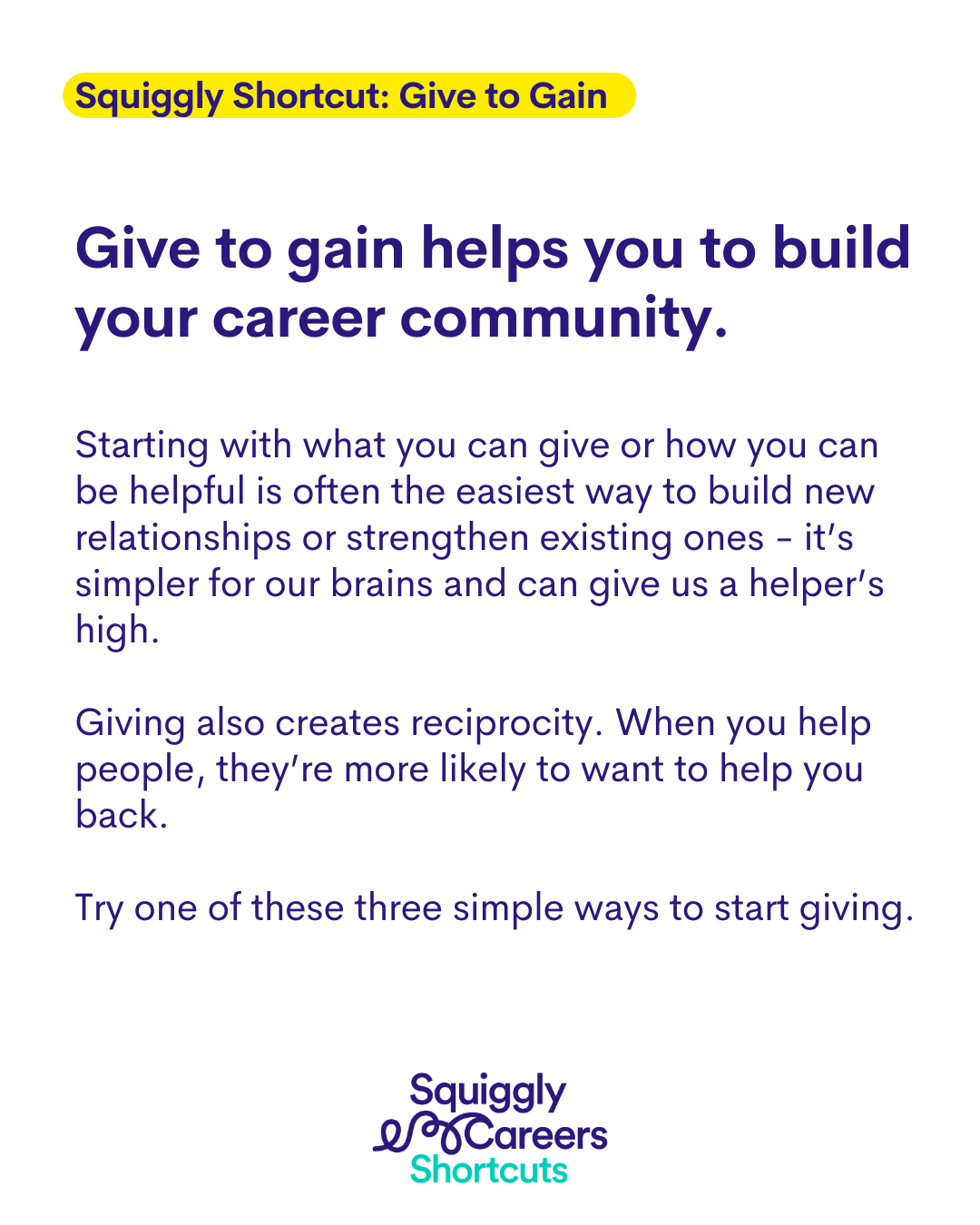
And today I want to borrow a bit of brilliance, actually, from International Women's Day, where this year the theme is give to gain. And this really aligns with what Sarah and I talk about in building your squiggly career community, which is that really we want to use this idea of people helping people as a way to make sure that we're building strong relationships. So it aligns with this idea of give to gain.
I want to talk about why it aligns and why it matters and then how you can do it. So let's talk about the why for a moment. Why does give to gain matter for your squiggly career? Two reasons. Relationships and reciprocity. So the first is big building relationships. It is easier for our brains to engage with helping people than it is for our brains to think, what can I get from them? So when you are building a new relationship with somebody or you're trying to build a better relationship with somebody, if your starting point is what have I got to give? How can I be helpful? That is just mentally easier for our brains. We get this thing called the helpers high, and it's just a better starting place for us. So it's easier to build the relationships that you need new ones and invest in existing ones. When we start with what have we got to give?
Now, the second reason that this works is that that then results in reciprocity. Do you build a better relationship that results in reciprocity. I.e. Those people want to help you back. And I really think the best person who's shown research and done work on this is Adam Grant. Very good TED Talk on the topic of kind of give and take. Really, really, really useful. So I dive into that if you want to learn more.
But what I really want share with you is three ways in which you can give. Because the hurdle I find when I'm talking to people about this is that they get the idea that giving builds better relationships and that it's proven to result in reciprocity, but they talk themselves out of doing it because they say, well, I don't know what I've got to give. And that question gets in the way of them giving. So three easy ways for you to give. And you don't have to do all of these, but I would think about which one feels like the best, the best one for you.
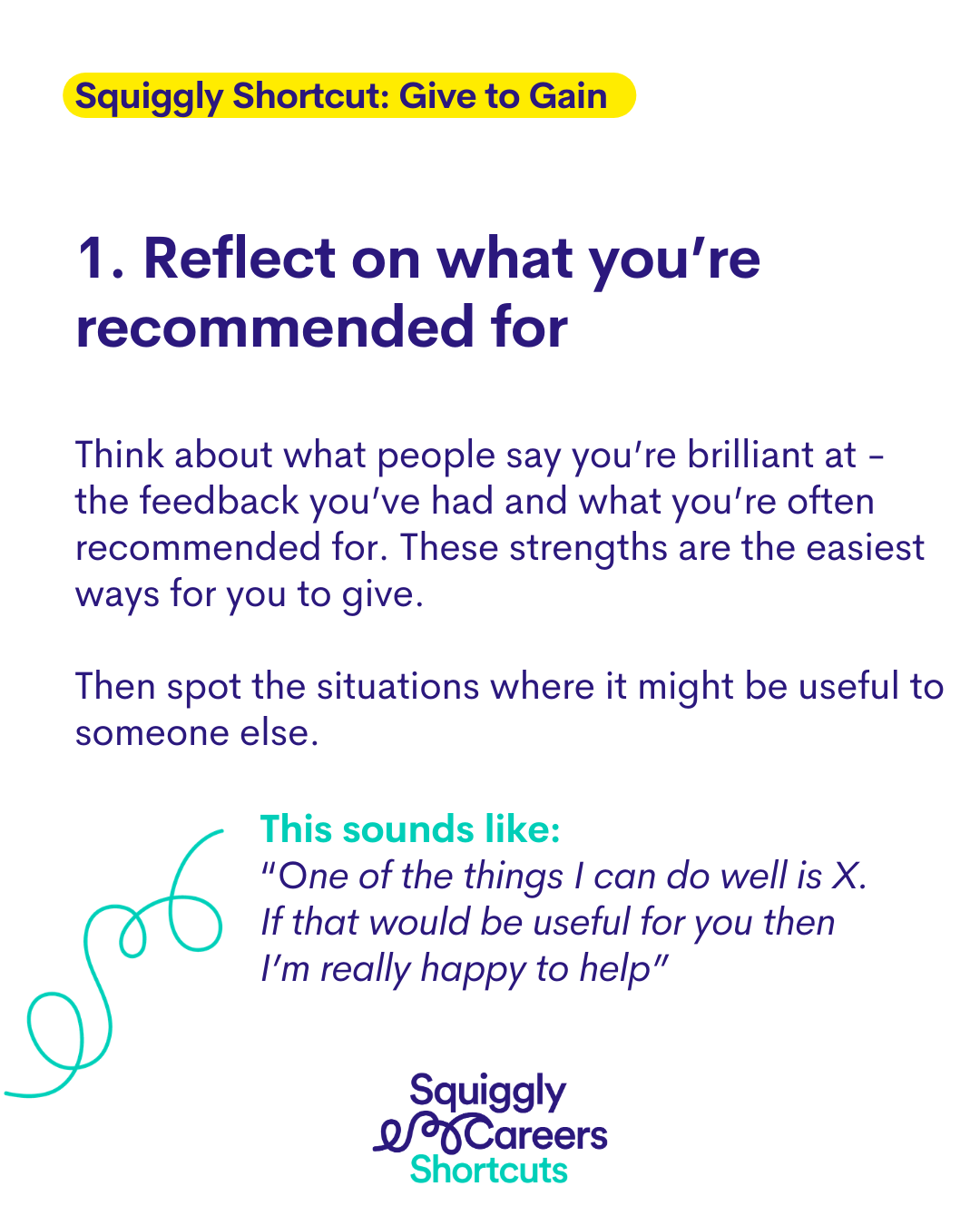
So the first thing I think when you're giving is reflect on what are you recommended for. So when people are talking about you and they're saying, you know, Sarah's amazing… at Helen's brilliant, because… you know, whatever the feedback that you have had on the past, that is, that is a really easy give for you because it's probably something that comes quite naturally to you. So, for example, if I reflect on when I've had feedback about what I do well, what are people most likely to say? They either say energy. So Helen creates lots of energy in meetings and conversations and presentations, or I get clarity a lot. Helen creates lots of clarity. So use that feedback as almost fuel for what you can give. . So now I will, I will think to people, or I'll say to people, oh, I'm, you know, one of the things I can do well is I can create clarity. If that'll be useful for you in this situation, I'm really happy to help. So I'll spot those situations where that skill that I've been recommended for is something that they might need to have. So that's the first thing. Reflect what you recommended for and then spot the situation where that might be useful.
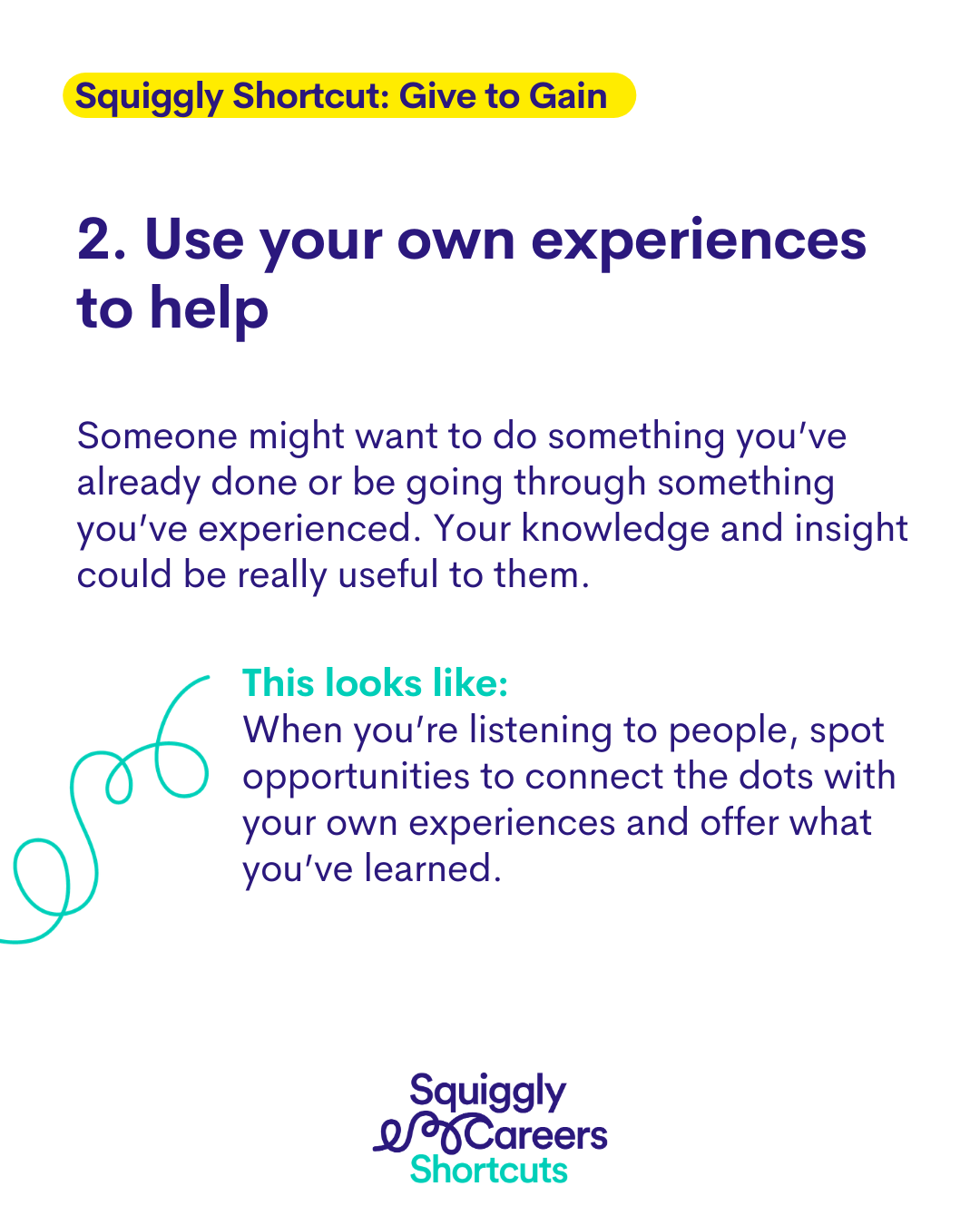
Second thing is about your experiences. We've all collected lots of different experiences in our squiggly careers, and there will be somebody who wants to or is experiencing something that you have already done or been through. And therefore your experience, your knowledge of that could be useful to them. Again, if I just, you know, quickly think about some experiences I've had. I've had experiences of changing industry. I've had experience of starting a podcast. I have had experiences of starting my own business. These are all things that I have experienced in my career that other people might benefit from. And again, it's about making sure that when you're talking to people and you're listening and you're curious about what they might need, you connect the dots with the experience, experiences you've had, and then you're proactive in offering to help them. People often don't know what you've got to give, so you have to do a bit of the work for them.
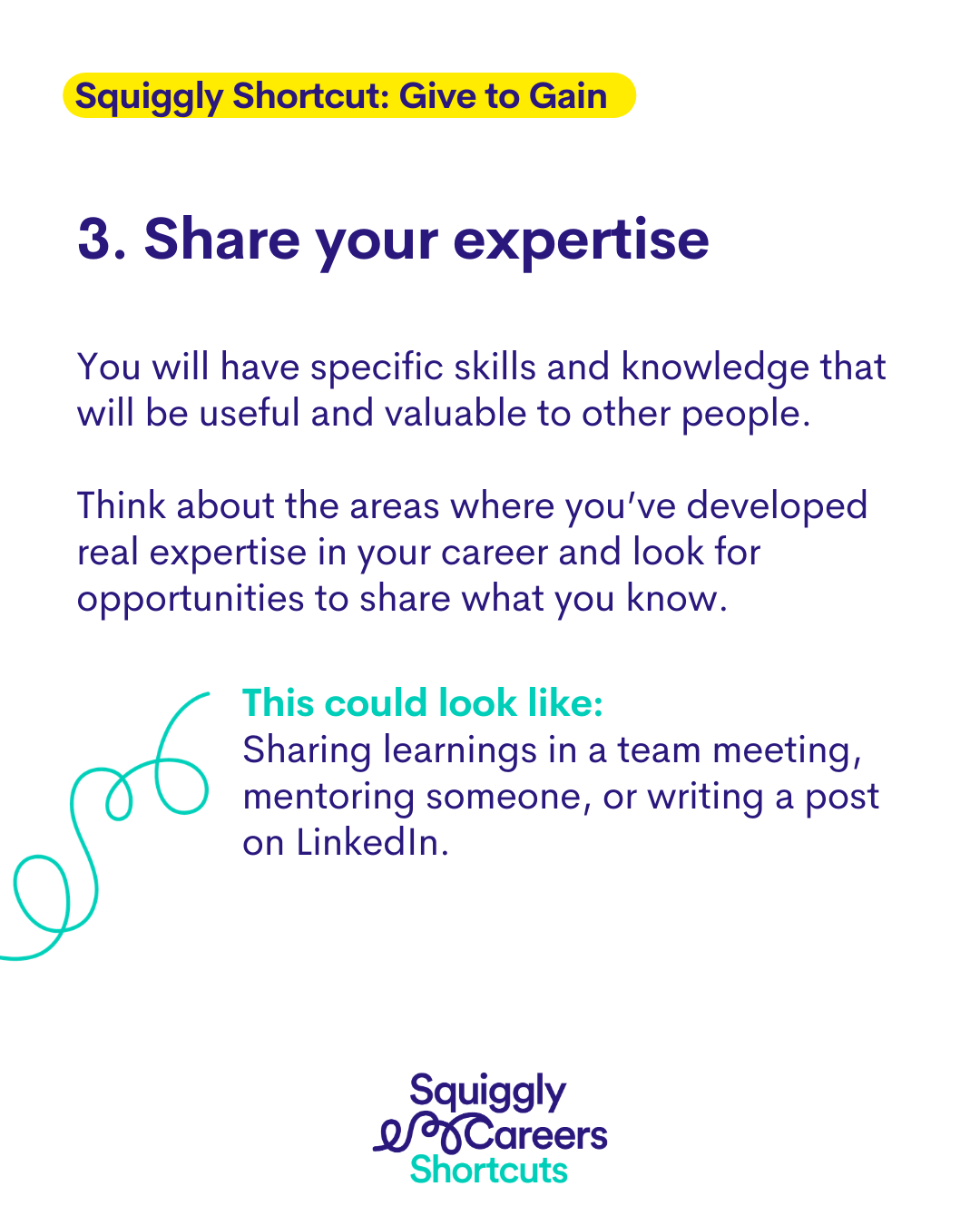
And then the third thing is expertise. You will have some specific skills, some specific knowledge. It might not be the things that you're immediately recommended for, like we talked about at the start, but it's definitely knowledge that's valuable for other people. So again, think in your career, what have you developed expertise in that could be useful to share now? You could share that in a five minute team meeting. You could share that by mentoring somebody. You could share that by writing a post on LinkedIn. There are lots of ways that you can give, but you really want to connect it to what is something that you have relatively deep expertise in. So for example, mine might be leading teams. Like I've been a manager for a long time now and there's a lot I've learned about managing. There's a lot I still got to learn. But I, I could share that expertise with somebody who's managing for the first time and I could share that expertise in lots of different formats. So just three ways that you can get giving so that you get gaining.
I hope that that has been helpful for you if you do want to dive deeper. We've done a longer podcast on how to create Career Karma, which will talk through the ideas. You'll hear a bit of Sarah's perspective as well. So that is a recommended listen if you'd like to learn more. But I will leave it there for now. Thank you so much. Feedback is always welcome. It's just helenandsarah@squigglycareers.com.
Sign up to our Squiggly Careers in Action newsletter and get our latest ideas, tools and inspiration every week - all in one place, straight to your inbox


