
Ever sent a reply you immediately regretted, or said something in the heat of the moment you wish you hadn’t?
In this Squiggly Shortcut, Sarah makes the case for the 24 hour rule, and shares the research that backs up why waiting is almost always worth it.
🎯 What You’ll Learn
– Why giving yourself 24 hours moves you beyond fight, flight or freeze (and why sleep is doing more work than you think)
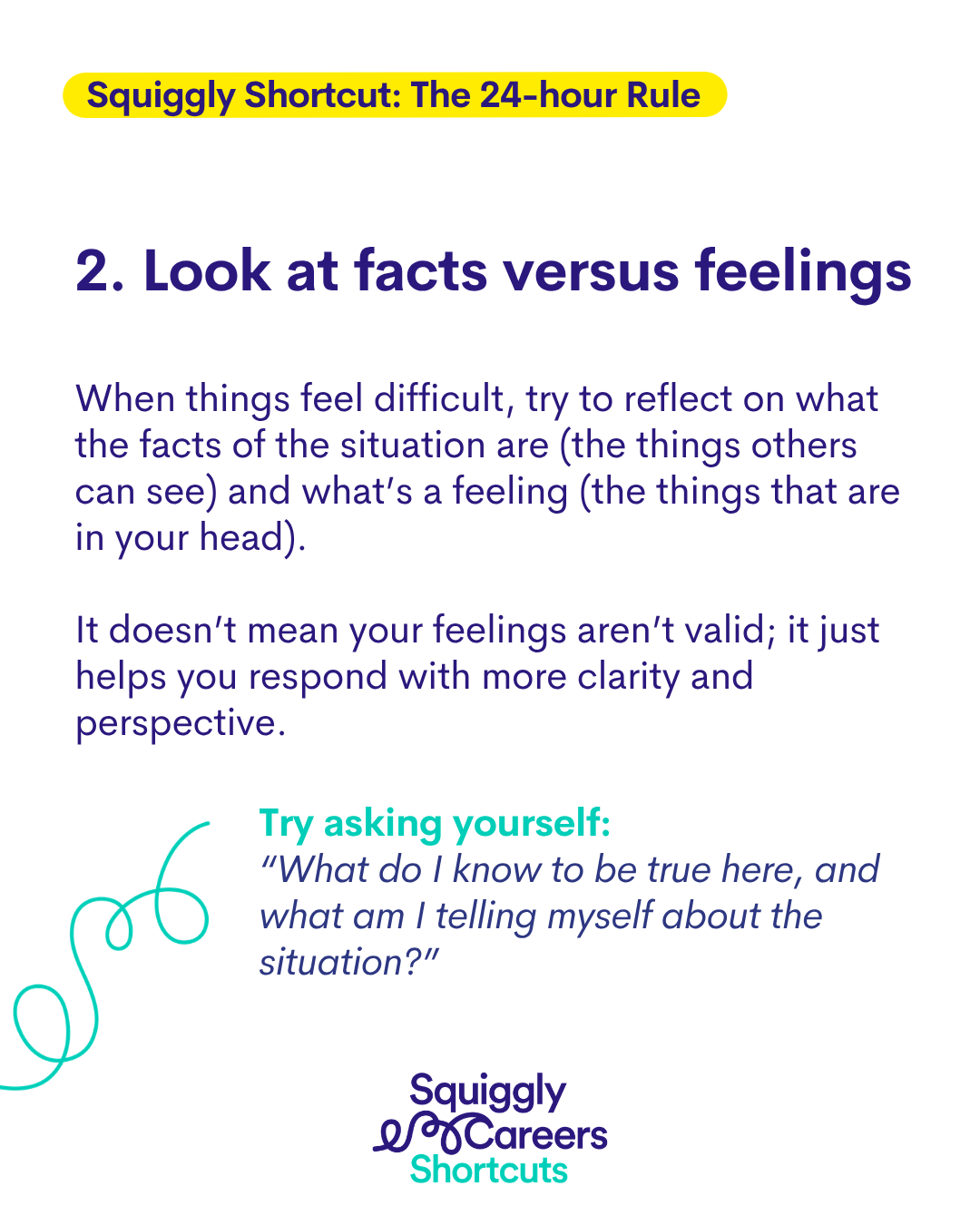
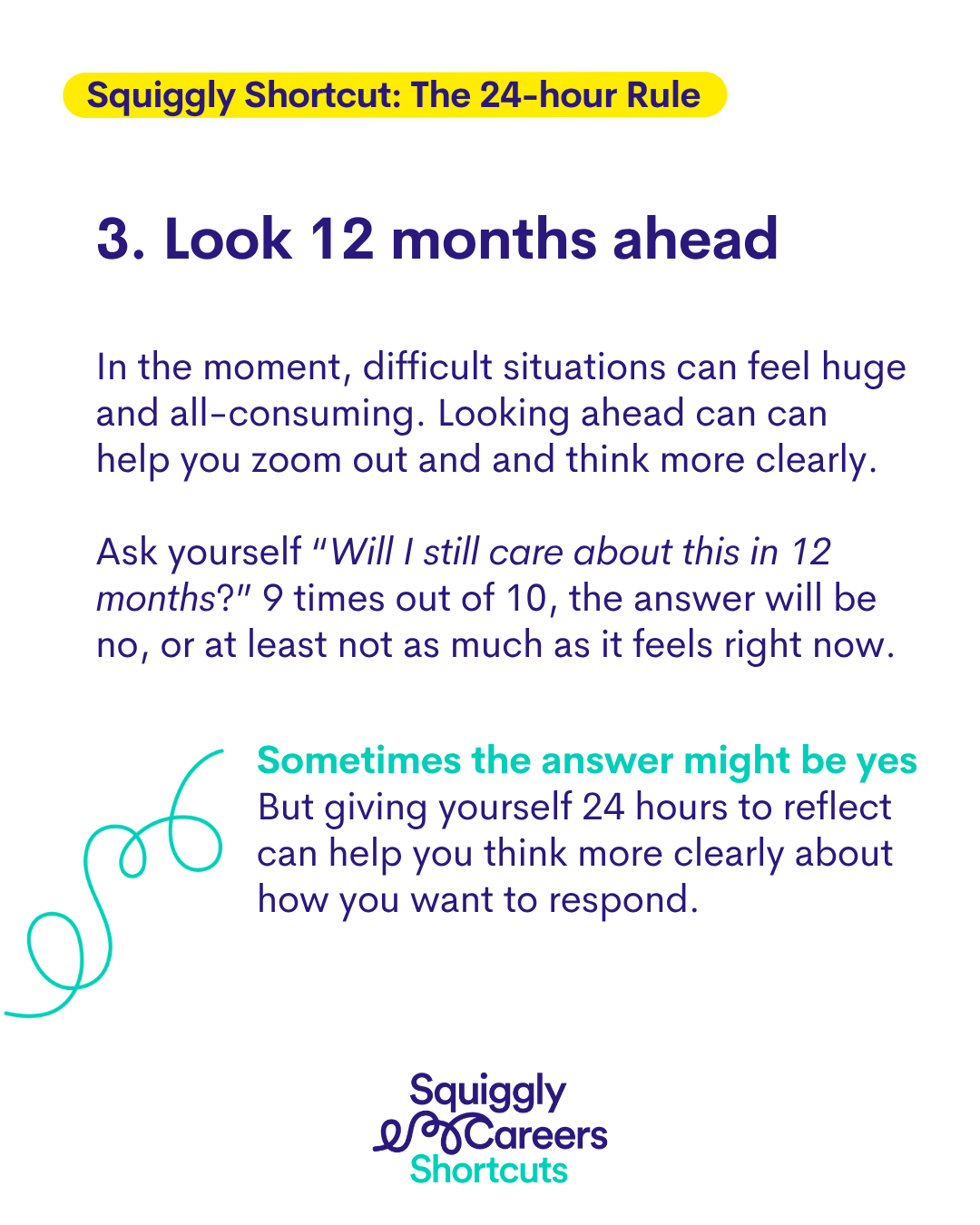
– 3 things to do in that 24 hours while you’re processing: name it to tame it, separate facts from feelings, and ask whether you’ll still care about this in 12 months
– Why it’s okay to say “I’ll come back to you tomorrow” (and why people actually find it reassuring when leaders do this)
– What to do when you don’t have 24 hours and an hour is the best you can get
📚 Resources Mentioned
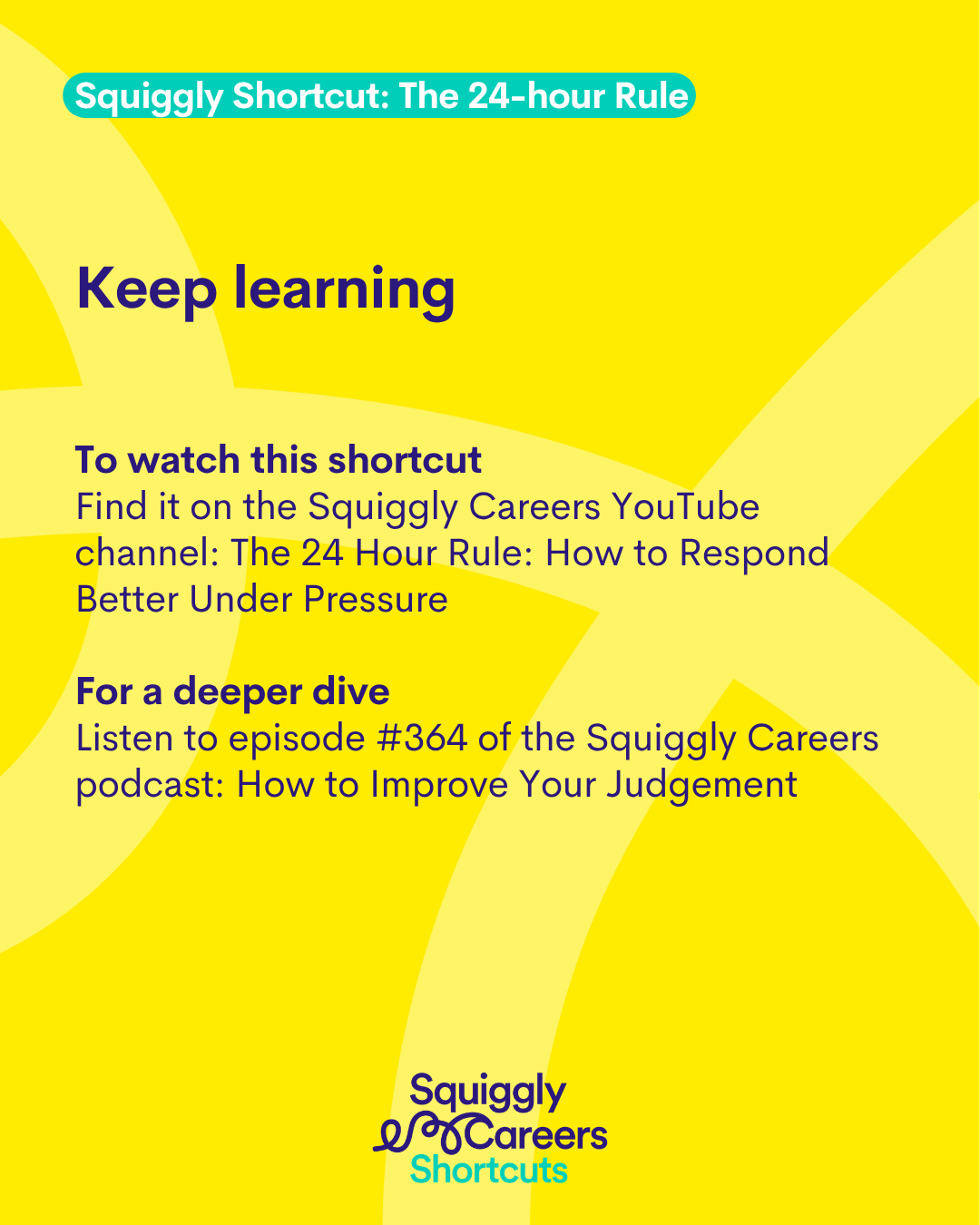
Episode 364: How to improve your judgement
For questions about Squiggly Careers or to share feedback, please email: helenandsarah@squigglycareers.com
Need some more squiggly career support?
1. Download our free careers tools
2. Sign up for our Squiggly Careers Skills Sprint
3. Sign up for the Squiggly Careers Newsletter, a weekly summary of the latest squiggly career tools
4. Order our new book, Learn Like a Lobster.
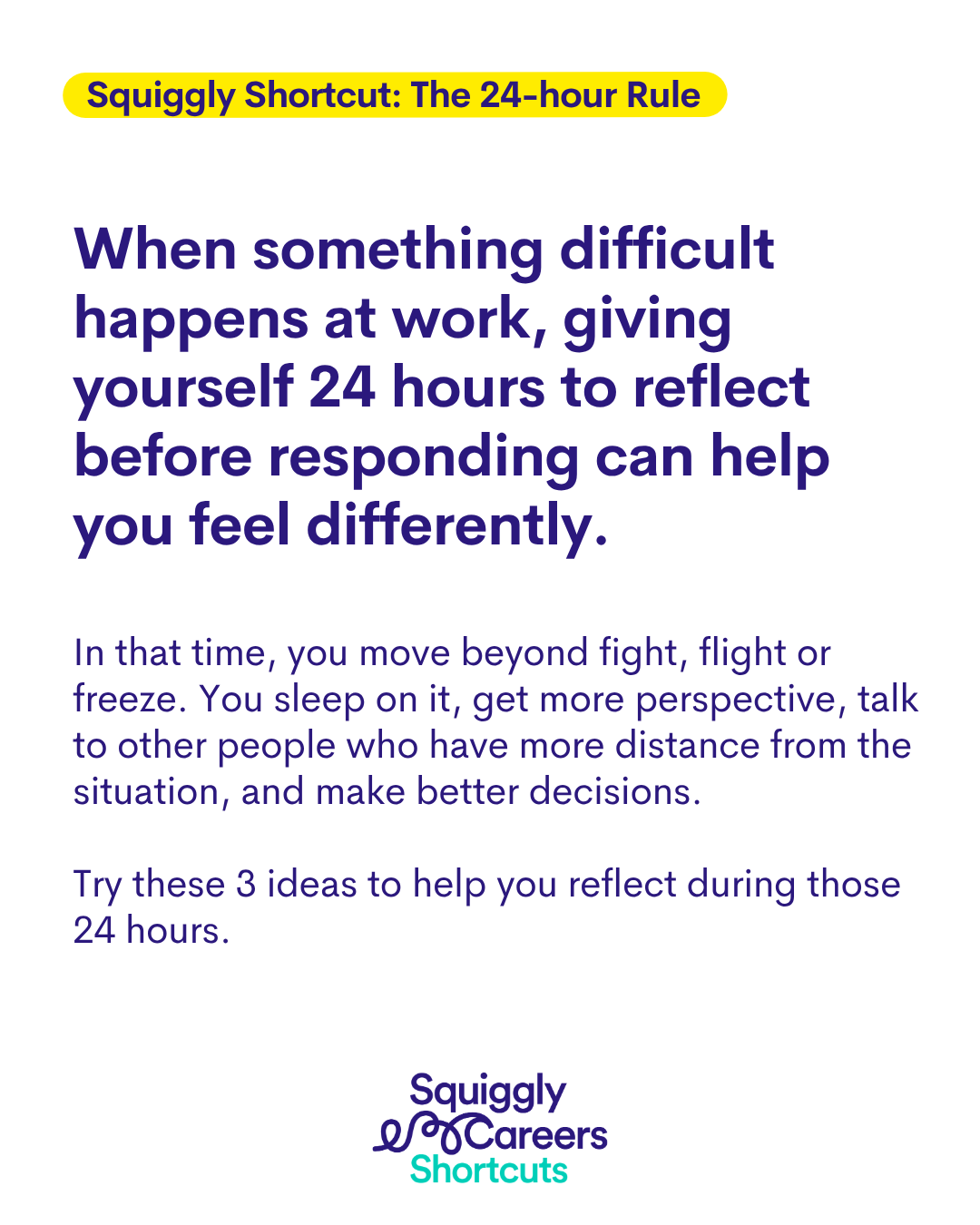
Sarah Ellis: Hi, I'm Sarah and in this squiggly career shortcut, I'm going to be talking about the 24-hour rule. So I talked about the 24-hour rule recently with one of my groups of learners and we were talking about it in the context of saying the hard thing. So when someone says the hard thing to you, it's obviously also hard to hear. One of my top tips was the 24-hour rule. If you give yourself 24 hours to reflect, to kind of make sense of what you've heard, you often feel differently about it at 4pm tomorrow versus 4pm today.
So I was having a look at this to see if there was kind of any research to support what I just thought was practically a good idea. And actually, there's a lot of evidence of why. Generally, the 24-hour rule is a good way of using our brains usefully rather than getting in our own way. So if we wait rather than instantly respond, perhaps when we're under pressure, we've received feedback. We were surprised by, you know, that email that has made you really angry that we all get. You kind of have this cooling off period, like see the 24 hours as cooling off, and it means that you move beyond fight, flight or freeze, none of which are usually that useful. And within that 24 hours you're inevitably going to go to sleep. And that sleep just helps us to rest, rejuvenate, recover the next day. You always have more perspective. I also think sometimes in that 24 hours, if you think practically about what happens, you know, you go and talk to some of the people, some people who are not as close to your situation, who've got a bit more distance, and that's typically really helpful. And I was generally thinking you often care less after 24 hours. You know, in that moment, in the kind of the heat of the moment, it feels massive and it feels really important and it maybe feels really stressful, even a day later, things can look a bit different. So three things I think you could do in that 24 hours while you're processing, you know, so it's like, generally give yourself the 24 hours, but like, what are you going to go away and do?
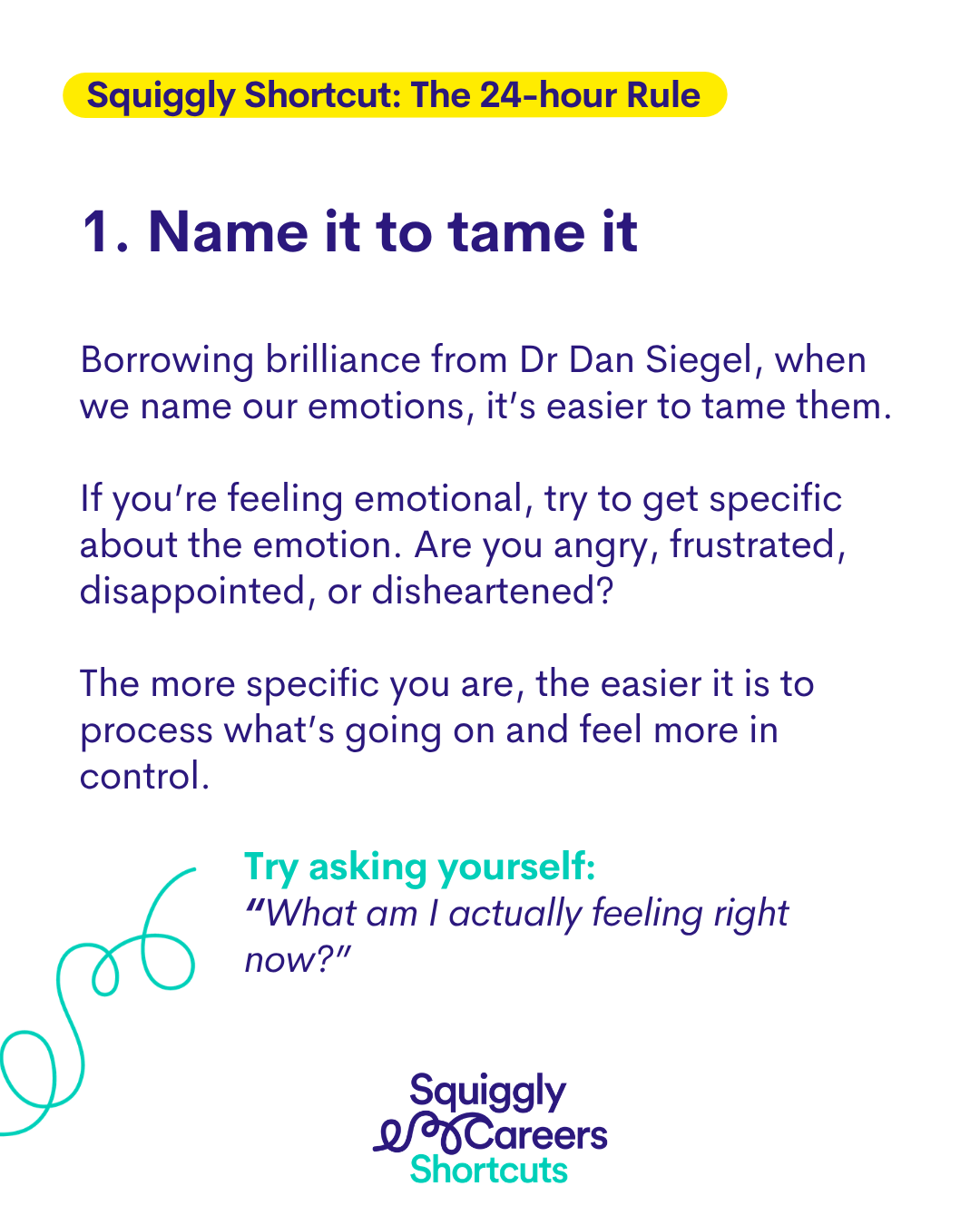
Firstly, top tip on emotions. If you are feeling very emotional and if you're not sure how to make sense of those emotions, name it to tame it. It comes from Dan Siegel. We know with emotions, the more specific you can be about how you're feeling, the more helpful it is. You don't need to change those emotions necessarily, you just need to recognise them. So, are you feeling angry, frustrated, disappointed, or disheartened? Like what, what are the words next? Facts versus feelings. Always really useful. So, you know, being really objective about the facts and then knowing what are more feelings and actually I think if you've done that first bit of naming it to taming it, that will help you a bit with those feelings. Doesn't mean those feelings are not valid, doesn't mean that they don't matter. It's just, I think sometimes just seeing the kind of difference between those two.
And then the last one, which is a good zoomed out question is will I still care about this in 12 months time? I think typically 9 out of 10 times the answer to that is no or certainly not as much as I care about it right now. Now sometimes it might be yes, you might think, I will, I will still care about this in 12 months. I do want to share a different point of view. I don't think this is the right thing to do and I'm going to stand up for that and I'm going to speak out. But you have, I suppose you've come to that choice, you've come to that conclusion almost in the cold light of day, made sure that you've got better judgement, you will make better decisions by giving yourself that 24 hours.
And I know not all, you might not always have the 24 hours. Like I've worked in teams before where that actually would have been a luxury to even have 24 hours. You've perhaps got an hour. So even if you've got a shorter amount of time, probably the best thing that you can do is walk away for an hour. Say, can you walk away from your laptop? Can you walk away from your phone? Can you actually go for a walk? Can you grab a coffee? Can you just give yourself a little bit of space perhaps to sort of fast forward some of what that you would have normally done in that 24 hours to again just have better judgement, better decision making. And I think sometimes it is okay to say to somebody that, you know, can we come back to this tomorrow? I just want to take 24 hours to reflect on it.
I was reading some really interesting research about leaders recently where people said they would much rather hear leaders say that than leaders make us sort of feel pressured to make an instant decision. Which I think sometimes if you're in a leadership or management position, you might think, well, it's my job to make a decision right away, like I should know the right answer to this. But actually people sometimes find it reassuring to hear you say oh, this feels important like, but I know we've got to make a decision quickly, so I'll come back to you by the end of tomorrow because I just want to sleep on it and know that that's okay to say, whether you're a manager or leader or not. If you want to do a bit more learning by listening on judgement and decision making, episode 364 of the podcast will help you to do that. And I do think decision making, choices, judgement are all really helpful skills, both in your day job, but also more generally for your development. So I hope you're finding these shortcuts useful and we'll be back with another one soon.
Sign up to the Squiggly Careers Newsletter and get our latest ideas, tools and inspiration every week - all in one place, straight to your inbox


