
If influence sometimes feels uncomfortable or awkward, this is a fresh take that reframes it as collaboration rather than persuasion. In this Squiggly Shortcut, Sarah shares a practical, three-step approach to influencing with curiosity rather than control.
Using the example of someone challenging the idea of squiggly careers, Sarah explores why pushing harder rarely works and why listening first is often your most powerful move. From opening up the conversation with genuine curiosity, to involving someone in shaping the solution, to landing on a payoff they actually care about, this episode is a simple guide to influencing in a way that feels thoughtful, not manipulative.
📚 Resources Mentioned
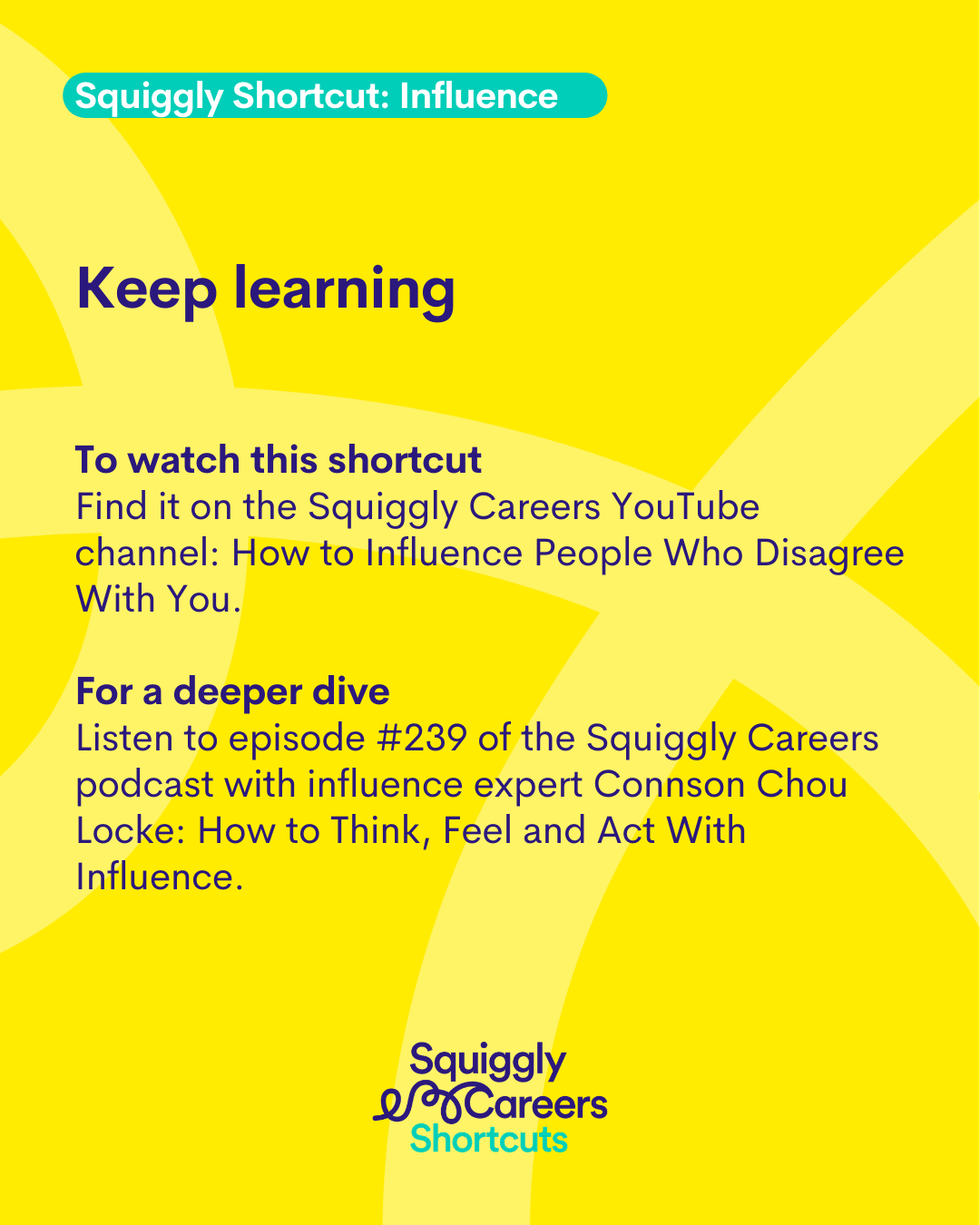
Episode 239: Ask the Expert with Connson Chou Locke.
Need some more squiggly career support?
1. Download our free careers tools
2. Sign up for our Squiggly Careers Skills Sprint
3. Sign up for Squiggly Careers in Action, a weekly summary of the latest squiggly career tools
4. Pre-order our new book, Learn Like a Lobster.
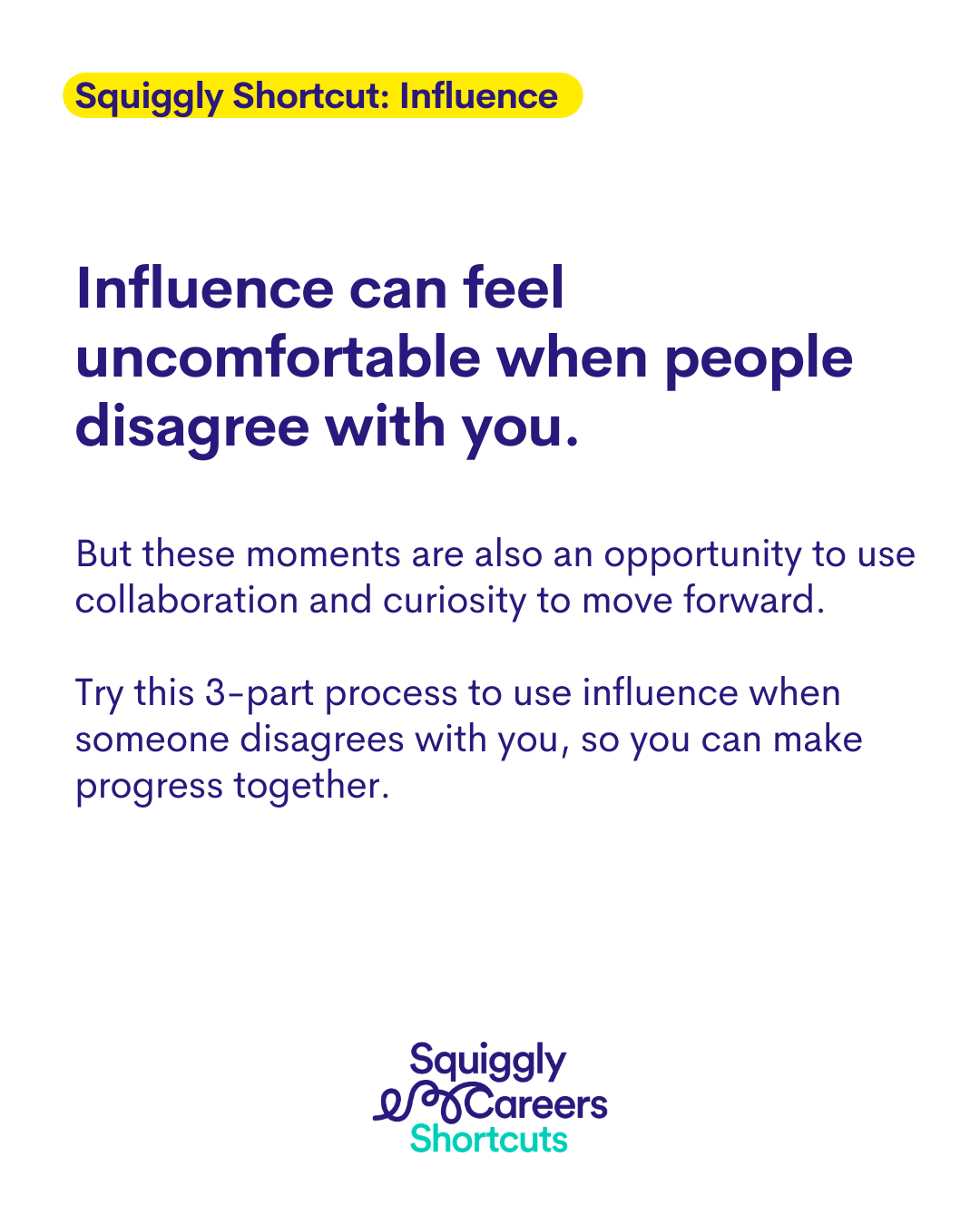
Sarah Ellis: Hi, this is Sarah from the Squiggly Careers podcast. And in this shortcut, I'm going to talk about how to influence people who disagree with you. And I was thinking about the best way to bring this to life, and I thought it was probably through an example.
So I want you to imagine I'm in a conversation with somebody who disagrees with the idea of squiggly careers. Can you imagine? But it does happen. Not that often anymore, but it used to happen a lot more. And I think the start of that conversation. So when you get a sense, perhaps you're surprised by it or perhaps you knew that it might be coming, somebody disagrees with you. Often our inclination might be to keep on talking, keep on persuading. You're trying to win someone over to your way of thinking. I don't think that works that well.
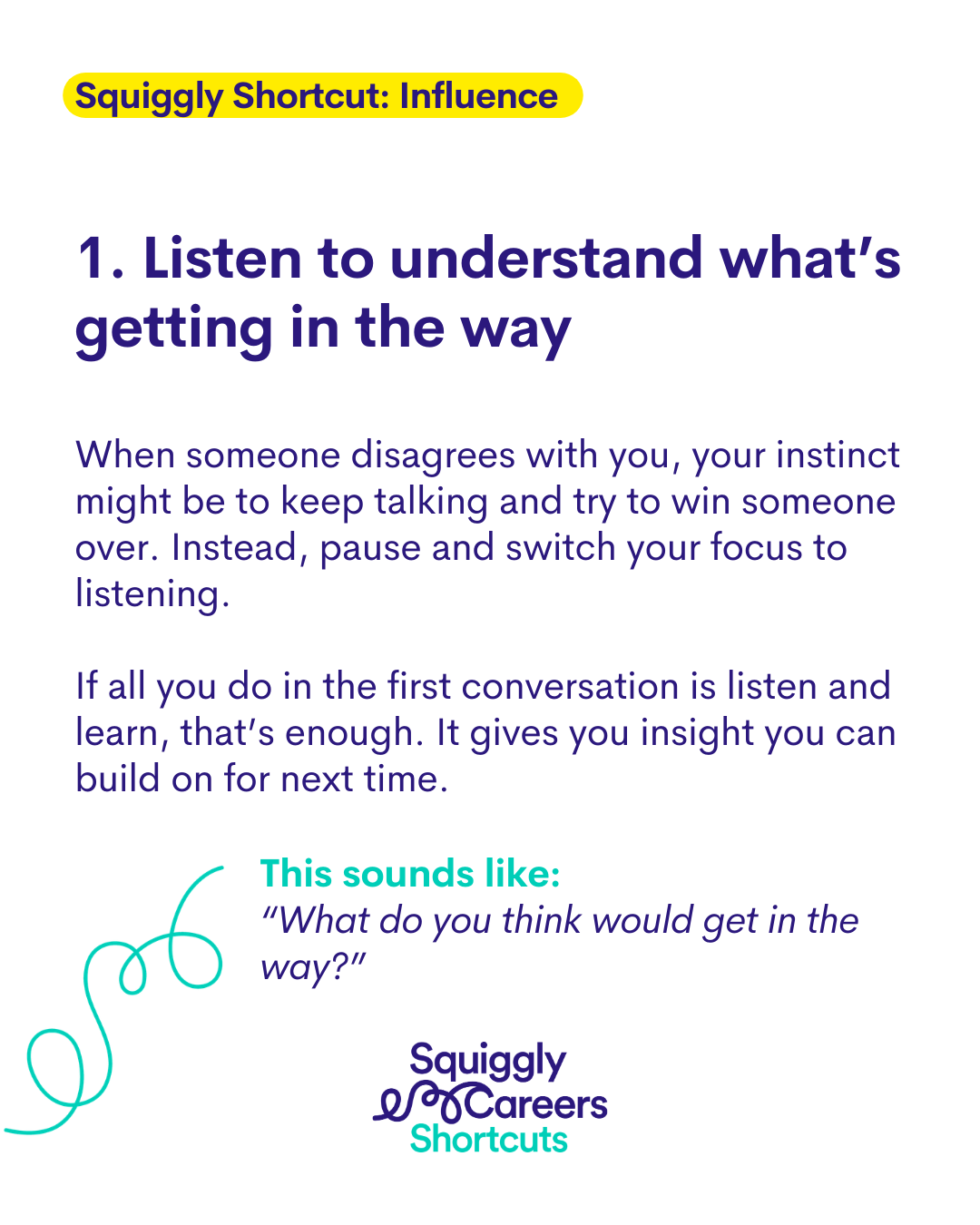
I think you are much better off being open to listening, because through that listening, that is how you then learn more about what's getting in the way, why somebody actually really disagrees. So if someone didn't like the idea of squiggly careers, let's imagine they said, I just don't think it will work in our company or in our culture. Rather than then trying to give them lots of reasons why it will work, I would now say, oh, that's really interesting. Like, what do you think would get in the way? What has worked really well? So just listen and learn. And if in that first conversation that's all you've done, that's okay. I think sometimes, you know, really kind of big influencing takes a while. You don't achieve it all in one conversation.
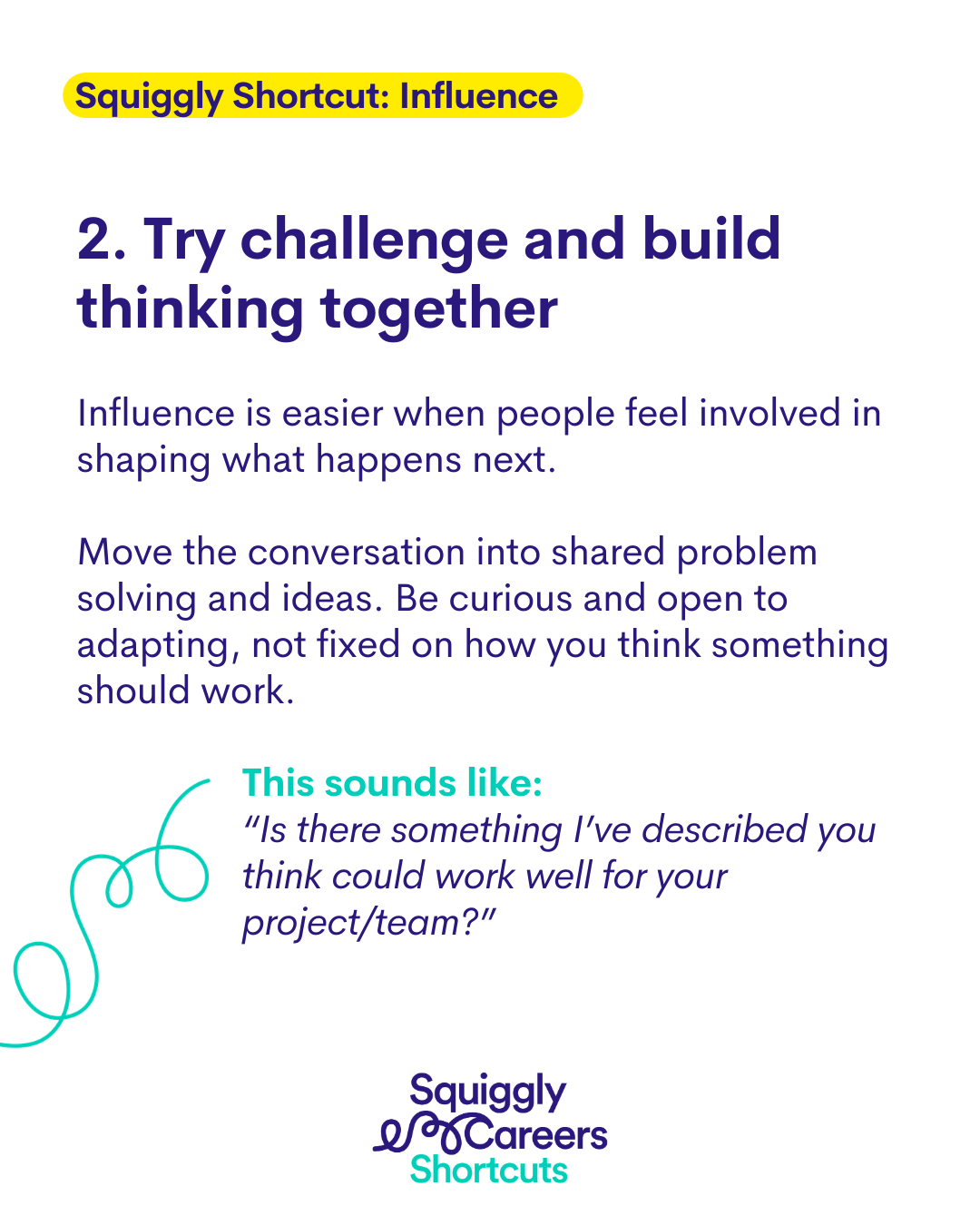
Secondly, I want to involve that person in challenge and building. So what I might say to them is, let's say we were talking about careers in their company. What has really worked well for careers in your organisation so far? What have people responded really well to? Or I might get them talking about the problems. So what do you think is stopping people from, you know, developing and growing in your company at the moment? Get them talking about kind of ideas and problems. So again, you're having a conversation. It's not sort of one way versus another way. It's actually you're just being really kind of curious about the challenges they've got. And you might be making some suggestions at this point and saying, oh, well, typically we've seen this work really well, but appreciate that might be different in your organisation. Like, is there anything there that you think would be interesting or what definitely wouldn't work. From what I've just described. And so it shows that you are sort of holding your ideas or exactly how something might work quite lightly. And again, as well as being open to listening and learning, you're also open to adapting. You've got good sort of agility in that moment. You're not really fixed on, like, how something might work. And then I think that helps people to relax. They don't feel like, oh, I, I must do. On squiggly careers, I must do exactly what Sarah's done elsewhere. It could look and feel different here. And, you know, almost you want them to be saying things like, oh, well, if I was going to do this, this is perhaps what I would be thinking about, or this is what I would do, because again, that will give you more insights.
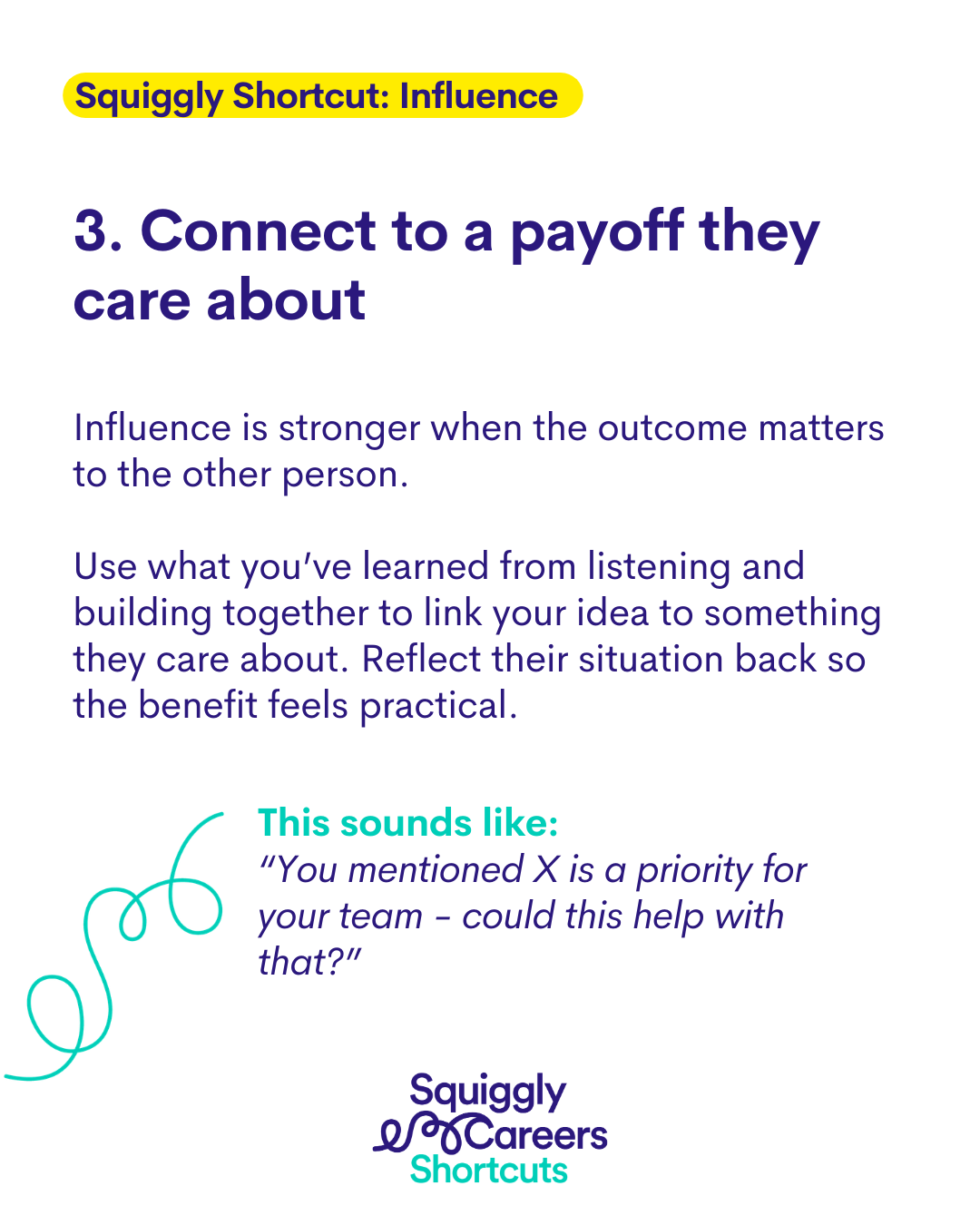
And then the third thing is just to make sure that there is a clear payoff that somebody cares about for whatever you're trying to influence on. And I don't think, as we said, it's probably not where you start, but it is a good place to finish. Now, it can't necessarily just be the payoff that you think is the right payoff. It has got to be a payoff that they care about. And if you've not done the first bit, if you've not been really open to listening and then you've not sort of done that challenge and build and involved them in that, it's very hard for you to do that last bit. Whereas actually, if you've done a really good job there, you can think about, well, for squiggly careers, what do I know is better because of squiggly careers, people take ownership for their careers. It feels much more personal, it feels more relevant. People can develop in different directions. They can transfer their talents. Which of the different things that I know squiggly careers are good for is going to matter most to this person. And so again, you're being sort of smart and reflecting their situation back to them and saying, well, if actually your challenge is ownership, like, one of the things that we know is that squiggly careers will really help with that. And so I hope that feels useful. I often feel like influence is one of those words that can feel a bit manipulative. So we might feel awkward about getting better at influence, but it does really matter because we all need to influence each other to kind of get work done and to have an impact, because you can so rarely deliver big bits of work by yourself. So you have got to go and influence lots of other people. But it's sort of the how you do that and the kind of the approach you take I think can make a really big difference. So I hope that felt helpful. If you want to listen to another episode of the Squiggly Careers podcast with an Ask the Expert with Constant Locke. She's a brilliant expert on Influence. It is episode 239 that's definitely worth diving into if you've got an extra 20 minutes or so.
Thank you so much for listening or for watching. I hope you're finding these shortcuts useful. Please give us any fast feedback on them. It's helenandsarah@squigglycareers.com Bye for now.
Sign up to our Squiggly Careers in Action newsletter and get our latest ideas, tools and inspiration every week - all in one place, straight to your inbox


