
Sometimes your career can feel unclear, uncertain, or hard to navigate — especially in a squiggly world where linear paths don’t really exist. If you’re feeling stuck, unsure of your next step, or craving more direction, these simple clarity-creating strategies will help you find focus, feel more in control, and move forward with confidence.
🎯 What You’ll Learn
• How to clear mental clutter by getting thoughts out of your head
• A simple prioritisation technique—the Bird and the Worm—that helps you balance long-term goals with short-term actions
• Why sharing your thinking with someone else (or with AI) can unlock fresh insight and reduce overwhelm
Need some more squiggly career support?
1. Download our free careers tools
2. Sign up for our Squiggly Careers Skills Sprint
3. Sign up for Squiggly Careers in Action, a weekly summary of the latest squiggly career tools
4. Pre-order our new book, Learn Like a Lobster.
Helen Tupper: Hi, it's Helen from the Squiggly Careers podcast, and you're listening to another one of our Squiggly shortcuts. And today, the topic that I'm going to talk about is creating career clarity, which is quite hard to say and sometimes feels quite hard to do.
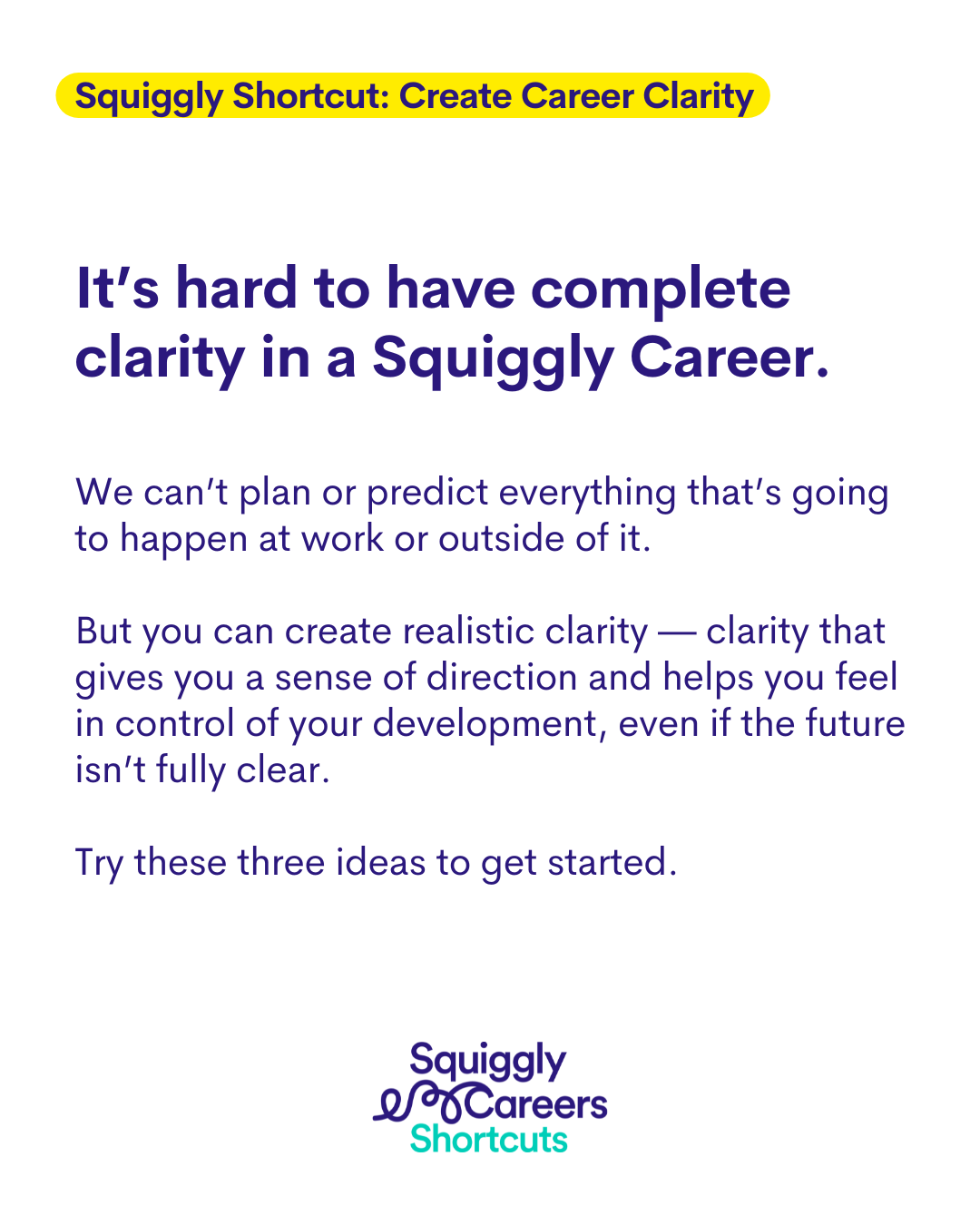
There's probably a bit of a clarity caveat before I get started, which is that I think in a Squiggly career, it is very hard to have complete clarity.
We can't plan, predict, or control everything that is going to happen to us in work or outside of work. So going into your career development with the expectation that you're going to be able to plan every move you're going to make and see this completely clear path, I think is a little bit unrealistic.
However, I recognize and I hear a lot of people who want that when it feels uncertain and ambiguous, we kind of look for clarity as a sort of source of stability.
So what I want to share with you is three ways that I think you can create clarity that's realistic for a Squiggly career.
Clarity that can give you a sense of direction, clarity that can give you a sense of feeling in control of your progress rather than perhaps in control of everything that is happening to you.
So three things that I think can help you to do this.
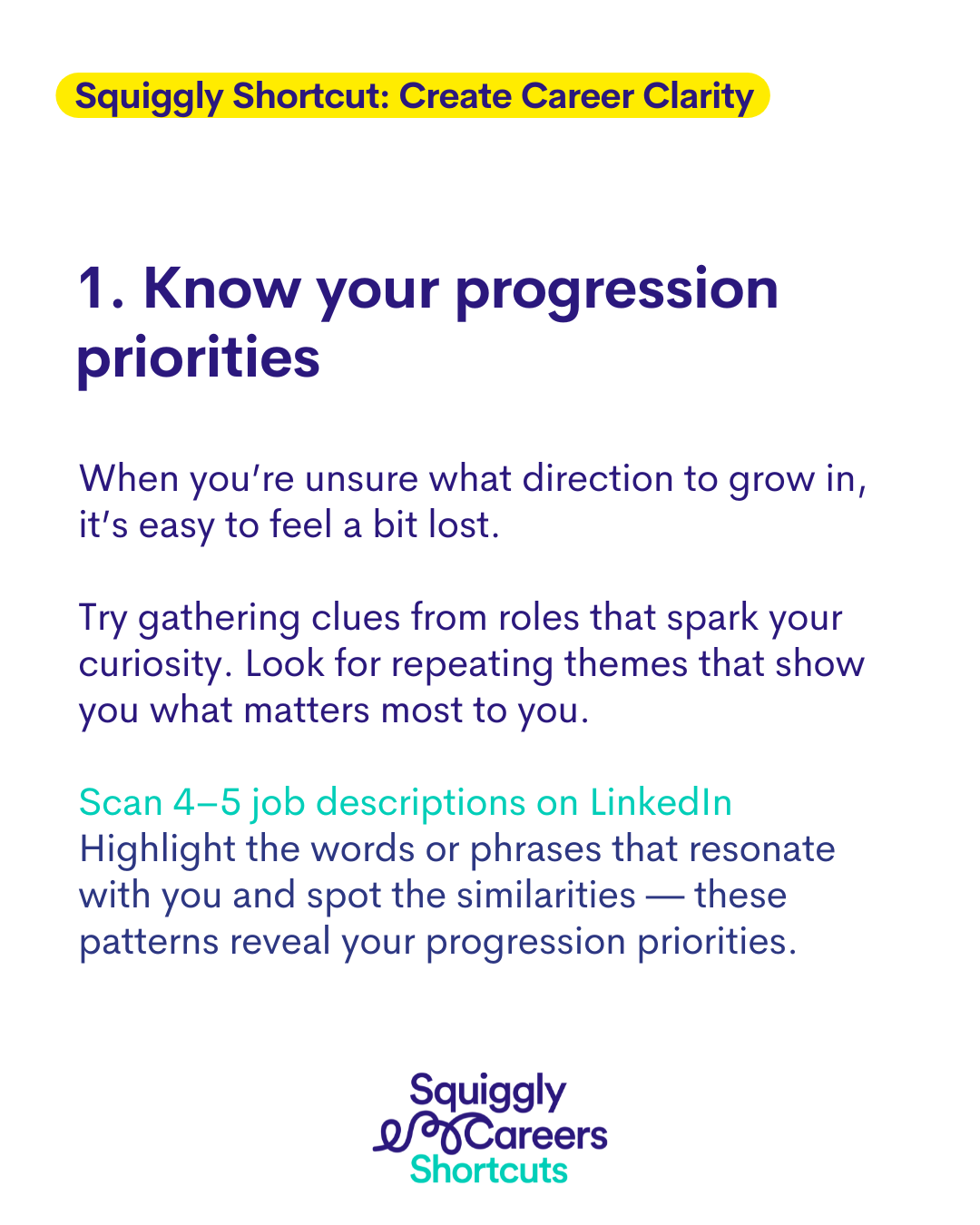
The first thing I want to talk about is making sure that you know what your progression priorities are. So in a Squiggly career, one of the things that can create clarity is when we have a sense of what we want to do, the direction that our development is going in. And if we, if we don't have that, we can feel a little bit lost and unsure and like we haven't got direction.
I think the easiest way for you to do this is to go and look at some job descriptions. I tend to get mine from LinkedIn. I just find it the easiest place to go to and find four or five roles that are sort of interesting to you. I think it's important. They're not exactly the job that you're doing right now. So pick some sort of curious career possibilities that you think, oh, it sounds like an interesting role. Don't worry about whether you can do it or not or where it is. We're not applying for them. We're just going to look into the job descriptions as a source of data.
So as you scan through the job descriptions, what you are looking for is the words or the statements or the sentences that really resonate with you. And I would just pull them out. I tend to just highlight them when I'm doing it and repeat that process for four to five different job descriptions and then spot the similarities, because you will start to see certain words and statements that show up more than once. And those are the things that you are particularly interested in. Those I think are sort of guides for your career growth.
I find I don't know exactly what my career is going to look like in the next five years. And I'm quite happy about that because I think it keeps me open. But what I do know when I do that process is that I end up with some priorities for my progression, some areas that are interesting for me, that regardless of where I work or what I work on, I want to be part of my work. And that's a source of clarity that's quite useful for you.
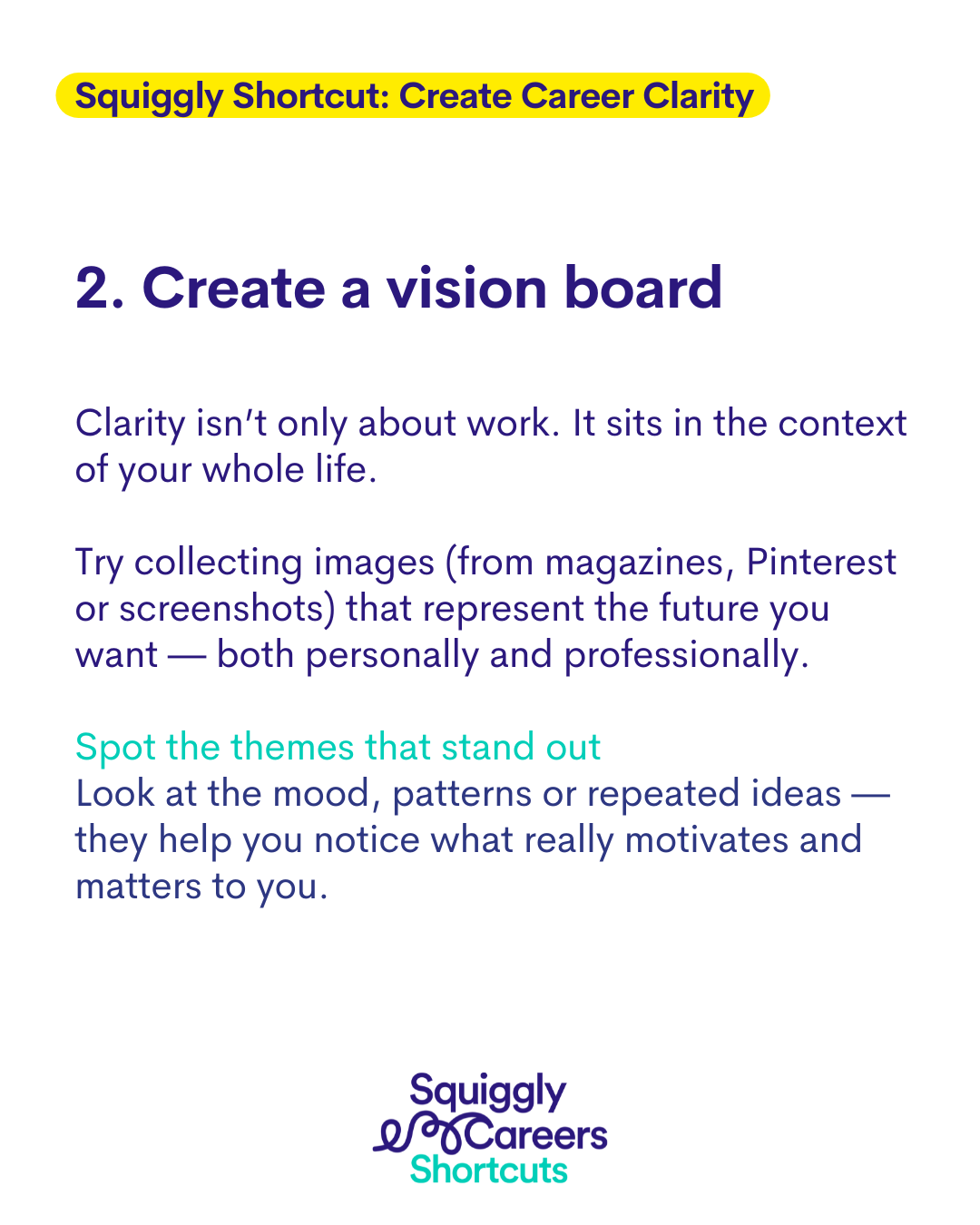
The second thing that I think is really useful is to create a vision board. Now, I know vision boards aren't for everybody. I get it. But if you want to get some clarity, they can be really useful. Let me tell you why. So when you have a vision board, what you do is you'll collect images. You can get them forever you want. I tend to get mine for magazines, actually.
You know, starting the year is a really good time to do this. But you can get them from Pinterest, or you can just screenshot stuff that you see, but you are collecting images, the image is important. And then you are putting those images together and looking at what they say to you. So what sense do you get from the images?
And I think the reason this can create clarity is it tends not to just be about work. We tend to collect images about the work and life we want to have. And I think that sets your career in context. So if I just talk to you about what I want for my career, I could come out with lots of statements, but whether that would actually make me happy, I don't know. Because you have to set your work in the context of your life, and there are likely to be other things that make you happy, other things that will create clarity for you and your career and your future.
And I think vision boards are one of the most comprehensive ways that we can. We can do that.
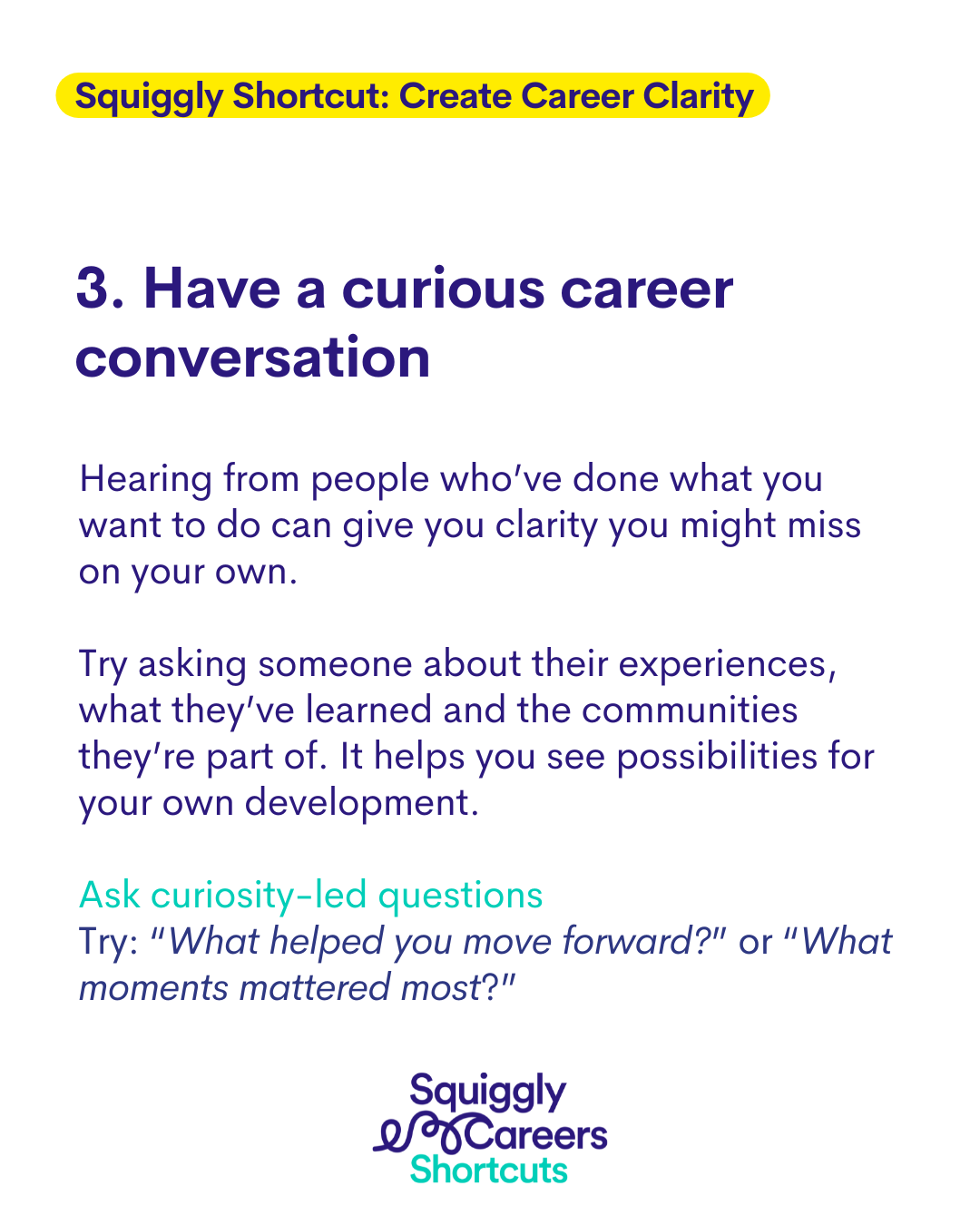
The third thing that I would say is curious career conversations.
If you want to create clarity, talking to people who have done what you want to do is very helpful for your development because they can tell you about how they've learned or who they spend time with, or communities that they are part of, or experiences that they've had.
And you can collect all of those insights and you can use it to inform your own development plan.
And I think if you're doing those three things, making sure that you know what your progression priorities are, making sure that you have a vision board so that your clarity isn't just about work. It's work in the context of your life.
And you're having curious career conversations where you're collecting insights and recommendations and actions from people who've done what you want to do that will be really, really useful for your career. And it still means you're flexible for your future, but it also means that you're taking control and creating clarity for your growth.
So I hope that that has been a useful shortcut for you. If you want to dive into this topic a bit more deeply. We did a whole episode on it. It's episode 274 on how to create career clarity. We will link that in the show notes for you. And if you've got any feedback on this episode, please get in touch. It's helen@amazingif.com.
Sign up to the Squiggly Careers Newsletter and get our latest ideas, tools and inspiration every week - all in one place, straight to your inbox


