How do you introduce yourself in a way that turns a polite “nice to meet you” into a genuine “tell me more”? In this episode,
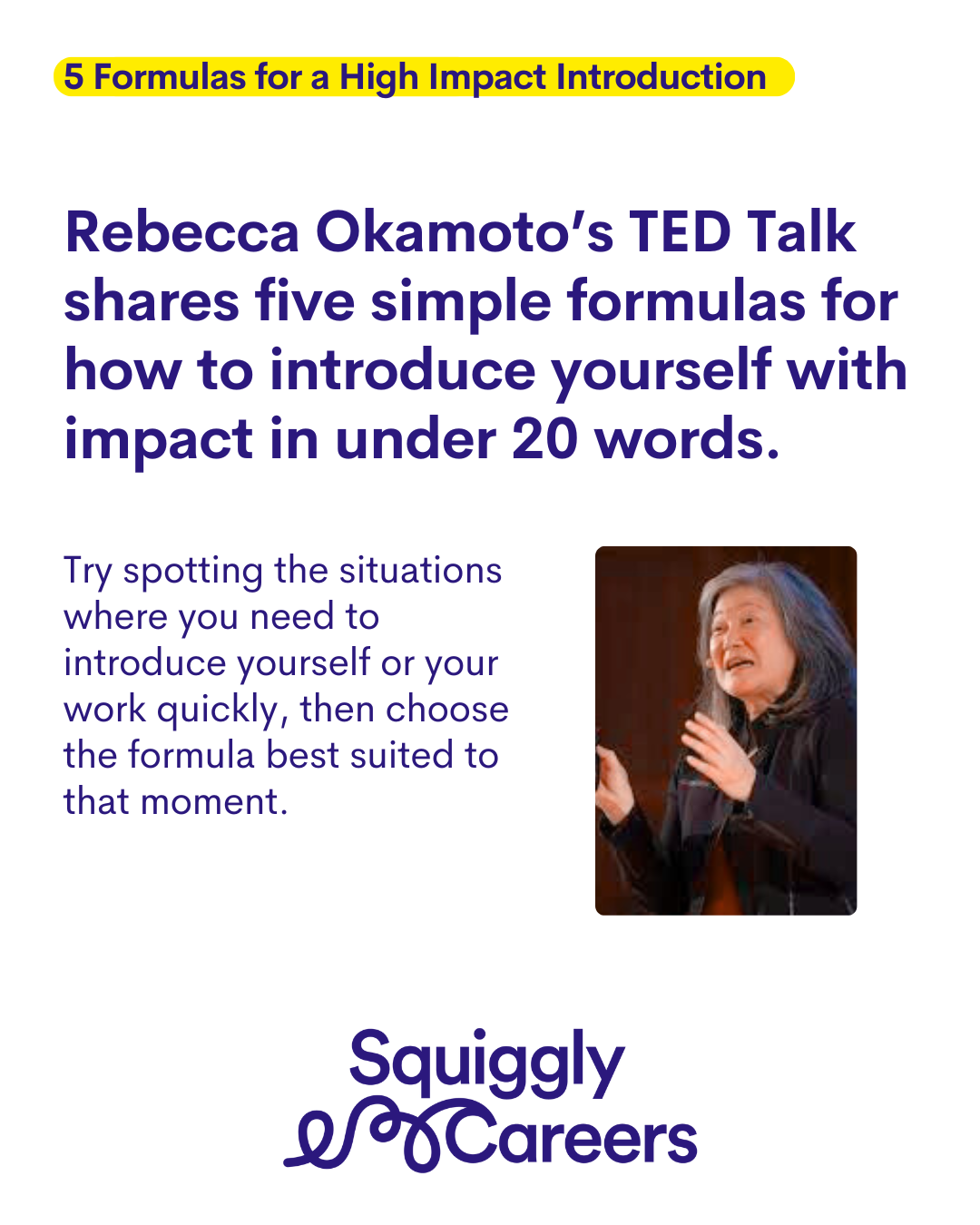
Helen and Sarah are Borrowing brilliance from Rebecca Okamoto’s TED Talk How to Introduce Yourself and Get Hired. They unpack five simple formulas you can use to make high-impact introductions – whether you’re meeting someone new, speaking at an event, or kicking off a meeting. This episode is all about short, practical introductions that help you be heard, remembered, and taken seriously.
🎯 What You’ll Learn
– How to introduce yourself clearly and confidently
– Five practical formulas you can adapt for different situations
– Why “tell me more” is the goal of a great introduction
– How to make introductions feel natural, not scripted
– How to use questions to build connection quickly
📚 Resources Mentioned
How to Introduce Yourself and Get Hired — Rebecca Okamoto (TED Talk)
For questions about Squiggly Careers or to share feedback, please email: helenandsarah@squigglycareers.com
Need some more squiggly career support?
1. Download our free careers tools
2. Sign up for our Squiggly Careers Learn Like a Lobster Skills Sprint
3. Sign up for Squiggly Careers in Action, a weekly summary of the latest squiggly career tools
4. Pre-order our new book Learn Like a Lobster
00:00: Introduction
09:45: We’ve created a custom GPT to help you make introductions to people
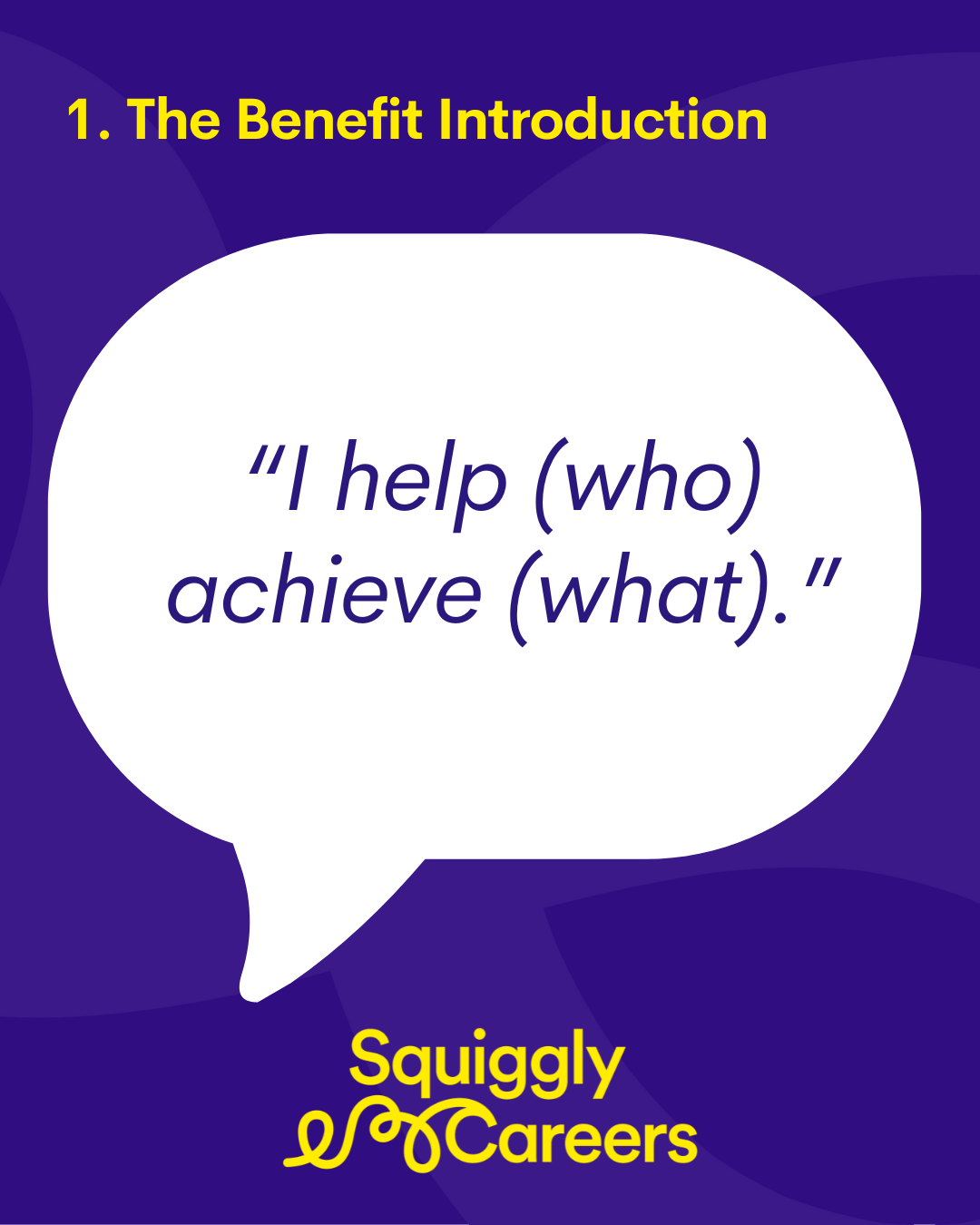
13:09: Formula #1: The benefit introduction
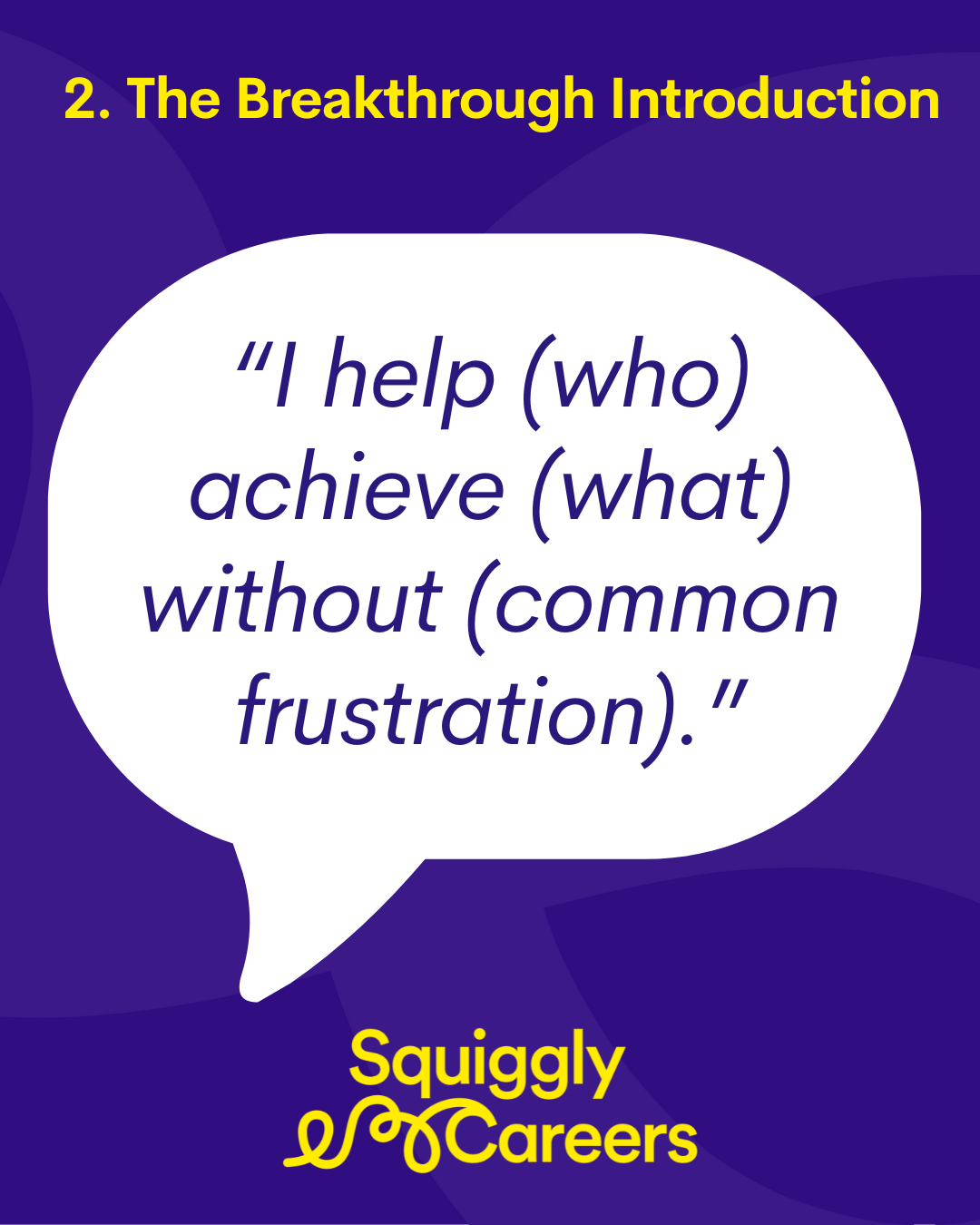
14:59: The breakthrough (problem-led) introduction
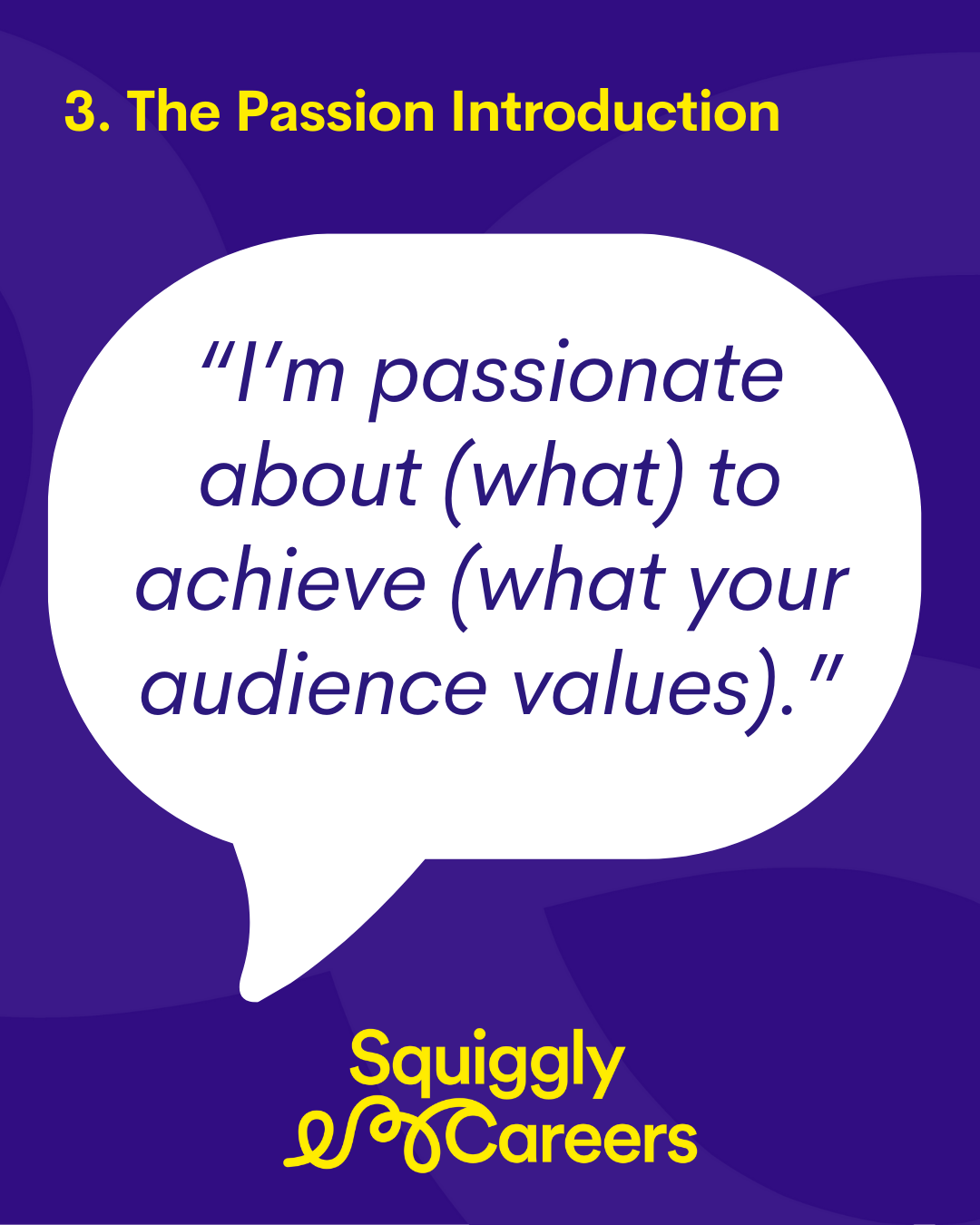
17:46: Formula #3: The passion introduction
21:41: Formula #4: The strength introduction
26:50: Formula #5: The mission (or ambition) introduction
30:17: The power of a great follow-up question
34:23: We would love to know where you listen to the Squiggly Careers podcast
Helen Tupper: Hi, I'm Sarah.
Sarah Ellis: And I'm Helen.
Helen Tupper: And this is the Squiggly Careers podcast, where every week we borrow some brilliance from a person, a place, even an object from time to time, and we turn that curiosity into ideas for action for you and your Squiggly career in a way that we hope is useful and relevant wherever you are and whatever you do.
Sarah Ellis: And so today it is my turn to borrow a bit of brilliance and use it to spark our conversation. And I've got a person times a place. So the person is Rebecca Okamoto and the place is Ted. And we're going to talk about her new talk, which is called how to Introduce Yourself and Get Hired. And I saw it, I think. I don't know what email came into my inbox, but I clicked for two reasons.
Helen Tupper: One, are you applying for some jobs?
Sarah Ellis: And this is how I tell you no. But as we will talk, I do think you are always. You may be not always trying to get hired, but I think you are always trying to get heard. And I think introductions are quite a big part of that. So I. I think I was. I don't know. I've not got a new job in mind, just in case you're worried, but I thought the title was intriguing. Also, I looked at how many people have watched that TED Talk in quite a short amount of time, and it is. It was released four months ago and already it has had 1.7 million views, which is quite. Yeah, it's quite good going, I think, for a TED Talk. So clearly, I mean, it's a good talk, but. But I would argue that the topic is a good talk. There's lots of practical stuff in it. But I think clearly most of those views are. Cause people have clicked because of the title and it's obviously a topic that appeals. So I thought on that basis it's probably interesting to our audience and something that we should talk about a bit more.
Helen Tupper: Well, you made me try out a new GPT by 8am this morning, so. Oh, yes. It obviously piqued your interest enough to create something and to be like, you need to try this out before this afternoon. Well, yeah.
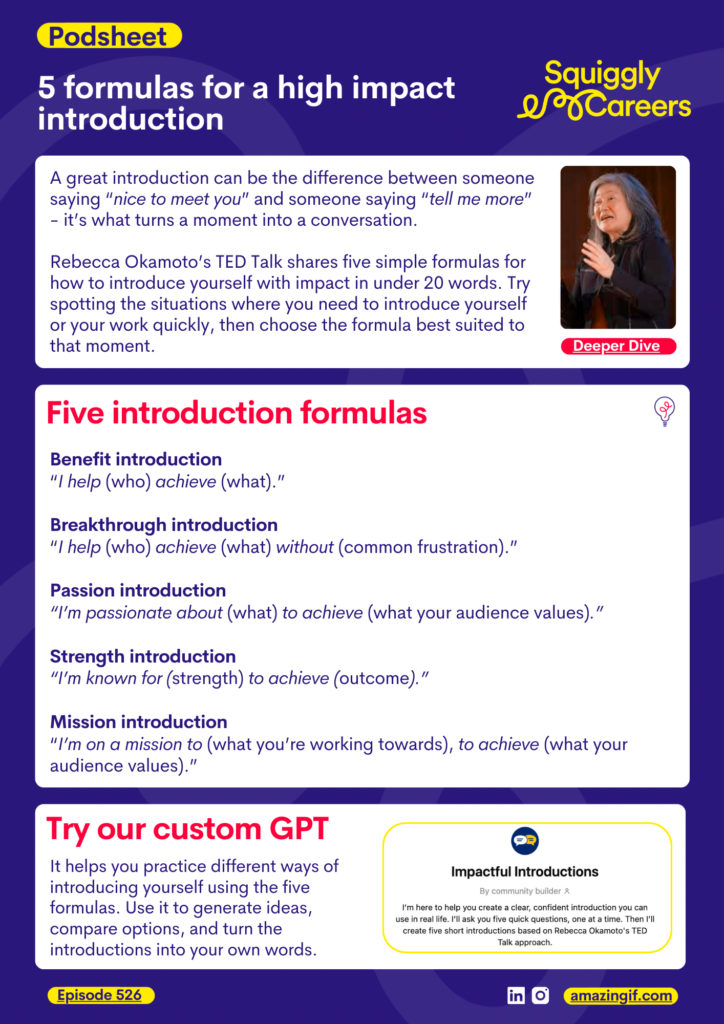
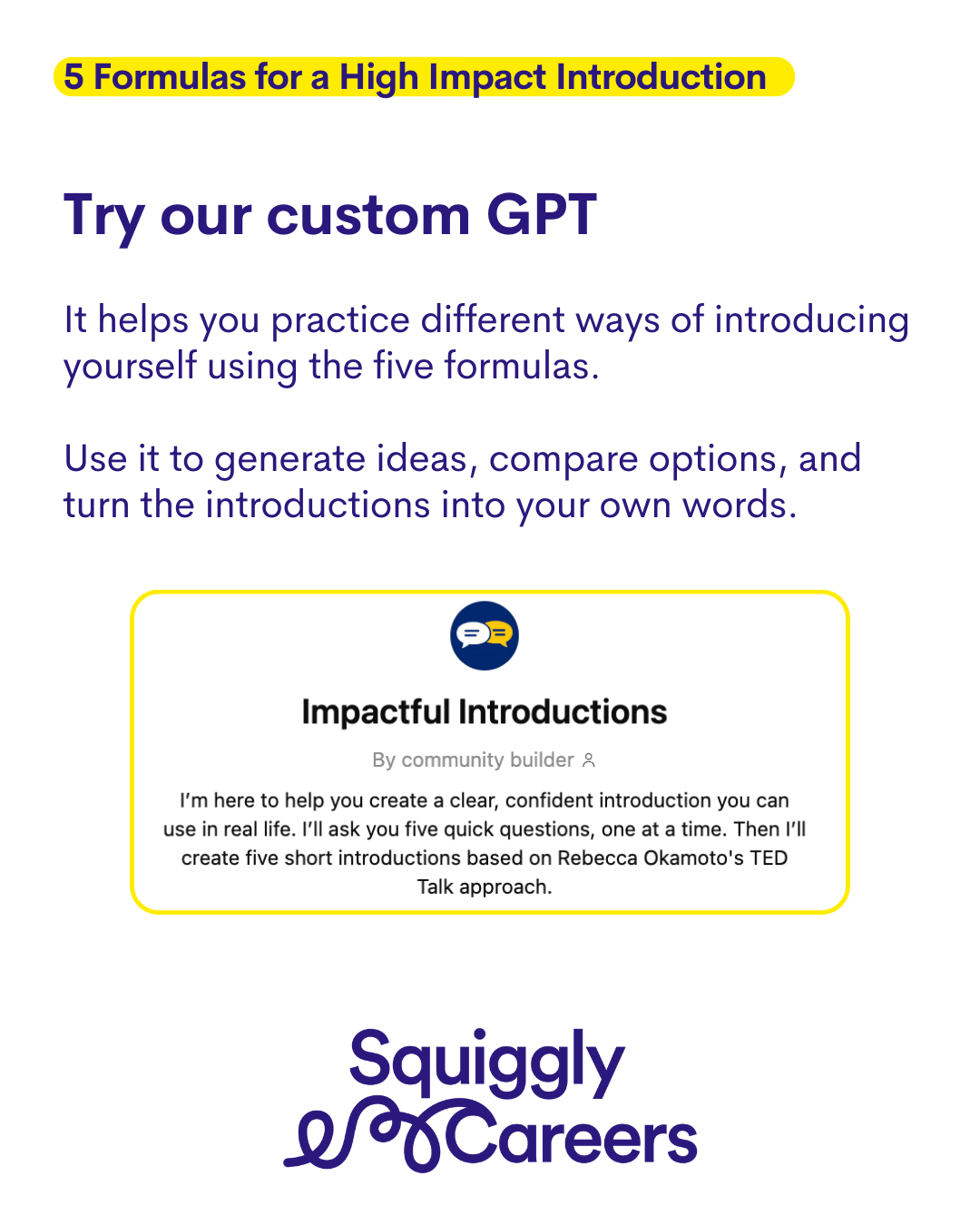
Sarah Ellis: Okay. Well, that's actually a good lead into what people can expect from listening today. So we are going to talk about the five formulas that Rebecca shares in her TED talks for how to get introduced. And so we'll talk about some common mistakes people make with introductions. We'll go through the formulas and we have both applied them to ourselves. But in the process of doing that, as Sarah said, I built a little custom GPT because I absolutely love doing those. Of course I did. I love doing it. And it is based on the content of the TED Talk and it will take the five formulas for introducing yourself, it will ask you five questions and it will then generate you five personalised introductions. So are they perfect? Probably not. I still think you might want to tweak some of them, but it does get you there quicker. And so we will put the link to the ChatGPT in the show notes. It will also be in the one page summary that we use for every of the. Every one of our podcast episodes. And if you can't find it, just message us, Helen and sarahquigglycareers.com, but it is a very quick way, I think, of putting what we're going to talk about today into action.
Helen Tupper: Yeah, I was thinking about this because I get nervous meeting new people. Once I've met someone once, then I'm absolutely fine. But for the first time is definitely just. It's not. I don't dread it, it's definitely not that level of anxiety, but it definitely makes my heart go faster, you know, like, I would almost, like, notice a bit of, like, adrenaline or kind of just needing to take a deep breath. Like, I would never want to feel rushed going into meeting someone for the first time. And I was thinking in those kind of introductions, which is probably the ones that I do the most. So through our work, I'm meeting someone for the first time. And to your point, I want to be heard. I suppose. We also want to be hired as a company. Right. So it's not like I'm asking them for a job, but we are asking them to partner with us. So it's just a different frame on really the same thing. And I'm always so mindful of I want to make a good impression, I sort of want to do amazing, if proud. So I really believe in what we do. So I don't doubt sort of the substance that sits behind what I'm going to say, but I would hate the idea of like, that not coming across in a way that feels like, credible or useful. So when I was going through this and when I was doing the. Using your GPT, like, that was definitely my filter, was almost like using a intro to make a good impression. Like, how do those two things come together?
Sarah Ellis: Yeah.
Helen Tupper: And also I think everyone has gremlins. Do you reckon people have. I was like, oh, I wonder what the connection is between this particular context and people's confidence. Gremlins. Because you know, loads of people's most common one is judgement or I wonder if they like me or what are they thinking about me? And I was wondering whether you worry about that a lot more like in this kind of context. I definitely. That's not even one of my gremlins. But it's the only time that gremlin sort of ever appears for me is meeting someone for the first time and I'll be like, do they think I am boring? Do they think I'm like, too enthusiastic? Oh, have I. Have I. Have I not given them enough opportunity to speak? Have I dominated the conversation? I think quite a lot of that chatter that, that we've talked about before goes through my head, particularly in this situation. So I was like, that was. That was the other little dot I connected as I was reading through this.
Sarah Ellis: It's interesting because I don't think I'm nervous meeting new people, but I don't think. Or maybe I think I could get better at introducing myself. I don't think I'm bad, but I think I could get better. And this whole podcast is, in prepping for it has made me think. I don't think I'm very consistent in how I introduce myself.
Helen Tupper: And.
Sarah Ellis: And I think that might affect. I don't know, I just don't. I think I just meet people and go, hi, I'm Helen.
Helen Tupper: I do.
Sarah Ellis: And I'll say different things to different people. Whereas I think what. What we're going to talk through is almost being a bit more strategic about the impression you want to create and how your introduction allows you to create that. And what I really like about the five formulas that we're going to talk about is I don't think all of them are right. I think you should. I think you should generate. I think you should use the ChatGPT thing to generate them so you can see. But some of them, I'm like, I would never say that. And. And you'll see that some of them are around strengths and passion, and I think I'm much more likely to say those. But even that is just interesting. And I think we'll just start saying that consistently. And then I think you can probably become more confident at introducing yourself because you already know what you're going to say at the start, which means that then you then just get into the rest, the rest of the conversation. And these, by the way, are designed to lead to a conversation. I think that's what Rebecca says in the TED Talk, that making a good introduction is the difference between someone saying Nice to meet you at the end of it. So I kind of do mine, just go, oh, nice to meet you. Like, end of chat. And someone's saying, oh, that's interesting. Tell me more. So the ideal is you have this, like, designed introduction that you can kind of rely on because it feels like you. And you're confident in it. That then results in a conversation rather than someone just moving on to the next person.
Helen Tupper: I was thinking about this because that. That point really stood out to me. And I had some feedback recently from one of our learning partners about how. Well, I had introduced myself to somebody new in their company. So I was really pleased with that. But then I was reflecting on it in relation to this and I was thinking, do you know what? I think I do? I don't think I get to tell me more. I think I tell them everything. So. Because what she said to me was, you do a great job of storytelling. So I think I do the. I can, like, describe the storey and, like, why we do what we do. And if somebody has the kindness, I suppose, and the patience to hear me out, then I think I'm. I'm convincing. You know, it's like. It's a. It's, you know, it's like, interesting to listen to. There are different bits that people can hook onto. There's a lot of interesting kind of things in there. But it's not. It's not like a short, succinct introduction to make it, you know. And often that is the. That is your. That's more common, I think, where you. You've got. You're in a meeting, there's six of you. You all have to go around and just kind of quickly say, like, who you are, like, why you there, what you do. And those ones I find much harder. I'm like, well, if you've given, you know, like, often it is harder to be shorter, you know, to say things in a really simple way. I think if I can tell a storey to make a first impression, then I'm fine. And I think I did this in interviews as well. When I did a lot more interviews, if I had that kind of an interview, I. I think I came out of it really well. If I had an interview where, you know, like, there wasn't much room around the edges, it was very prescriptive. I then think, I find that's harder. Cause it's just not as natural, my style. So I'm like. I don't think anyone has ever said, tell me more to me, like you've told me Enough. Yeah.
Sarah Ellis: And move on.
Helen Tupper: I think more likely that. More likely that.
Sarah Ellis: Well, maybe just to kind of frame these formulas a little bit. She does talk about Rebecca in the TED Talk. These are 20 words or fewer, so they are short. And I don't. I don't think that is right for every situation. You know, actually, I think in an interview, I might. I might feel a bit abrupt if I did that, like I do probably want to do, because I'm trying to create a bit of. A little bit of connection. But I think if you're going to an event and you're meeting someone quite quickly for the first time, I think you want to get to conversation quite quickly. Sarah, I think your thing is a really good point. Like if you're in a room, you know, the round the room thing.
Helen Tupper: Yeah.
Sarah Ellis: You definitely don't want to storytell there because it's. It's sort of selfish, isn't it, to use time in that way? Or one that is probably specific to Sarah and. But maybe other people could make a connection with. What they do is. Sometimes we'll be on someone else's podcast and they'll say before we kick off, helen, introduce yourself. And that I know, is they've already. They want. It's their conversation, they want to lead it. I shouldn't be dominating too much at the start, so that's got to be quite a quick thing. So for what we're thinking of, to make sure this feels useful for you, I would think about what are the moments where you relatively quickly need to introduce yourself and your work to somebody else and then which of the five formulas we're going to talk through feel most relevant to you and how you want to come across?
Helen Tupper: Yeah, spot the situation. That helps me spot the situation.
Sarah Ellis: So shall we go through the five formulas? I'll say what it is and then we'll.
Helen Tupper: Should I get my GPT ready? Do we. Do we do that as we go?
Sarah Ellis: Yeah, we're going to do that.
Helen Tupper: I think I'm just so proud of myself that I've done it.
Sarah Ellis: Yeah. So just on the five questions that GPT will ask you, it'll ask you a little bit about who are you most likely to make introductions to? Like, what is the work that you do, what the strengths you want to stand out. It'll ask you all those sorts of questions to generate this for you. And so Sarah and I have already done that to be able to give you our examples. So formula number one is called the benefit introduction. So the formula here is I help insert your who achieve. Insert your what. Okay, so you hear quite simple is a really short, simple. It's basically who do you help to achieve what? So Sarah, what was your, what did it generate for you there?
Helen Tupper: I help senior leaders grow their people's performance by making development practical, relevant and owned by individuals.
Sarah Ellis: Nice, nice. And to be honest, Sarah and mines are probably going to be quite similar because we're probably pretty much do the same job. I think I went a little bit broader on my who because I got, I help senior leaders in HR and L and D build learning cultures where people take ownership of their career development. How do you, what were your reflections on your, on your kind of introduction response?
Helen Tupper: I would never say that one.
Sarah Ellis: Tell me why.
Helen Tupper: Because I didn't like the emphasis on senior leaders because I was like, well, actually we believe in kind of democratising development developments for everybody. So I can't imagine ever saying those words out loud to anyone like, oh, well, we help senior leaders. And I, yeah, it felt not as inclusive as I think I would like to feel. The bits I did like was practical and relevant. Like I think I do use those words all the time and I use the word useful a lot, which wasn't in there but, but for me it just felt perhaps just not warm enough or human enough. So I, I, that one, I, I, I didn't connect with as much as some of the others. How about you?
Sarah Ellis: Well, my reflection on it was because it asked. I actually have a few different people I make introductions to, so I might need some different statements because sometimes I am introducing myself, I am introducing myself to senior leaders because that's who might sign off some of the programmes that you run and sometimes I'm, I don't know, introducing myself on a stage to people who are in the squidly career community. So I don't know if I could find a universal one for both, but I did think, oh, this is more tailored to one part of my work. And just a reflection on what Sarah said, I have trained the GPT. Once it's, once it asks you five questions and it generates them, I've trained it to end with a question back of like, is there anything you change? So it's, if you kind of, if you go, oh, it's not warm enough for me or you, at the end of it, you can then do that and it will, it will then regenerate them. So I do think the first pass is just for you to look at and critique and then if you want to, if you want to make it even more personalised you can.
Helen Tupper: You can give it a bit of extra. Yeah. Because mine gave me a recommendation that I disagreed with.
Sarah Ellis: What's your recommendation? Oh, are we allowed to, you know.
Helen Tupper: Once we go through, I'll tell you which one. But then I was like, oh, no, that's a tease. Or end the recommendation.
Sarah Ellis: Don't agree with. Do you know where?
Helen Tupper: I thought that first one could be good, though, and I wondered whether this would be true for us, because I definitely see it with other people is, you know, when you are making introductions, you know, like, there you were talking about on other people's behalf. So let's say someone we work with a company, I think they should know another company. Because I'm like, oh, they might be helpful, you know, being able to say, oh, I think these people, that's the who could help you. Because this is sort of what they do in a really clear and short way. And sometimes I have given feedback to people I know who I know do really good work, but I struggle to describe, like, who they are and what they do. And I was thinking, I wonder if people ever have that challenge with us because you want people to be able to easily recommend you, you know, so we. We know, for example, that sometimes people just describe us as like, they're the Squiggly people.
Sarah Ellis: Yeah, so true.
Helen Tupper: And we know, we, like, I have seen those because sometimes, you know, you end up seeing the emails or whatever. So you sometimes see something like, oh, you might know them as like the creators of Squiggly Careers, or they're the people who came up with Squiggly Careers. Um, and. And then it's. So that often helps us, I think, the kind of. The Squiggly Careers concept and the fact we came up to that and that has had a ripple effect that's useful. But I wonder then whether then people consistently know, like, the what. Like maybe what we can do for organisations. Because actually we don't talk about that as much. It's quite different for different companies. So I think maybe there is something in the, you know, like the who and the what, but perhaps more for. I was thinking for written who introductions rather than things you say out loud.
Sarah Ellis: Like so sort of benefit introduction, but brackets by recommendation, like so how people.
Helen Tupper: Can say like it.
Sarah Ellis: Okay, let's do the second one then. So this is the breakthrough introduction and it's a bit of a build on the one that we just talked about. So I help who. So your target audience. I help who achieve what. So, so far, so much like the first one. But the next bit is an interesting build without. And this is where you put a negative consequence in. So, you know, without taking up lots of time, without increasing the cost of what. Whatever that is, things. But sometimes for the breakthrough, then it's like, what's different about you? What's different about the way that you do it or the way that you work? So what did you get on this one? What was the. What was the. How did it change?
Helen Tupper: First bit was same. I help senior leaders improve people's performance without development feeling like another HR initiative no one owns. So that was the. Without it.
Sarah Ellis: Well, again, same bit. At the start, my without was. So I help senior leaders build learning cultures of people own their careers without thinking that progression only means promotion.
Helen Tupper: Okay, I would say that one. I do say that this the one that you got.
Sarah Ellis: I don't.
Helen Tupper: I don't ever. I mean, I don't ever say to HR people without it feeling like another HR initiative. Because I'm like, I mean, that feels a bit harsh. Doesn't it just feel brutal, what I do say. And I mean, I have said this recently. You know, sometimes with our work, I will say to people, you know what we don't want this to be is another initiative that kind of appears and disappears. Like, we don't want squiggly careers to be a flash in the pan, for example. And I'll say that about us. So I can see where it was trying to get to what I like about this one, but I think I would call it something different, is you are spotting a problem that might get people to nod. And I do think people connect to problems. So when we say to people, progression's gotta mean more than promotion. Now everyone's like, definitely. If I say, you know, we don't want this just to be a programme for this year, and it's gone the year after because we'll have put loads of effort in. So we want it to kind of go beyond that. Everyone goes, yeah, progress. Because we've all done those things, right? We've done those things that didn't last as long as we wanted them to. So I think having. Having a problem that you are interested in or a challenge that you're grappling with or attention as part of your introduction, I think is interesting. I just don't know if I'd describe it as like a breakthrough introduction. To me, it's more of like a problem introduction.
Sarah Ellis: I prefer this one to the first one. If your aim is for someone to say, tell me more, I think you are More likely to get that one with this one. Because people are like, oh, like you said, they identify with the problem that you're solving and they kind of want to go, well, how do you do that?
Helen Tupper: How do you do it? Yeah, that would be like, how?
Sarah Ellis: Well, I want to know that.
Helen Tupper: How do you do it?
Sarah Ellis: Is most likely to be the response there. Okay, so that one maybe gets a kind of a higher rating from us. The third formula then is the passion introduction. And when I was sort of reading about this, this passion introduction is particularly good for people. I don't know, maybe they don't want to lead with their role, maybe because maybe that passion isn't actually the job that they do right now. It's something I'm thinking side project. Helen and Sarah, you know, when we were doing jobs that were not, you know. Well, I was about to say, not we're passionate, we were passionate about our jobs, but we did this on the side.
Helen Tupper: But maybe not quite as passionate as we were about learning and development.
Sarah Ellis: And we might have been introducing ourselves to people who are more connected to our side project. And so our day job was less relevant than the one that we were doing to help other people develop.
Helen Tupper: This one also made me think of people who on LinkedIn describe themselves through their passion either, like, they've changed it so they haven't got a job title in the same way, and they've they using a description which tells you what they really care about, and they do that in their summaries as well. So back to this doesn't always have to be things that you say. This one struck me as, again, something you might want to use on LinkedIn, depending on, you know, for whatever reason, if you can't choose your title or you don't connect with your title, and obviously we always want talents to be more than titles. I felt like this was a different way into talking about, you know, the things that you care about.
Sarah Ellis: Yeah, I love that. And when we're thinking about quick introductions, like we said at the start, like the going around the room, I think LinkedIn, if someone's going on your page, that is effectively a quick introduction. And so actually having. Having this at the top is. I might have a relook at mine. So how do we get to this one, though? The formula for this one is I'm passionate about insert the thing that you're passionate about to achieve what your audience values. And so I'll maybe give you mine here and see what. How different here. So I had. I'm passionate about helping People build confident, flexible careers to achieve success in a world where work keeps changing. And my, my reflections on this were. I think I could. I, I liked the formula. I quite like the formula, but I thought I could probably write that one better myself. I felt like. Or probably some words I use, you know, because passion is so personal. I felt like, oh, you're not going to be able to get, get these words out of me as good as I can get them. So I like the formula and it was a start, but I would definitely want to make this one sound a bit more like me.
Helen Tupper: Well, I think my problem was I am never going to say the words I'm passionate about. What would you say instead? I mean, anything but that.
Sarah Ellis: But okay, I enjoy doing what's sort.
Helen Tupper: Of like going, oh, I love. You're like, well, I'm never going to. I, I don't like those kind of lofty statements. I don't think about, about like work in that way. So I would just never say out loud to someone I'm really passionate. I just, I just wouldn't. Maybe that's also a bit of like a British cultural thing. But I was like, I would say.
Sarah Ellis: I really care about. In fact, I have said that to people. I say, definitely say I really care about democratising development. I really care. I go out learning without levels of work. I definitely say that I do care.
Helen Tupper: I'm trying to work out whether I would ever actually say those. Just trying to work out what you'd say.
Sarah Ellis: I don't know this.
Helen Tupper: So that's what, that's why I struggled with this one because I was like, what would I actually, you know, like the words that I would say in real life. And yes, this one caused a few problems for me. I mean, it didn't get it completely wrong. I mean it talked about, I'm passionate about realistic career development. I was like, that sounds a bit more like me realistic. And then it went back to the senior leaders thing again. But I think because I got caught up in like passion and introduction and I was like, oh, no, that's just jarred a bit. Yeah, it just jars and something I can't connect to, you know, like, if you get to the point where you're like, it's never, it's never going to work for you. So, yeah, I crossed that one off. I didn't like it.
Sarah Ellis: So Sarah didn't like the passion interest. I, I didn't mind it, but like I did. Of the three, I thought the first one felt too blunt. So the benefit and the breakthrough felt the best so far. The passion, I didn't mind, but needs a bit more work. Let's try out the fourth.
Helen Tupper: Let's try the fourth.
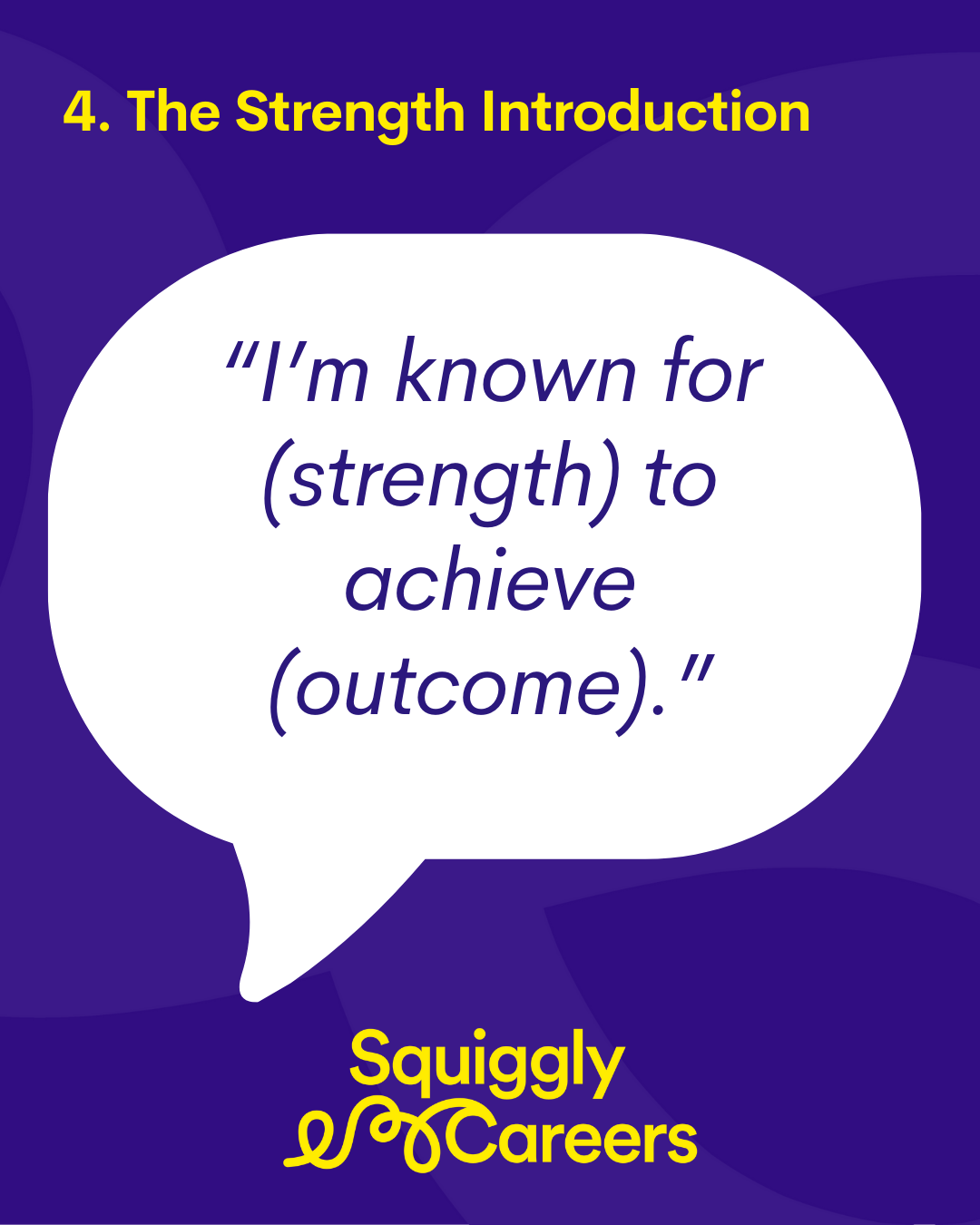
Sarah Ellis: So this one, the fourth formula is the strength introduction. Let's see if this one resonates with you. So this one starts with. I'm known for. Insert what you all want to be known for to achieve. Insert the outcome that you want someone to get from the thing you want to be known for. So what did. What did you get here?
Helen Tupper: Well, I also don't like saying I'm known for. I think it sounds really arrogant. Oh, like I'm known for this. I hope you all appreciate this. This is what I'm known for. So that bit, I didn't like that bit.
Sarah Ellis: No, you can tell Rebecca.
Helen Tupper: Well, I mean, I do think it is important for people to know what they want to be known for. You know, when we talk about strengths and intent versus impact, it was just the idea.
Sarah Ellis: If you meet someone, say, hi, I'm Helen.
Helen Tupper: I'm known for.
Sarah Ellis: I'm known.
Helen Tupper: So this one, by this point it was like 8:15 and I got a coffee. So my critical thinking brain had kicked in and I was getting a bit more crit as I was going through.
Sarah Ellis: Let's see what it generated and let's see if I can make it sound more like you.
Helen Tupper: I'm known for making career development useful and relevant. So senior leaders see real performance improvement from their people.
Sarah Ellis: Oh, well, I mean, I know you don't like the senior leader thing, but in one context of our businesses, I actually really like a lot of that.
Helen Tupper: Yeah, I like the words useful and relevant. I think I put those into the.
Sarah Ellis: And I like people and performance. It's obviously not just what we're about, but I do think, you know, I do think if you make careers more appealing for people because they have more opportunities, they. That pays off in engagement, retention, recommendation, lots of which I think translate to performance. So I do. I do believe it.
Helen Tupper: Yeah. I think I would always actually, funnily enough, want to zoom out a bit more, which is slightly more passion territory to talk about squiggly careers really early on, if I'm ever introducing myself, I think because squiggly careers is the a. The thing that sometimes people say tell me more because they've not heard about it or sometimes this is a real bonus for me. If they have heard about it. Great, because then they just start asking questions and then you're sort of. You've created a connection. So I often think I would start, you know, I think the strengths one feels a bit too much about me, you know, versus I kind of want to talk about something that I do care about and I'm proud of, which is this like the idea and the concept of squiggly careers which I then think we have made that useful and relevant for people and companies. But I think starting off with me just feels a bit like oh, hello, I'm meeting you. Let me tell you how great I am. And that made me a bit uncomfortable. What did you say?
Sarah Ellis: Well, like I said, it said the said I'm named for turning career development to practical everyday learning to achieve real growth managers can actually deliver. So again, I don't, I don't the words are right for me, but here. But I would say I'm known for energy. Like if I actually thought I do like the formula. So And I would say that I would say I'm known for energy, which helps. That's why I would rather than say to achieve, I'd probably say which helps to engage people in learning so they are more likely to take action. So that's. I, I believe that and I think I would say it so that's a.
Helen Tupper: Better way of doing it. You know, just writing that down as you were doing that. So you're like if, if you, if you do it that way that you just described. Because then I could get to, in my, in my head first. You get to, oh, well, I'm known for ideas that helps me to make career development useful and that people can then turn that career development into action for their progression or whatever it might be. I wonder whether you have to do it as like a, almost a two stage process. So actually listening to you going through this and I've not watched her talk, but I know that you have. I feel like the formula gets you the data, you know, like the, well, what are you known for? How do you use that? What's your who and what's your what? And then you can turn it into like your version. Whereas obviously what we've done for the first one is it's then just sort of spat out the. Using those exact phrases. But I think probably the usefulness here comes from, for each of these formulas. Actually can you answer those questions? Because I think all of them are helpful to know the answer. It creates clarity, right? Knowing the answer to each of them. And then you've just got to turn it into like the words that work, that work for you rather than going, oh, I don't like the strengths one because it's a bit ego y, which is kind of where I went first. If you just actually go with what would the answers be? Then I think you can do something with it.
Sarah Ellis: I often think you're coming at it, but I do think, you know, when things jar with you, you know, you're like, oh, I don't like that word. I always think that's a useful thing to pause on and go, oh, why don't I like it?
Helen Tupper: Why not?
Sarah Ellis: Which is completely valid that people can like and not like what, whatever they want. But what would I say instead? You know? So I think it's almost useful to find the things that you like. Oh, I definitely wouldn't say that. But then to sort of, like, work out what's. Why is it uncomfortable? What could. What could better sound like? So we've now got one more. We've got our final. Our fifth formula that you can use to introduce yourself, which is the mission formula. This one sounds kind of big.
Helen Tupper: Let's see.
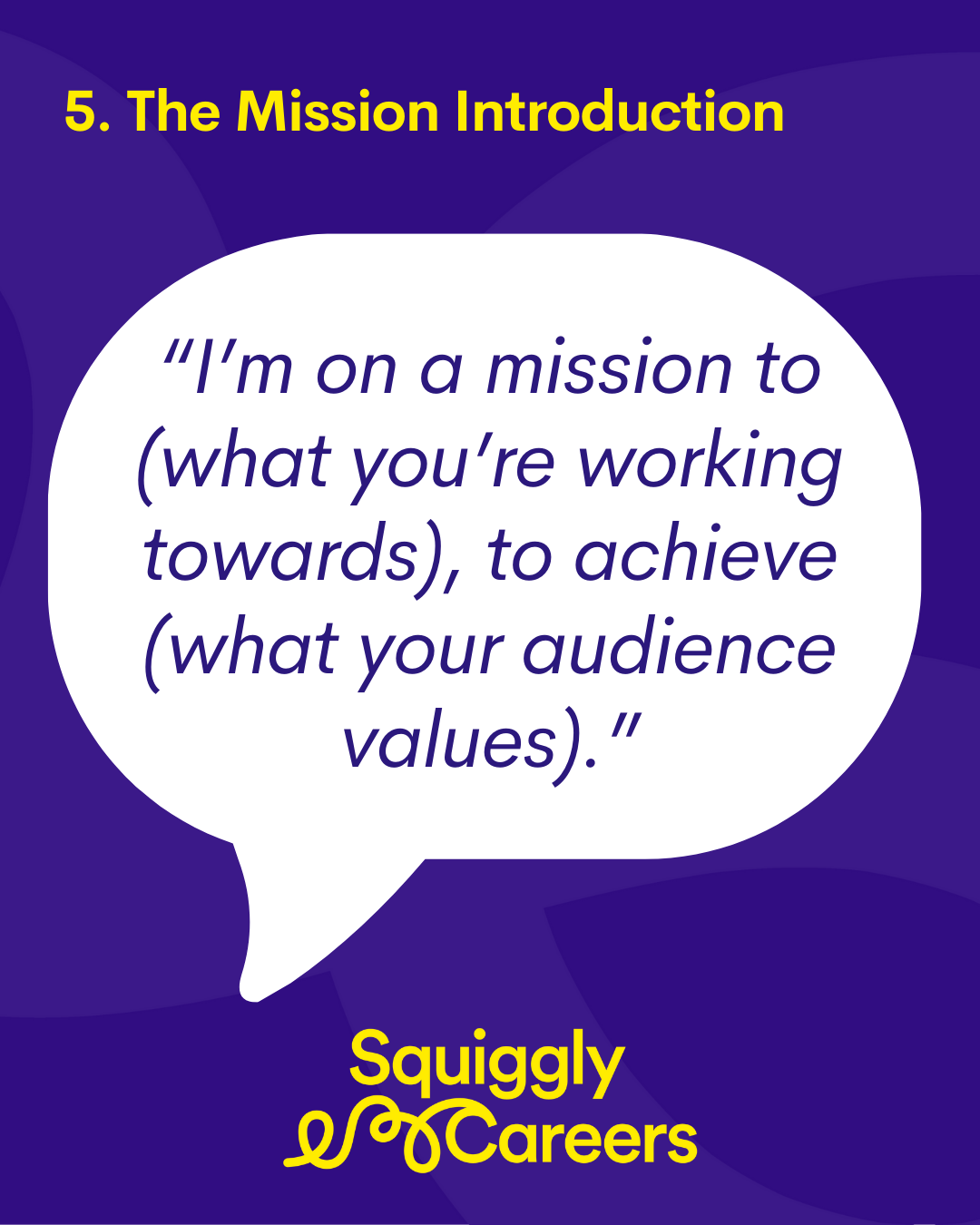
Sarah Ellis: Let's see what you think. So the mission formula starts with, I'm on a mission to. I can't wait for Sarah's thoughts on this one. I'm on a mission to. And then insert what you're working towards to achieve, and then whatever your audience values. And so I got here, I'm on a mission to replace outdated career ladders with squiggly career systems to achieve skills, ownership and momentum at scale. And I was like, oh, it's the first time I thought of squiggly career system. I never. I never used that word. I was like, what does. What could that mean? Was my thought. But I quite liked skills, ownership and momentum at scale. I was like, there's something in that. I tweak it a bit more. But I quite. I quite like the succinctness, the scalingness. There's a bit of energy in that that I think I could work with. Would I say that statement? Maybe not a version of it, though?
Helen Tupper: Yeah, well, I suppose that's the point. As we're going through this, you don't have to take it literally. You don't then go and have to say that exact statement. Like, I don't say I'm on a mission, but when I'm describing squiggly career as an amazing. If I do say ambition, which is quite close. So often when I'm introducing us and Helen and I rarely do this together, so Helen's like, oh, interesting. If I'm introducing us to, like, a new potential learning partner somewhere in the World, I will say so as a company, we're an ambition to make squiggly careers better for everyone. And like, then I'll say, and what that means practically, I think that's how I often follow that up. And what that means practically is about, you know, helping people to learn as they go. Really helping people with, like, how they can take ownership for their career development, making progression more than promotion. That's where I think I probably, like interchangeably say different things after that bit, but I pretty much. But I do say that first bit. So even though if you just said to me mission, I would have gone, oh, no, that feels a bit too lofty. But yeah, I do say ambition. Funnily enough, that's not what the GPT got me to. But also that's partly because of what I put into it. So I was thinking you could go back because this took. It's really, really fast to do. The GPT was. I did it really quickly. And so I think you could also do it from a few different angles and obviously you'd get some quite different prompts back in return. And also, if I looked at my LinkedIn, like, I do use those words, I think probably the mission one is actually probably closest to some of the things that I would actually say.
Sarah Ellis: Yeah.
Helen Tupper: So it's not the recommendation that I got at the end.
Sarah Ellis: Ok, we're coming on to your recommendation. I really like your mission to ambition swap. I think I feel more comfortable saying my ambition or ambition is that just. That feels better than mission. Yeah.
Helen Tupper: And also I think it's good to be ambitious. So that's, you know, that's a contentious word. So some of you might be listening and be like, oh, I don't. I know that some people don't like the word ambition.
Sarah Ellis: Yeah.
Helen Tupper: And can feel quite uncomfortable with it. But I think I am. I am comfortable with it and I. I am ambitious and I want amazing if to be ambitious. So I think because you believe in it, you can say it with confidence and credibility. You're like, yeah, that is our ambition. And do I think we'll ever be done, like, no. But do I think we will always keep striving to get closer and closer to that ambition? That's when I feel like I could probably get quite enthusiastic and start telling lots of people about squiggly careers for a long time.
Sarah Ellis: So I want to end with Rebecca's advice to ask a question and follow up. So you kind of introduce yourself using a version of one of these formulas and then you ask a Question. But before we do that, I want to hear. Because it is built. If you do choose to use a GPT, it is built to give you a recommendation. And I'm very intrigued by what Sarah disagreed with. Go on, what did it say?
Helen Tupper: Well, mine said to use the breakthrough introduction.
Sarah Ellis: Oh, okay.
Helen Tupper: Which, with what it wrote, obviously I'm never going to say to hr. I'm never going to criticise HR directly in that way. That doesn't feel like a smart. A smart thing to do. But thinking about it, if I took away exactly what it had written and went back to, like, the formula, I am very attracted to solving problems, spotting problems, being very transparent about things that are not working, going well, like, let's, let's look at those and let's see what we can do differently. Like, I like constraint thinking. I think it helps you to be, you know, curious and creative. So actually, it probably is the area that I'm most like, interested in. I think I use the Ambition Mission one the most, like, at the moment. So I think probably initially when I read it, I was like, oh, that feels really far away. But actually, having talked it through, I'm like, actually, maybe not. It probably is the most like me. What did you get?
Sarah Ellis: I actually can't remember, to be honest. And I'd have to. I'd have to look at it and distract myself in this conversation. I didn't. Obviously nothing that was so compelling that it made me remember it. But my reflections on it are. My top three are the breakthrough one. I quite like, to your point, the problem solving. I do like the strengths one. If I'm just sort of introducing myself. And I do like the mission, which I'm now going to call the ambition ones, they're my top three. Three. And my reflection is I would use those in very different situations. So if we're talking to companies and we're basically talking about how we can help them with our work, I'd go breakthrough. If I'm in a big, like a stagey moment or I'm on a podcast or something like that, I would use the ambition one. Like, you know, if people were saying, tell us a bit more about you and your company. I do that one. And if people were trying to get to know me personally, like, oh, like, tell me a bit more about you, then I'd probably do the strengths one. So I think. But I think having them written, you know, just confidence, clarity and consistency. If I got those written with the words that I really liked, I think it would. I'd feel I Don't know. I'd feel like I'd done myself justice in those situations.
Helen Tupper: Yeah, yeah, yeah. And you said she recommends asking a question.
Sarah Ellis: Yeah. So again, back to. You're introducing yourself to create a connection that results in a conversation. So if you are just introducing yourself, someone say oh, that's nice, and they walk away.
Helen Tupper: Who?
Sarah Ellis: It's kind of, you know, we haven't quite got to like the tell me more thing. So a way to do it is once you've done your introduction, remember these are short introductions. We're going to ask a follow up question which can either be quite a generic one, so how are you finding the event? Or what is it that you do? So something quite generic. Or it could be specific to your introduction. So mine might be how are you supporting career development in at the moment? Or I might say, what problems do you think you've got with progression in your organisation?
Helen Tupper: Yeah.
Sarah Ellis: And so you quickly connect what you've talked about to them. So it drives a conversation. And again, I don't think I have thought consciously about quick introduction, follow up question to create connection. I don't think I've thought that before. So I did think that was quite a useful ending of it.
Helen Tupper: Yeah. Because you could say to somebody, these are the problems that I'm really interested in working on or solving and there are two or three. And then you could explicitly ask the question, which of those feels most familiar for you? Or is there something different that I've missed that's kind of really on your mind? And then someone goes, oh, it's definitely the progression promotion one. And you're like, okay, let's talk about that. Or I think if it was more informal like we're doing a lot of events in a few weeks time when then like a lobster comes out and we'll be both be meeting lots and lots of people in quite a short space of time. I would then always ask a question based on what we've been doing. So, oh, what one thing really stood out for you from listening to the speakers? Or when did you first start listening to the Squiggly Queers podcast? And someone might say, oh, imagine I've never listened actually I just thought I'd come along. Oh, but you then sometimes get people going like, oh, I've listened, I listen in an ad hoc way. Or I've listened since the very start and I always find it really interesting to hear people's like listening habits but also how they use the podcast. Yeah. Because I think for our community it's always it is quite different too.
Sarah Ellis: Oh, my gosh. We should do a little post on that because I feel like there could be some really intriguing insights because you always get like the, I don't know, walking the dog, but then you get some really curious ones. They're like, oh, squiggly careers on a kayak. And you're like, never. Yes, I never knew. So I love it. In fact, if you are listening now, um, as well as on a kayak. Yeah, hope you're on a kayak. But if you are listening now, we would love to know, like, where you listen to the podcast. Email us helenand sarah squigglycareers.com because I think I could create a very fun post on social media with all the, like, you know, pitch of a dog, pitch of a kayak. Let's see how random these listening moments and places are.
Helen Tupper: And lots of people probably commuting and walking their dogs.
Sarah Ellis: I can do a train too. I could do a train in a car. I could do. I could do that too. Um, so thank you for listening today. We hope you have found it useful. We will summarise those five formulas in our pod sheet. As I said, you can download that from our website, which is amazingif.com we also put that in our weekly newsletter, Squiggly Careers in Action. So make sure you're signed up for that. We'll put the link in the show Notes that comes out every Tuesday has all the links to listen and watch the podcast and the pod sheet too.
Helen Tupper: Thank you so much for listening. That's everything for this week and we'll see you again soon. Bye for now.
Sarah Ellis: Bye, everyone. Sam.
Sign up to the Squiggly Careers Newsletter and get our latest ideas, tools and inspiration every week - all in one place, straight to your inbox