
Most people wait until they’re ready to make a career move before having career conversations.
In this Squiggly Shortcut, Helen shares the only script you need to make curious career conversations feel less daunting and a lot more useful.
🎯 What You’ll Learn
– What a curious career conversation actually is, and why having them regularly (not just when you’re ready to move) makes a real difference
– How to make the ask in a way that’s low pressure and easy to say yes to
– Three questions to structure the conversation: one to get people talking, one about strengths, and one about future-proofing your skills
– What to listen out for in each answer, and how to use it to work out whether an opportunity is actually a good fit for you
For questions about Squiggly Careers or to share feedback, please email: helenandsarah@squigglycareers.com
Need some more squiggly career support?
1. Download our free careers tools
2. Sign up for our Squiggly Careers Skills Sprint
3. Sign up for the Squiggly Careers Newsletter, a weekly summary of the latest squiggly career tools
4. Order our new book, Learn Like a Lobster.
Helen Tupper: Hi, I'm Helen from the Squiggly Careers podcast, and you are listening to one of our Squiggly Careers shortcuts. These super short episodes are designed to be easy to fit into your day and also easy to take action with straight away. And today I'm going to talk about the only script you need to get started with a curious career conversation.
So one of the things that we notice when we're talking to people is that people can sometimes be quite reactive about the conversations they have about their career. So they can wait until they decide they don't want to do what they're doing or they've seen a job that they want to do. They're sort of waiting for that moment. Whereas what we would recommend is that you are continually curious about your career because it is very likely that it is the connections that you make and the conversations that you have which will get you closer to the possibilities that you want for your career. So if you're not making those connections and we're not having those conversations with, we're always keeping those opportunities a bit further at distance.
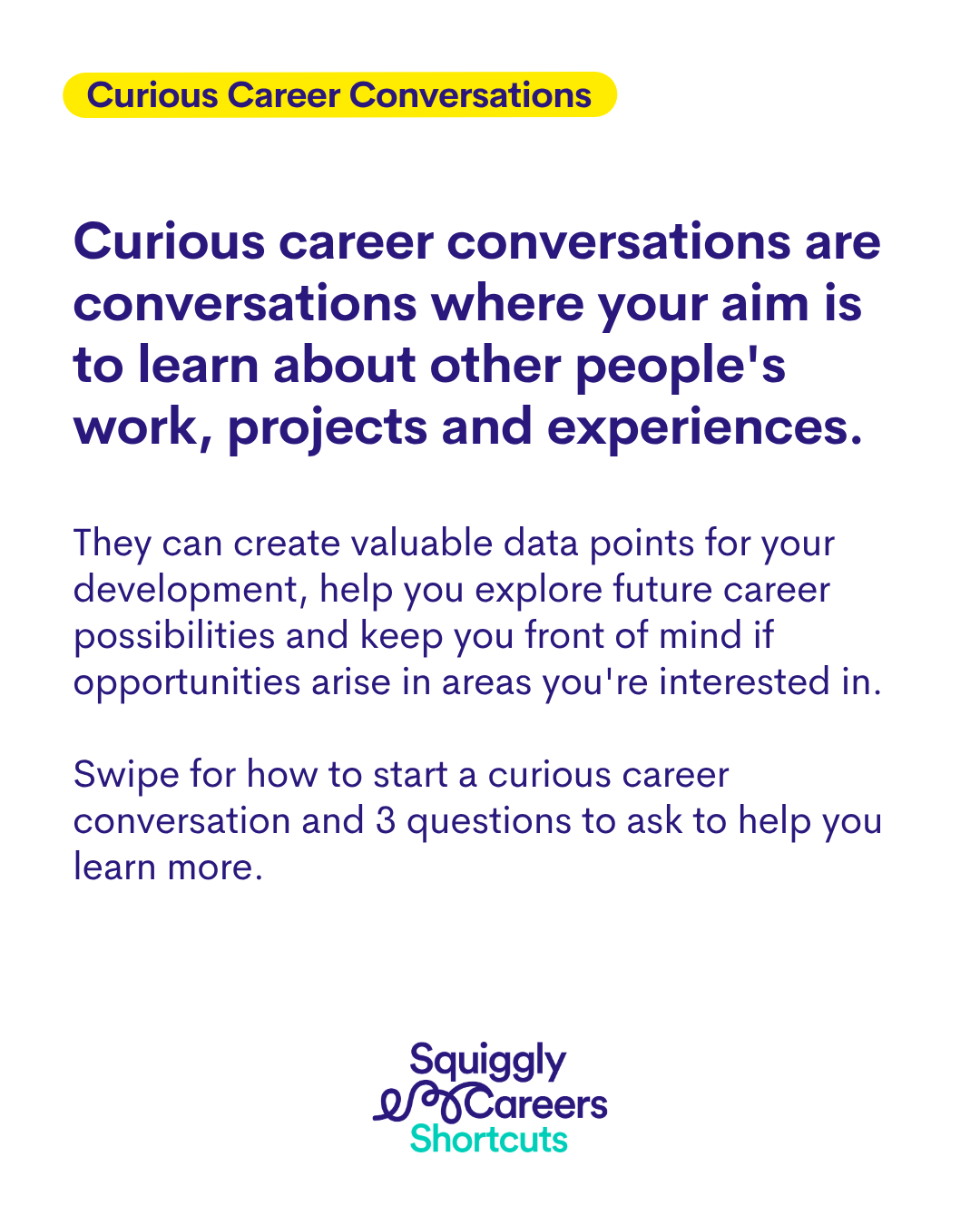
So curious career conversations are when you go and talk to somebody about the work that they're doing, could be a project they're working on, could be a job that they're doing, could be a company they're working in, and your only aim in the conversation is to learn to learn about them, the company, the work. You're not necessarily coming away with any actions, you're not really making any asks you, you're just going in with the intent to learn. And this can create some very, very helpful data points for your development. And it can also mean that you can plant yourself in people's minds so that if there is an opportunity in an area you're interested in, you're more likely to be considered. So that's why curious conversations are really important.
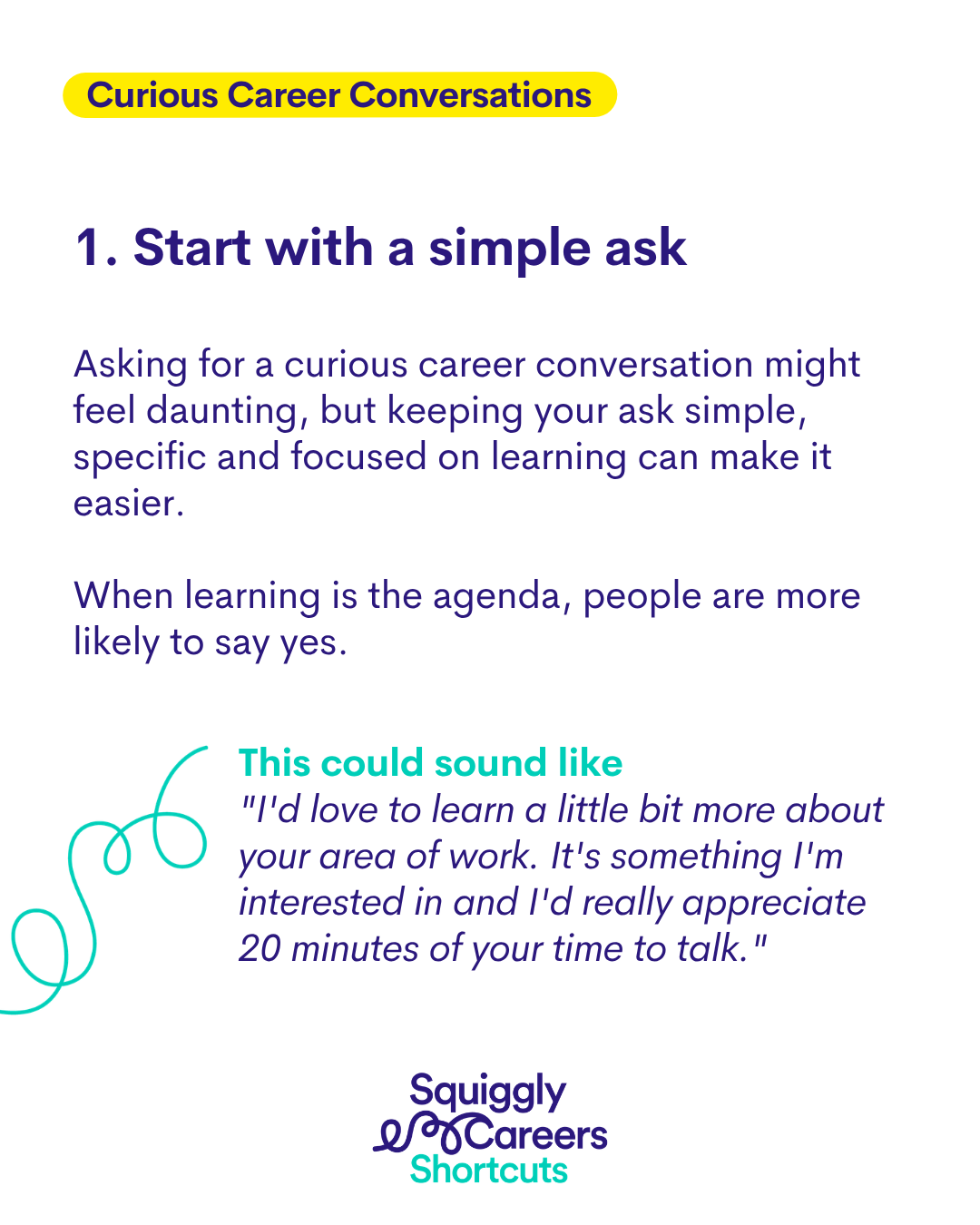
Now, Sarah and I also know that it might take a bit of confidence to have these conversations, to reach out in the first place and then to think, well, what do I talk about when I'm in this conversation? So reaching out, I would suggest you just get in touch with somebody via email or via LinkedIn, or even better, perhaps ask for an introduction and just say, I'd love to learn a little bit more about your area. It's something I'm interested in. I'd really appreciate 20 minutes of your time to talk. Like a low pressure ask, make learning the agenda. And then they're very likely to say yes. If you're very specific about that ask.
So you're going to go into the conversation and there are three questions that are going to help. Clearly, you can ask more than three questions, but if you're feeling a bit nervous and you've not done this before, it's helpful to start with a bit of a script.
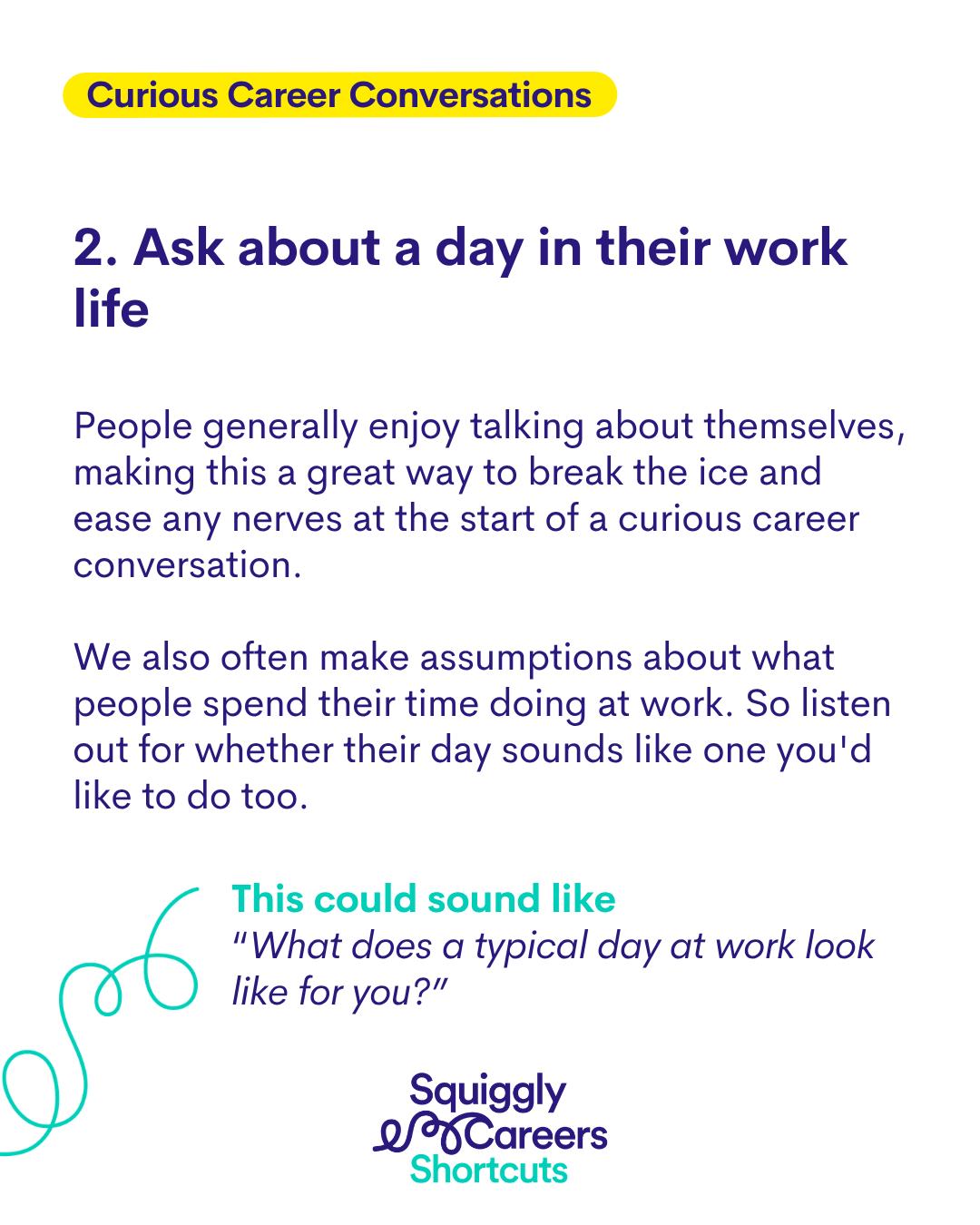
So question number one, I would always start with, can you tell me a bit about a day in your work life? The reason this is a good question to start with is people generally quite like talking about themselves. So it gets rid of any awkwardness or weirdness or nervousness straight away. And what you are listening out for when they are responding to that question is, is, does a day in their work life sound like a day that you would like to do? And we often make assumptions about what people spend their time on, so this can challenge some of their assumptions. Now, clearly, you don't need to tell them. You don't need to say, gosh, that sounds awful. That's not for me. You're going to keep that learning to yourself. But it's a good question to get started with.
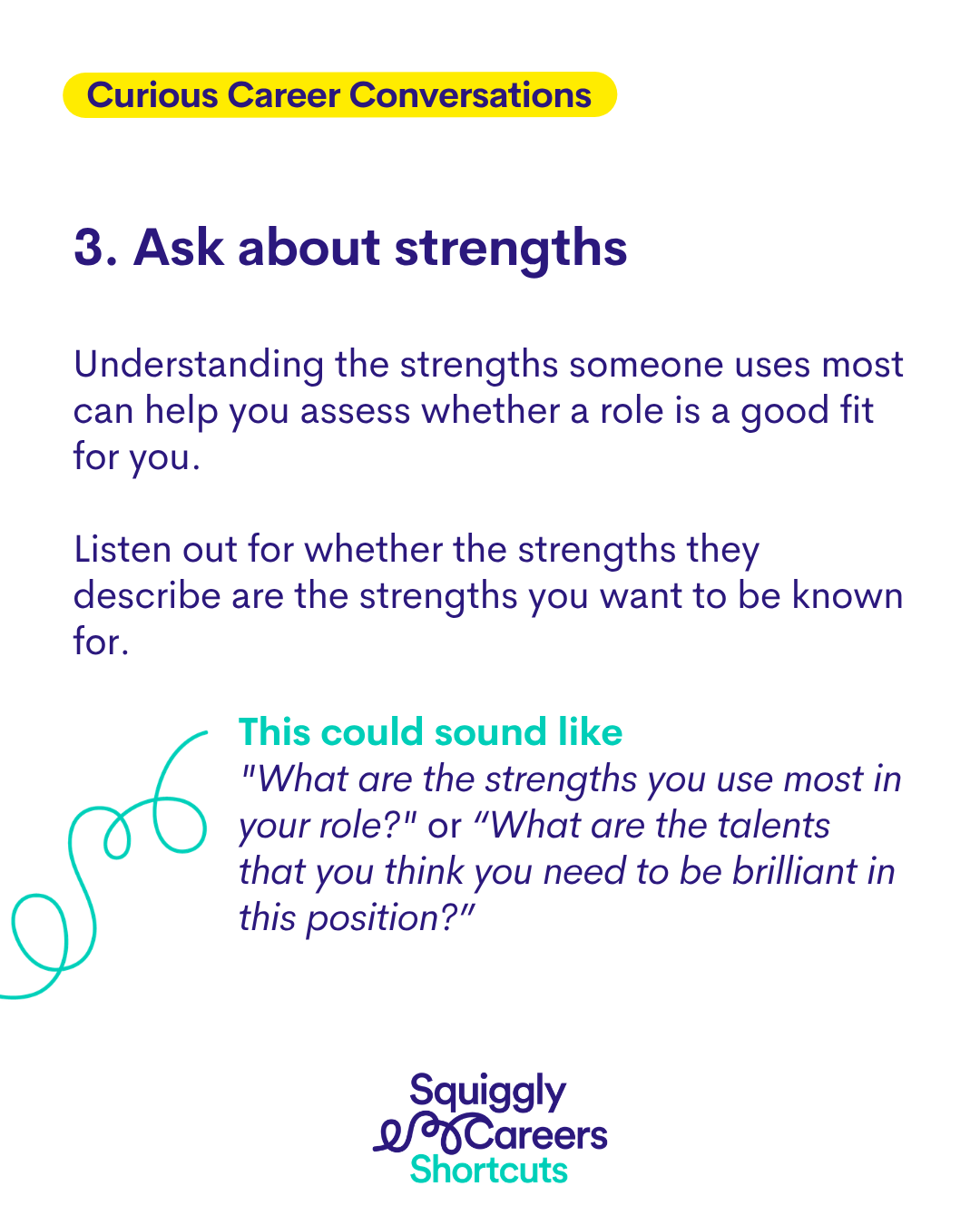
Second question, I would always ask something about strengths. It might sound like, what are the strengths that you use most in your role? Or what are the talents that you think you need to be brilliant in that particular position? But something about strengths. Now, the reason that you want to ask that question is because in your mind, you're thinking, does that job need what I want to be known for? Because if this is going to be a good fit for you in the future, you really want to make sure that the strengths that you want to be known for are what a particular project or a position needs. And. And until you learn from what strength someone else is bringing to it, you don't know whether you're gonna get that sense of fit. So always ask something about strengths. Now, let's imagine that the day they've described sounds like a day you want to do, and the strengths they need are what you want to be known for. These opportunities are currently getting big ticks for you in your career.
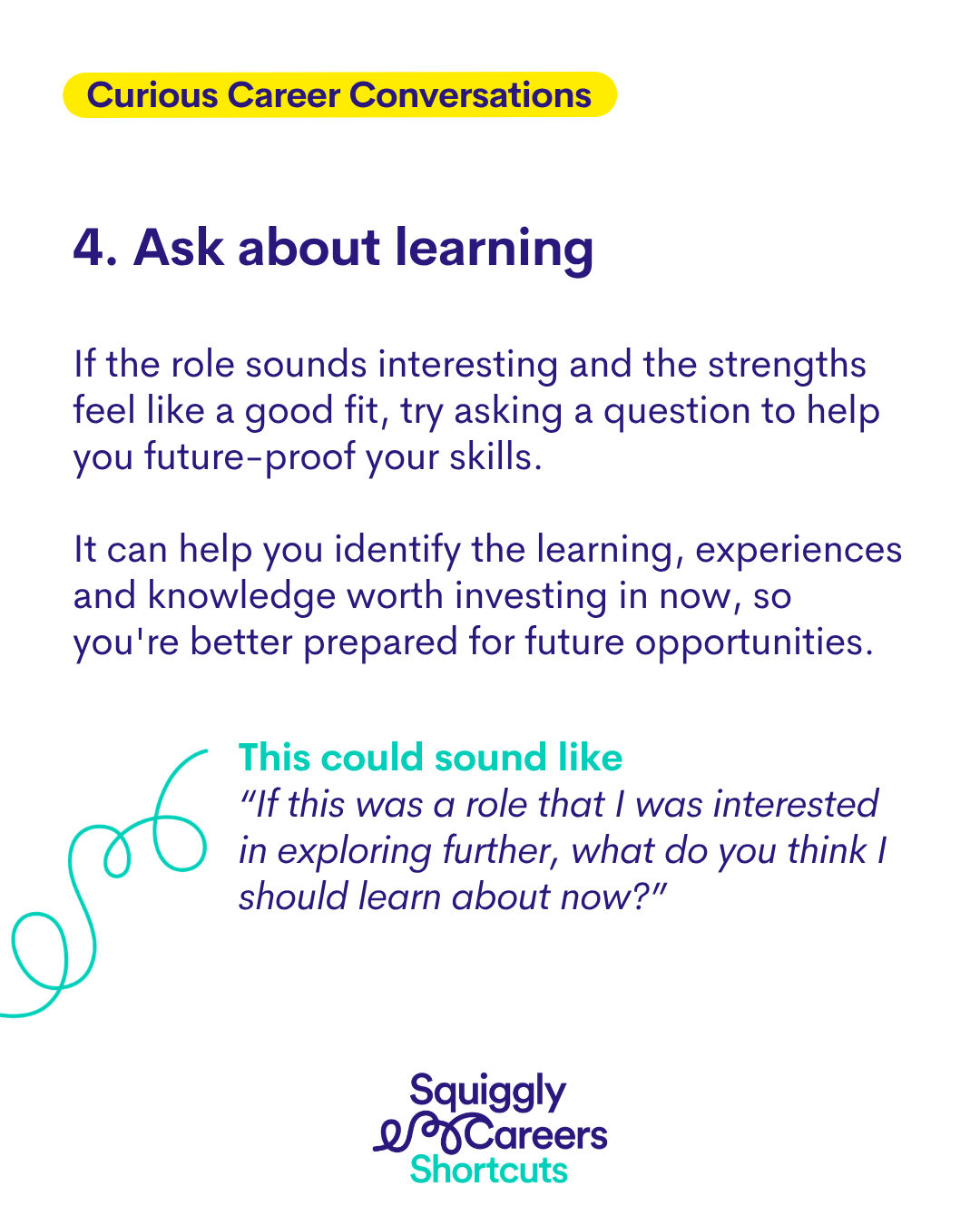
So we're gonna go in with the third question. This one is much more about learning. It's about future proofing your skills for these opportunities. So the question here, I would go and say something like, if this was a role that I was interested in exploring further, what more do you think I should learn about now? And understanding that helps you to proactively spot skills, experiences, areas of knowledge that are useful for you to invest in now, so that when these opportunities are available to you, you've already got that knowledge that you need. And in the course of the conversation, not only are you building a better connection with the person that you're talking to who might have access and influence over the areas you're interested in, you're also getting the insight into is this a good fit for me? And sometimes you'll have those conversations and you'll realise it isn't a very good fit for you, and sometimes it might be the perfect fit for your future, but it's the conversations that unlock the insight and the connections that are going to get you closer. So I really hope that this has inspired you to go and schedule a curious career conversation and that you're going to be a bit more confident now about how to structure that conversation and that you're going to get an awful lot of learning from it. Thank you so much for listening to the Shortcut. We'll be back with you with another episode soon.
Sign up to the Squiggly Careers Newsletter and get our latest ideas, tools and inspiration every week - all in one place, straight to your inbox


