
In a world that keeps telling you to learn faster, what if slowing down was actually the smarter move?
In this Squiggly Shortcut, Sarah makes the case for slow learning, and shares three questions and three actions to help you get started.
🎯 What You’ll Learn
– Why slow learning and fast learning aren’t competing, they’re complementary
– Three questions from the beautiful Slow Learning website to help you zoom out and reflect on how you learn
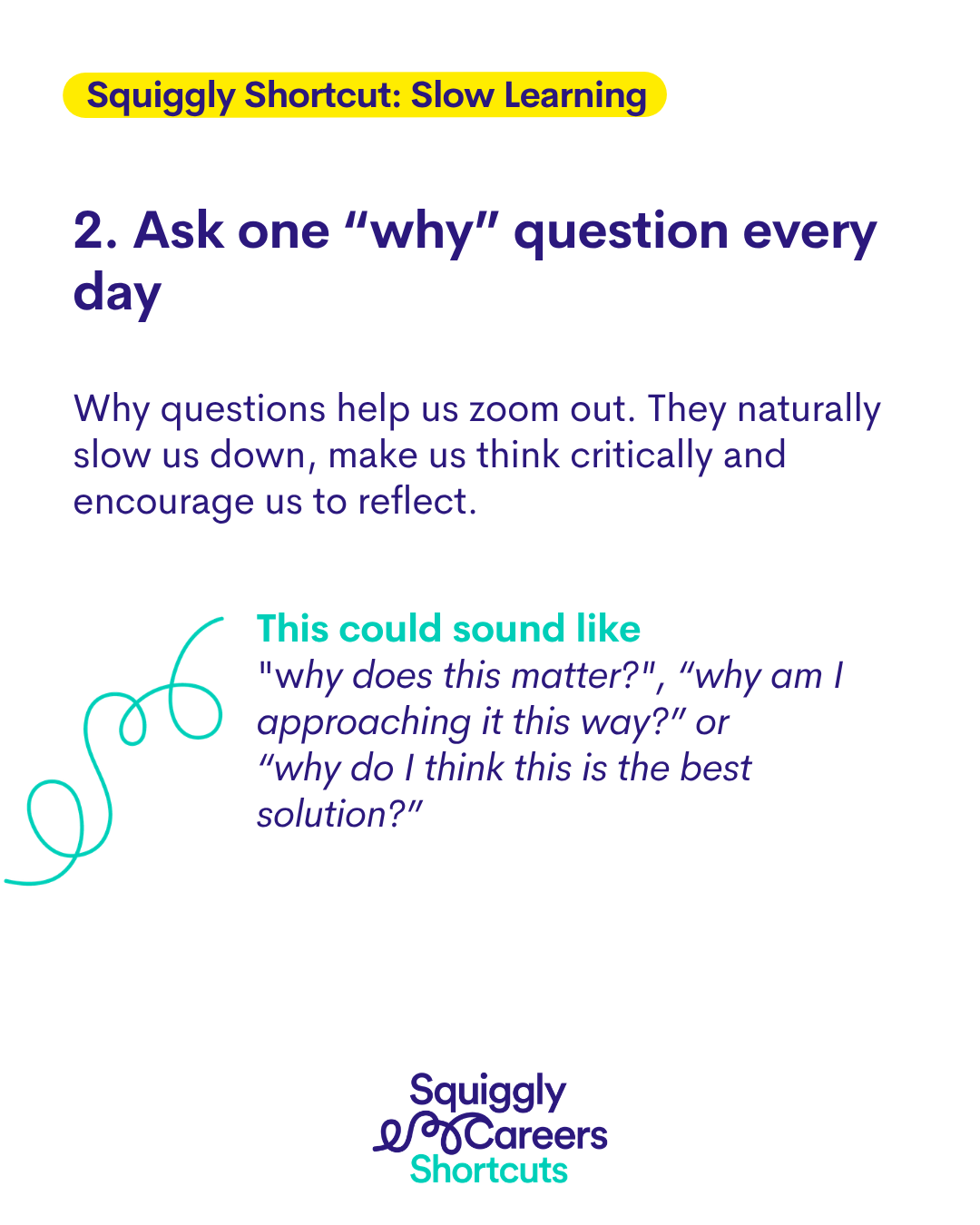
– Why asking one “why” question every day is one of the simplest ways to slow down your thinking
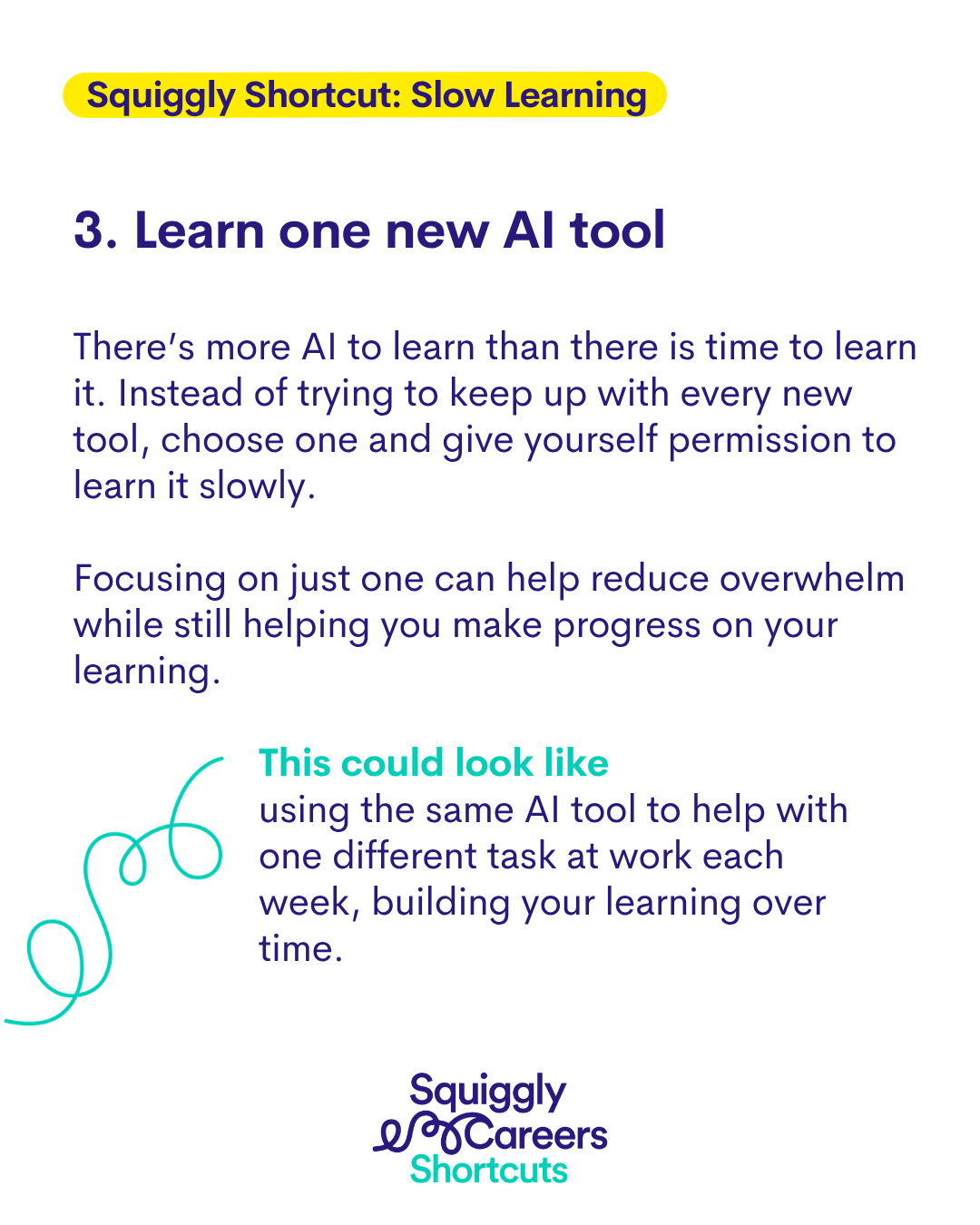
– How to take a more intentional (and less overwhelming) approach to learning AI
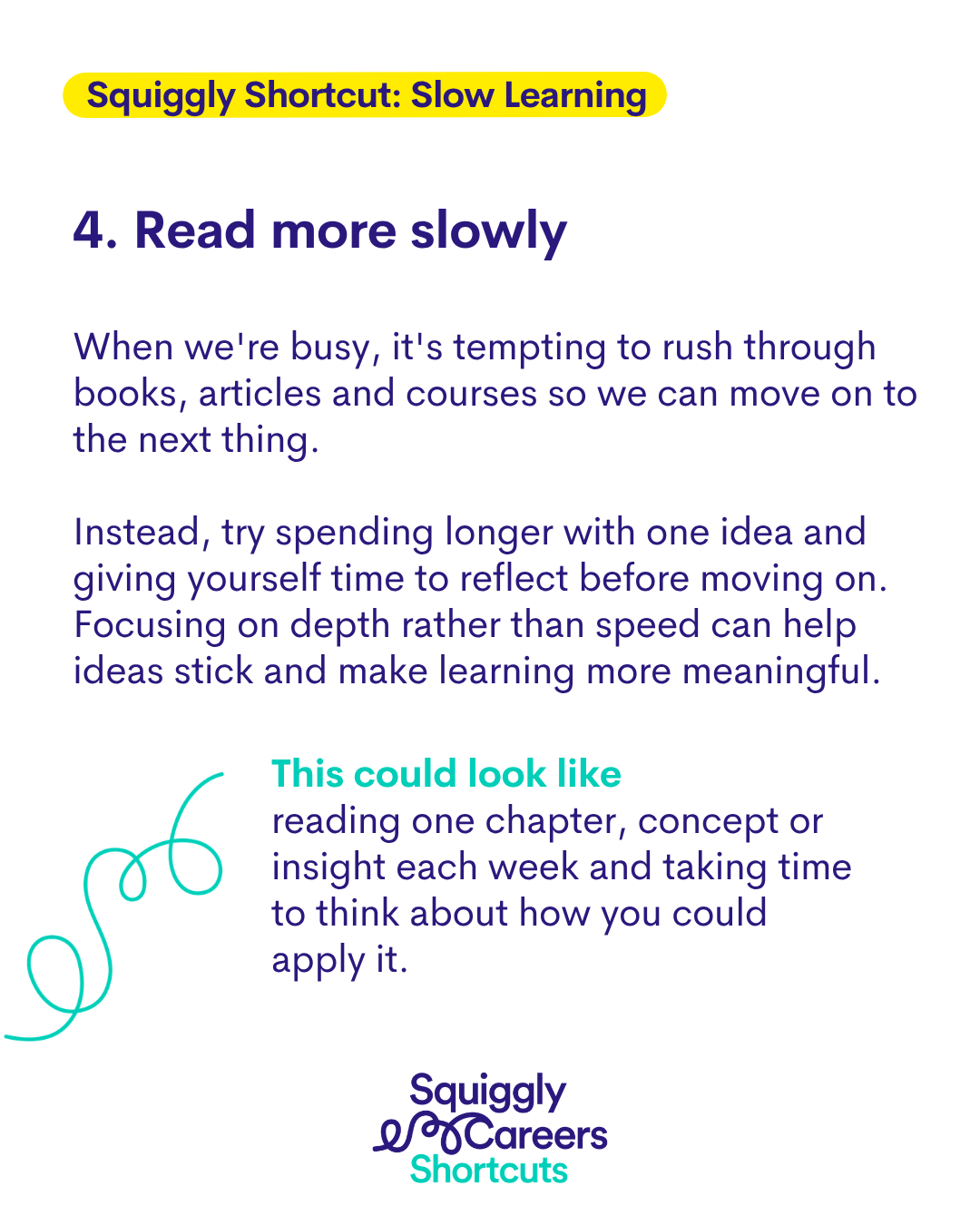
– A slow reading idea for Learn Like a Lobster that makes one chapter feel very doable over seven weeks
📚 Resources Mentioned
For questions about Squiggly Careers or to share feedback, please email: helenandsarah@squigglycareers.com
Need some more squiggly career support?
1. Download our free careers tools
2. Sign up for our Squiggly Careers Skills Sprint
3. Sign up for the Squiggly Careers Newsletter, a weekly summary of the latest squiggly career tools
4. Order our new book, Learn Like a Lobster.
Sarah Ellis: Hi, I'm Sarah and in this squiggly shortcut, I'm going to talk about how to learn slowly.
Now, I do realise the irony of doing a shortcut about slow learning, but hopefully this will help you to get started. Now, the first thing to say is slow learning and fast learning. You might have seen my co-founder, Helen talk about fast learning, and they are not contradictory, they are complementary. So these are not two things that are competing with each other. It's just appreciating where sometimes we might need to be more tortoise than hare in our approach.
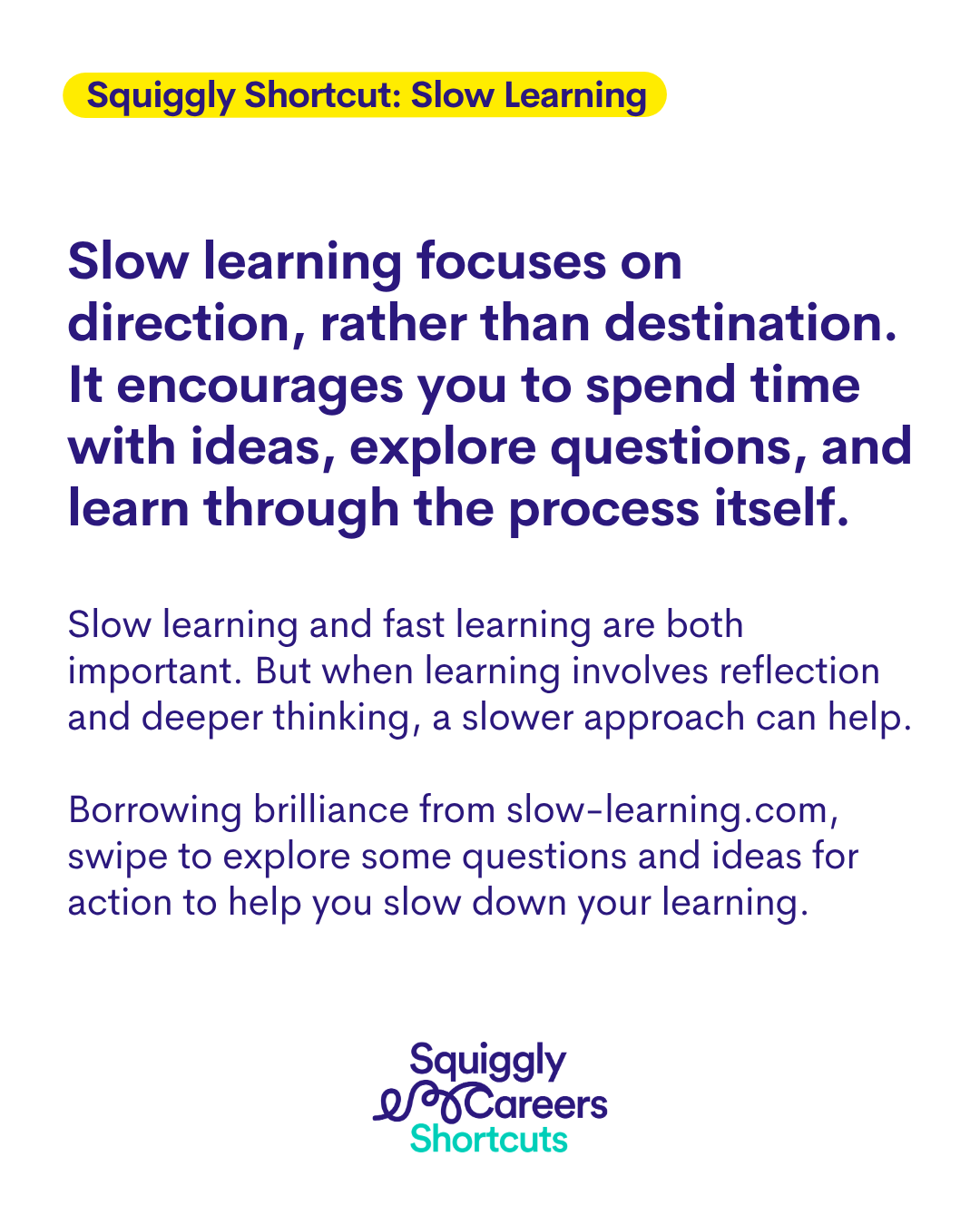
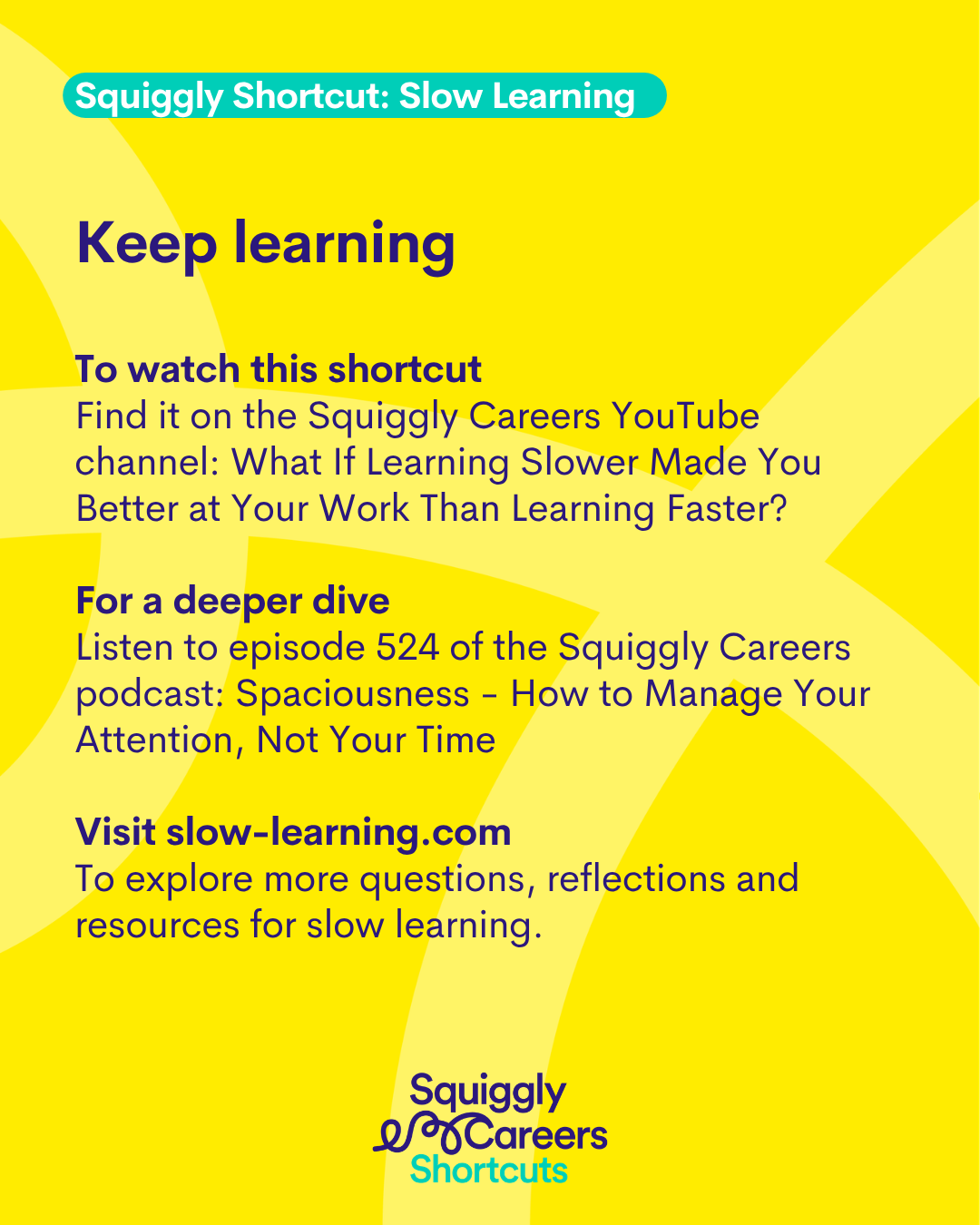
And the focus here really is on direction for our learning rather than destination. You know, sometimes we're all tempted to see learning as something to tick off our to do list. I know I've definitely been guilty of that in the past. And this is more about the process of learning. And there is a brilliant website and it's also beautiful. I don't know how often we say that about websites called slow-learning.com and if you scroll down on the website, they give you lots of questions and reflections to get you started and you can download that and then download this really beautiful book that gives you lots of inspiration.
So I've chosen three questions from that website that I thought might be helpful and then three actions that I've come up with to help you to start to learn slowly.
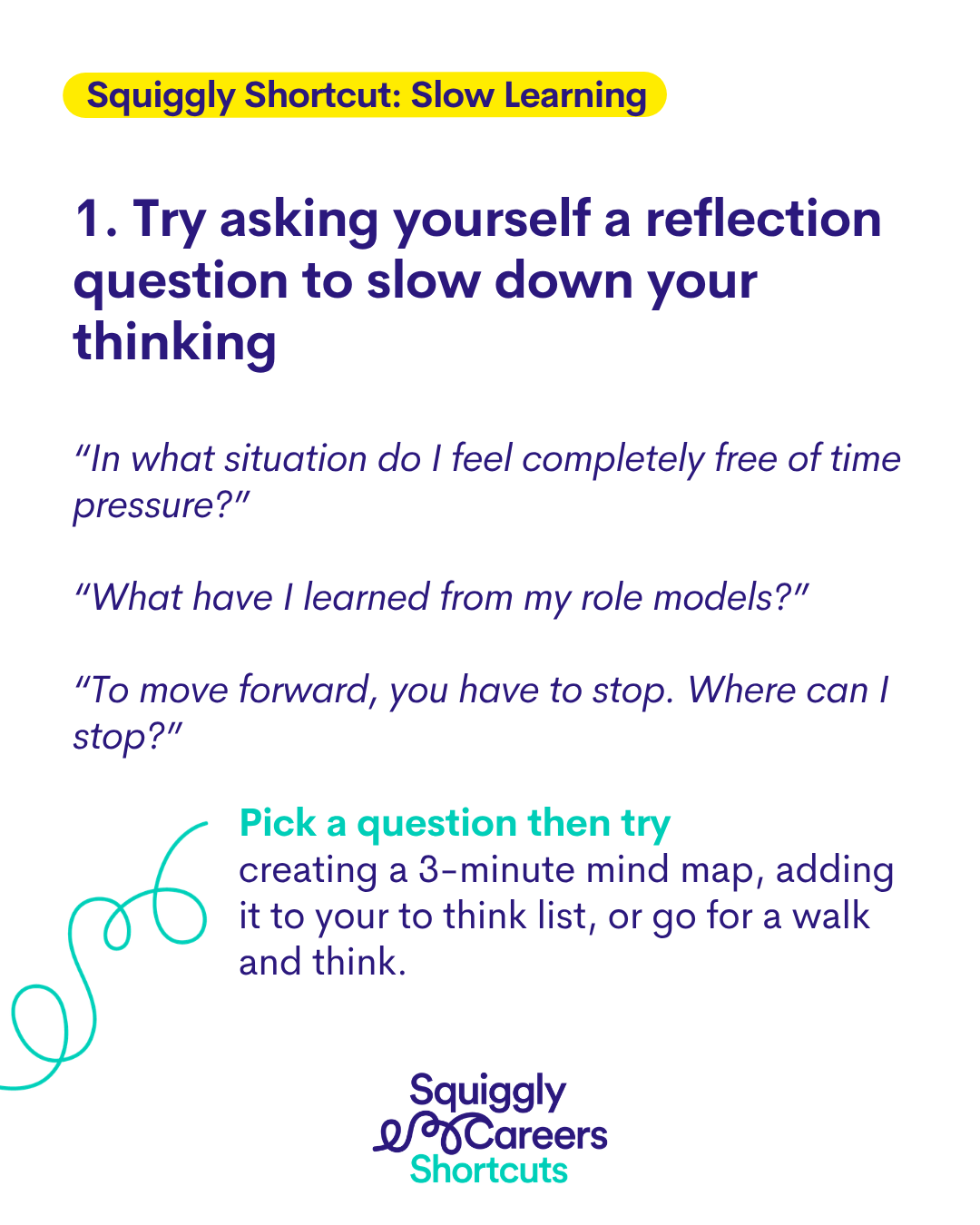
So three questions which might just slow down your thinking and your learning. In what situation do you feel completely free of time pressure? Quite a hard one to answer. Number two, what have you learned from your role models? And number three, to move forward, you have to stop. Where can you stop? Maybe for each of those questions you could try doing something like a three minute mind map. Maybe you add those to your to think list. Maybe you just go for a walk and ponder on one of those questions.
Then I was thinking, well, what actions could you take to start learning slowly? First one, what about asking one why question every day? Why questions get us to zoom out. They naturally slow us down, make us think critically, make us reflect. So maybe if you've not asked a why question today, that's where you could start.
Number two, AI. There feels like loads of pressure to learn AI quickly and there's more AI in the world than there is to time that we have. So what about learning slowly with AI? So maybe you could pick one AI tool and think, I'm going to consciously learn that slowly so that maybe it stops you feeling overwhelmed. But equally at the same time, you know you're going to make some progress on it. So I was reading this week about a new design tool called Fizlo, and I was like, do you know what? I'm just going to pick that one and I'm just going to learn it really slowly, almost making that intention to learn something slowly. Whereas at the moment, I feel like I'm a bit sporadic and a bit all over the place with my AI learning.
And number three, I know lots of you watching or listening will already have learn like a lobster. Maybe you've started reading it, maybe you're hoping to read it. How about reading that slowly? And to give you an idea on that, the final chapter in the book is about seven ways to lead your own learning. What about reading one way each week for the next seven weeks? So that's only one chapter, though it's quite a long chapter, but in seven weeks. And all you've got to do every week is read one of those areas, whether that's giving or connecting, and you're just intentionally reading that slowly.
So don't forget to go on slow-learning.com because it's so brilliant. And you can click on Get Impulses. It's called, like, they call those questions impulses. And you can download the pack. And they also have a brilliant book, too. And I feel like there's an interesting connection between slow learning and what we talked about on episode 524, which was spaciousness. This idea that Megan Reitz introduced us to around how do you have spaciousness in the work that you do? So I hope you find that helpful. I'm back with you again soon for another shortcut.
Sign up to the Squiggly Careers Newsletter and get our latest ideas, tools and inspiration every week - all in one place, straight to your inbox


