

Your career doesn’t need a bigger network, it needs a better one. In this Squiggly Shortcut, Helen shares the four roles that matter most for your career community, and why focusing on just these four makes building your career relationships feel a lot more doable.
🎯 What You’ll Learn
– What a mentor actually is (and why they don’t need to be senior or long-term to be valuable)
– Why a peer — someone going through what you’re going through right now — can be one of the biggest accelerators for your career
– How to spot a sponsor and what you need to do before they’ll advocate for you
– Why a coach doesn’t have to be a qualified one, and what to look for instead
– What to do if you’re lucky enough to have one person who plays all four roles
📚 Resources Mentioned
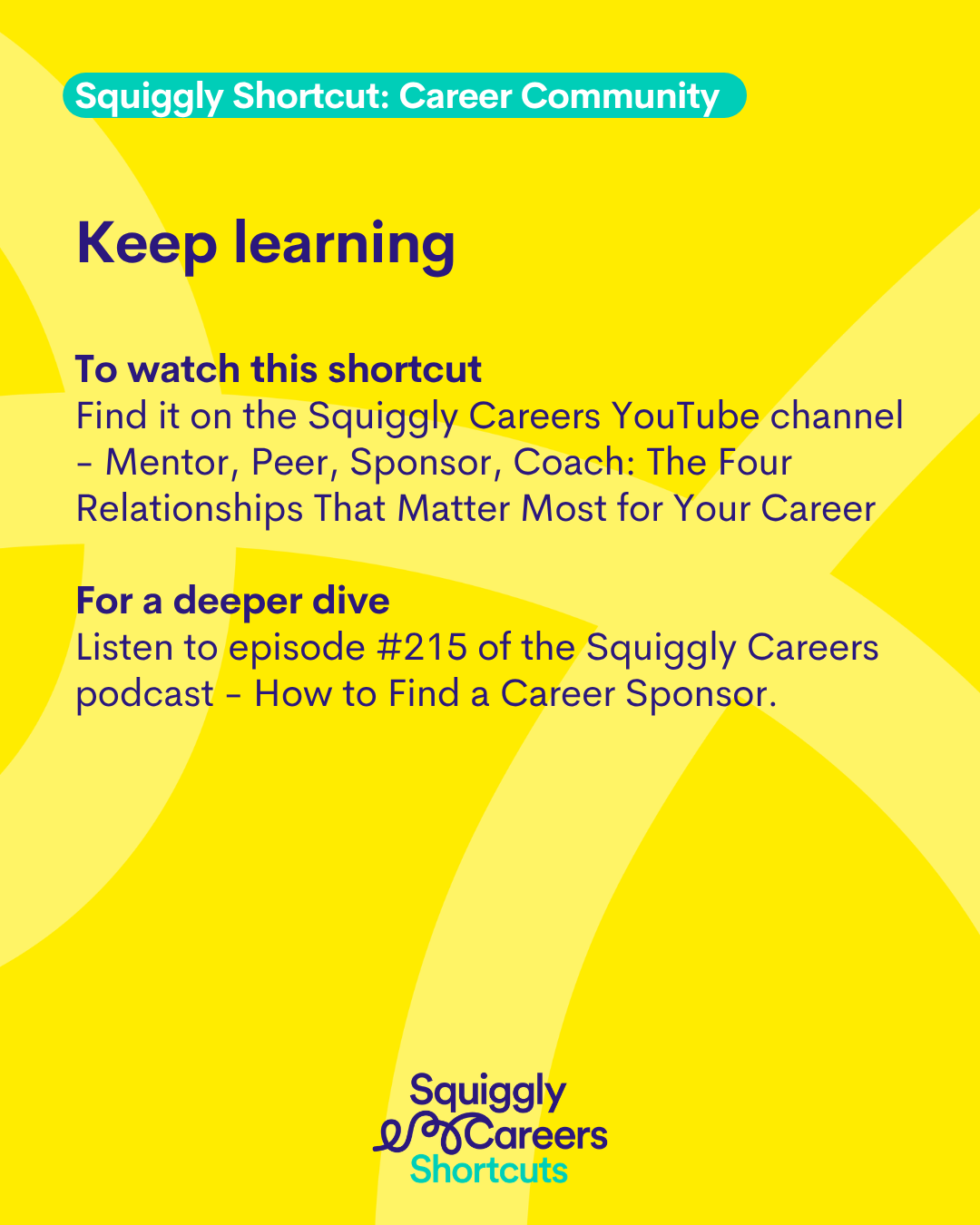
Episode 215 – How to find a career sponsor with Sylvia Ann Hewlett.
For questions about Squiggly Careers or to share feedback, please email: helenandsarah@squigglycareers.com
Need some more squiggly career support?
1. Download our free careers tools
2. Sign up for our Squiggly Careers Skills Sprint
3. Sign up for the Squiggly Careers Newsletter, a weekly summary of the latest squiggly career tools
4. Order our new book, Learn Like a Lobster.
Helen Tupper: Hi, I'm Helen and you're listening to the Squiggly Careers podcast and this is another one of our Squiggly Career shortcuts. Thank you for everyone that's given us feedback on these. Lots of people have said that these feel really useful. We always love your feedback, so you can just email us helenandsarah@squigglycareers.com but today in our shortcut, I wanted to talk about a topic that comes up in lots of the workshops that we run.
And it's all about your career community, but investing in the most important roles that are going to make the biggest difference to your development. And the reason this matters is I find when we're talking to people that lots of people don't really like the idea of networking. They worry that they have to make lots of random relationships and go to loads of events they don't want to be at. But actually the idea of the four roles that matter most, the four that make the biggest difference to your development, just feels a bit easier for people because we know that if we just focus on those four, then actually we don't have to worry about all those events and all those other awkward conversations.
So I want to tell you what the four are, what they are, why they matter, and maybe give you a few ideas to get started with building those relationships.
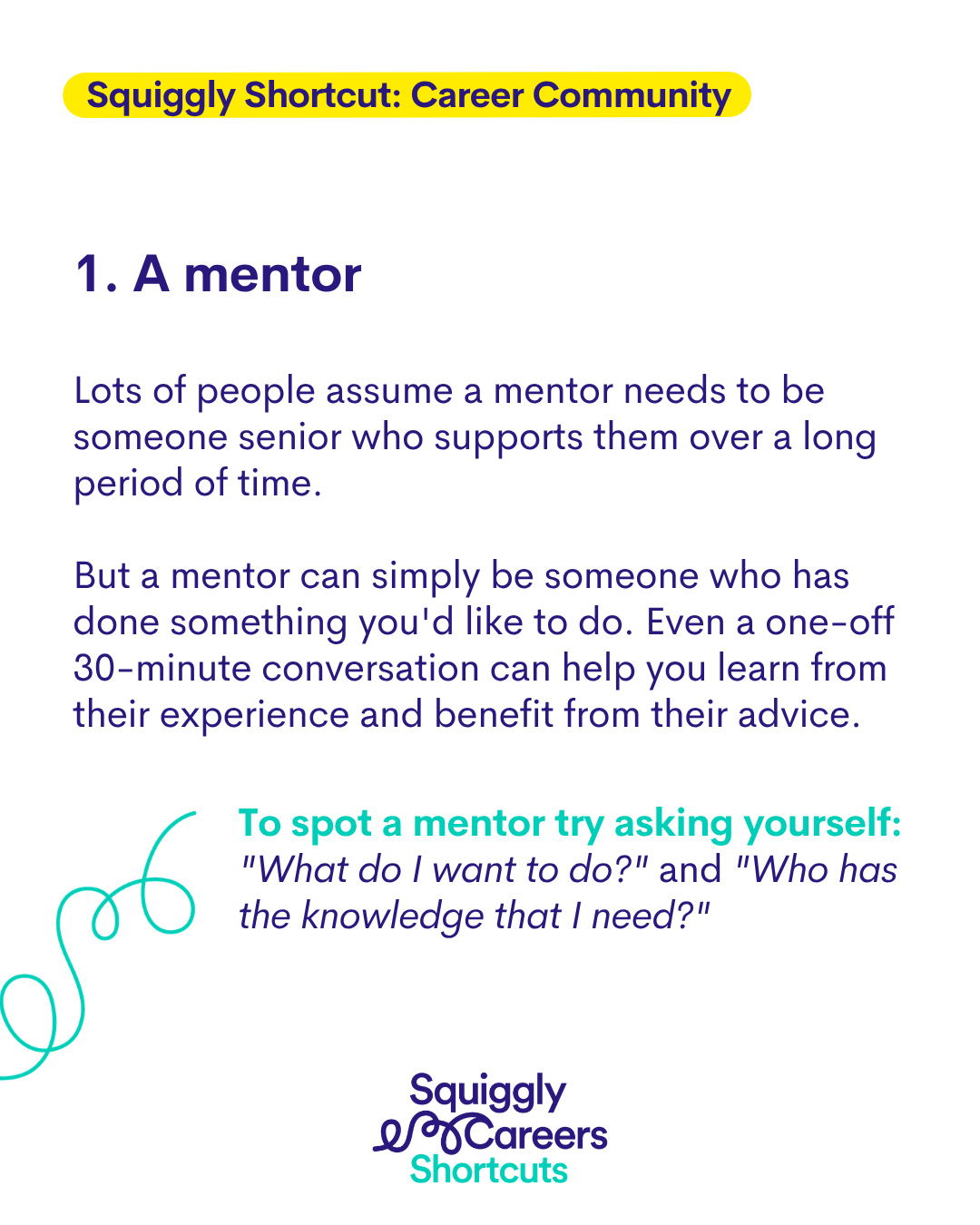
So let's start with the first. The first is the role of a mentor. Now, most of you probably already know about mentoring. It's not new news, but what I find is what stops people getting a mentor is the idea that these mentor relationships need to last a really long time and they need to be with a really senior person. And when that is your assumption for what a good mentor is, it makes it so much harder to get started. So we are just going to put those assumptions away for a moment and we are going to reset what having a good mentor for your squiggly career means. A mentor is somebody who has done what you want to do. It is that simple. Everyone, they have done something you want to do and what you get from that person is advice. And that can be one conversation. I think that's a really important point. Mentors do not have to all be these 12 month relationships where you have, you know, a 90 meeting minute meeting every month. We don't need to do that. It could be a 30 minute conversation because if that person has done what you want to do and you learn from them, then you've benefited from it. And so make sure you have at least one mentor, ideally have several mentors, people that have done what you want to do. So it's an easy action to get started. You need to think, what do I want to do? And then you need to think, who do I know that's got the knowledge that I need? So ask yourself those questions, reach out, have that mentor conversation continue if you want to end it there, if you don't, but know that that's a really, really important way that you'll learn.
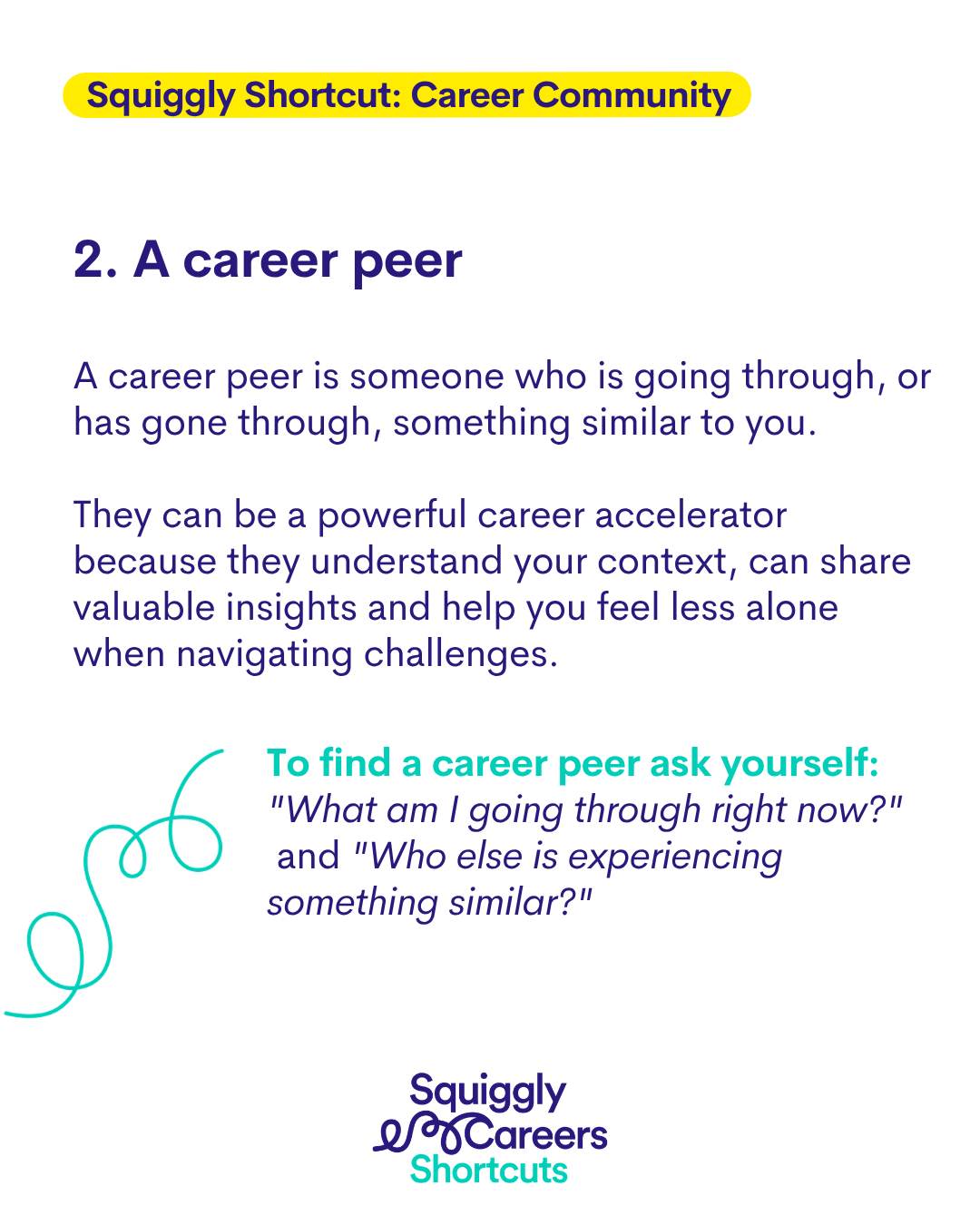
Let's move on from mentors to our second role. That's really important in your career network and that is going to be the relationship you have with a peer or. Or peers. This could be plural, but the definition we're going to use here is this is people who are going through what you are going through. So they get it, they understand it. To be honest, this is me and Sarah like we are. I'd say we are pretty perfect peers. I've managed to keep her for quite a long time. But the benefit of this peer relationship, so this is somebody who's going through what you're going through, is they can be a really big accelerator for your career because it's someone that you trust, it's someone that gets your context, it's someone that's maybe doing the same thing at the same time as you so that you can share insights with each other. They stop you feeling so alone. And what I think is really important with these peer relationships is to recognise that this person might change over time, that what you are going through right now in your career might look quite different in a few years time. And so they're quite dynamic relationships. It doesn't mean that they. They don't become a friend. They can still be a friend, but they might not be a career peer. That's what we're looking for here. So for this one, just think, what am I going through right now? And then who else is going through the same thing? And reach out to them, spend time with them. It's a really, really important part of your. Of your career relationship that you have the contact with someone who's going through what you're going through. So we've done mentor, we've done peer.
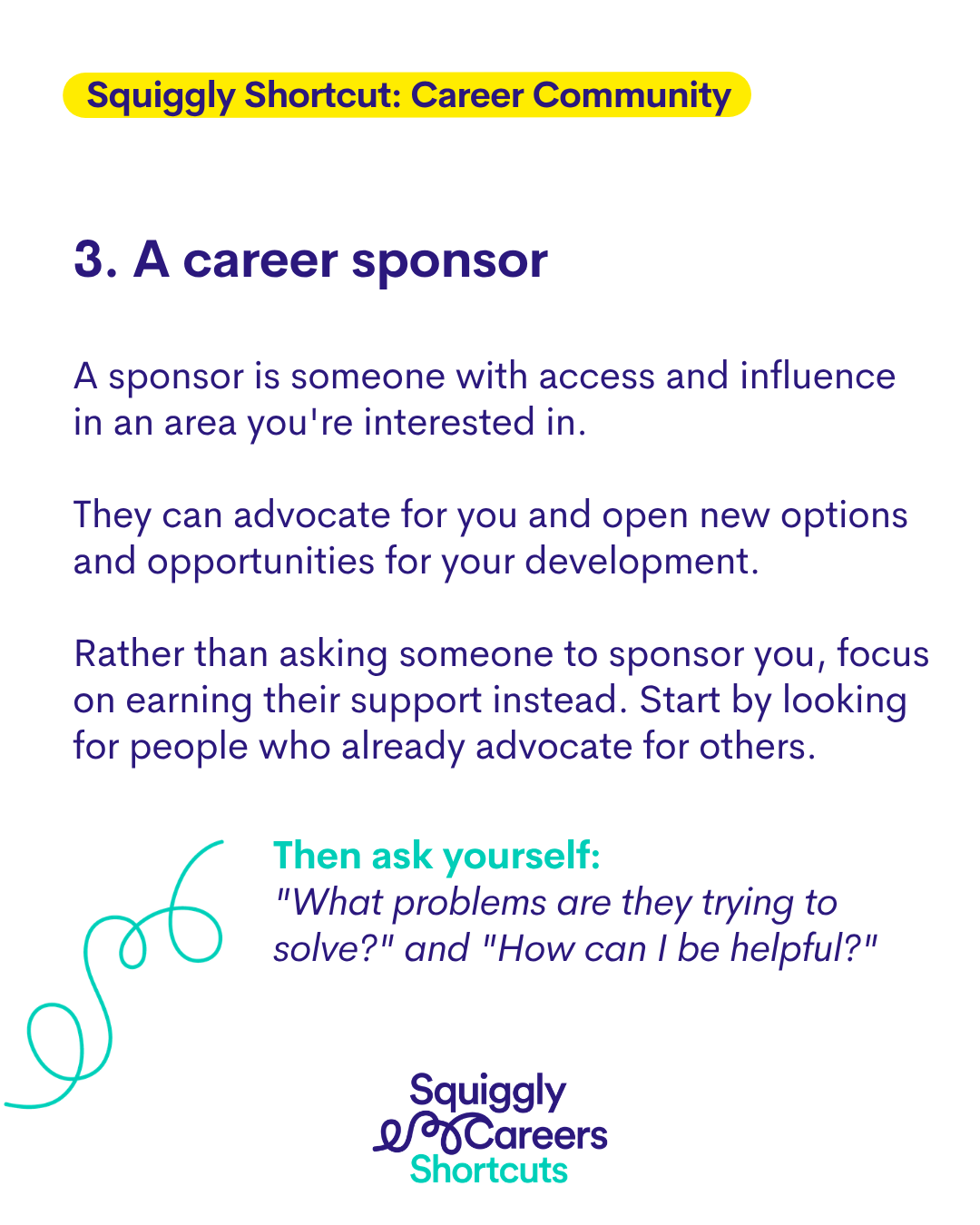
The third one is potentially the hardest, but it is really, really helpful. That is the role of a sponsor. And if sponsoring feels quite new to you, then think about it as somebody who has got access and influence over an area you are interested in. Access and influence over an area you're interested in. It doesn't have to be someone who is more senior than you Though to be honest, it tends to be because of that access and influence. Now, what these people do for you is they advocate for you. They can open doors for your development that you might not be able to open for yourself. That is very, very helpful so that we've got more options and opportunities for our squiggly career. The thing with sponsors is you can't really ask for a sponsor. So we don't just go up to somebody who's got this access and influence and say, can you please say some nice things about me in your next meeting? You don't ask for it, you earn it. So the best action to do here is once you spotted the sponsor, I would also look out for sponsor behaviours. Do you see that person with access and influence advocate for other people? Because that's a sign of sponsorship behaviour. Not every senior person is a sponsor. So spot your sponsor and then think, how can I help them? You need to support a sponsor before they buy in to helping you. So, think, what are their problems? What are their priorities? How can I be helpful? Really, really important.
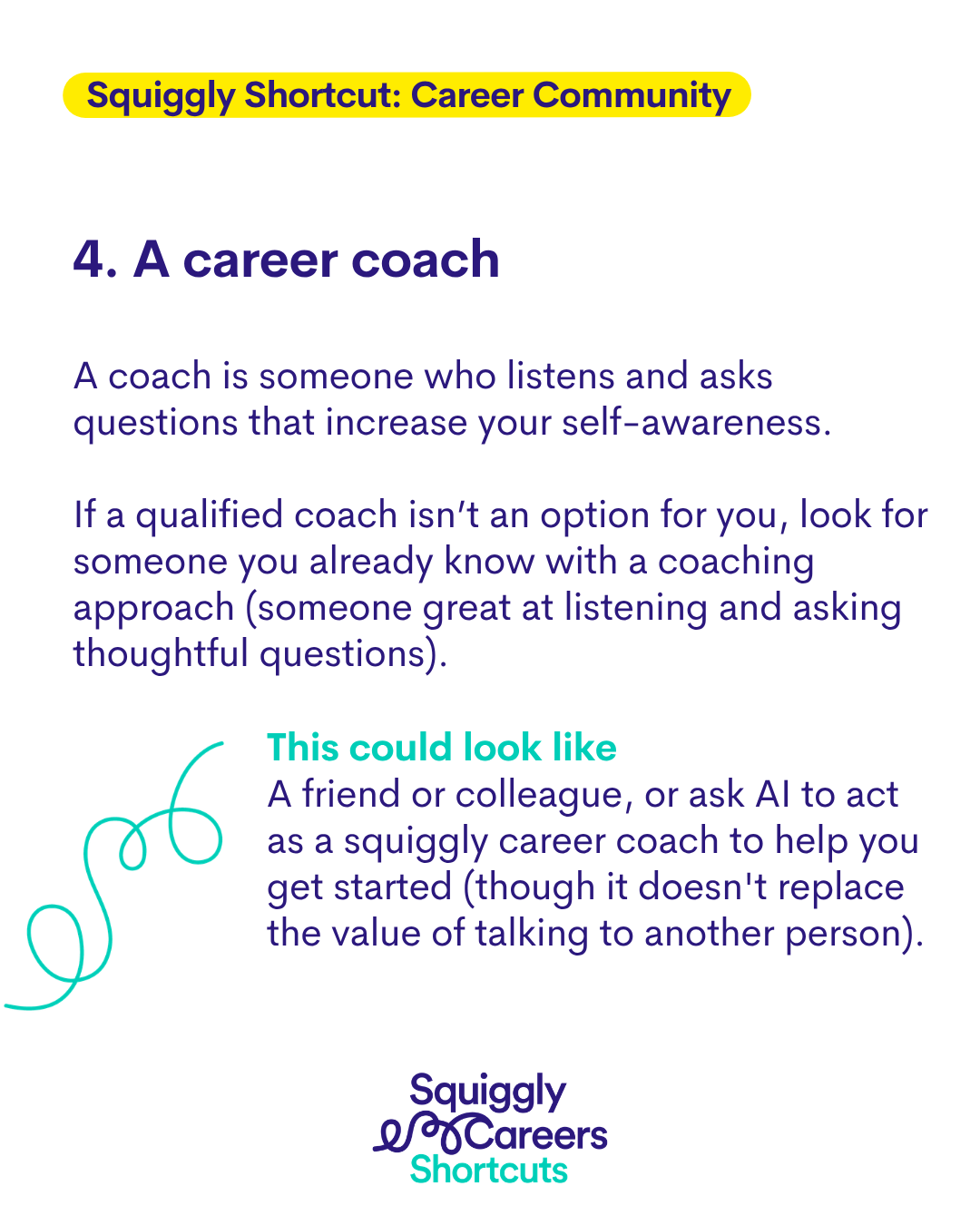
And then last but not least, for our fourth and final role for you to focus on is the role of a coach. And a coach, somebody who will ask you questions that raises your self-awareness. And self-awareness is so important in a squiggly career. I think it's. We always talk about having a career as individual as you are and you can't do that without self-awareness. Now, the trick with a coach is this could be a qualified coach, but they aren't always available to us when we want them. Qualified coaches do tend to cost some money. Your company might provide them for you, which is great, but not everyone can access them. So there's a couple of other things you can do here. You can look for someone who's got a coaching approach. So that is somebody that demonstrates two skills. Very, very good listening, very, very good questioning. So maybe you've got a friend who is great at that. Go spend time with that person, talk to them about your career. In the conversation, you will raise your awareness. The other thing that you can do is you could train some form of AI to become your squiggly career coach where it will ask you questions. I do think that is very useful, but I don't think it replaces a conversation with an actual person because they have some other benefits as well as the fact that they raise awareness for you. So these are your four roles. Mentor, peer, sponsor, coach. And before you stop listening to me and go off and start investing in those relationships. I'm just going to do one caveat because I sometimes get asked this question and some people will say to me, Helen, what if I've got one person who can do all of those things? My response to that is fantastic. Tell that person that you value them because they are very valuable for your career, but do not solely make your development dependent on that person. That the point here is that these different people bring you different perspectives, and if one person isn't available to you, you've still got a lot of other relationships that you can go to. So it's the different people that actually bring the value to your development. If one person does a lot, fantastic. But don't forget to invest in those other relationships. So I hope that was helpful. I hope I've got some rid of some of the fear and frustration that often comes with networking. And I've inspired you to focus on four roles. We've got lots of episodes on networking, but because I know that sponsorship is one that people often struggle to get started with, I would really recommend listening to episode 215, which is a conversation that I had with an author called Sylvia Ann Hewlett, who says, forget a mentor, get a sponsor. I would say have both, but I would definitely listen to her expertise on what getting a good sponsor looks like.
Sign up to the Squiggly Careers Newsletter and get our latest ideas, tools and inspiration every week - all in one place, straight to your inbox


