
Want to achieve your biggest career goals this year? The answer might lie in planning exactly how you could fail first.
Drawing on research from New York University on mental contrasting, Helens explore how balancing your biggest career opportunities with your realistic obstacles can significantly increase your chance of success.
🎯 What You’ll Learn
– What is mental contrasting and why does it build resilience?
– How to identify what you want to be true in 12 months
– Why optimism blindness might be holding your career back
– How to honestly audit the obstacles in your way
– What practical actions can reduce your risk of failure
– How to take one simple step this week to move forward
– Find the best timing for your deep work
For questions about Squiggly Careers or to share feedback, please email: helenandsarah@squigglycareers.com
Need some more squiggly career support?
1. Download our free careers tools
2. Sign up for our Squiggly Careers Skills Sprint
3. Sign up for the Squiggly Careers Newsletter, a weekly summary of the latest squiggly career tools
4. Order our new book, Learn Like a Lobster.
Hi, it's Helen from the Squiggly Careers podcast, and you are listening to another one of our weekly Squiggly Shortcuts. We've been doing these episodes for a while now, and we did them because we know it is hard to fit listening and learning into your week, so we've tried to make it really quick and easy for you to do so. These episodes are always really short.
And today's topic is about. I don't know whether it's going to sound negative, but I hope it's going to be positive. The topic is about how to set yourself up to fail so that you are more likely to succeed. And I am borrowing some research and a tool that we put in our second book, you coach you. And the tool that we talk about here is called Mental Contrasting.
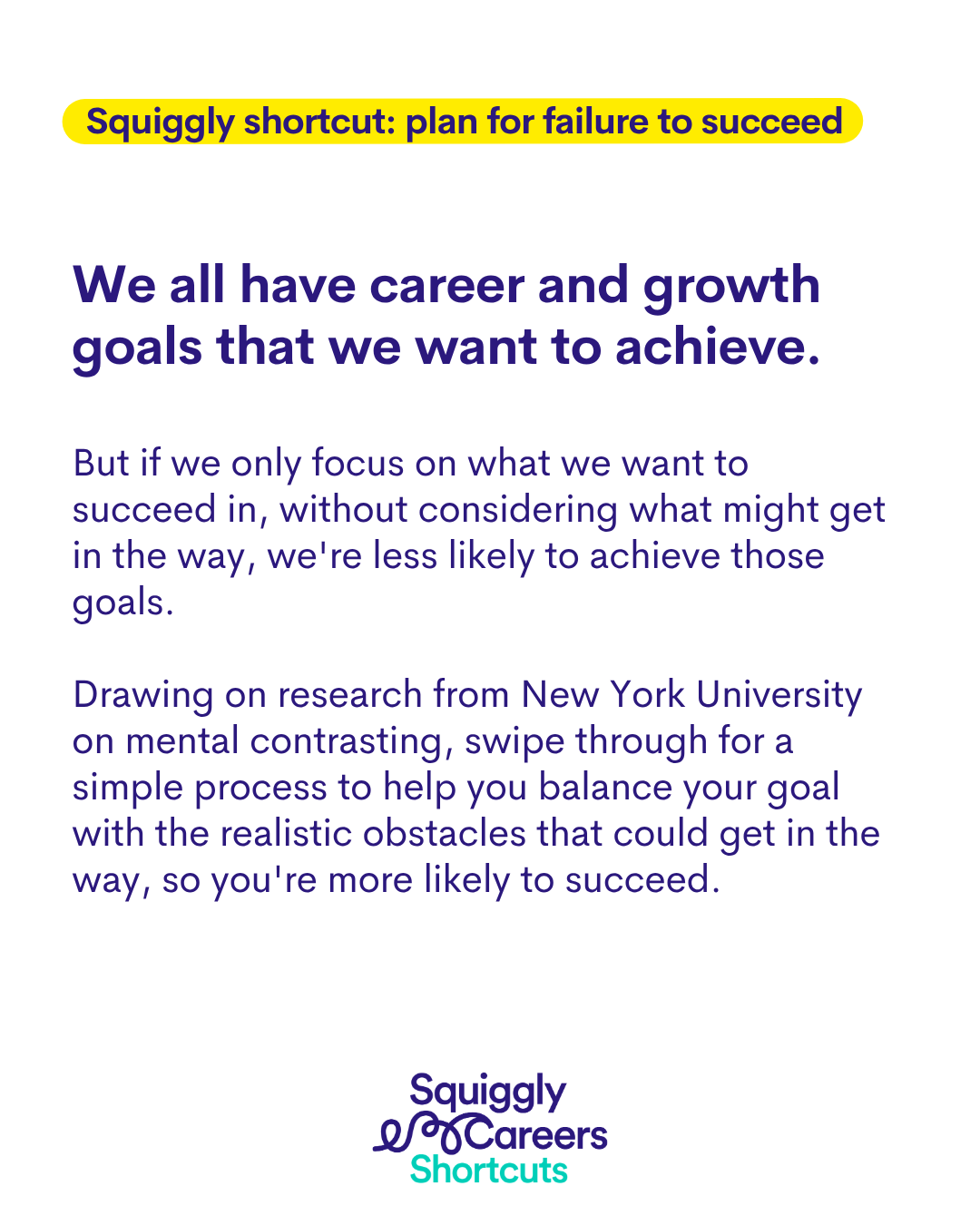
It actually comes from some research on new from New York University which says that the people that are most resilient, the people that are most likely to succeed, are the people who are not only able to hold the opportunity, so the thing that they really want to achieve, but they are also able to hold the obstacle so they can see where it might go wrong or what might get in the way.
And what I see when I talk to people about their career is that they often have a goal for their growth. So maybe that is a role that they want to do, or maybe that is a skill that they want to develop, or maybe maybe it's getting promoted. Like lots of people have got different goals for their growth, and they hold onto that goal that they have, that thing that they want to succeed in, but what they don't do is consider all the things that might go wrong or that might not happen or that might get in their way.
And based on this research, if we are only thinking about the opportunity, so we're being sort of permanently optimistic about what we want to happen, and we are not also considering some of the things that might get in the way, then we are actually less likely to achieve that, that thing that we're looking for. So in this Squiggly Shortcut, I want to just talk through a bit of a process that you can go through so that you can have that goal that you want to go after.
You can have that squiggly success in mind, but you can set yourself up to be more likely to achieve it by thinking about what's going to get in the way. So by thinking about how we'll fail, we actually become more likely to succeed.
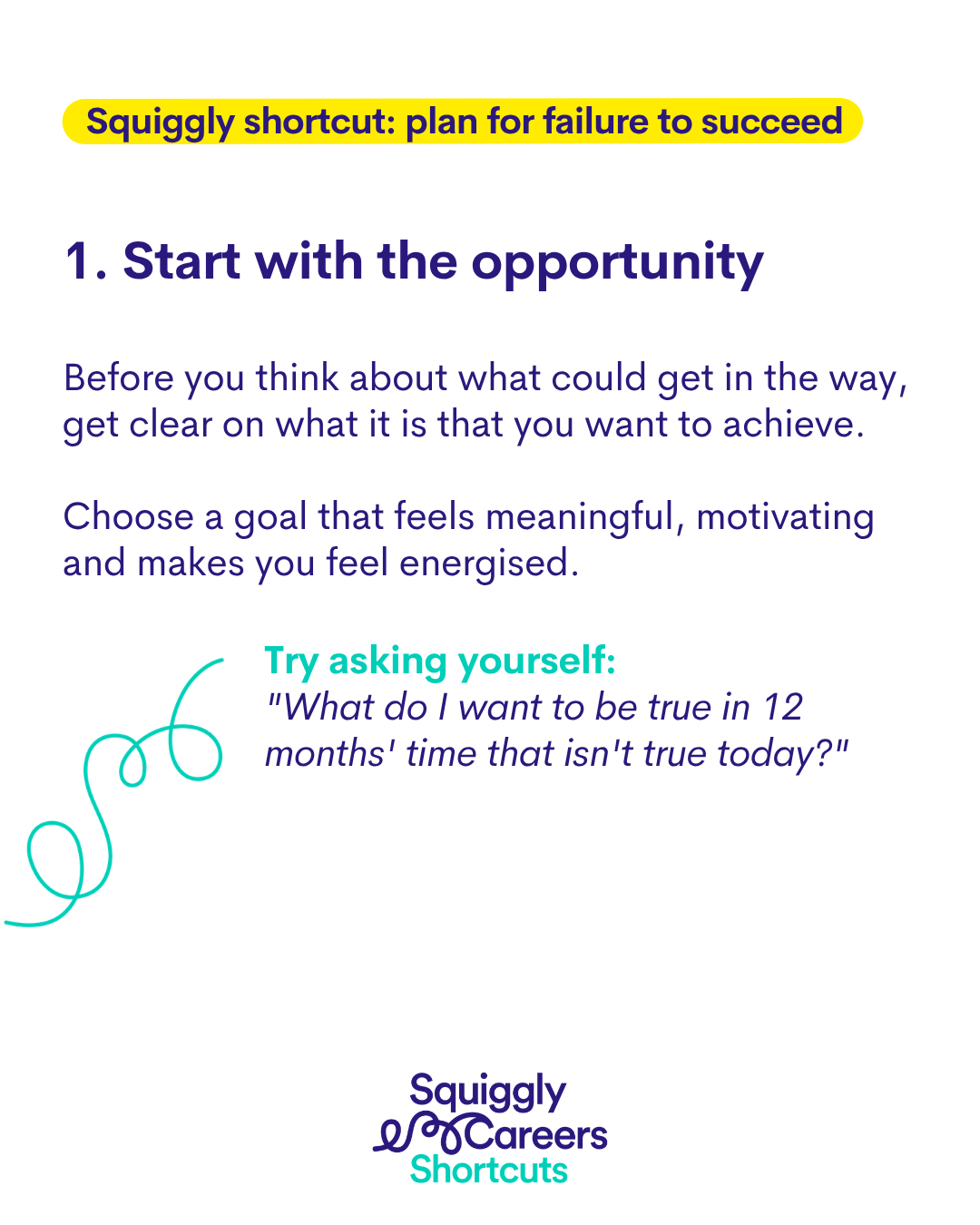
So here's what we do. First of all, you do have to start with the opportunity so we can start with something positive. Pick a positive. Pick something for your progression that you want to be true. I actually love the question, what do you want to be true in 12 months time that isn't true today? I find that that's a really nice question to leap forward a little bit and look for the thing that you are energised by. So if you haven't already got a goal in mind, then maybe use that question as a bit of a prompt.
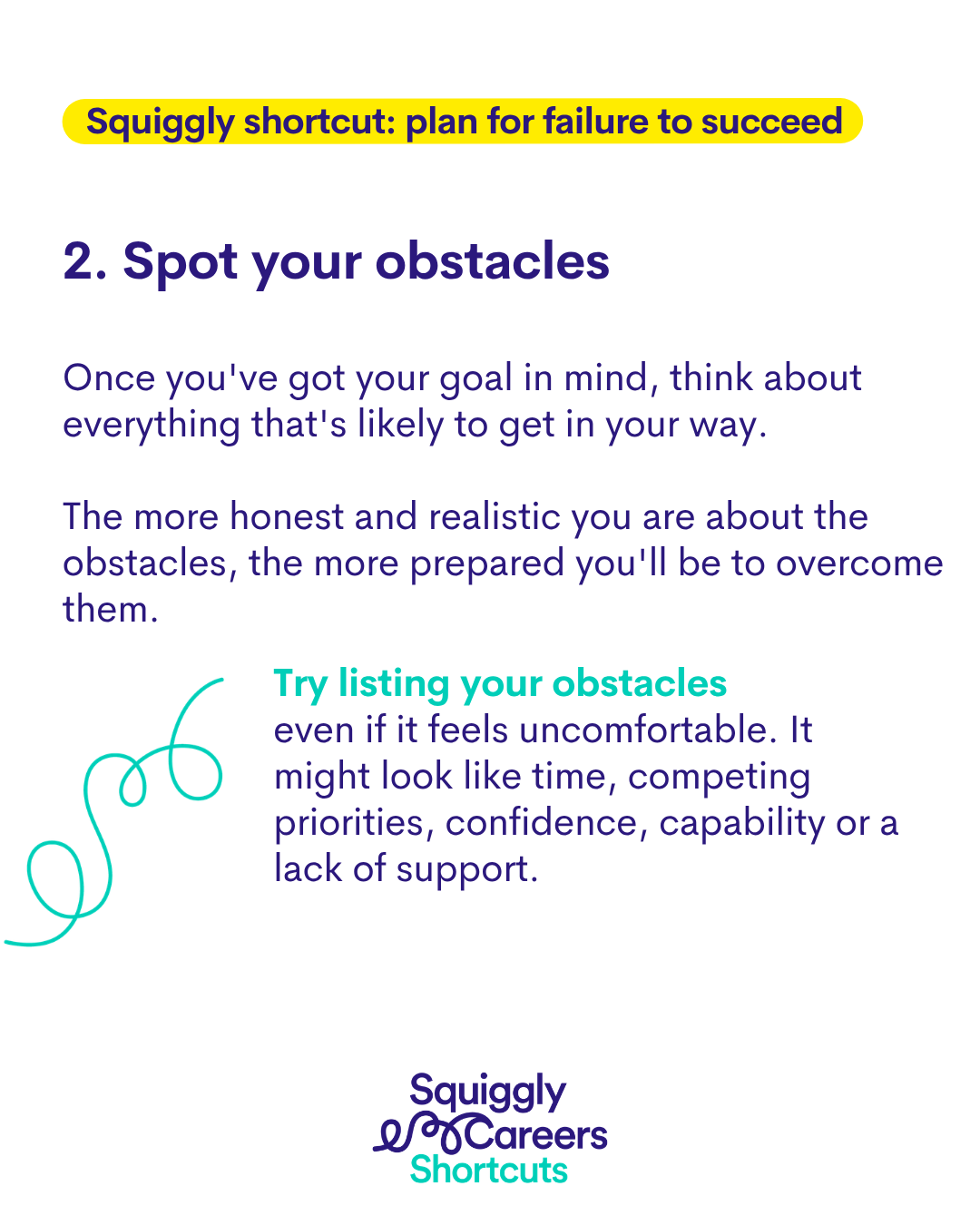
So, first thing, what's the opportunity? Then what's the obstacle? And I would go even further here, like, what are the obstacles? I want you to think about what are all the things that are likely to get in the way? Maybe your manager doesn't support you doing this particular thing. Maybe you know that it's going to put pressure on your time and that's going to make it too difficult to do. Maybe you know that you're already doing too many things and you haven't said what's going to happen, to have to stop so that you can start this. But I want you to be really honest with yourself about what are all the things that are going to make you likely to fail on this. And you might even want to use AI, like where am I going to go wrong? What's going to get in my way? But be critical, be honest about the obstacles, because if you ignore them, you're less likely to succeed. So now we've got what's the opportunity?
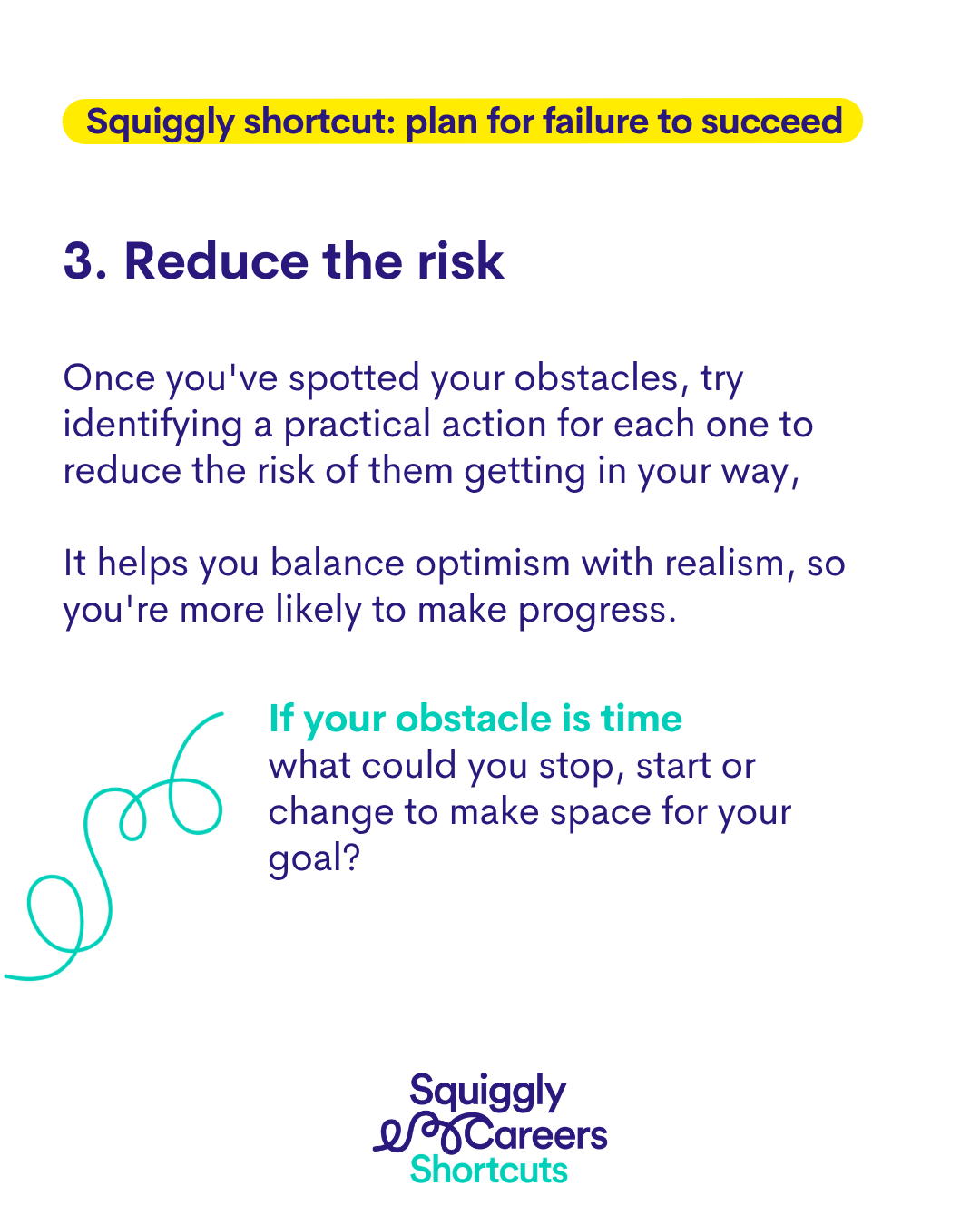
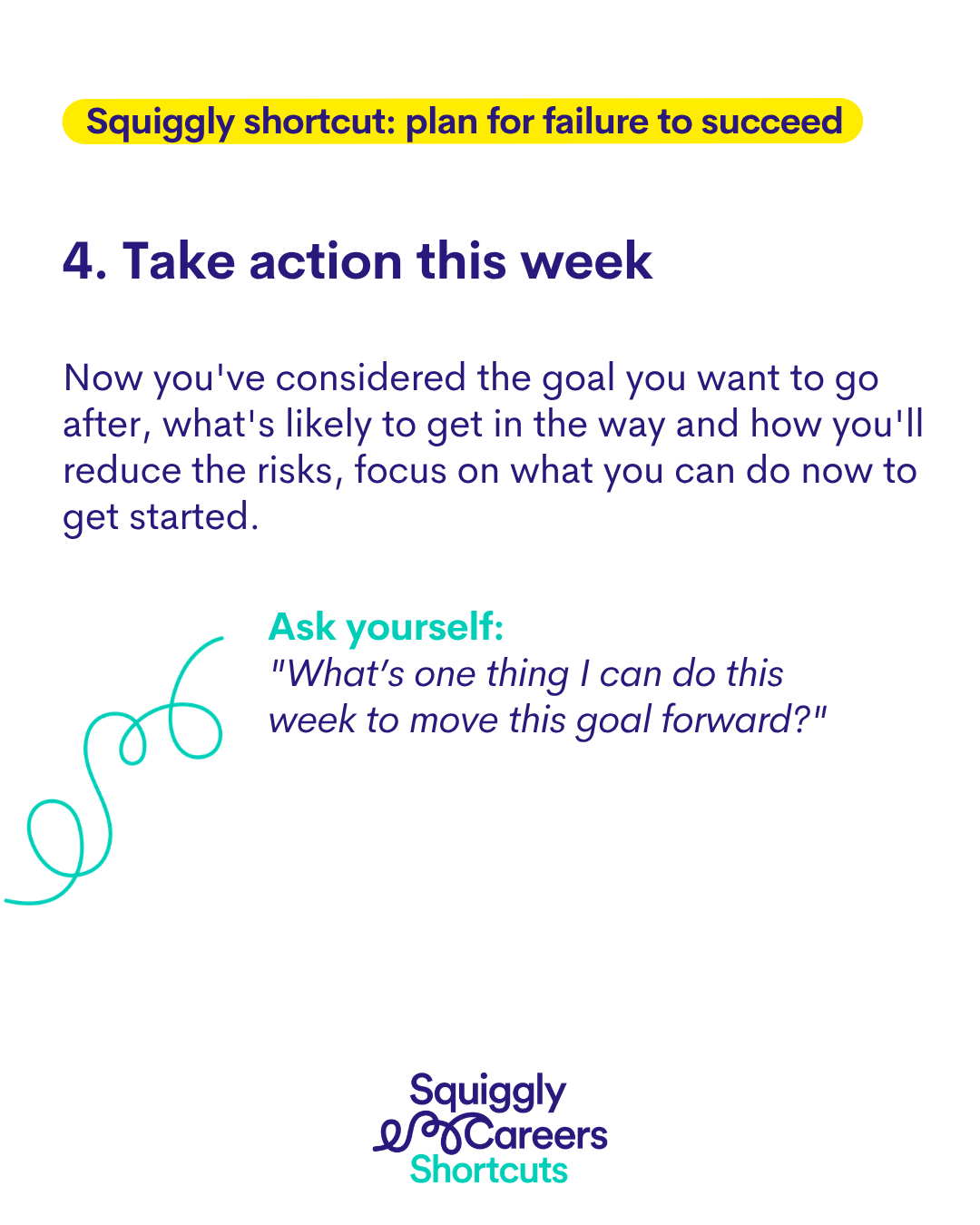
Then we've got what are the obstacles? And then you've got a third part, which is what action can I take to reduce the risk of these obstacles? And you are going to go through every one of the obstacles that you have identified and think, well, if that's the reality, if time is a problem and if I haven't stopped something else, then what could I do to reduce the risk of this thing getting in my way? And so now you're being very practical and you're being really pragmatic and you're being very considered and this is really important so that we don't kind of get optimism blindness about the things that we want to do, the final part of this is for you to say, and what can I do this week to move this goal forward? So having considered the great goal you want to go after and everything that's going to get in your way and what you could do differently to reduce the risk, what we then want to zoom into, like the here and now and say, what is one thing that you can do this week to move this forward. And if you go through this process with the goals that you want to go after, you are much more likely to succeed on the things that you want to start.
So I hope we finished in a positive place, even if thinking about setting yourself up to fail can sound quite negative. We'd love your feedback. Let me know if you give this a go. You can always email us. We're helenand sarah@aquigglycareers.com.
Sign up to the Squiggly Careers Newsletter and get our latest ideas, tools and inspiration every week - all in one place, straight to your inbox


