Uncertainty isn’t going anywhere. So what if the goal wasn’t to get rid of it, but to get better at holding it?
In this episode, Helen and Sarah borrow brilliance from a feeling and dive deep into one of the most relevant topics in work and careers right now.
Drawing on Margaret Heffernan’s Embracing Uncertainty, Sam Conniff and Katherine Templar-Lewis’s Uncertainty Toolkit, and a brilliant HBR article, they explore what it really means to develop the capacity to hold uncertainty, and what your default response to it reveals about you.
🎯 What You’ll Learn
– Why the goal isn’t uncertainty to certainty, but uncertainty to the capacity to hold
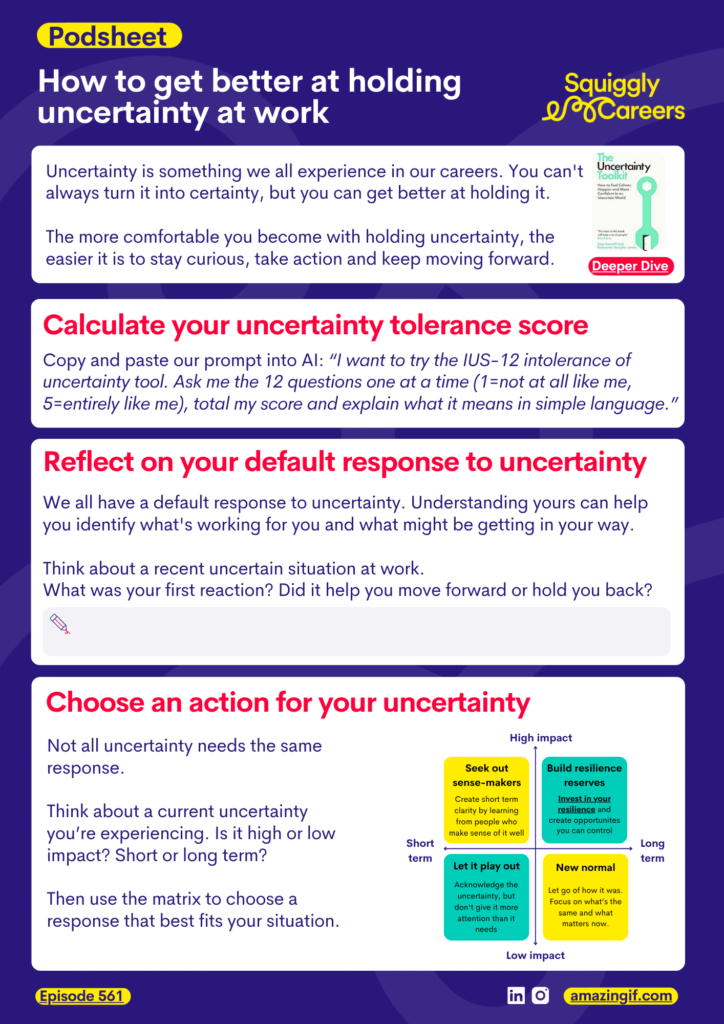
– How to find your own uncertainty tolerance score (with an AI prompt on the podsheet to help)
– Why leaders feel more pressure than most to appear decisive, and what the research says about that
– How to use a simple matrix to plot your uncertainty by impact and duration, and respond differently depending on which quadrant you’re in
– Why patience might be the most underrated skill in uncertain times, and how Helen and Sarah both score themselves on it
– What it means to reframe uncertainty as opportunity rather than threat
For questions about Squiggly Careers or to share feedback, please email: helenandsarah@squigglycareers.com
Need some more squiggly career support?
1. Download our free careers tools
2. Sign up for our Squiggly Careers Learn Like a Lobster Skills Sprint
3. Sign up to the for Squiggly Careers Newsletter, a weekly summary of the latest squiggly career tools
4. Order our new book Learn Like a Lobster
00:00: Borrowing brilliance from a feeling…uncertainty
04:31: Sam Coniff says you can't change uncertainty, but you can rethink it?
05:34: Is there a limit to how much uncertainty you can hold?
10:22: Margaret Heffernan talks about embracing uncertainty in leadership and management
13:01: Sarah and Helen’s uncertainty tolerance scores
21:08: Uncertainty equals opportunity to learn
25:35: A framework to help you make sense of an uncertain situation
35:41: Closing remarks
Sarah Ellis: Hi, I'm Sarah.
Helen Tupper: And I'm Helen.
Sarah Ellis: And this is the Squiggly Careers podcast, where every week we borrow some brilliance and try to turn that curiosity into some useful action for you and your Squiggly career and make sure that you
Helen Tupper: are subscribed to Squiggly Careers. Wherever you listen or you watch, it will mean that all of our episodes go right to the top of your playlists.
Sarah Ellis: And so today we are borrowing brilliance, I think for the first time from a feeling. Are we taking the idea too far, do you think? This one I did, I was like, I think people are feeling really uncertain and there's a lot of uncertainty in the world generally, but also more individually for people when they think about their work and their career. So what about borrowing brilliance from feeling? Obviously I then got very carried away. I think I could now do a 90 to two hour podcast on uncertainty because I've done a lot of research.
Helen Tupper: Sarah and I met this morning before this and we're having a conversation.
Sarah Ellis: Are you going to tell people?
Helen Tupper: I don't know. I mean, we'll come on of what we. We come on. We learn about our own response to uncertainty. But it was more after talking about it for about 45 minutes and I was like, so it's all very interesting.
Sarah Ellis: I was like, this is absolutely fascinating.
Helen Tupper: Sarah has, like read so many things. I mean, what I love about you, but you like read so many things and we connected dots and you were like, that's brilliant. And that was so good. I listened to that podcast twice.
Sarah Ellis: I did listen to it.
Helen Tupper: I know you listened to it twice. People do not have to listen to this episode twice, though somebody did email us. Oh yeah, did you see that yesterday?
Sarah Ellis: No.
Helen Tupper: Nicola has emailed us yesterday. So shout out to Nicola because she has listened to our episode on drawing twice because it made such a big impact to her about kind of drawing. And I think we had like, you know, there was the episode where we had the Post-it notes and we were kind of doing all the things and she's really like taken it into action and she's doing lots more drawing to help her.
Sarah Ellis: Oh, I think I might have seen her share something on LinkedIn.
Helen Tupper: Yes, yes, yes.
Sarah Ellis: That looks better than our drawings. Yeah, obviously.
Helen Tupper: It's fine, it's fine. Take it and improve on everyone.
Sarah Ellis: So should we talk about uncertainty?
Helen Tupper: Let's talk about uncertainty.
Sarah Ellis: Let's do it.
Helen Tupper: Sit in.
Sarah Ellis: Everybody ready? Like, get comfy. It's not gonna be that long. Well, yeah, we. So I think one of the conclusions that I've come to from reading, watching, listening to lots of different things is, you know, what's the job to be done here? And I think you can start off by thinking, well, I need to move from uncertainty to certainty. Because, you know, uncertainty doesn't feel great. You feel out of control, you might feel overwhelmed. So what's the opposite of that? Well, you know, I need to get to certainty.
Helen Tupper: So just, just. Can I just one minute before we talk. Because I'm just trying to think about just some examples which I appreciate talking about such in a broad sense. And I'm trying to make it specific. So if you just bear with me for a second. Uncertainty at work for people now might look like I would. I'm just thinking of conversations we have with people just to make it like a sort of a factual feeling, if that makes sense. What do you, what are you hearing that people feel uncertain about?
Sarah Ellis: I think the most common uncertainty that is really difficult for people is restructures, team changes. I was literally on a call with somebody this week, someone we work with, and then she was like, oh, our team's just been restructured today. Do you mind if I'd go for this call? And I was like, no, I mean, go for the call, that's fine, go for the call. So you're like, there's that kind of uncertainty. Then I think there's more day to day uncertainty, which might be, I'm not really sure how this project is going or I'm not sure how these people are feeling about our progress or priorities seem to be changing. And so my work feels uncertain, you know, like the work I am doing day to day, which I think is quite different to, you know, like the team that I'm in or my role feeling uncertain. And then I think people do have bigger worries about work, which might be about their industry. The most common one probably at the moment is, is AI going to take my job? You know, that's the uncertainty of that. Because it's not people, they don't know that it's going to take their job, but there's a lot of uncertainty about how will AI impact my role, how's it going to impact my industry? Like, we could say that, right? Well, surely you don't need us anymore.
Helen Tupper: There's quite a lot you don't need us.
Sarah Ellis: We really like talking about Squiggly Careers and I'm needy. So between the two of us, we definitely need you to keep listening or watching. Um, but I guess that's creating probably even more uncertainty for people. It's like technology feels like it's playing a very different role to perhaps how it looked before. Maybe.
Helen Tupper: Okay, sorry.
Sarah Ellis: Are we happy?
Helen Tupper: I was just trying to just understand the reality. Uncertainty for our listeners. But let's go back into.
Sarah Ellis: So what we are trying to unlearn is uncertainty to certainty.
Helen Tupper: Okay.
Sarah Ellis: And what we want to relearn is uncertainty to the capacity to. To hold. I think we've got to hold the uncertainty. And Sam Coniff gave us a brilliant quote. So he's got this great book, which I will just hold up to the camera. So if people are at home watching, just play. Yeah, Be more pirate. If you've listened to Sam previously on the podcast. And Sam and Catherine together have written this book called Uncertainty Toolkit, which we'll come back to. But he says you can't change uncertainty, but you can change your relationship with uncertainty. And that's much easier than you think. And so, you know, when you are trying to think about what you're trying to get better at, I think if you set yourself up to. I'm trying to get rid of the uncertainty, you'll fail. You often can't do that. There's a lot outside of your control. But you can rethink. What does it look like to live with uncertainty, to have the capacity to hold that uncertainty and to kind of find your way through it.
Helen Tupper: May I ask a question about the capacity to hold? Do you think or do you know, having read and dived into this quite a lot, you know, you talked about. Actually what we want to do is develop this capacity to hold. And then we gave the examples of, well, maybe part of the uncertainty is AI. Maybe the part of the uncertainty is what do people think about me? Part of the uncertainty is something going on outside of work. Do you think that there is a limit to how much uncertainty you can hold?
Sarah Ellis: Before what? Before burnout or.
Helen Tupper: Yeah, before burnout or before you can control a response to it, you know, because I think, I guess where we're going to is you experience an uncertainty, you. We. We're not trying to go to certainty. So you're not trying to, like, fix it right now. And we're trying to hold it. And I was just wondering, like, actually if you develop the ability to hold uncertainty, can you do that? No matter. Let's have got uncertainty at home. I've got uncertainty at. And I've got this ability. Doesn't matter how much uncertainty there is. I'm able to manage it. Or do you Think, actually, if I'm uncertain in lots of areas all at the same time.
Sarah Ellis: Well, it's interesting. So we're a big fan of Margaret Heffernan and her latest book is called Embracing Uncertainty and it links really well with Uncharted, which is what she came on the podcast to talk about last time. And what she looks at in that book, it's sort of a book of completely borrowed brilliance, but because she's looking at people who are really creative who choose uncertainty. So to your point about, like, how much can we hold? These are people who are sort of opting in to uncertainty. And she gives an example. Actually, I don't think I realised this. She was talking about some novelists who. Their approach is always, they start writing a book, but they don't know where it's going to go and they don't know where it's going to end. Whereas I think. I thought people who wrote fiction would be, like, right, you know, like, storyboarded. Yeah.
Helen Tupper: Like a skeleton, you know.
Sarah Ellis: Yeah. And I've seen pictures of. I think some writers do write like that. So I've seen that. And I was like, oh, that must be how they figure out, like, what's gonna go in each chapter. And maybe they move around how the stories gonna work, but they always have this overall sense of this is the story. I'm trying to tell. And she gives loads of examples of people who read, that's just not true. You know, they'll write the first chapter and they'll just stick with that first chapter. There was one person who'd sit with the first chapter for nine months, but then his book won, like, an incredible literary prize. And so I wonder whether I suspect your tolerance for uncertainty is easier. It's, like, easier to tolerate uncertainty, probably, if it's only in one part of your life. That would be my hypothesis. You know, if you have a bit of uncertainty at work, but a lot of stability at home, that's probably easier. If you've got uncertainty in lots of
Helen Tupper: part of your life, you know, like exponential uncertainty.
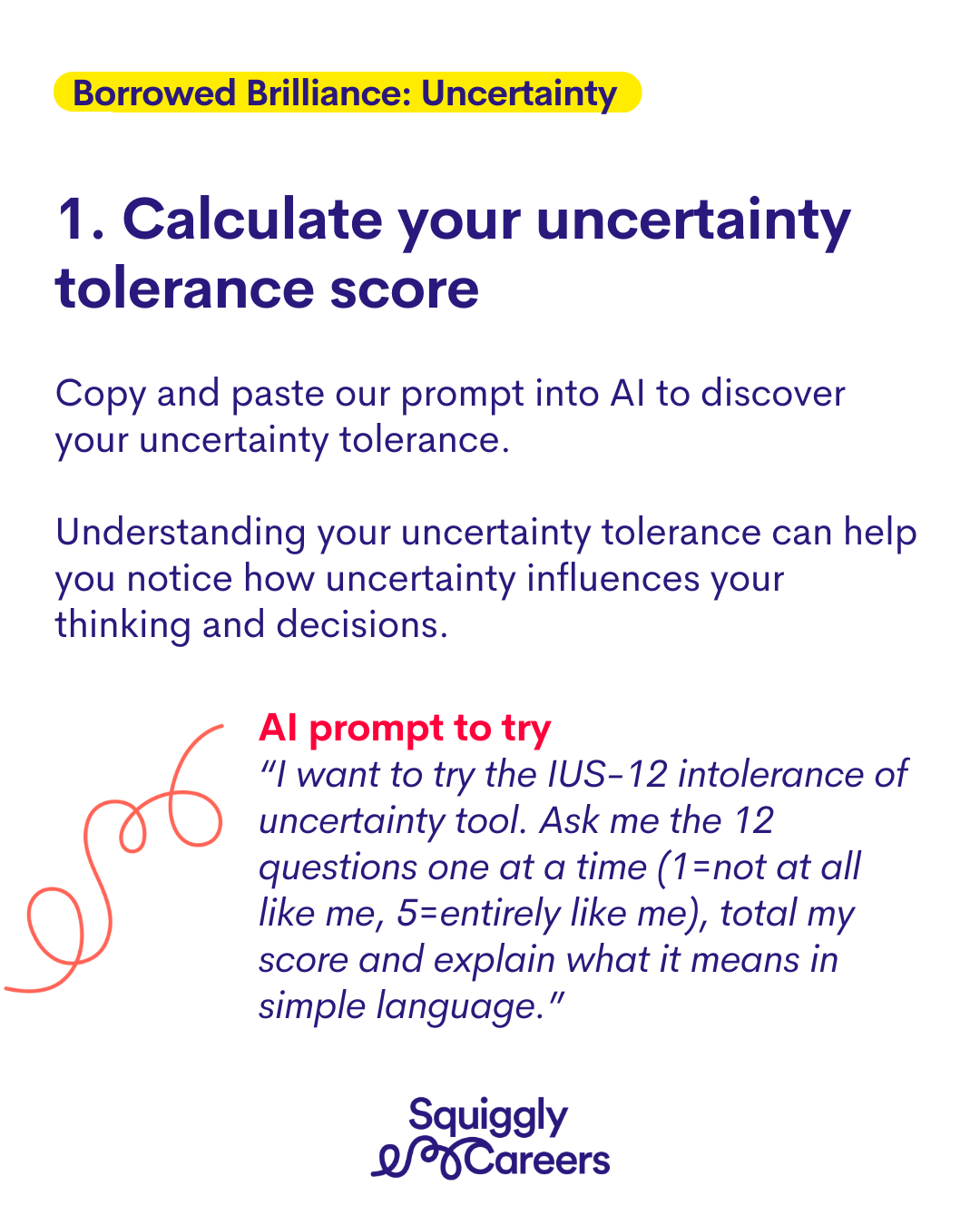
Sarah Ellis: Yeah. That must be particularly difficult. And that's one of the things, actually, you can do. So one action you can take is to figure out your uncertainty, intolerance and sort of tolerance score. So basically, like, how well do you cope with uncertainty today? And I think that's quite a good place for, like, everybody to start, because I think everybody probably starts from a natural level. And I was just thinking about your question. I wonder if that also changes a bit with context, like where you're working at the moment, what's going on in your life at the moment? Like, we've both done that and we both actually got nearly an identical score. Right. Like I got 19 out of 16, you got 18, which actually means we've both got quite a high capacity for uncertainty. But then we were reflecting on. But we have quite a lot of control. Like we run our own businesses, we both have relatively stable lives outside of the work that we do. Most of our uncertainty comes from work, but we have each other to kind of figure our way through that. If I had then taken that assessment, maybe when I was working for someone, would that score have been different? I think it would have been. And so some of this is also about the environment I think that you're in at the moment. But what's useful about doing that if you want to do your own uncertainty, intolerance or tolerance score? Helen and I were like, oh, how can you do, how can everybody do that? We have written a prompt that you can put into your AI tool of choice, trying to be agnostic. I use Claude, obviously, because I love Claude, but you can actually tell it to create the score. We'll put the prompt in the pod sheet. It'll do the assessment for you. There's one that is 12 questions and then there's one that's 27 if you really want to dive into it. And I think that just gives you a useful starting point. It also helps you reflect on some of the things we're going to talk about in terms of which parts of uncertainty do you feel okay about and which bits do you find hardest, just
Helen Tupper: in case we've got any new listeners. The pod sheet is a one page summary that we create for every single episode and we will link to it in the show notes or you can just go to our website, amazingif.com there's a podcast page and you find the podcast, then you click on that and scroll down and you'll get your pod sheet there.
Sarah Ellis: So one thing that is interesting is when you read about uncertainty in relation to leadership and management. And I think lots of leaders and managers put themselves under pressure to have the right answer when there is uncertainty. They think their job is to provide certainty. That's part of being a leader. You look up to your leader and you're like, well, you, you create this clarity for me. But then actually when you read about what people want when they, when they say, like, well, what do you look for from a great leader? Like someone you want to work for and with, people say, well, Actually, I would much prefer somebody to acknowledge that I don't know something yet. And I'm going to work with you. We'll figure this out together. I'm going to trust the process and the different practises that Margaret Heffernan talks about around getting good at embracing uncertainty. She talks about curiosity, courage and patience. And we were both saying, we think patience is a really interesting word because I think when something is uncertain at work, you have to have the kind of patience and trust in the process that you will find your way through without feeling like we're trying to predict or without maybe trying to, like, shape too soon. And there's a guy called Simone Stoltsoff who is actually. Got a new book about uncertainty that's not out yet, but he's written an article and he says being a leader is like sitting in a rowing boat on a foggy lake. You can't see far ahead or know precisely where you'll end up, but you have two jobs to maintain faith that you'll eventually reach land and to keep rowing. So, you know, to me, that's a real patience, trust the process. But that can feel hard.
Helen Tupper: I have a counter memory to that quote, which was, I was swimming in Australia. I think I was on, like a tour in Cairns or something. I was like, going to Barrier Reef or something and. And, you know, it was. You've been swimming around. You're supposed to have, like a buddy. I think I was with my cousin. You're supposed to have like a buddy when you're swimming. And I saw a shark and they did warn us that we would see potentially seashells and not to panic, panicked and I just swam. I just swam and I was swimming, but I realised I was swimming into the sea after about some.
Sarah Ellis: Well, like, towards the sharks. So not only.
Helen Tupper: Yeah, we'll just into the deep unknown. So I was just like, you know that.
Sarah Ellis: Just like.
Helen Tupper: Just trust that you will. You will get to land. Not if you're me, because you're just. You're just swimming deeper, deeper. And I left the buddy basically said, don't panic, don't leave your buddy. The first thing I did was just swim deeper into the situation.
Sarah Ellis: That also tells me something about your lack of direction.
Helen Tupper: Yeah, I mean, that. Yeah, that is. That is true. Just a quick question on the patience point, because we came out quite well on the older uncertainty tolerance scale with our scores. If you were to rate yourself on patience, if patience is a component of the tolerance uncertainty, how. How do you. How good are you at that?
Sarah Ellis: It's a really interesting question. So I don't think a. I don't think it's a question I've ever asked myself. So you're like, well, that's. That's interesting in its own right. You're like, oh, that's a new question. Around the skill of being patient. How patient do I think I am? I don't know. I think there are some things where I'm very trusting of the process, where I am really happy to, like, you know, they talk a lot about, like, letting go, holding, holding, like believing that you will get to something. And I think then I can be patient probably because I trust myself, you know, Like, I trust the process and I trust myself to, like, keep going and be curious and be brave or whatever. But then I think if something feels really uncertain and maybe it's not just about me, it's not just something I'm working on, then I think I can be a bit like. I can be the opposite. I can be not patient at all and sort of feel like, well, we just need to sort this now.
Helen Tupper: I think it could be a future podcast episode, you know, the patience in patience payoff. Because I think there are some times when it pays to be impatient.
Sarah Ellis: Yeah, I do some.
Helen Tupper: When actually you probably don't. You want to practise patience and you want to do it very. You want to do it kind of very consciously.
Sarah Ellis: Yeah. Do I think I'm a patient person? I don't know. Do you think you're a patient person? No, no, no, no.
Helen Tupper: I think I probably quite.
Sarah Ellis: No. It's also tricky, isn't it? Because it's like, do you start to conflate sort of patience and pace? Because I'm like, you're a pacey person. But I'm like, is that the same as being patient? Like, you're patient with me? I, like, see you being patient with me. Sometimes in a deep breath, I can see you being like, right, okay, tape. And being. And giving me, like. But part of being patience, that's because giving people payoff.
Helen Tupper: So that's. That's why. Because I know that the. That your difference is best, you know, like, there's a. If I know.
Sarah Ellis: Yeah, yeah, yeah.
Helen Tupper: No, I do. You know, like, say we're writing a book, and I know that there's a process. You have a different process to writing a book than me. But there is a big payoff of having patience with that process because the words are better and they're more considered and we're more critical. Like, I've been friends with you long enough to know that that patience pays off. It's definitely worth it. But I think probably some of the ways, maybe not.
Sarah Ellis: Maybe I've taught you to be patient because you've had to work with me.
Helen Tupper: Like, I've had to learn from Sarah Ellis.
Sarah Ellis: I've had to learn to be patient. Yeah. But it's because that is a consequence of working with me. One thing that is really interesting I'd be interested to get your take on. And this is a diagram in Sam and Catherine's book where they talk about, is it more important to you to be seen as decisive even if it leads to a negative outcome, or is it okay to be indecisive if that leads to a positive outcome?
Helen Tupper: So do you know what I think is hard here? In the moment, I would always want to be seen as decisive. I want to be seen as someone who is decisive. And I don't think. It's almost like it's a retrospective thing, isn't it? So if you said, like, in the moment you want to be seen as decisive, I would always opt for. I would always opt for decisive rather than someone who's indecisive. But you've nuanced that a bit, because. Decisive, but it's a bad outcome versus someone who's seen as indecisive.
Sarah Ellis: But it's a good outcome in the context of. They describe it here a moment of uncertainty. So you're in that moment of uncertainty. It's a tricky one, isn't it?
Helen Tupper: It is really tricky. I think. I think maybe I'd still want to be seen as a decisive person.
Sarah Ellis: Well, if it helps, you're in the majority.
Helen Tupper: Okay.
Sarah Ellis: Because when they asked the general population, it was like, I think this is. Yeah, It's a percentage. 71% of people choose being decisive. 89% of leaders choose it.
Helen Tupper: Oh, okay.
Sarah Ellis: So it's like it's the majority anyway, but then it spikes and probably because as a leader, maybe, like we said, you kind of put yourself under that pressure. So I think this ability to uncertainty isn't going anywhere. And I think whatever your role, this ability to have the capacity to hold the uncertainty is really interesting. There's a HBR article by a lady called Annie Pescom, who I'd not come across before, but it's a brilliant article where she describes this, and she has a couple of sentences that I think are just worth reflecting on. She says, capacity is different. It begins where competence ends. And her point here is, basically, you can't just rely on being competent to find your way through uncertainty. It is how much you can stay present when action will not resolve the tension.
Helen Tupper: I find her quote the hardest.
Sarah Ellis: It is the extent to which you can hold complexity and tension long enough for meaning to emerge. It's tough, though, isn't it?
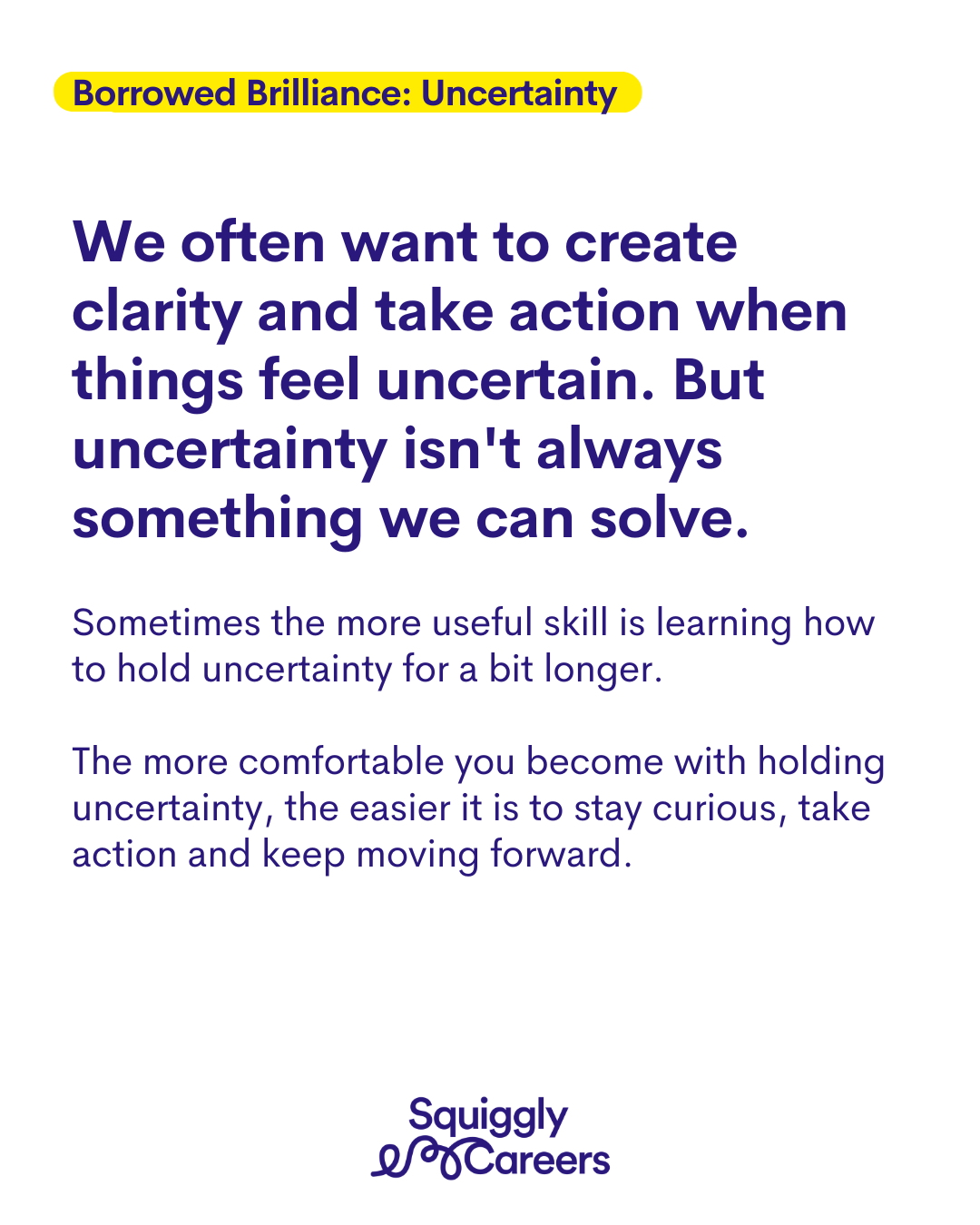
Helen Tupper: It is tough because I'm like, well, but when do you know that it's a meaning? I feel like I always want to create clarity and take action in uncertainty. And I'm not saying that that is always good. And actually, this whole podcast has made me think, like, how could you hold it for longer? Because I don't think I hold uncertainty for very long. It's not that I have to move to certainty, but I try to create
Sarah Ellis: clarity, and I think that might be okay. Okay, yeah. Maybe that's just my point of view, but I don't know. But I think there is a difference between clarity and certainty. So I think if you've got something that is. There's lots of uncertainty on a project you're working on, you could still create clarity that doesn't ignore the things you don't know the answer to. Right. One way to create clarity from learn like a lobster would be to create a don't know notebook that creates clarity. You've not. You don't know all. You've not created certainty. You don't know all of the answers, but what you have done is gone. Let's take team learning about AI. Cause we said AI creates a lot of uncertainty. If you wrote a don't know notebook about AI as a team, you've created some clarity on what you don't know, but what you have not tried to do is solve everything or get to certainty on answer the question, what does AI mean to our team? And so I do think there is sort of a, like, everything. There's sort of scales of it, isn't there? And I don't think what any of these people are saying in any of the work that I've read, no one is sort of saying, leave it. Yeah, hope for the best. Don't do anything.
Helen Tupper: I think be very passive. Just let it happen to you.
Sarah Ellis: I wonder if there's a difference between, you know, she talks about, like, you can't just take actions that are going to sort it. I think it's sort of letting go of, like, the immediacy of, like, well, if I do this, then that's. It'll be sorted out. It might be more about. But it's an active process and I think they might be very different. Things. And when you do read Margaret's work, which is brilliant, you can listen to her on lots of podcasts talking about embracing certainty. You don't need to read the book if you don't want to read another book. And she's got some really good keynotes, so all available on YouTube. All about embracing uncertainty. She is really clear. She's like, would you want everything to be certain? You know, ask the opposite question. And then she runs through an example of what your day would be like if you had full certainty. And she's like, it's everyone's idea of hell. She literally describes it as like a prison robot. Well, that's what it is. It's like a uber efficient, slick, predictable world where there's no, I don't know, there's no discovery joy. There's no joy. And she says uncertainty is the great propulsive power behind curiosity, learning, discovery, and invention. It's the essence of being human. And I'm like, oh, if you start, you know, I do wonder whether there's sometimes just a something that holds us all back as we go. Uncertainty equals bad. Whereas actually. And back to Simone's work, he actually talks about if we go. Uncertainty equals opportunity to learn. You go into what scientists call the approach mode. Our blood vessels dilate and we get more oxygen to the brain, which allows us to explore new ways of thinking. And so, you know, but I feel like with uncertainty, there's just quite a lot of, like, unlearning and relearning. So, like, you are unlearning uncertainty to certainty. You are unlearning. Certainty equals bad. You are kind of relearning. Uncertainty equals opportunity to learn. You're unlearning. Uncertainty equals take loads of action immediately. Uncertainty equals holding. And it's more of like. And it's about patience, you know, Like, I think I find some of those from and to's are quite helpful around how you, like, navigate some of the uncertainty.
Helen Tupper: It is interesting, though. Cause the way that Sarah and I, it's like insights into our podcast process. We pick a topic and then we both go away and look at it. It's always interesting to see where our brains go.
Sarah Ellis: I mean, I went, McKenzie, this one really showed our differences, I think.
Helen Tupper: And then we have a document that we both basically, like, just dump all of our thoughts. And then we get together before we record and we discuss and try and align and, you know, like, what do we think? What do we think? And so in the document, Sarah had got like, reams of thoughts.
Sarah Ellis: I've got quotes, musings, reflections.
Helen Tupper: I had some traps and a matrix.
Sarah Ellis: Let's move on to the traps and the matrix.
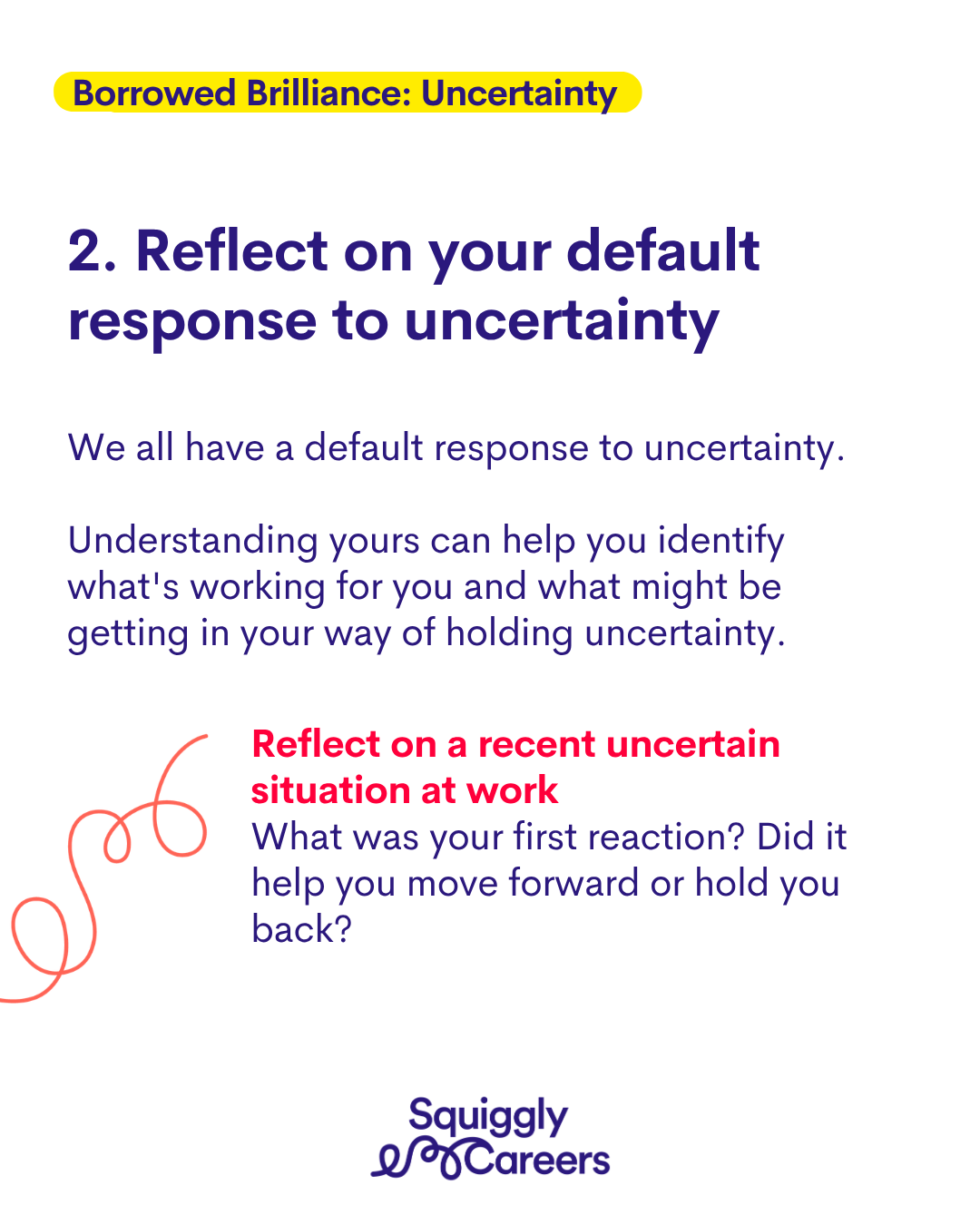
Helen Tupper: Well, I think we could leave the traps behind a little because I think we talked about them. But I do think, I do think my thought process was. I do think it is useful to reflect on your own default response to uncertainty and just, and just, I think just, just to cheque in do. I think that always works for and against me. So if you always, you know, for example, the clarity point that I mentioned, I think whenever there is uncertainty, I try to quickly create clarity. When you were talking, I was going back to like when I worked in innovation. And innovation is an inherently uncertain field. Like you're producing things, you don't know if they work and you're doing it for a market that might not be there yet, all that kind of stuff. And we used to do a lot of like scenario planning. You know, like, if this, then that. If this, then that. And it wasn't. You were trying to create certainty because you didn't know which, which outcome would happen, but you were trying to kind of, you know, sort of like create a bit of clarity, like, where would we go? That kind of thing. And I think my brain, my brain does that. And I think it works for me and I think it works for the people that I work with too. Because sitting in complete, you know, the hold, I do find it to sit in it. That's why I didn't like that quote. I didn't like it. But, you know, the.
Sarah Ellis: But my challenge back to you is, is that it works for you and works for the people. But is that because everybody's just searching for certainty. So, you know, like, are you falling into the trap? Have you just.
Helen Tupper: I just worry that if we're all just sitting here waiting for meaning to
Sarah Ellis: notice, not waiting, holding.
Helen Tupper: Holding. What did she say?
Sarah Ellis: It's a really good article. I would really recommend it.
Helen Tupper: I'm not sure I like the quote. I find it hard. I find it hard. Which is an insight.
Sarah Ellis: It's how much you can stay present when action will not resolve the tension. You can't, you can't act your way through.
Helen Tupper: We said wait for meaning to emerge.
Sarah Ellis: It is the extent to which you can hold complexity and tension long enough for meaning to emerge. She gives some very good examples of
Helen Tupper: how it is very interesting. I find it a very interesting quote. There's lots of it I find uncomfortable, which says more about me.
Sarah Ellis: Like, that's because uncertainty holding is uncomfortable. And also if you think about Even like how organisations are set up. It's back to like ladders, to squiggles. And what is rewarded in organisations is holding and maybe inaction and trusting the process and being patient. Are those the things that are rewarded and looked for? No. No. So you like, you know, like you learn that certain ways of thinking and being.
Helen Tupper: I just think I'm not wait for meaning to emerge kind of person. I'm a create meaning. Like I'm okay, I'm going to go find some things that feel meaningful and some of them might not be the old meaningful.
Sarah Ellis: And you've had to do it with things that we've worked on together where you don't, you have to like hold that. We don't always know the answers yet and we have to trust in each other that we'll get to some ideas at some point.
Helen Tupper: Yeah, but I think something's happening, you know, we're experimenting.
Sarah Ellis: Yeah, but that's like the, that's what I mean though. I think it's solving. You're experimenting and that's quite different.
Helen Tupper: Yeah, that's what I think that backs that default responses though. I think I would go, okay, this is uncertain. So let's try and create some clarity. Let's, let's have a framework to see if it helps us make sense of a situation or like, I don't think it means solving and I don't think it means leaping to certainty. But I've, I think I, I do like to move people. I don't like to sit for too long in it, which may or may not be right. It's just my response. That's my point. Like reflect on your response and think, does that work and what influence are you having on other people? All that kind of stuff. I think it's just useful.
Sarah Ellis: Well, one of the things that Sam has found. So through Sam and Catherine's book, they get people to do like, what's their tolerance to certainty, to uncertainty? And then can they increase that tolerance through the toolkit, through the work that they've done? And they find two things that I find really interesting. One is that the thing that people feel most uncertain about is careers. Like careers is top of the list so far from what they've kind of found. And secondly, the big shift that they're able to support people with is almost like dealing with uncertainty internally, which is, you know, like overthinking, probably worrying in a way that feels unhelpful, probably stuck and stalling. You know, words that we hear a lot to actually, if you start to Maybe consider your relationship with uncertainty and your response and then what you might do and go through kind of some of the tools in his book. He has some really. I was doing a word search last Saturday. There's a word search in the book. And I was really happy doing a word search in my car, like, you know, waiting to pick my kid up, thinking, I'm quite enjoying this. So there's a word search. He found that actually when you kind of go through the book or some of the kind of the actions, the uncertainty stays the same. So I think if you're hoping the uncertainty is going to disappear again, you're probably hoping for something that's unlikely to happen. But people stop being as internal focused and start being more external focused. So to your point on action, what the external focus looks like is, well, what are the actions that I could actually take? So given the uncertainty, who could I go and talk to? What is the choice I am going to make? And it feels more positive. It does feel like something that builds momentum. So to your point, it's like, interesting because we were looking at his research this morning. What people are not saying is, oh, I'm just going to hold the uncertainty better. Actually, what holding the uncertainty better looks like for people is usually you're still doing something, but it's not expecting that action is then going to, like, solve everything. So I think it's okay.
Helen Tupper: Maybe it's my desire to talk about it.
Sarah Ellis: Maybe the toolkit is your. Maybe I'll go for the holding for Annie's work and you can go for Sam's toolkit.
Helen Tupper: Yes, I'm in. But I did also obviously create a
Sarah Ellis: matrix because it took me about 20 minutes to realise that that was ironic. And I was like, at what point is she going to think. But she's, she's coping with uncertainty by creating a matrix.
Helen Tupper: I feel like my learning from this whole conversation is like holding for me just means wait for five minutes before you create a matrix. Just wait five minutes, Helen.
Sarah Ellis: Well, I just hold it for five minutes. I was like, where's the matrix come from? I was like, what's the source? And you were like, oh, me? I was like, oh, okay. So even here, she's managed to die even here. So talk me through the matrix because
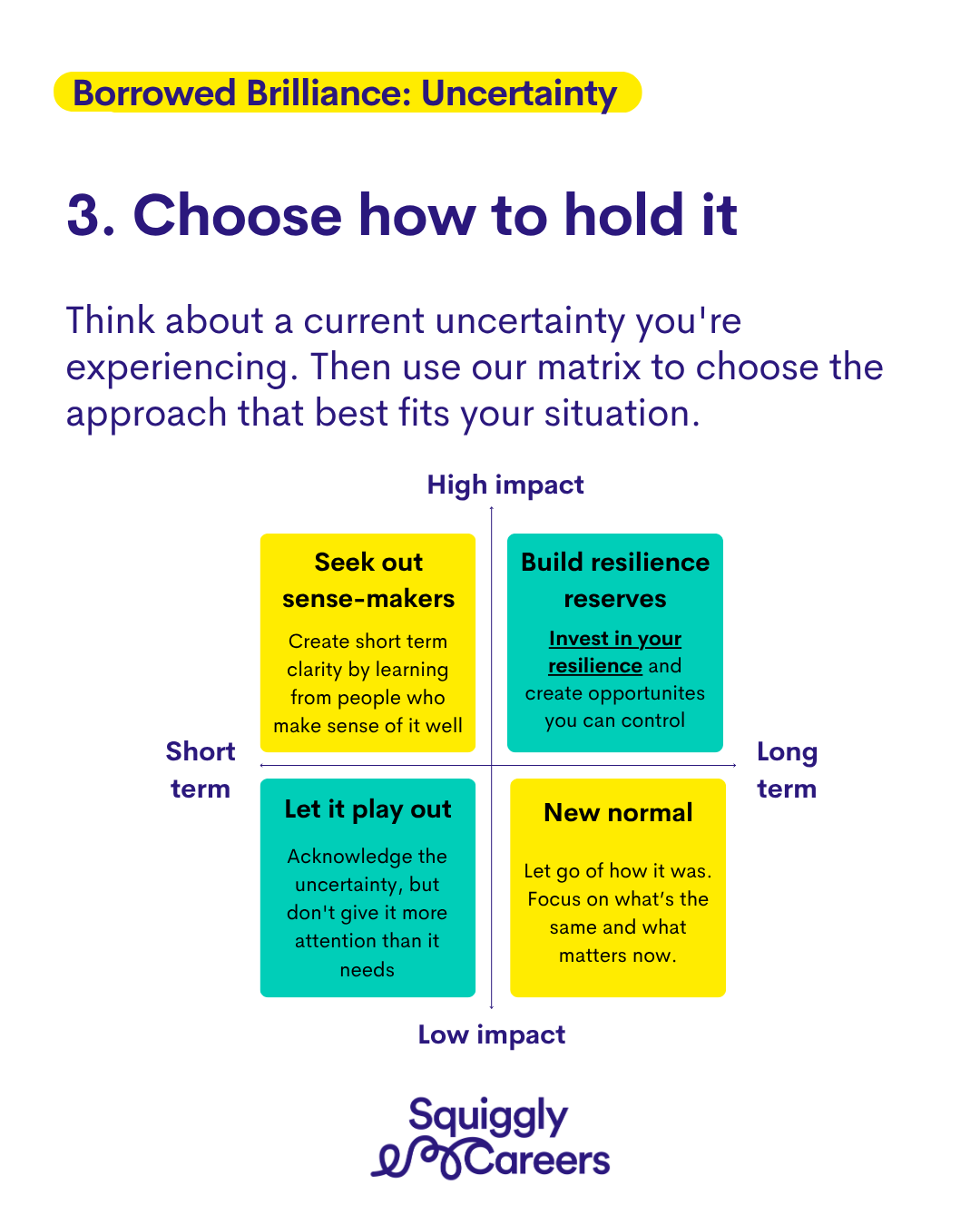
Helen Tupper: just in case some people might need a matrix to take this, this interesting conversation into something that they want to take action with. Obviously they've got sand stool kit. And so when I was reading about uncertainty, different sources to Sarah, one of the things that stuck with me was that Uncertainty isn't equal in every aspect. So you can be experiencing long term uncertainty. Like how is AI going to affect the world of work long term to short term uncertainty? Is my project going to get signed off next week? Like there's a kind of a length of uncertainty that's useful to be aware of and then there's an impact of uncertainty and low impact might be. It's a bit annoying but I probably get over it. And high impact is this is going to have a significant impact on me, my life, my career, who knows what else. And you can plot that on a
Sarah Ellis: matrix so you can, it turns out
Helen Tupper: you really can, really can. So just imagine a matrix is a two by two matrix and you've got on the kind of bottom, let's go bottom left of the matrix here. You've got. It's. It's low impact, it's a bit annoying but it's not that big a deal and it's not, it's kind of short term these, these kind of ones. I think you just have to let it play it out. You can acknowledge kind of. I don't quite know what's happening here, but you probably shouldn't. Yeah, don't spend as time like don't spiral. And it just kind of let it play out. It's some. Something's going to happen by the end of the week and it'll either go in your way or it won't go away your way. It doesn't really matter either way. And so you kind of. I think it's also useful to think how much my uncertainty sits in these different areas. But that's the least bothersome, I guess type of uncertainty. Now you might have one that is quite long term uncertainty but low impact. So like take the AI one, you might think, well yeah, I can see why that's kind of big and bothersome. But for me and what I do
Sarah Ellis: right, you know, it was probably love your word, bothersome.
Helen Tupper: Bothersome. Hey, bothersome. Why is that a bad word?
Sarah Ellis: It's not a bad word. It just feels like it's from like the 1950s. So where's that come from? I don't, I love to know how many people go uncertainty. It's just a bit bothersome. Everyone's like, I was reading Sam's research and people say like anxiety and fear and Helen's like, it's a bit bothersome. I mean it's a different frame.
Helen Tupper: A little bit bothersome.
Sarah Ellis: I'm enjoying it. It's really baby, I think we need
Helen Tupper: that more, more I think we should just drop bothersome into chat. More bothersome. Bingo.
Sarah Ellis: I'd love to know when that word was used the most. So I'm Gonna guess the 50s, but let's find out.
Helen Tupper: Can we drop any more archaic language into our squiggly quick conversation?
Sarah Ellis: Okay, okay.
Helen Tupper: So that one, if you're in the. Okay, it's quite a big deal, but it's maybe not that much of a big deal for me. I think that's just a bit of a reset. You kind of have to go, well, this is my new normal now. There's gonna be around. Everyone's been talking about this thing for ages. They'll be going on about it, but it's not directly affecting me. I think that's just kind of the new normal. What I think some people might do is they might kind of hanker for the old ways of doing things.
Sarah Ellis: I had a good example of this one where, you know, you hear a lot about, well, young people because of hybrid working, young people can't learn from more experienced people or their leaders in the same way. And so. And then what people sort of default back to is the old way. Well, you know, you need to be sitting next to someone.
Helen Tupper: Yeah.
Sarah Ellis: And like, you and I both experience that. I like, I do believe learning by osmosis happens. Like, I love those leaders that I work for, and I did learn a lot in that way. But then I heard someone describe to me what they're now doing, and I was like, this is such a good example of, like, embracing the new normal where they do because everyone's hybrid worker. So rather than just going, well, we've all got to be in the office all at the same time. It's just unrealistic to do that. All people are in global roles. They do these, like, live working moments where, let's say I'm the leader and I'm going to create a proposal, say, for one of our learning partners. Someone from our team actually comes online and, like, we work on it live. But they sort of. It sounds a bit creepy, but, like, they watch you. Yeah, they kind of. And I was all, crikey, imagine someone, like, watching me trying to be like, all right, what do I do? But they actually, like, see the process in action. But also you then create space for the people to, like, ask questions. And then they might be doing things a bit on it as well. Or you, like, do it for a period of time. But they are sort of learning by kind of watching, learning by noticing. But they see the process. You go Through. Yeah. And they like, they're really sort of trying to like make that a ritual.
Helen Tupper: Yeah.
Sarah Ellis: So that people don't miss out on things that maybe leaders take for granted or other people are just more experienced and have to be a leader, take for granted that they know how to do. But you're brand new into a company and you're like, how do you, how do you figure out what to put on the first page of a proposal? Oh well this is. You literally kind of see that thought process. And I was like, oh, that's such a good example.
Helen Tupper: I think you can get caught up in those situations where it's sort of a long term, big impact, but not necessarily on you directly. Sometimes you can get a bit caught up in the noise of all that and I think it's just embrace the new normal like, but don't get caught up in the noise. Just, just kind of let go of how it was, embrace the new normal and just kind of kind of go with it a little bit. The other sides of the matrix are where something is, it has a high impact on you, but it may be it's a kind of short term situation. So I don't know, you've got team changing, team changing, kind of maybe like a, I don't know, team changing, budget cut or something like that. So it's got quite a big impact on you, on your work, but it's not gonna, it's not gonna be an impact forever. I think in that a really good response to that kind of uncertainty is to go seek out some sense makers. So people who've been in this situation before because that'll stop you getting unstuck, it means you can learn quite quickly, you're less likely to spiral. Cause I'll be like, oh Sarah, what would you do? What did do and what would you do if you were me? Like quite good, like sense making people, sense making questions. And I think the hardest type of uncertainty as a situation to be in is where it is high impact and long term. So this might be, it's me and Sarah. There's something, something's happening with our business. It's gonna have a really big impact to the ongoing, I don't know, the ongoing growth of our business. And this is probably going to happen for quite a long time. This is not going to get sourced or solved quickly. I think that's quite, I think that's the hardest box of uncertainty to be in. And so in there your response to that, I think your first response is to invest in your resilience reserves. Yeah, because you can't.
Sarah Ellis: You.
Helen Tupper: You can't just solve this very quickly. And so your ability to stay present. I will go back to that quote.
Sarah Ellis: Okay.
Helen Tupper: Your ability to stay present, I think requires resilience so that you're less reactive or emotional or all those things where we kind of haven't got that sense of self control. We have done a podcast on resilience reserve, so maybe we'll link to that in the pod sheet and also try to create opportunities. Maybe try. And back to. Again, your point about uncertainty is an opportunity because you could be a victim in that situation. This is super hard and it's going on for a really long time and there's nothing I can do. Like, pessimism is not going to help you if that's where you are. So creating opportunities, building your resilience is a really good response there.
Sarah Ellis: So from this podcast, what is one thing you're going to do differently or do more of? Because it might be differently the next time you find yourself in an uncertain moment at work, has it sort of changed your mindset as it made you reflect on your skill set?
Helen Tupper: I think I might ask more about how are other people feeling? Like, I think everyone a bit of like the leader thing and the decision making and the clarity and all that kind of stuff. I think I go, optimism bias. I know this is difficult, but there's going to be some good things at the end of it. Here are some things that we can do. You know, I think I tried to create clarity and give that to people, and I think I might just sit in it a bit more and be like, how are you feeling? What are you thinking? You know, not what are we doing? But I might. That's a way that I might just hold and accept that we might be experiencing this differently. And not everybody's need for clarity in that moment might be the same need as mine. So that's my version of holding. What about you?
Sarah Ellis: I was thinking it's helpful, actually. Also involving other people. Helpful to sometimes signal and say out loud like, we don't know that's okay. And we think actually sitting in that don't know world is going to get us to a better answer than trying to create too much clarity or trying to. Certainly trying to create certainty. But I do wonder whether. I think probably both of us, maybe one more than the other, have a tendency. You are brilliant at creating clarity. And I would never want to take that. I would never want to take that away, but I wonder whether there are certain projects or things that we might work on where you're more intentionally actually embracing uncertainty. I think, you know, like, almost the words you use around uncertainty are interesting. And I think Margaret Heffernan's. Even the fact she called it embracing uncertainty and almost being intentional about that uncertainty, about that curiosity, that courage and that patience. I think you could proactively spot in what we do. Where the uncertainty is actually going to work for you is like, that's a. It'll still feel uncomfortable and it will still be hard, and we're still gonna have to hold. But I think if you had intentionally gone, well, this is helpful for this piece of work or this project. I think you just approach it differently what you say. Not being. Trying. Not trying not to worry too much about creating clarity, like the questions that you ask, what you say to other people. So I sort of almost like the idea of creating the uncertainty, which is probably. I do think we are in a privileged position to be able to say that. I think some people would be. And I've been in those positions for where I'm like, I don't want. The last thing I want to do is, like, create uncertainty. But probably from reading all of this and spending a lot of time with it, I find it quite motivating. Yeah.
Helen Tupper: Because of the opportunity.
Sarah Ellis: Because of the opportunity. Because I want the positive outcomes.
Helen Tupper: Well, it would be good to get some feedback on this, I think, from our listeners.
Sarah Ellis: There's going to be a lot of links team. There are a lot of. I have done too much work. Work on this. And so you are getting every link that I have.
Helen Tupper: Thank you for listening, everyone, because I think it's probably a longer listen. And you've got. You've got both of my.
Sarah Ellis: Do you reckon anyone is still listening?
Helen Tupper: Let us know if you're still listening. But, yeah, I think. Let us know what you're thinking that. I think that would be useful. Can you. Are you kind of more in Sarah's camp of, like, just kind of creating the uncertainty and seeing the benefit of that, or are you in the. No, I think I'm just gonna. I'm gonna using. I think I'm probably using clarity as a proxy for certainty. I'm, like, cheating a little bit, but, um, it's just interesting. Very interested in your reflections. We have been reflecting on this. We definitely think is an important skill. And I think the key point that I heard you say was it's not going anywhere, so you can't ignore this. And it is very useful to think, how do I want to respond to it? So it works better for me.
Sarah Ellis: So if you have stuck with us through the whole of the episode, thank you so much for listening. For everybody who does rate, review, subscribe, every single one of those actions makes a massive difference to us. And we do really, really appreciate it, whether you listen or watch or share with other people. But that's everything for this week. Thank you so much for listening. And we're back with you again soon. Bye for now.
Helen Tupper: Bye, everyone.
Sign up to the Squiggly Careers Newsletter and get our latest ideas, tools and inspiration every week - all in one place, straight to your inbox