
In this Squiggly Shortcut, Sarah shares how to bring small, low-pressure moments of play into team days, without falling into the trap of forced fun. She shares why play matters for learning, connection, and wellbeing, and offers simple, practical ideas that teams can try in just a few minutes.
Need some more squiggly career support?
1. Download our free careers tools
2. Sign up for our Squiggly Careers Skills Sprint
3. Sign up for the Squiggly Careers Newsletter, a weekly summary of the latest squiggly career tools
4. Pre-order our new book, Learn Like a Lobster.
Hi, I'm Sarah. And in this squiggly shortcut, I'm going to be talking to you about small ways to make play a part of your team day. Now, caveat, before we even get started, what we don't want to do here is create forced fun that everybody dreads. You know, I'm the biggest cynic and most sceptical person when it comes to that. So what we are trying to do here is to design small pockets of play that. That feel very low pressure, really easy for everybody to get involved in, and in some ways, sort of optional, so people can share what they want to share, but are not being made to do anything they don't want to do, because nobody likes that.
But play is really powerful. It doesn't get talked about that often at work. But I've got a couple of really nice quotes that I wanted to share with you. One doctor, and he also wrote a book, an author of a book called Play, Stuart Brown, says “when we stop playing, we stop developing”. So, like, playing and learning go hand in hand. And Linda Grattan, who, if you watch lots of our work, you'll know we're a big fan of Linda's work and her book, the Hundred Year Life. She says “we are much more likely to love our work when we see it as play”. Again, I'm not expecting you to see every day at work as play, but I think it's just this idea of, like, we can be playful in what we do. And so if you've got a team day coming up or you're spending time together, whether that is virtually, could even be a team meeting or in a room, some ways that you could use play to connect, to get to know each other and just have a bit of fun too. And I think we've done pretty much all of the ones I'm going to talk to you about today. So I've seen them work. And like I said, even as someone who's a bit more sceptical, I can reassure you that these. These feel fun in kind of the best. The best possible way.
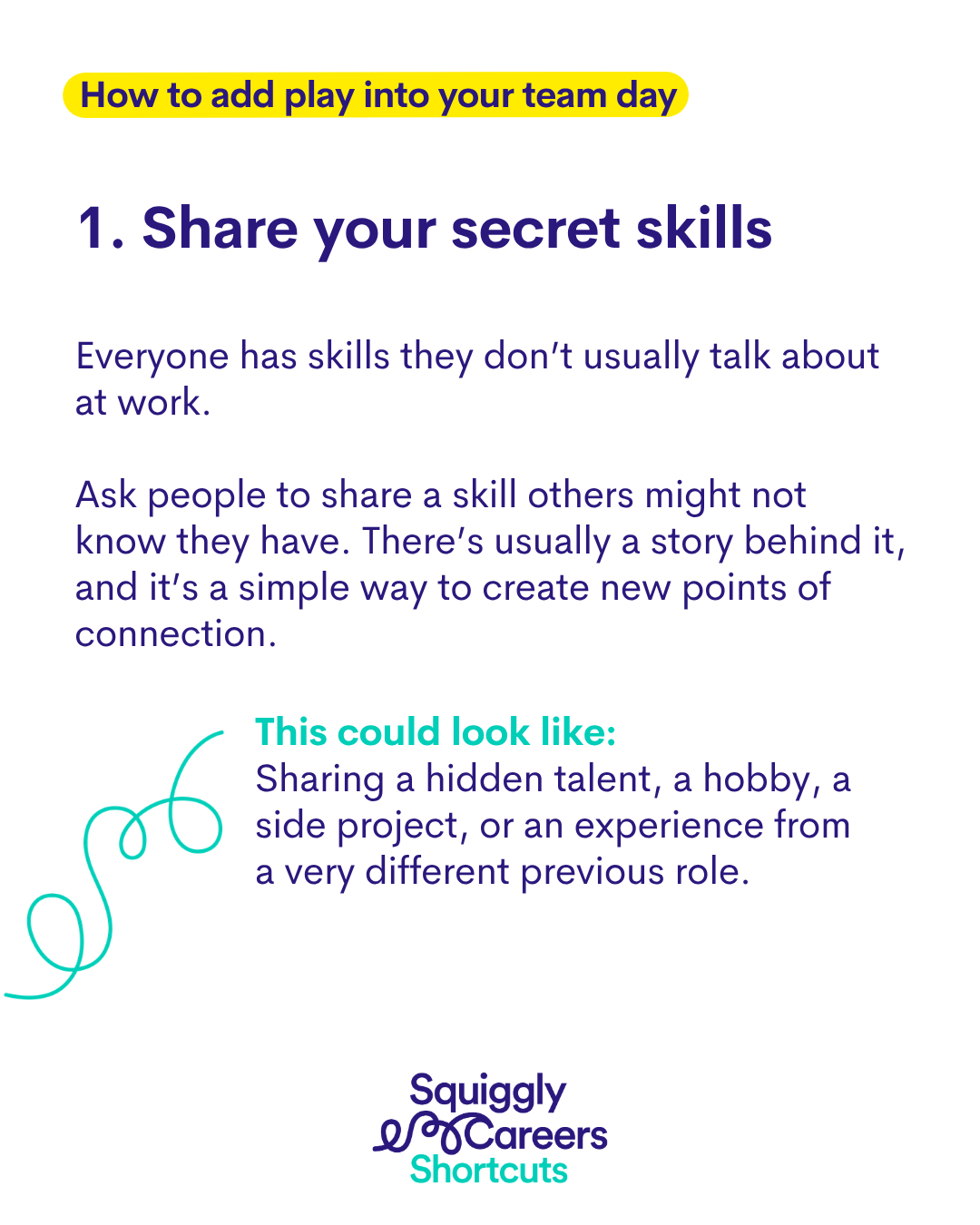
So, number one, secret skills. Everybody has secret skills that they just don't talk about at work unless you know each other really, really well. So just get everybody to share a secret skill they've got. We've used this on the podcast before when we've got guests, when we're just getting to know a guest. Cause there's always a story behind people's secret skills. I've heard people talk about, like, DJing, crocheting, some people talk about like previous life professions like, oh, I'm a trained pianist or I'm a trained beautician. Mine is always that I trained to be an aerobics instructor, but in the 90s, so in a very sort of leg warmer, grapevine type way. But if you do want to learn a grapevine, I can totally teach you. So there we go. That's a dangerous thing to share though, in a room where other people are there, because then they'll be like, okay, show us. So you've got to be ready for a bit of show and tell.
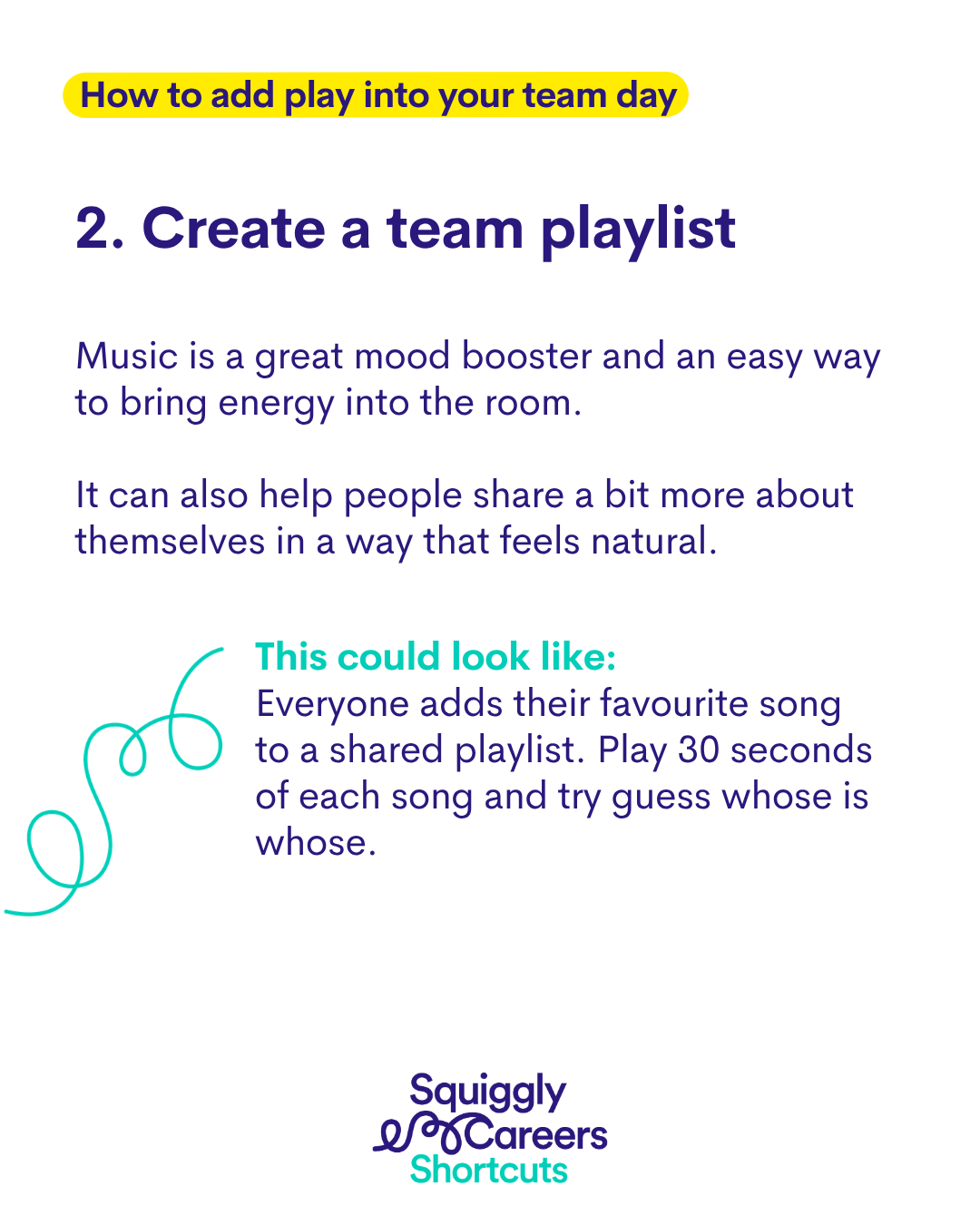
Two. Think about music. So music is always a real kind of mood booster for people. What about creating a team Spotify playlist? So the best way to do this is you need to nominate a team DJ. What's very helpful in our team is we actually have somebody who loves to DJ and everybody shares one song but sort of secretly so you don't know each other's songs. Then a snippet of the song gets played on the day and then people sort of have to guess like who chose that song. So, oh, it's a Ibiza classic that's going to be this person because they love to party, but it's often not what you think. And again, everybody has a story to share on the piece of music that they chose. It can be happy memories, sad memories, just memorable moments in people's lives. And I feel like you just get to know people in a new way. And again, these are all quite quick. They're probably between five and 15 minutes.
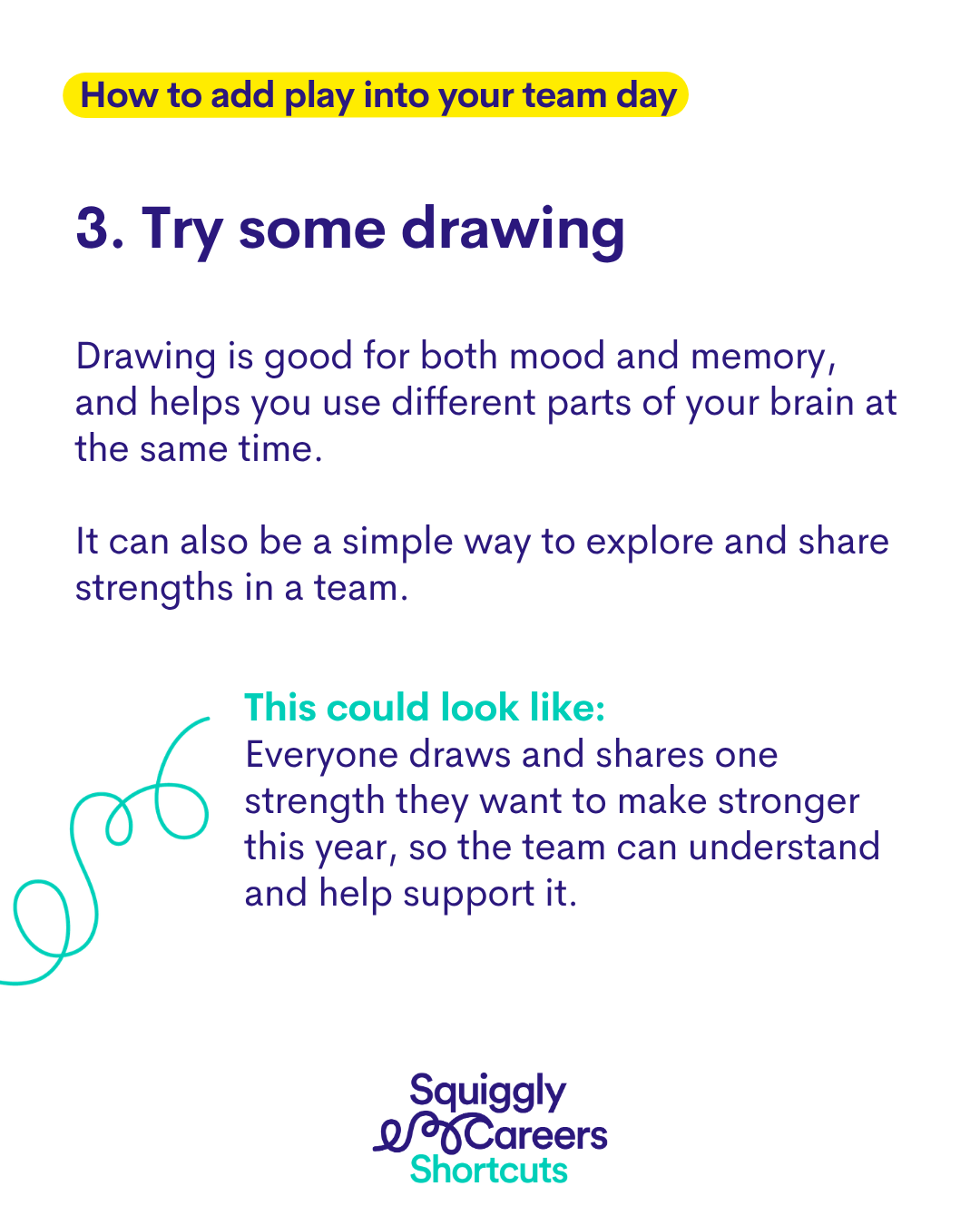
Number three, drawing. We've got an episode on drawing coming up in a couple of weeks’ time, so I recommend diving into that if you're interested in this. But we know that drawing is a good both for our mood but also for our memory. And it works lots of different parts of our brain at the same time. What often stops us from drawing is that we all tell ourselves we're not good drawers. But the point of this is not to be a good drawer. It's just to use drawing as a way to do something. So maybe you get everybody to draw their dream day. That's an exercise that we've done in the podcast coming up. Or perhaps you go into pairs and you describe your dream day and the other person draws it for you. Or you could get everybody to do a quick strength sketch so everybody gets a post it note. You draw on that post it note. One strength you've got. You want to make stronger this year, but you do it visually. Everybody holds that up and maybe you will talk about it for one minute. So we all get to know each other's strengths. That's always useful. We know in a high performing team, people's strengths are seen as useful and they're also well utilised. So if we can do some strength sharing as part of this and as part of our play, even better.
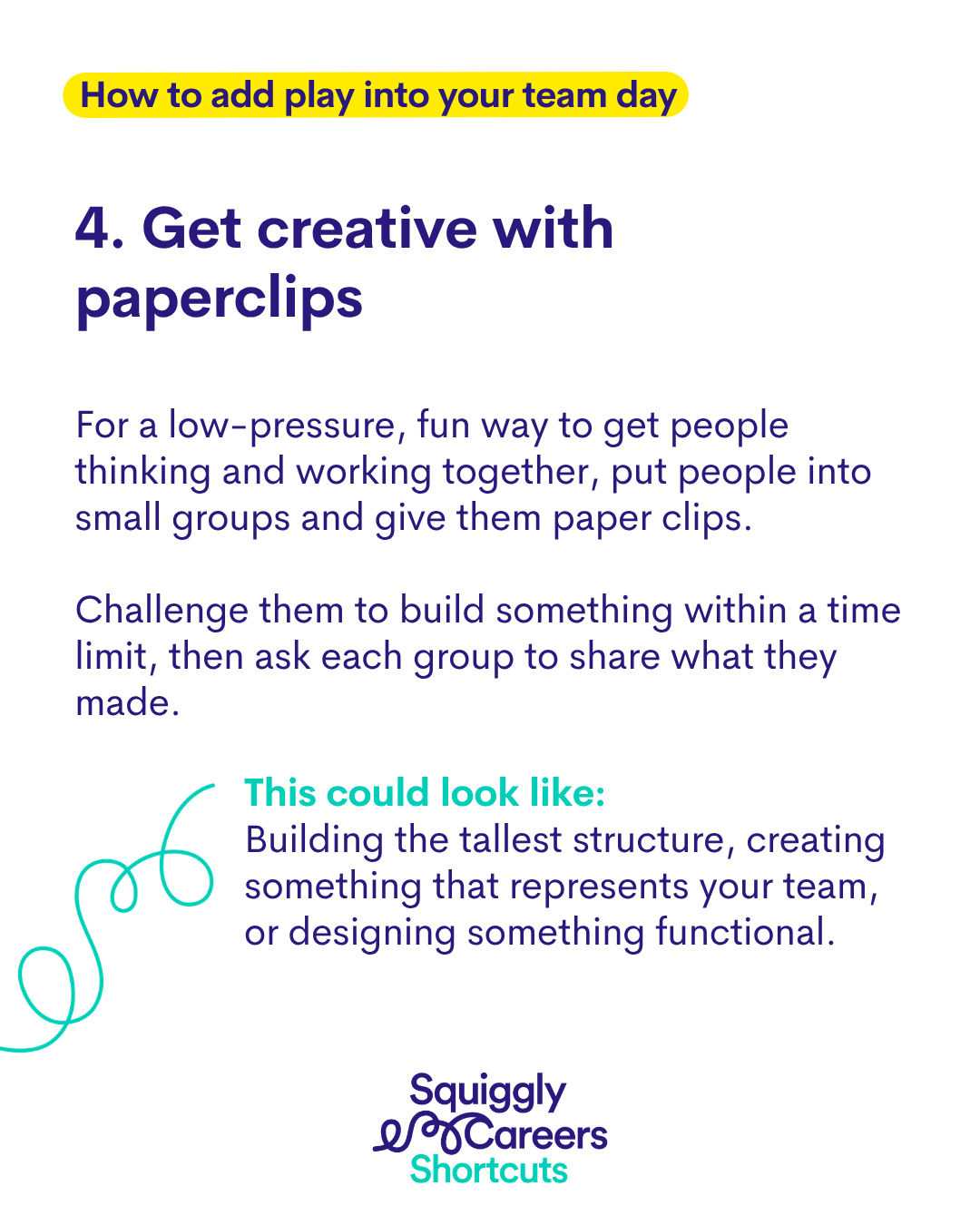
The next one is always super fun. And I think if you're very good at lateral and creative thinking, people are always good at. This one is like the paperclip challenge. So if you've never done this before, people work in threes and fours. You just get a load of paperclips and you see what you can create. I actually like doing this physically, but sometimes people just draw. Like, what can you do with paperclips? But I always quite like it when people build things. The classic one that I have to say I have done lots of times is that you get spaghetti and marshmallows and make the big towers. But I have done that so many times that I started to sort of know what you were meant to build, which makes it a lot less playful. Because the whole point here is it's not about winning. You don't really want. You don't really want winning as part of play. Playing for playing sake is what we're aiming for.
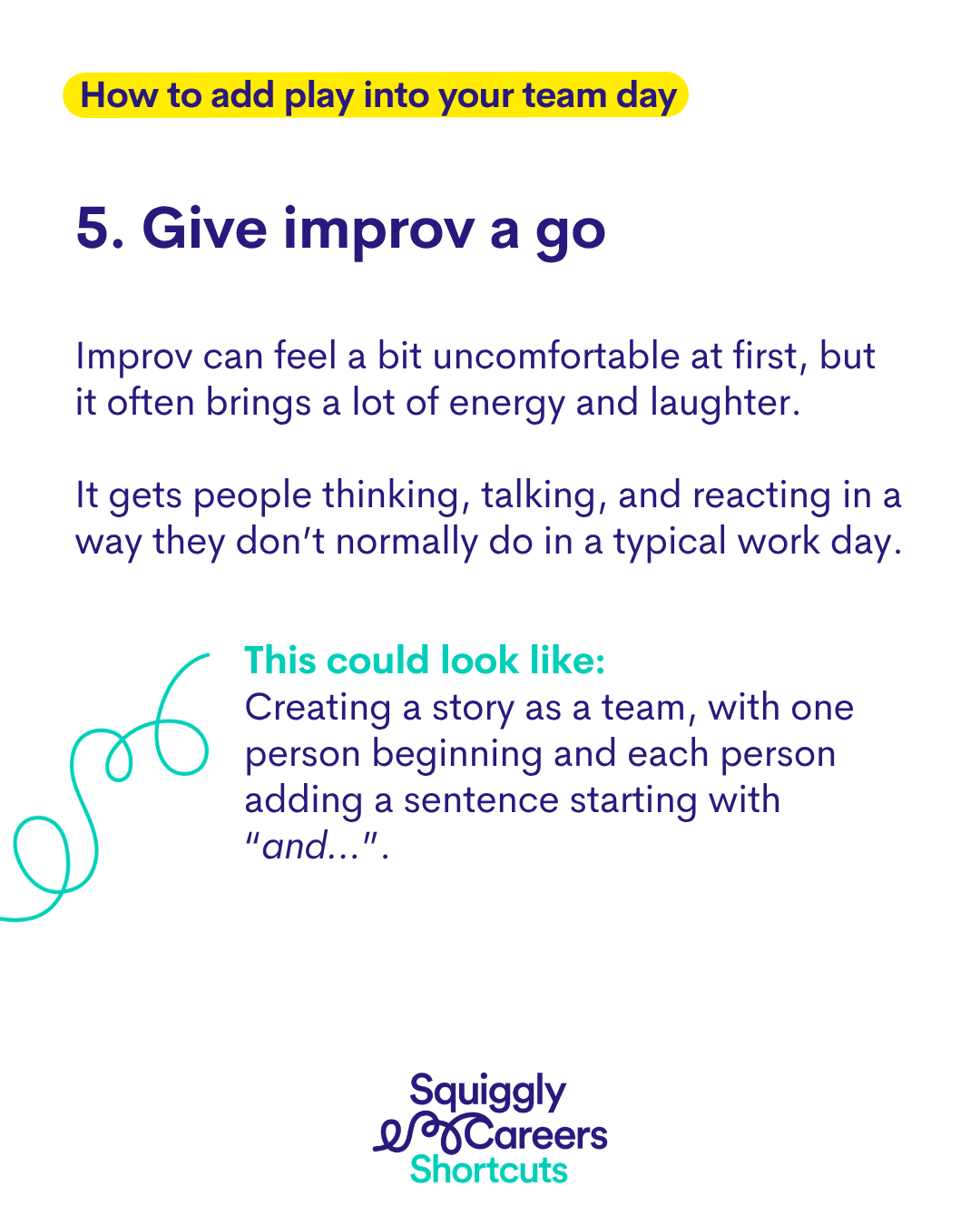
And then the last one, and this is perhaps a bit more involved, but definitely was really playful for our team and we've also done it for very big groups of hundreds of people, is having a go at some improv. Now, I know that can sound scary, but probably way scarier than drawing. But we did this with somebody called Max Dickens and Max came in and did an amazing job of making it accessible and easy. And there was so much laughter and energy in the room. And I've seen him do this with lots of different types of people, lots of different types of industry people at different stages of their career. And I think it is just a way of playing that just gets people thinking and talking and acting and probably moving in a way that they don't normally in a day. So that one is. Might be a bit more ambitious, but if you feel like your team might be up for that, I'd really encourage you to have a go. Again, as somebody who's introverted, that sounds like a nightmare. But I am talking from my own experience, it's nowhere near as bad as it sounds. As long as you've got the right person, sort of facilitating, I think, and helping you to make it happen.
There's also some really good things that you can read around this. So there was a great lady called Heidi Edmondson who was a doctor in an A&E hospital here in the UK, and she did sort of five minutes of play at the start of every day and one of those things was sometimes improv. And she showed that by doing five minutes of play in like a huddle at the start of every day. Wellbeing improved, sickness went down from the nurses, level of engagement went up. So these sort of small pockets of play in a team day, in a team meeting can have lots of significant benefits. It's sort of small actions, significant outcomes. And if you're looking for a book to read, I'd really recommend humour. Seriously. So Jennifer Aker and Naomi Bagdonis, who have both been on the podcast, talking about, like, why it's important to, like, have fun and levity and play at work, so you can dive into that too. And we did an episode, episode 441 on how to add play into your day and what that looks like. So some of the ideas you've heard today, but some extra ideas too. So I hope that's encouraged you to be a bit more playful as part of your team. I'd love to know what you have a go at. You can email at helenand sarah@squigglycareers.com or if you've got any questions, get in touch. But that's everything for this shortcut. I hope you're finding them useful and we'll be back with you again soon. Bye for now. Thanks for watching.
Sign up to the Squiggly Careers Newsletter and get our latest ideas, tools and inspiration every week - all in one place, straight to your inbox


