What does it actually take to go from good to great at work — and is “mastery” even the right word for it? In this episode, Helen and Sarah borrow brilliance from The Big Think’s collection of articles on mastery, and make it feel a lot more relevant to everyday squiggly careers than the word itself might suggest.
They explore two big ideas: how to master your response to tricky situations (think: the passive aggressive Canva comment, the “I’ll just do it” default, or the unexpected tears in a meeting), and how to master your ability to succeed — including how elite athletes think about risk and failure in a way that’s surprisingly useful for anyone with an ambitious goal.
🎯 What You’ll Learn
📚 Resources Mentioned
The Big Think — Mastery collection
For questions about Squiggly Careers or to share feedback, please email: helenandsarah@squigglycareers.com
Need some more squiggly career support?
1. Download our free careers tools
2. Sign up for our Squiggly Careers Learn Like a Lobster Skills Sprint
3. Sign up to the for Squiggly Careers Newsletter, a weekly summary of the latest squiggly career tools
4. Order our new book Learn Like a Lobster
00:00: Introduction
03:17: What is mastery at work?
05:18: Two areas of mastery to focus on for a Squiggly Career
06:04: Idea 1… Mastering how to respond to situations
18:36: Idea 2… Mastering your ability to succeed
24:30: Closing remarks
Sarah Ellis: I don't think mastery happens by accident.
Helen Tupper: We've picked two areas of mastery to focus on.
Sarah Ellis: You want to move from your response being a default. And we're trying to move from default to decision. And I wondered whether this was more about going from good to great.
Helen Tupper: What do you do when you respond in a way you don't want to? And they said that I didn't want to cry. It was not. And now I'm worried about what you're thinking about me because I'm crying. The failure almost just becomes a data point for your development.
Sarah Ellis: And then know that there will be these mini failures. And it's sort of what happens in those moments, I think then helps you with will you get to the ultimate, ultimate success.
Helen Tupper: You can only truly master one thing. According to Epictetus, I think he was Socrates friend, or maybe just of that, of that group. I don't know how to say it.
Sarah Ellis: He's probably not listening, so it's probably fine.
Helen Tupper: He's probably right.
Sarah Ellis: Hi, I'm Sarah.
Helen Tupper: And I'm Helen.
Sarah Ellis: And this is the Squiggly Careers podcast, where every week we borrow some brilliance and turn that curiosity into useful action for you and your Squiggly career.
Helen Tupper: And today we are going to be borrowing brilliance from the Big Think.
Sarah Ellis: I know it's exciting. I've not come across it before. It's a very Sara thing, I know. So I was looking at it thinking, how do I not know this? But that's exactly why we do the podcasts. Well, we do them for everyone, but for each other as well.
Helen Tupper: I feel like I spend a lot of my time sort of listening to events you're going to or things you're reading and being like, oh, that's good, that's a good book. I'll get that.
Sarah Ellis: I'll do that.
Helen Tupper: So it's always kind of novel when there's something I've found that I'm like, oh, maybe. Maybe you would like this too. And so the big thing is, I think mainly it's a website that will share really interesting articles. Not always about careers, just about the world. Some of it's a bit sciency, but I mainly engage with it via a newsletter. So I've created like a folder in my inbox where all of my newsletters go, which both saves my inbox and then means that on a Friday I have a scroll through my newsletters and then I'm like, well, that's interesting. Or that could be good for the podcast or what does that make me think? I quite It's. It's turned my inbox into, like, I like. That's like a happy scroll for me, going through all those newsletters and the Big Think newsletter is always in there. And I was struck by a collection. So they pulled together a few articles that they'd produced previously, all around mastery, the topic of mastery. And I was like, oh, and I'm. I think I mainly know, like, the word or the idea, mastery from Daniel Pink's work on Drive, because he has that equation, purpose, autonomy and mastery equals drive. But I don't think I've spent much time reflecting on mastery outside of Dan Pink's work.
Sarah Ellis: No. Maybe a bit through. You've got Malcolm Gladwell's work. I feel like he. You know the thing that's not true about the 10,000 hours, I think a lot of people would talk about mastery around, oh, you know, you've got to do something for 10,000 hours, albeit that applies to a very small subset of things that you need to do. So I sometimes I go back to deliberate practise as well. I think that's Anders Erickson. So they're sort of. That's in the territory of mastery, isn't it?
Helen Tupper: You're right.
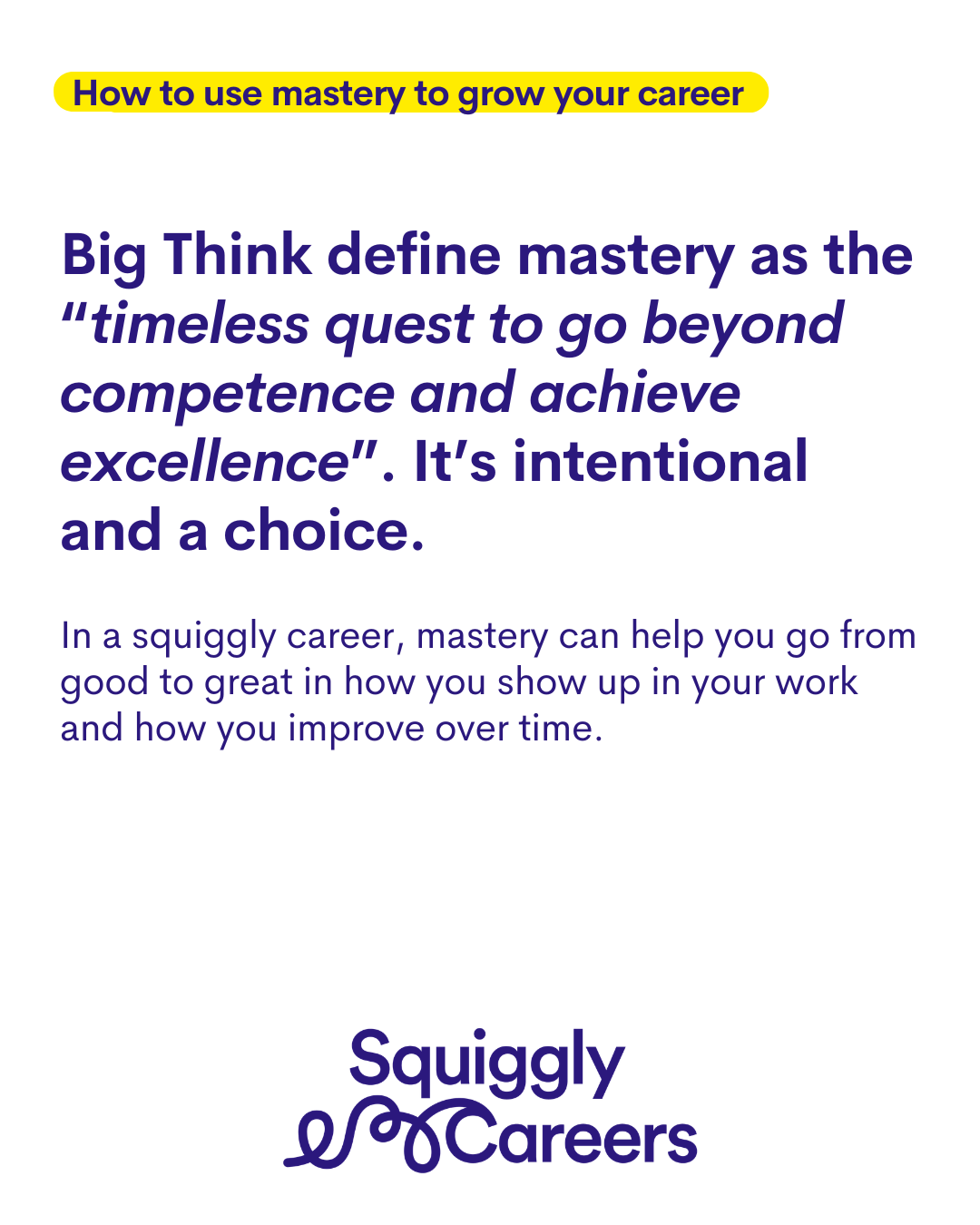
Sarah Ellis: But I was reading through those articles because I was intrigued and I was thinking, oh, it's. Mastery at work is not a word that you hear very often. I was like, in a week, I don't think I'd hear the word mastery. So I was trying to be specific about, well, what. What does it mean in our context, in a squiggly career? And this kind of quote stood out to me, albeit I still don't think this is a very everyday quote. It describes mastery as the timeless quest to go beyond competence and achieve excellence.
Helen Tupper: The timeless quest. I know.
Sarah Ellis: I feel like we're in Lord of the Rings or something at work.
Helen Tupper: Yeah.
Sarah Ellis: But I think the point if we're now trying to make it feel more every day for us at work is I bet everybody listens to Squiggly Careers Podcast is good at their job.
Helen Tupper: Yeah.
Sarah Ellis: You're already. You're listening to a podcast about working careers. You are already good at your job. And I wondered whether this was more about going from good to great, to borrow a phrase from Jim Collins. Now, I felt we name checked lots of people now, because I don't think mastery happens by accident. I think it's an intentional process. And I think when we get into some of the things we're going to talk about today, you realise it's a choice it's something you've got to decide. What do I want to be particularly great at? Where do I want to invest effort to be a. Whether you use the word master or to just go to be. To be better than I would be from just doing my job. I think that was. That was my conclusion.
Helen Tupper: I like the sort of intentional improvement, like what does it take for me to be at my best kind of language more than I do mastery. It doesn't quite resonate, but I do, I do like the idea of it. Like the idea of getting to excellence in an area and what you want that area to be and how could you do it. And so in the collection, which we will link to both in the show notes, we'll also put it on the pod sheet. You can get that on our website, amazingif.com There are a range of articles. I don't think all of them are relevant to squiggly careers. They're all interesting.
Sarah Ellis: I have to say. I did read them and they were all interesting.
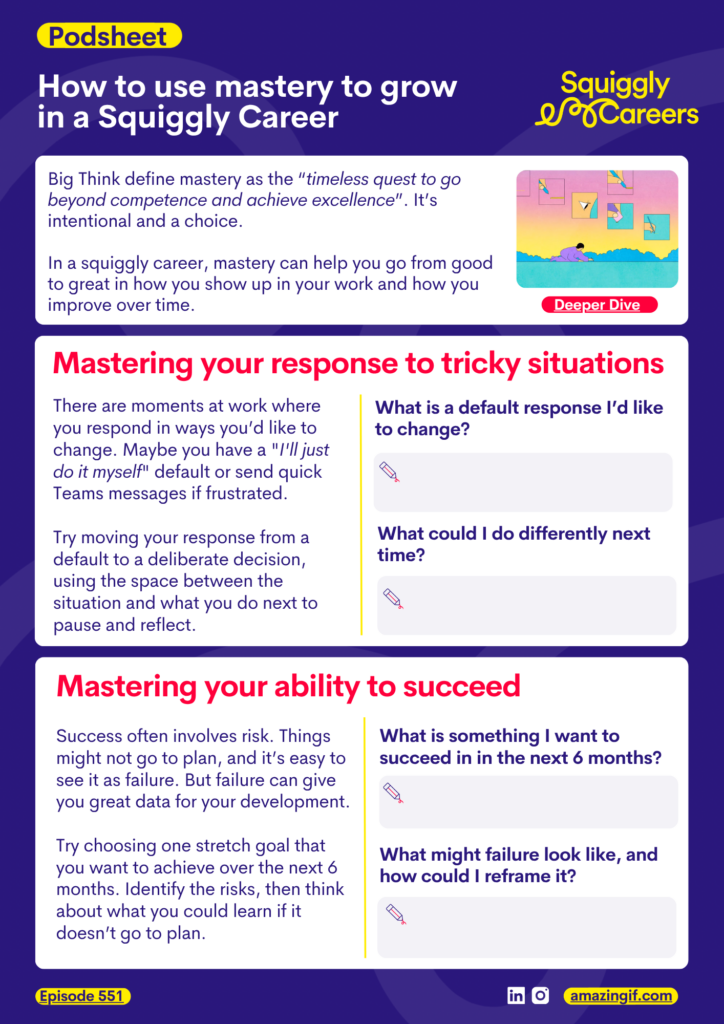
Helen Tupper: They're all interesting. But I think some are more obviously relevant to squiggly careers. So we've picked two areas of mastery to focus on for the conversation today. So we've got mastery of your response to a situation which was sparked by one of the articles called you can only truly master one thing. According to Epictetus. I think he was Socrates friend, or maybe just of that, of that group. I don't know how to say it.
Sarah Ellis: He's probably not listening, so it's probably fine.
Helen Tupper: Don't judge me on pronunciation, everybody. And the second thing we're going to talk about is mastery of your ability to succeed, which was sparked by an article in the collection called Mastering the How Success Raises the Stakes for Elite Adventurers. So we're going to make it a bit more like day to day, unless any of you are elite adventurers. But most of us are just trying to do our best at work, so we'll try to make it relevant to that. So let's start with mastering your response to situations. What's that all about?
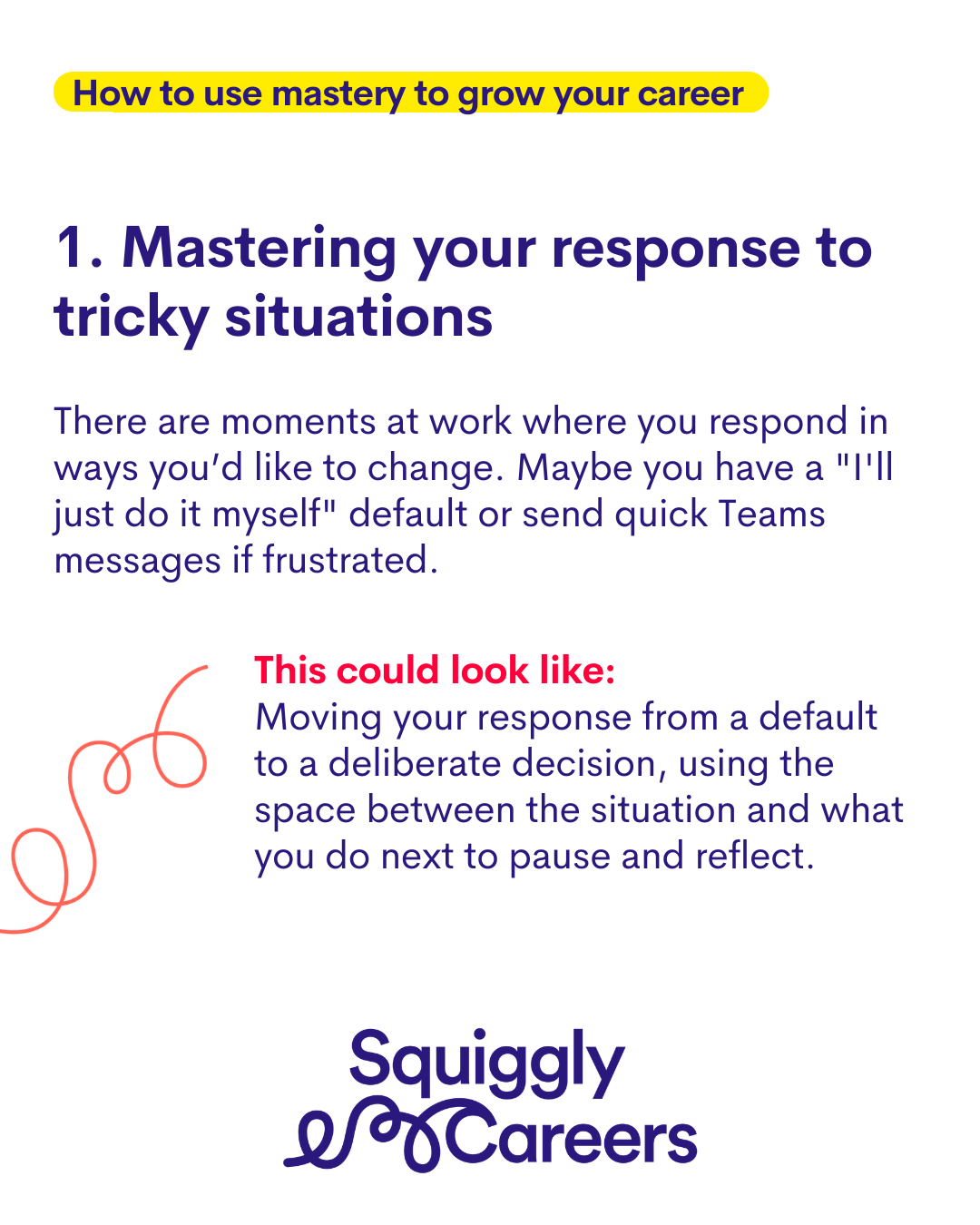
Sarah Ellis: So I think here it's reflecting on when do you respond in a way that you would like to change. So where you're not a master, essentially where you're thinking, either maybe I'm just not very good, or maybe I'm good, good enough, but not as good as I would like to be. And so this is thinking about day to day at work. You know, those moments where you come away and think, I didn't, I didn't show up in the way that I would have liked to. You probably feeling a bit frustrated. And so when we were both thinking about this because we were trying to work out what would this mean in our world, I was saying how sometimes I respond to our team and almost like to myself when I'm a bit frustrated that maybe we've not thought something through properly or I don't know the answer. So maybe there's just like messiness. I think I respond to messiness with a phrase. Let's think about this some more.
Helen Tupper: And it's quite passive aggressive. Only because I know. Only because I know you. Because I'm like, sarah doesn't like it. That means we're not making a decision on this now.
Sarah Ellis: So we'll talk about what to do differently. But I think if we just stay with the response, that's not helpful. Me saying, let's just think about this some more almost to yourself, to other people, is not the way that I want to respond when things feel messy because I know it's not helping us to move forward. And like you said now when you say it out loud, it does feel quite passive aggressive. But an interesting nuance here is I'm often typing it. So I write those words all the time in Canva. So we use Canva for creating, like presentations and proposals. And I'm in there going, let's think about this some more. And I now know it creates confusion. It's the opposite of creating clarity. So I'm not responding there in a way that I want to. So that's kind of my. I want to apply what we're going to do today to that situation.
Helen Tupper: Okay, got it.
Sarah Ellis: What about you?
Helen Tupper: I think if I think about a situation where I respond in a way that I kind of don't want to respond in that way, and this actually not. This happens at work and at home because I've had the feedback from my husband quite a lot on this is when things aren't moving quite quickly enough. And that could be a deck isn't getting written quickly enough or someone isn't being responded to on email quickly enough or at home. Something hasn't happened that I want to happen quickly enough. Everything from booking a holiday to doing something in the house.
Sarah Ellis: Just chickens, chickens, chickens, chickens, everyone okay, Chickens.
Helen Tupper: All I talk about chickens, chickens, chickens. But I just go, well, I'll just do it. I'll just do it. But I say that, like, don't worry, I'll do it. And basically what I mean is, it's not moving fast enough so I can make it move faster. But I just don't think that is helpful. I think it annoys me for so many reasons. Like, I get frustrated by that default because I think, well, maybe there was an opportunity for feedback in that, which is like, actually, we had a deadline, we haven't met it, and I'm frustrated by. That's why I'm doing it. But I haven't given that feedback. I've just said, I'll do it. Or maybe I've disempowered somebody because they could have done it better or done it differently. And I've just made an assumption that speed is the most useful thing in that situation. And so I never. I'm like, oh, but you didn't. You didn't give a chance for any of that. You didn't give a chance for the feedback. You didn't give a chance for someone else to do it better. You. You just got frustrated and said, I'll do it. And so I never feel. I never feel good about that afterwards. Even though the thing gets done, I never feel kind of good about how it got done. And Sarah and I were chatting, and I can share this because the person said this openly. Last week, I was in a. I was in a session which was about confidence, actually, and somebody in front of the group was talking. They asked me a question, and they said, oh, like, what, What. What do you do when you, like, respond in a way you don't want to? And they said that the situation they were talking about was they might cry in a meeting. And they said, I might be in a situation. I don't want to cry, but we're having a conversation. And it is. It's something they kind of feel quite a lot about. Maybe they're frustrated or maybe, you know, it matters to them what they're talking about. And they said. And I just cry, and it's really annoying. And I find it so distracting because I didn't. I didn't want to cry.
Sarah Ellis: It was not.
Helen Tupper: And now I'm worried about what you're thinking about me because I'm crying. And they said it really affects their kind of what happens after that moment because of this response that they're not in control of, which, you know, they mentioned crying, but it could be like you've talked about blushing before as being like, something you're not in control of. You know, for other people, could be the handshaking, but it's this response that you think, I didn't want to respond like that. And then it almost becomes distracting in your head.
Sarah Ellis: So the key here is, when you're in these situations, to try and master them, you want to move from your response being a default. So I'm not being really thoughtful when I write, let's think about this more. It's just. It's my. It's my default.
Helen Tupper: Yeah.
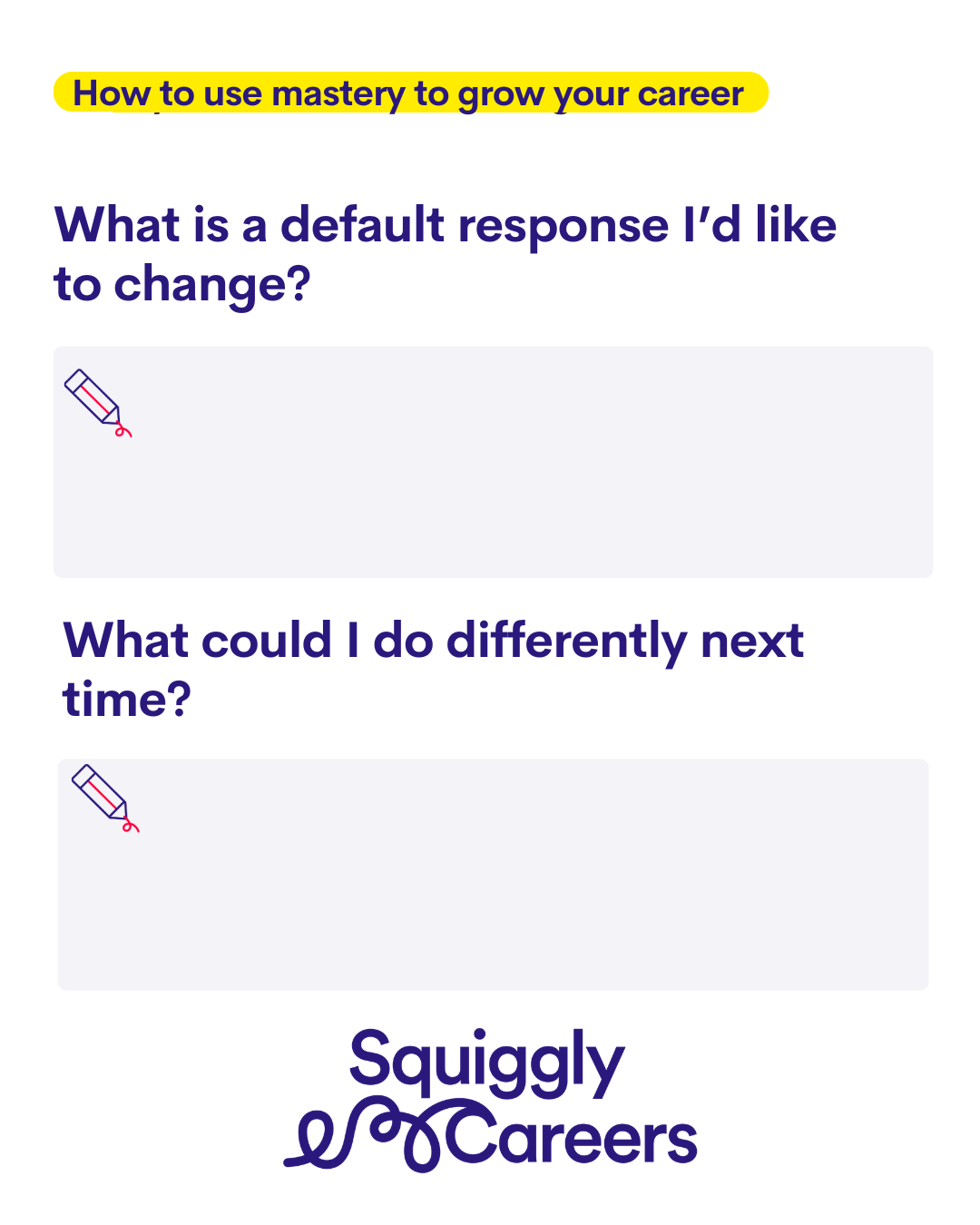
Sarah Ellis: And we're trying to move from default to decision. And it's this space that you have. We both did a leadership programme years ago and it's always so interesting, isn't it, the learning that sticks and plays with you. Because as soon as we said this to each other, we both knew straight away what we meant, which we were sort of taught. This idea of the thing that you are always in control of, the thing that you always have a choice about is sort of how you respond. Like you've got the space to choose how you respond. And I think often here where you're not a master, you're sort of forgetting that you forget that you've got a choice, either because you're annoyed or busy or kind of think things are full on. And it's this. Some of you will have come across this before from Viktor Frankl, where the psychiatrist who talks about the space between stimulus and response. So you've got some sort of stimulus, things are not moving fast enough. I don't think we've thought something through properly and then you have got this space to choose to make a decision about what you then do. So we both found it helpful, having gone through this, to think, what is the situation? What is your response when you're not mastering it, which is what we've described, and then what's a reflection that can then help you to make a different decision? Because I think you've then got to create clarity for yourself about, well, what does behaving differently look like? What's an alternative action to what I do today? So when I was thinking about this, I was like, oh, actually, I think I need to change the channel. So actually I tend. I always write this. I don't really actually say it out loud very often. It's always where I've read something and I'm thinking, that's not right. That's obviously what's going on in my head. And so, yeah, you get these passive aggressive comments from me, which are, we, we need to think about this more, or let's think about this more. Where there's no, like, accountability, there's. There's no, like, well, who's actually thinking about this? Yeah, and I think my change the channel decision is if I am feeling like that I need to pick up the phone, which again, is not what I would think to do now. But I think if I pick up the phone and call somebody and talk something through, I'm quite good at thinking out loud. So that's. That will be useful for me. I can get that other person's perspective and we can almost do that thinking like live in that moment to then figure out then, okay, what. What do we need to change?
Helen Tupper: Yeah.
Sarah Ellis: And I think I have. I can think of some examples of when I've done that and it is always better because of it. And that's the. That's the different decision that I need to make rather than almost getting a bit frustrated. And actually what I sometimes do. And you'll know this is I'll complain, like, you know, I'll just be like to you, oh, we. We don't know what we're doing on this. Whereas you're like, well, you could just pick up the phone.
Helen Tupper: Yeah.
Sarah Ellis: And try and talk it through with somebody and then you're not writing. I don't think writing that in a canva document is ever useful.
Helen Tupper: Yeah.
Sarah Ellis: So it's sort of reminding myself you've got a. That's the default. I need to make a decision to do something different.
Helen Tupper: I do see you. I've seen of late your. I think you should pick up the phone. But also like signalling that to other people as well. So I can. I think you're already.
Sarah Ellis: Yeah.
Helen Tupper: You're already doing this and I think you're signalling it to other people too. Is actually this is a good response rather than as like going around in circles on something.
Sarah Ellis: Yes.
Helen Tupper: Just pick up the phone.
Sarah Ellis: Yeah. What about you?
Helen Tupper: But you have reflected too and I think. So my statement at the moment is I'll do it. And I think I should move from a statement to a question or questions. I think there are two questions that I would benefit from asking as a. As a decision rather than the I'll do it default. And the questions I think are when does this actually need to be done by. Yeah, because I create a deadline.
Sarah Ellis: Yes.
Helen Tupper: I. I just create some deadline and then who is the best person to do it? And I think if I could move from the. Because if, like say, when does it need to be done by? Tonight. Well, who's the best person to do it? Well, Helen, you know, there's lots of people that might be working part time and the team.
Sarah Ellis: Yeah.
Helen Tupper: So perhaps I might be the best person. But that is a choice and A decision rather than an assumption and a default. And I think if I could start asking those questions, I think it would be much more helpful. And even if I am the best person to do it, that would have been a decision that wasn't just made by me.
Sarah Ellis: Yeah, maybe get rid of the. Actually, when does this actually need to be done by? As soon as you said that, I was like. You sounded quite aggressive. I was like, oh, gosh.
Helen Tupper: I mean, this is obviously late and it's really annoying me. So when does it actually need to be done by?
Sarah Ellis: Maybe just go with, what's the deadline? Or when. When do we need to deliver this by? I've got images of you sending me WhatsApp. So, Sarah, when does this actually need to be?
Helen Tupper: But when, Sarah. But really when.
Sarah Ellis: What about the person who cries at the moment at work? Because I think even if you don't cry at work, probably that sense of responding in a way that feels very out of your control will feel familiar to lots of people. And I'm thinking the action there. In some ways, the decision. In some ways is a bit different because we've talked about actions that feel quite in our control, but responses that almost are physical, like crying, like me. Like when I think about blushing, I think is quite. You make a different decision. The thing that really helped me when I used to blush, I used to blush more than I do now, which is interesting. Like, you can. I do feel like I have made a bit of decision around blushing is somebody did say to me, well, two things happen when you, like, blush or you kind of go red. One, people don't notice as much as you think that they do. Obviously you really feel it. But most people don't notice that much. And if they do, it just sort of shows that you care and then everyone sort of moves on. And so I think my decision with blushing was if it happens, and it still would some of the time, and it's an involuntary thing, my decision is to think that's because I really care about this. It's maybe because I'm a bit nervous and I care and I make a decision to slow down.
Helen Tupper: Okay.
Sarah Ellis: So my decision now is if that does happen, I'll have a sip of water, I'll just slow down, and I basically give myself time to recover, and then I feel less red. You know, whether I am or not, I actually don't know because you can't always see yourself. But I think just by kind of taking a sip of water, saying, oh, it's because you're nervous, like Telling myself it's sort of what goes on in my head and then like a very small action I take. That's been really useful for me.
Helen Tupper: Well, I think your advice and that's more useful for mine because I don't have that. And so I was thinking, oh, what would. Because I think part of the default at the moment is the, the reaction happens, the tears come and then it's sort of reaction and distraction because then in that person's head they're then thinking about, well, how am I coming across? And that stops them in the conversation. So over time, maybe the reaction is managed to your point, maybe you stop blushing. But I think the decision is not to be distracted by it for that person. So almost to sort of acknowledge, oh, clearly this is something I care about because I can feel my eyes welling up and then almost just accept it.
Sarah Ellis: Yeah, maybe it's okay and that's okay.
Helen Tupper: Like I don't need to worry. I mean you could go and ask for feedback and all that kind of stuff, but I wonder whether in the immediate situation it's kind of going, oh, I can feel my eyes tearing. And that's okay. Just, just like I'm gonna, I think some of your like, almost like tactics to manage that are really useful. But yeah, that's what I would do.
Sarah Ellis: So that's how we're going to master our responses.
Helen Tupper: Yes.
Sarah Ellis: What about mastering our ability to succeed, which is the other one that you picked out? Yeah.
Helen Tupper: So this is the elite athletes article.
Sarah Ellis: Yeah, very you, very on brand and
Helen Tupper: they talk about again just, I'm trying to take the bits that are really relevant to. The majority of people are going to listen to this podcast and they talked about the thing that helps elite athletes to master their success is they have the ability to appreciate the risk of a situation. So it's not success as just I'm going to win a gold medal, for example. Like what's, what's, what's the risk? The risk is, well, you know, I might not win, I could injure myself, something in the race could go wrong. So they, the success becomes a very thought through thing. Not just like I want to write a bestselling book. You know, they really think about, well, what's, what's the risk involved in that? Maybe no one reads the book.
Sarah Ellis: Maybe you get bad reviews, maybe you get bad reviews. Obviously not in our case, but you know, theoretically.
Helen Tupper: All reviews welcome on our latest book.
Sarah Ellis: All good reviews, welcome.
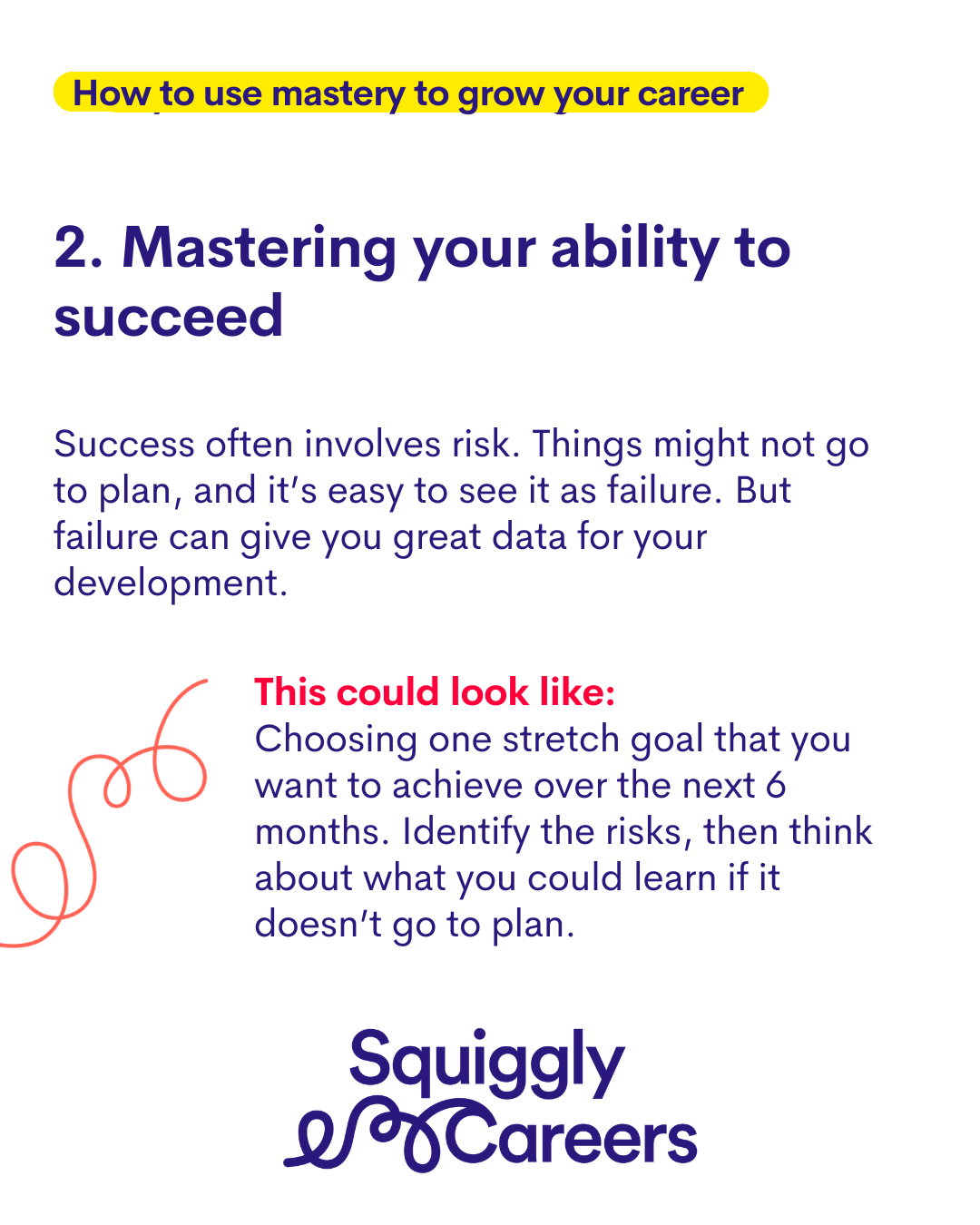
Helen Tupper: All good reviews, welcome. Yeah. So yeah, they appreciate the risk, but they also have a very constructive way of framing failure. So I think there is an inevitability that if you are trying to do something you have not done before, anything that has an element of risk that will hopefully lead to success might also result in some failure or some mistakes because it's hard, or you'd already be doing it. And what the article says is these people, that they have the edge, they kind of master their success, see the risks, but they also frame failure in a really effective way. So they don't go, oh, I'm a loser because I lost. They go, oh, I could have taken that term better. Or actually, there's an op. There's an opportunity to improve in that specific area of my race. And so the failure almost just becomes a data point for your development rather than an issue with your identity. So it's not I failed, I'm a failure, it's I failed in that area. And I can. I've now got some more data about what to do differently. And these people that have the edge in terms of their mastery, success can do those two things.
Sarah Ellis: And I've been watching almost like, bit surprisingly, wouldn't. Wouldn't have been the thing that I normally would have clicked on. I've been watching the Gordon Ramsay documentary.
Helen Tupper: Food documentary.
Sarah Ellis: I do like food. Yeah, I do like food documentary.
Helen Tupper: That's always one of your recommendations to
Sarah Ellis: me, but that's very different. So the Gordon Ramsay one, though, is more about, like, him. So I wouldn't usually watch a documentary about, like, reality. It's closed much closer to reality tv and I can't even remember why. What? Oh, I think my sister recommended it, which surprised me, so I thought, oh, I'll give it. I'll give it a go. And it's essentially about him. It's kind of his life, but it's more about him opening five restaurants in the city in one building. I think it's 22 Bishops Gate, I think. And it kind of. It follows his journey to trying to kind of open these restaurants. And it is definitely a mix of what you've just described. Like, watching him is really interesting because there is loads of risk, financial risk, and he talks about very openly, yet reputational risk. And he, you know, the judgement of people being like, is he a real chef anymore? You know, but actually he really cares about food. Or it certainly came across that he did. And also some of it does fail along the way. So couple of the restaurants, I think at least one of them was massively delayed, so just didn't actually. Just didn't open during the programme. And so you see, and it's interesting, like how he kind of talks about that. And then he did this one night, one of the restaurants is called Lucky Cat and they do like a kind of pretend opening, real people there. And he sort of does this speech where he says to them, I want you to make all of the mistakes. Now he's quite tough on them when they do make mistakes. So I watched it and I was like, brilliant. He's encouraging mistake moments and he wants them to do it. But then when things do start to go wrong, but not that mistake, you're like, oh, okay. But, you know, it's quite a high pressure environment, I guess. But when things do fail, it's really interesting. It is all about, as you described. They're like, well, let's just get better.
Helen Tupper: Yeah.
Sarah Ellis: If this fryer can't take the capacity, like, that's literally one of the things. Like the fryers haven't been used as much as suddenly they get used when there's like loads and loads of people and they sort of just stop working and then they have like a massive backup of orders. And like, watching it is really. It's really stressful. I mean, it didn't make me want to work in a restaurant.
Helen Tupper: Decision to have that filmed in the first place.
Sarah Ellis: Yes.
Helen Tupper: Is an interesting choice.
Sarah Ellis: Yeah.
Helen Tupper: Yeah.
Sarah Ellis: And so that. That's also a risk in its own right. You know, like suddenly. I mean, it's great on one hand, it's great pr.
Helen Tupper: Yeah.
Sarah Ellis: For that restaurant or those restaurants and his brand generally. But on the other hand, you know, you're giving people a window into your world. And like, the things. The things that he does, like, is
Helen Tupper: like in his family actually at work, that every. You were just. People were invited into every one of your meetings. Every one of your mistakes is visible, like in, you know, in your new job. Like.
Sarah Ellis: Yeah.
Helen Tupper: What he's doing.
Sarah Ellis: And I just thought, oh, he doesn't have to do this.
Helen Tupper: Yeah.
Sarah Ellis: You know, probably doesn't have to open those restaurants. He's already clearly really successful. But it was really. He's really ambitious. You can just see he's really ambitious. He really wants to succeed. And he has this kind of sense of, like, risk and he's sort of learned how to cope with failure. And I think you have to in restaurants because you have Michelin stars, they get taken away, you get bad reviews, you get brilliant reviews. He's really embracing, actually, the bit. One of the bits I really admired was he really, like, welcomes influencers and like social media. So rather than being a bit sniffy about them and being like, oh, they're not like a proper critic or whatever, he actually has fun with them. And it's like a really nice way of being like, well, actually, of course that's risky because then you're maybe on TikTok or you might, who knows what's going to get produced from that content. But you also see that actually then his fans love it and love him because of it. It actually is a really good one.
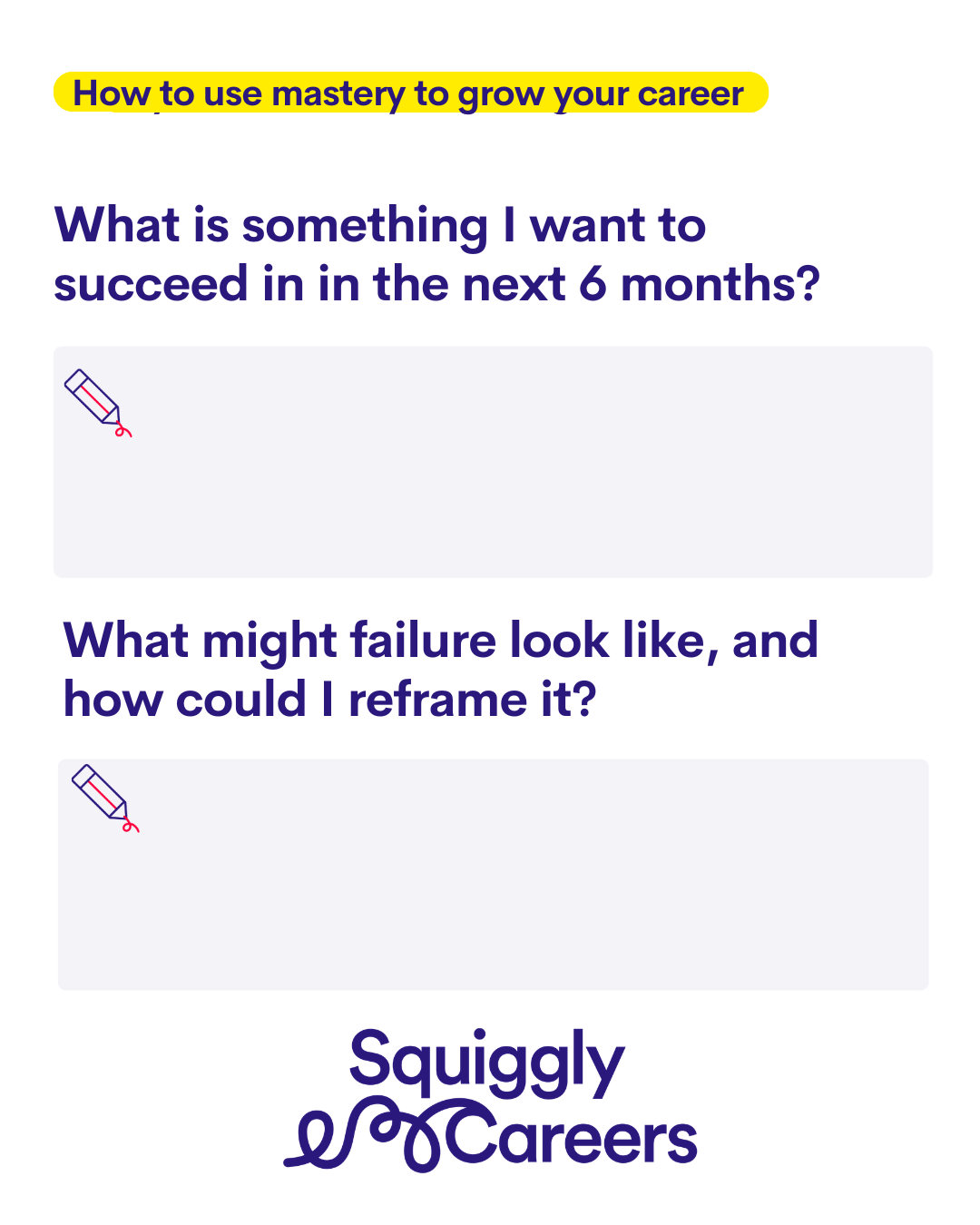
Helen Tupper: Well, I mean, aside from mastery, that's on my weekend watch list. I will get that recommendation. But I guess to make that really relevant and relatable to people, I think our reflections were, first of all, you kind of have to know what you want to succeed in. So you do need to like, name what does success mean to you. And you might want to put some parameters around that, like, what does success mean to you this week at work? What does success mean to you by the end of the year at work? Like, I think you need to name your success. And then based on this insight, it's very useful to think about, well, what are the risks? Like being aware of what are the risks involved in going after that goal and if I fail along the way, like, what might those failures look like and how would I frame them? Because you just don't want the default to be, if I fail, I'm a failure. I think you kind of want to go. So to make this real for us, let's take, let's take the book, for example. So we wanted our ambition, success was the book becoming a Sunday Times bestseller, like that was definitely part of what success meant to us. Not the only thing, because that's just part of what one thing. You want people to actually like it. But that was definitely part of it. The risk was it didn't, it didn't, it didn't do that. And we could have said our kind of sense of failure if we were being negative about that could be, oh, well, you know, we shouldn't write any more books. We shouldn't write any books. But I think actually what we're saying is, well, we'll learn from what people like. We'll read reviews, you know, if we fail, we'll kind of work out why and what's behind that. And we will. I think we always look for the learning. That would probably be how we would shame failure, look for the learning.
Sarah Ellis: I think this is this idea of sort of the risk and the failure together is most useful if you think about a medium term success that you've got in mind. So I want to be promoted, I want to be a manager for the first time. I want to move teams, I want to do projects with bigger influence and impact. And so it's something that does feel sort of borderline scary. Yeah. I think it's got to feel stretching, definitely in your courage zone, not in your comfort zone. Because that is ambitious and that's the risk and whatever that looks like for you. I think that could be. You know, if I think back to working in Sainsbury's, it felt, it, it felt ambitious when I wanted to work a four day week so I could spend a day on amazing if. And that had a sense of risk because, well, does that mean people in Sainsbury's will think I not committed? I was, but that's a risk there. Am I going to get overlooked for opportunities to progress because I'm now working part time? Am I not going to get involved in like the most interesting conversation? So there is quite a lot of risk and there's potential failure. Right. You're like, oh, okay, I might that one day I might fail to do anything meaningful in that day. It might then mean I fail in my job because I've got less, less time to do it. Does that mean that I'm not as good at my job as I kind of was before? And I think to your point, I mean, you said if you fail, I was thinking actually it's probably like just a when. Because everything we've ever done, and I think individually as well, where I've had that sort of ambition, there are always like mini failures.
Helen Tupper: Yeah, there are many failures.
Sarah Ellis: Like with our book, we could name loads of mini failures, right. Of things where there are things that have gone well, but there are also things where we would have loved to make certain things happen that haven't happened or things that have felt harder. You know, we tried our best to get on the Chris Evans radio show, let's take that as an example. And that was really ambitious. Right. They'd already said no to us, I think, twice.
Helen Tupper: And I turned up at the office
Sarah Ellis: and then you turned up at the office with a lobster basket.
Helen Tupper: I persuaded a man to take it up there and then I watched the live stream to see whether it went in. And it did go in, but we still didn't get out.
Sarah Ellis: We didn't get mini failure. It's a mini. And also it's quite a public failure
Helen Tupper: because you've wrote now, you've literally told
Sarah Ellis: everyone a podcast, but you told everyone on LinkedIn.
Helen Tupper: I know, I'm joking.
Sarah Ellis: No, no, I did. But I think generally, sometimes with those big ambitions, you do have mini public failures along the way. And I. And when I say mini public failures, that was like within your team. Yeah, like within your company being like, okay, actually, that didn't, that didn't work. And I think it's really easy in those moments either for it to kind of dent your confidence or to think, well, I'll give up because I tried and failed. So it's sort of not, it's not worth it. And so I think this is where it becomes most useful. So if you're listening, I'd be thinking for yourself, what is something you want to succeed in in the next six to 12 months? So it's sort of medium term. What are the risks that go alongside that to make almost like to stress test, am I being ambitious enough? Yeah, because, you know, we sometimes hold back our own potential and then know that there will be these mini failures. And it's sort of what happens in those moments, I think then helps you with. Will you get to the ultimate, ultimate success? Because I think knowing it's going to happen, I think we knew with the book this time round there would be many failures, probably because we'd done it before, but also probably just life. You just get that there will be many failures, but we didn't let that sort of stop us. And also we didn't let that mean that we didn't try. Sometimes I think we were like, right, so say we like that Chris Evans thing. We tried everything we could and we still failed. And you're like, okay.
Helen Tupper: And that's okay because maybe that's part of the framing of the failure, which is like, but we tried everything we could and that's okay. Yeah. Ah, I love that.
Sarah Ellis: I feel okay. Are we going to master success?
Helen Tupper: Yeah, we're going to master success and accept so many failures along the way. And so we will summarise some of those things we talked about, you know, particularly the practical things about mastering irresponsive situations and mastering your ability to succeed. We'll put all that in the POD sheet as well as the links to the collection because I think, you know, if you are just curious, there is quite a lot of good, good stuff in that general collection and the big think is definitely something that I'd recommend having a look at to borrow brilliance from more broadly.
Sarah Ellis: That's everything for this week. Thank you so much for listening and we'll be back with you again soon. Bye for now.
Helen Tupper: Thanks everyone.
Sign up to the Squiggly Careers Newsletter and get our latest ideas, tools and inspiration every week - all in one place, straight to your inbox