Have you ever finished a week at work and wondered what you actually did that mattered? In this episode, Helen and Sarah borrow brilliance from David Graeber’s book Bulls*it Jobs…and find it uncomfortably relatable.
Helen and Sarah explore what pointless work actually looks like, why it’s more common than most of us admit, and, crucially, what you can do if you find yourself in it.
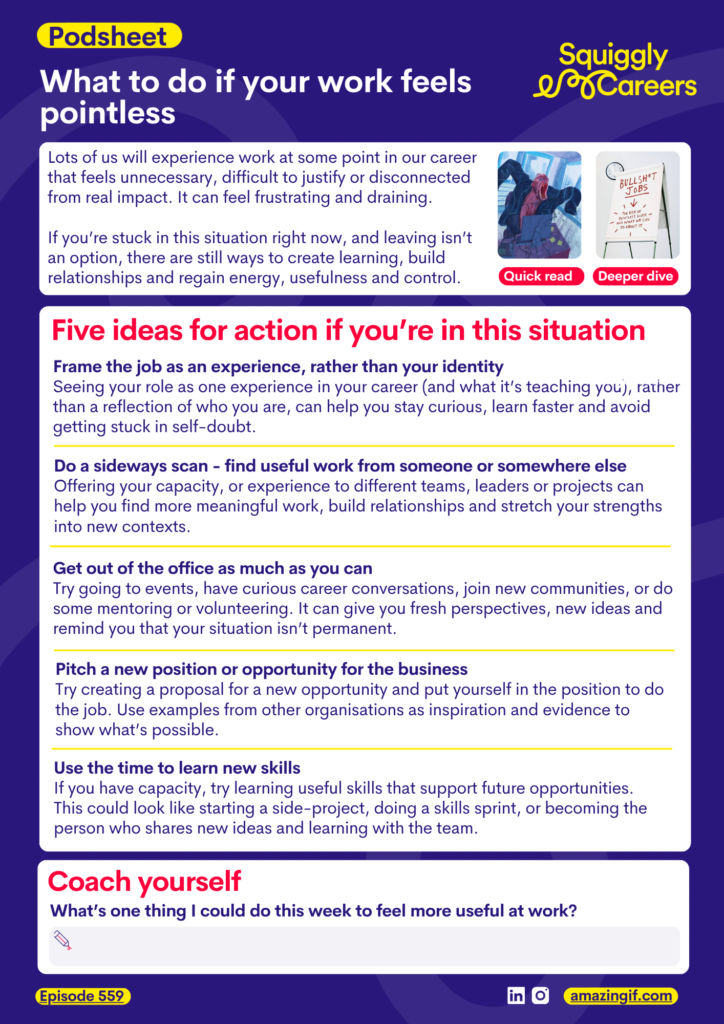
🎯 What You’ll Learn
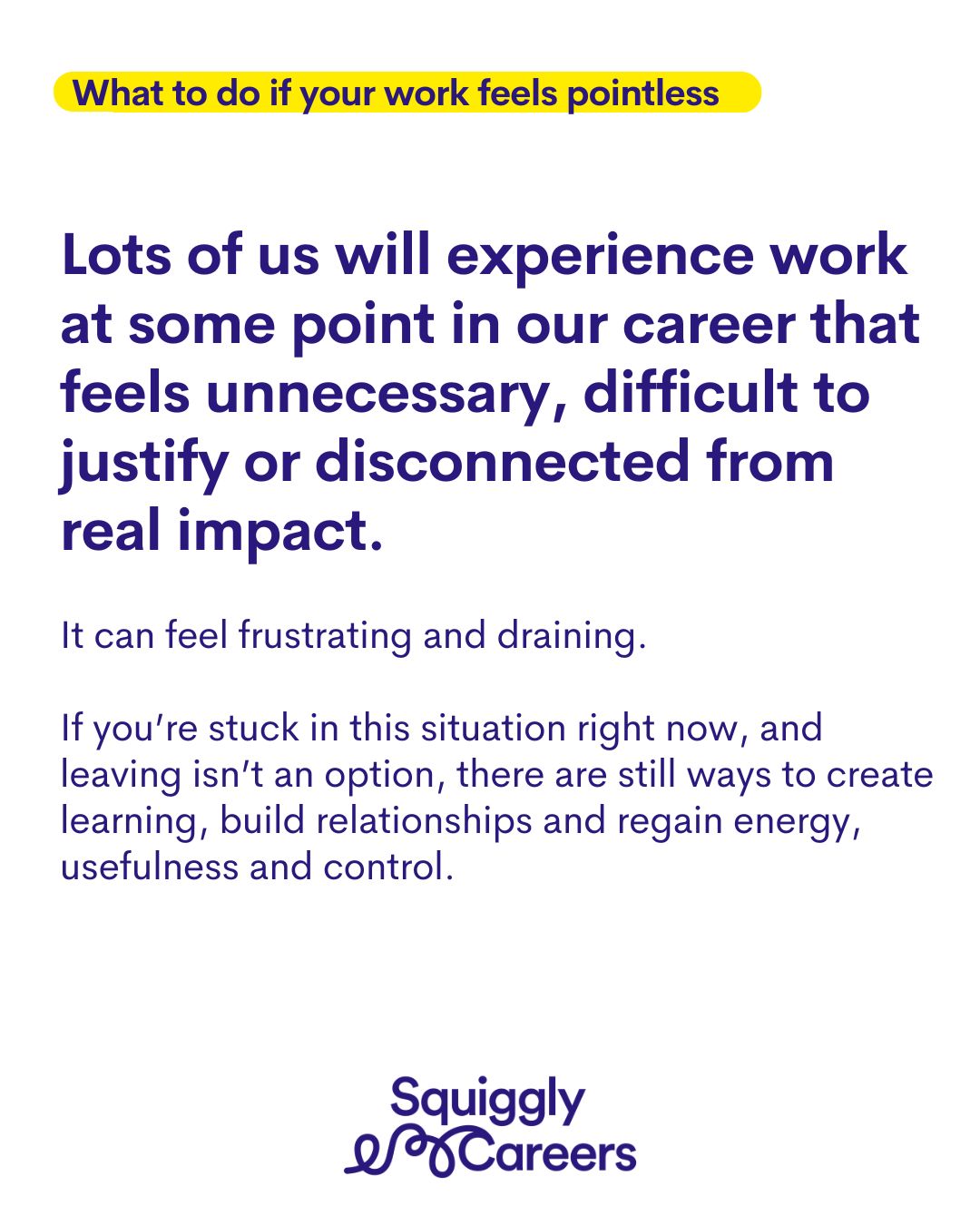
– What makes a job “pointless” according to Graeber’s definition (and why it’s more about your own assessment than anyone else’s)
– Why high-paid pointless jobs are often more draining than they sound
– Five practical strategies for surviving and escaping a job that doesn’t feel real (from scanning sideways to pitching yourself a new role)
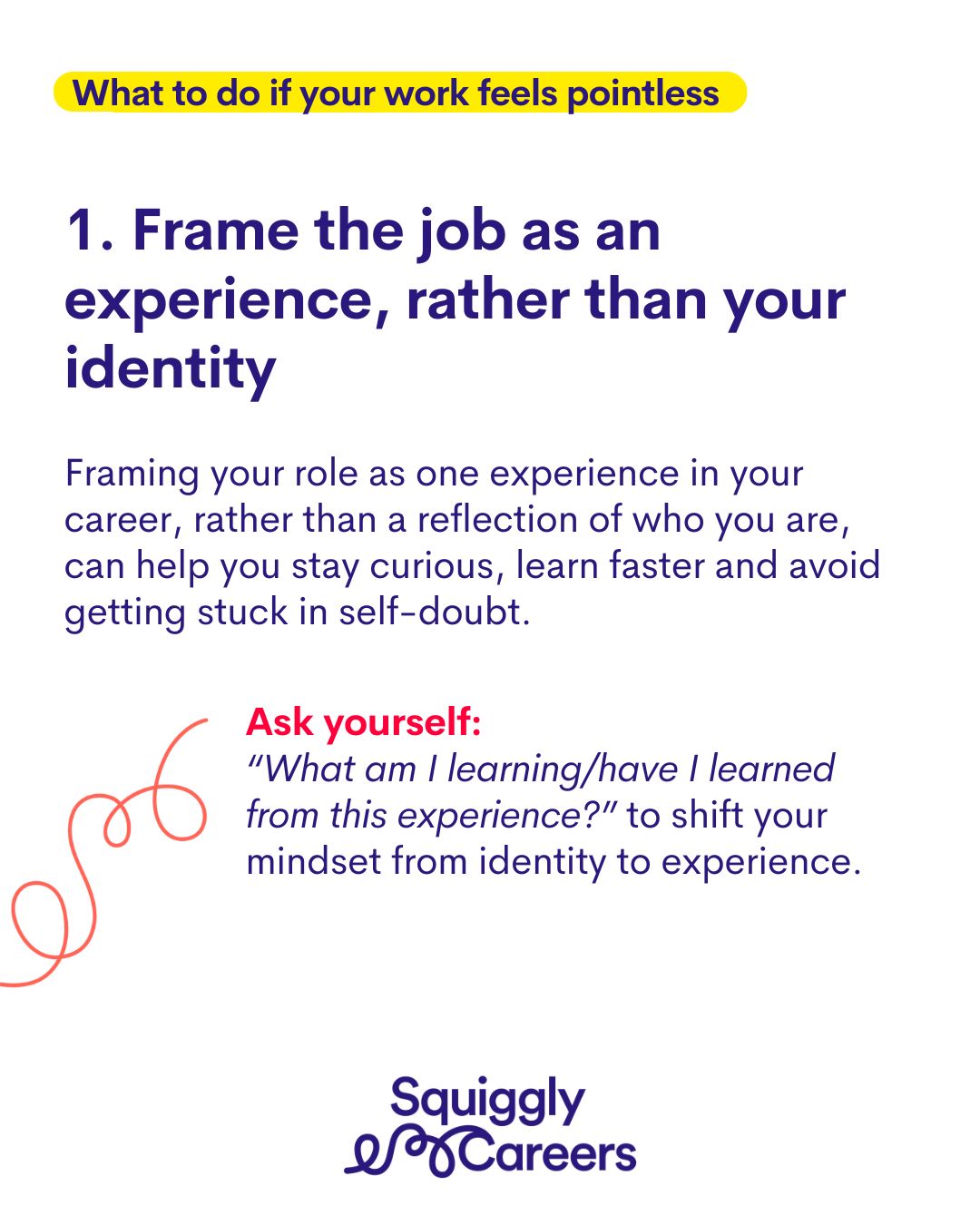
– Why treating your career as a series of experiences rather than an identity makes these moments easier to navigate
– When to leave (and why calling it fast is increasingly the right move)
📚 Resources Mentioned
Bullsh*it Jobs — David Graeber
I Don’t Want a Job (Not a Real Job) — Amy McNee
For questions about Squiggly Careers or to share feedback, please email: helenandsarah@squigglycareers.com
Need some more squiggly career support?
1. Download our free careers tools
2. Sign up for our Squiggly Careers Learn Like a Lobster Skills Sprint
3. Sign up to the for Squiggly Careers Newsletter, a weekly summary of the latest squiggly career tools
4. Order our new book Learn Like a Lobster
00:00: Introduction
03:56: What is a pointless job?
09:12: Helen and Sarah’s experience of pointless jobs
18:18: Idea for action 1… frame the job as an experience, rather than your identity
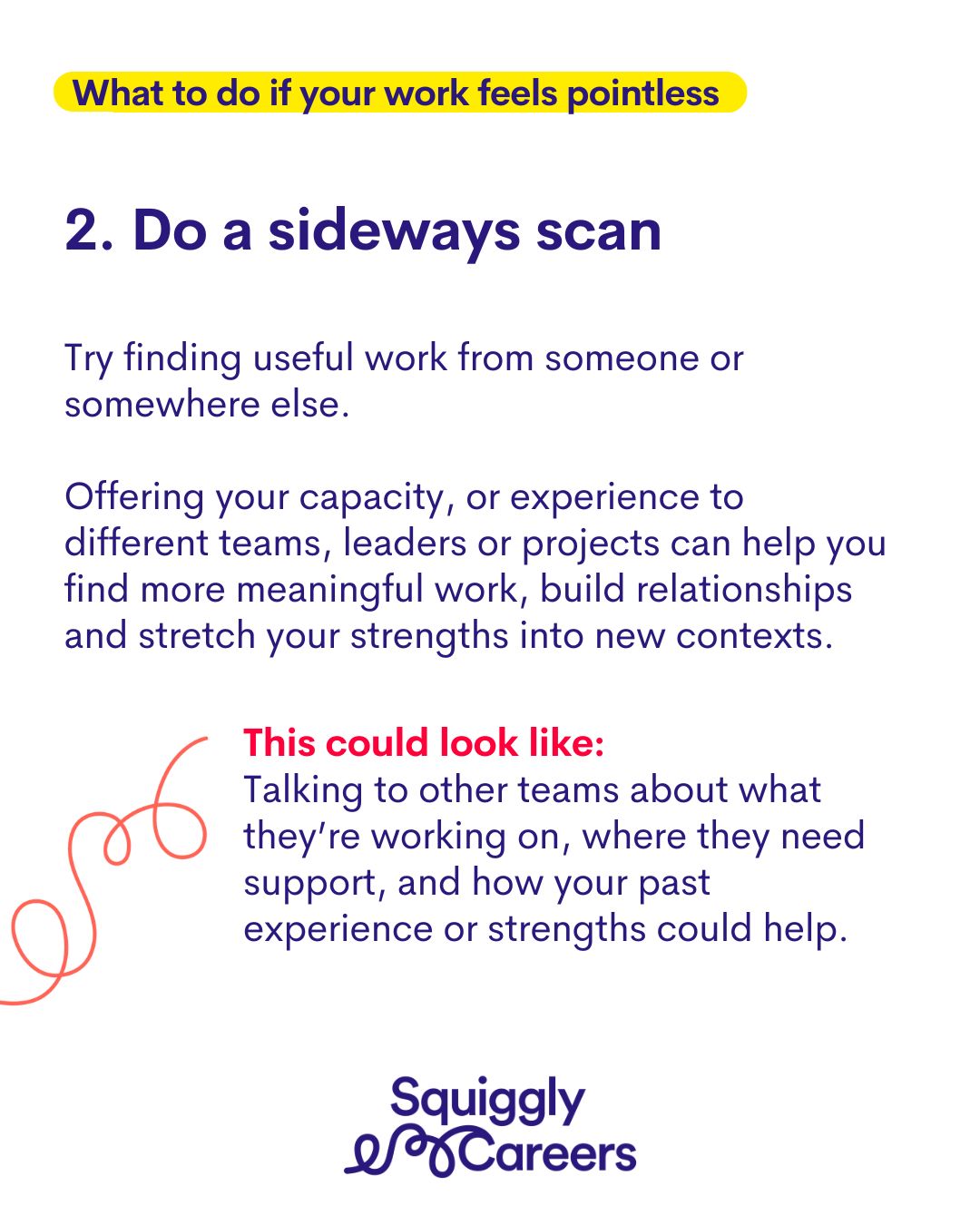
20:57: Idea for action 2… find useful work from someone or somewhere else
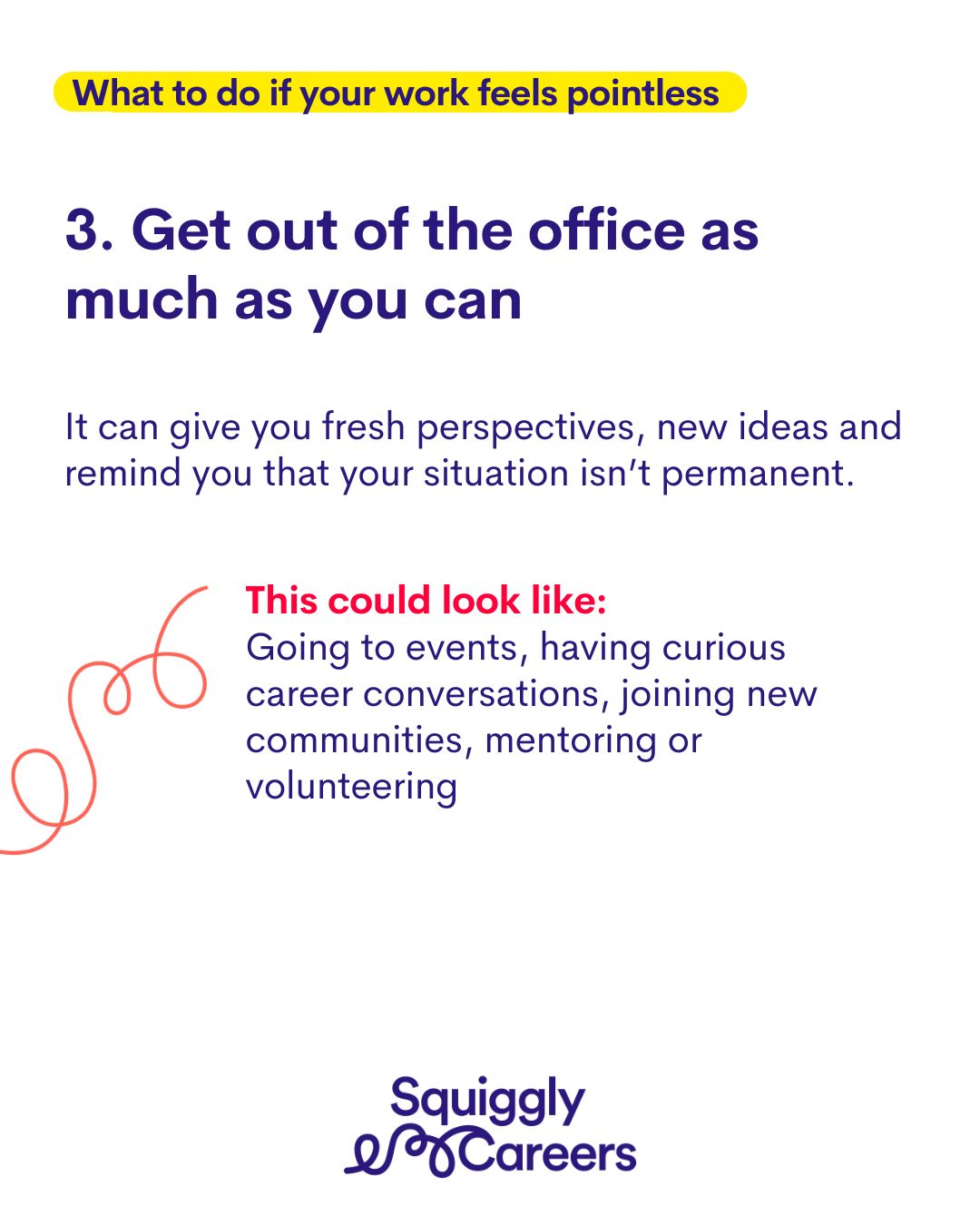
23:20: Idea for action 3… get out of the office as much as you can
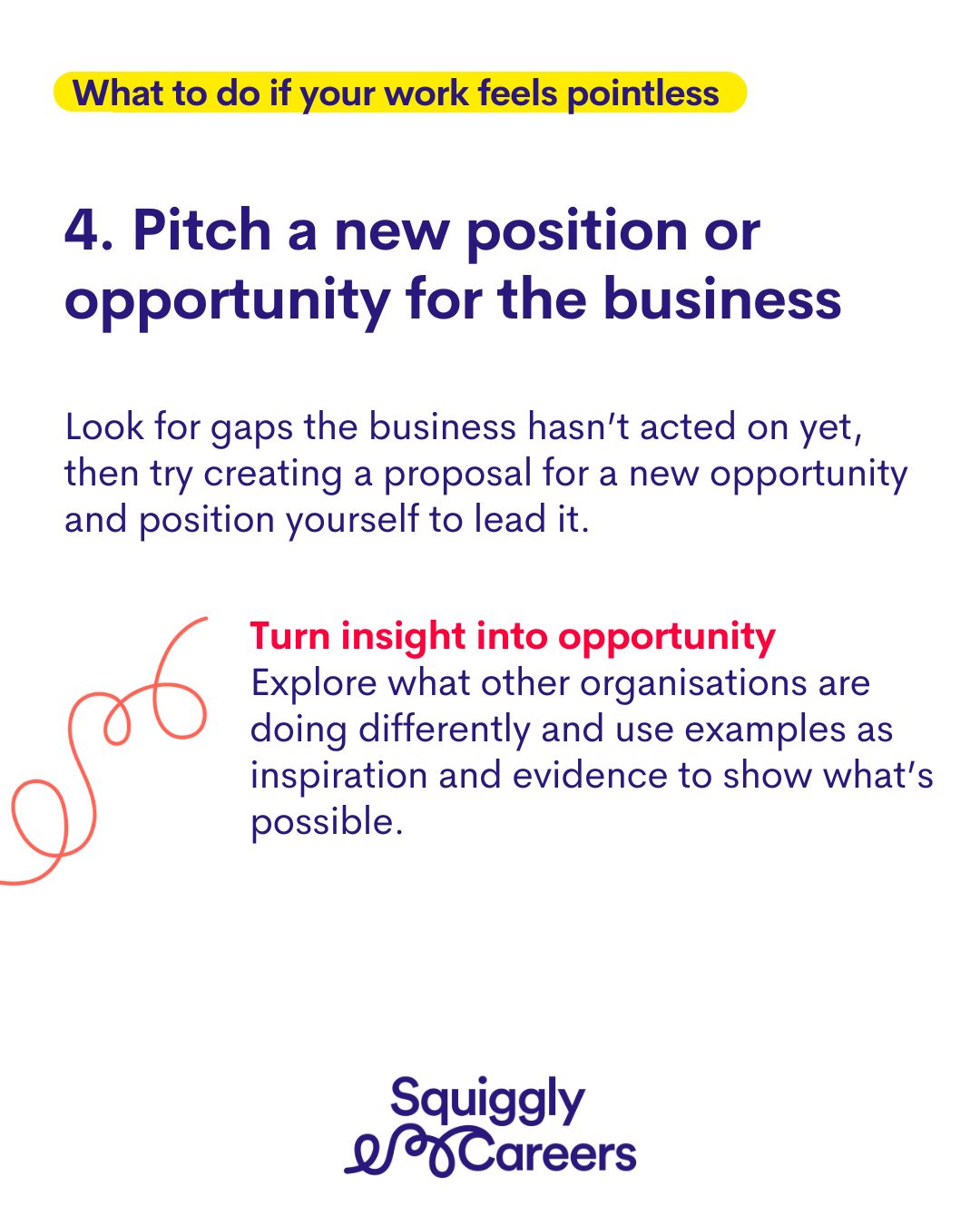
25:15: Idea for action 4… pitch a new position or opportunity for the business
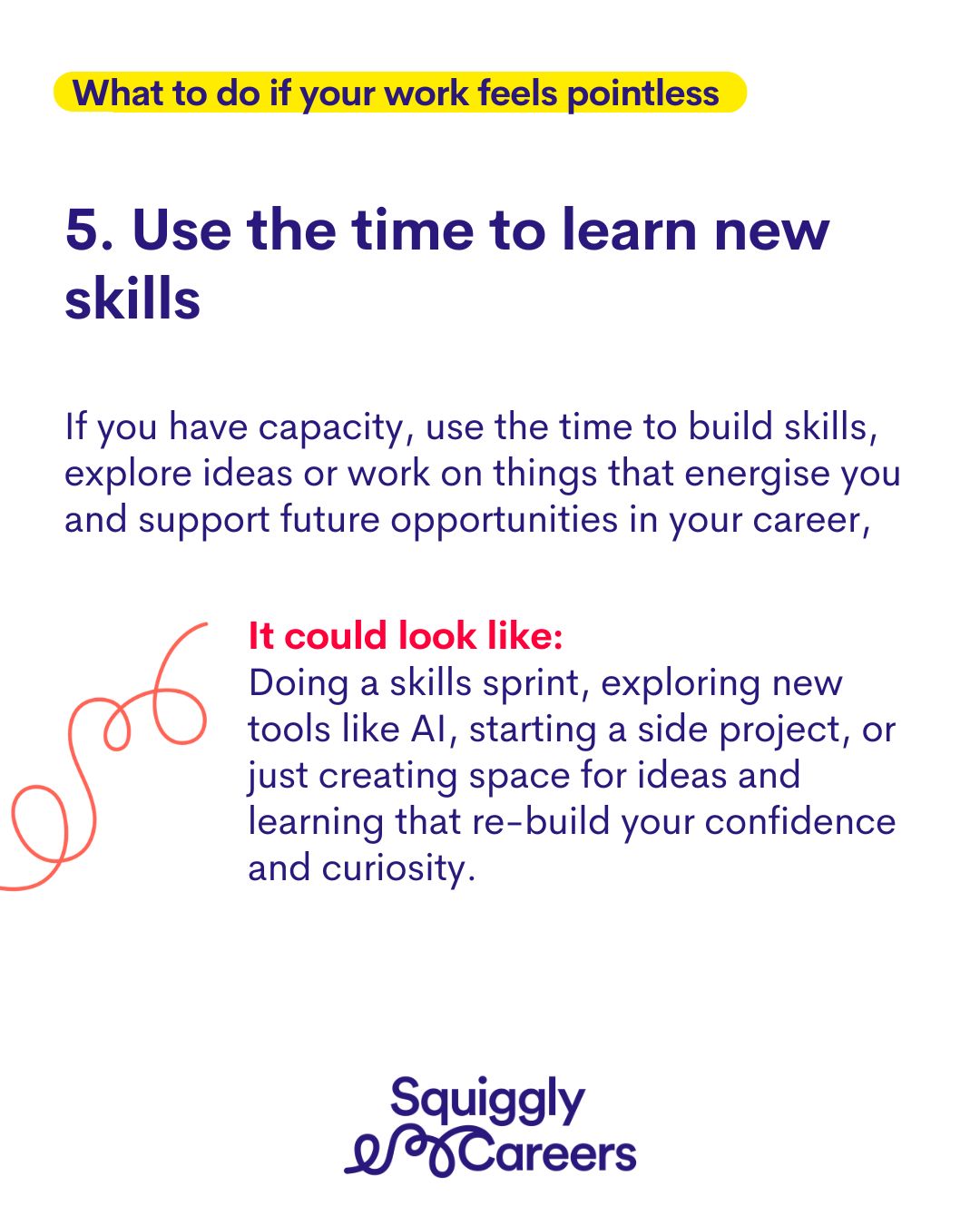
27:27: Idea for action 4… use the time to learn new skills
30.15: When is it time to leave a pointless job?
32.18: Squiggly community events
33:00: Closing remarks
Helen Tupper: Hi, I'm Helen.
Sarah Ellis: And I'm Sarah.
Helen Tupper: And this is the Squiggly Careers Podcast, a weekly podcast where we borrow brilliance from something we've been reading or watching or listening to or an event that we've been at which we think has some inspiration and usefulness for our careers.
Sarah Ellis: So this is. We're laughing before we even start. So this could feel a bit negative, listeners and viewers, but we still think it's worth exploring a few things that we have kind of come across that all I feel like have converged or come together. So Helen and I went to the theatre this week, we did to see Wankonomics and it was absolutely brilliant. If you don't, like, follow their work, it's hilarious and slightly too close to the bone at times, I think it's fair to say. I think they're doing another one in. We're based in London. They're doing another show in London in November, which we're just gonna take all our team to, I think. I think, like, you've gotta just laugh at yourself.
Helen Tupper: Sarah sat there, went, this is great tone of voice training for the team.
Sarah Ellis: Don't say that.
Helen Tupper: That is exactly what I said.
Sarah Ellis: Because they basically go like, don't use. Everyone uses 10 words rather than three. Because if you use 10 words, your job's more like, worth it, you'll get paid more or whatever. So that was brilliant. Before that, I had read this book. I bought this. I've never read Bullshit Jobs before, probably because the title just does not appeal to me.
Helen Tupper: I mean, there's quite a lot of swearing already in this episode.
Sarah Ellis: Yeah, it is Anti-Work. People are very sweary. Rise of Pointless Work and What We Can Do About It. And I just go, oh, that feels quite negative. So it's probably not a book I would normally pick up, but I think I saw some people refer to it and I was like, oh, no, you should get curious about things that are different.
Helen Tupper: Remember that anti reading list? You know when we had that thing in our reading episode? Yeah.
Sarah Ellis: And so I'm like. And probably a little bit, maybe it was prompted by that. Even so I sat and read this in the. You know, sometimes you read things in really weird situations. I was at a soft play.
Helen Tupper: I mean, that sounds like even more depressing.
Sarah Ellis: And so I put on some noise cancelling headphones.
Helen Tupper: Yeah, I would always do that in a soft play.
Sarah Ellis: And then got out this and like sat there happily highlighting it, ignoring the two 9 year olds that I was meant to be looking after. And then at one point I did realise I'd not seen them for, like, 20 minutes. And I was like, oh, I went wandering around. They're not trying to find them. So there's that.
Helen Tupper: There's that book, Bullshit Jobs, Wankonomics, and.
Sarah Ellis: And so the latest book from the Pound Project. So some people will have our book from the Pound Project about confidence gremlins. And we are big fans of the Pound Project. We always buy their book every time they release a new one for everyone in the team, even when the latest one by Amy McNee is called I Don't Want A Job, a Manifesto. Not a real job, Not a real job. So, yeah, I don't want a job. So there's two books. Choose Creativity instead. And she actually has a really good TED Talk as well, if you kind of want to watch that. So Bullshit Jobs is probably what we're borrowing the most brilliance from today. But we also thought, oh, it's interesting that there's some of these things that have all been sort of like an
Helen Tupper: anti work, anti job theme.
Sarah Ellis: Yes. And actually it's quite funny. Quite a lot of people I know buy the Pound Project books. And people are messaging me going, oh, it's very anti-squiggly. And I was thinking, oh, that's even more reason to read it. And we were talking to JP, who's one of the founders, and I said, oh, I found it a really provocative read that. He was like, yeah, I bet you did. Which is good, right? There's no point.
Helen Tupper: You two that love careers,
Sarah Ellis: My sister's read it and she was like, oh, I'll be intrigued to see what you think of it. You know, she was saying it in a sort of very nice way, and I was messaging her and she was like, oh, I do always really appreciate your, like, optimistic outlook on life, where she, like, absolutely loved it, whereas I was like, oh, I think I probably have a bit more of an optimistic view.
Helen Tupper: Well, I haven't read Bullshit Jobs yet and I haven't read the New Pound Project book. So I'm going to kind of sort of be open to your insights and think about how they apply.
Sarah Ellis: Okay, So I think for Bullshit Jobs, the thing that's really important is actually the definition of, like, what he means. So it's David Graeber who wrote this, and he is an anthropologist.
Helen Tupper: Okay.
Sarah Ellis: So the book, if you do want to read the book, the book is very much zoomed out. It's the economy, it's the rise of Pointless jobs, like society, it's definitely not written with an individual lens, which is some of what we're going to attempt to try and do today. And he describes them as jobs that are pointless, unnecessary, and basically, as an employee, you cannot justify its existence, but you're sort of having to pretend that they're worth it, essentially. And the keyword is the individual's assessment. So it's like they're pointless and you know that they're pointless. And when he. He wrote this article in a magazine called Stripe Magazine, which you can read for free, so you can read the original article for free. And basically what happened was he. He sort of put this, like, phrase out there and then he just got a massive response. Loads of people all across the world sharing their stories, mainly anonymously, of being in pointless jobs and often being in quite well paid pointless jobs. And this, the secret test, which is quite confronting, is if the job disappeared tomorrow, would it matter? And he sort of says, well, there are loads of people in jobs where, if it disappeared tomorrow, it just. It wouldn't matter. And obviously there are lots of people in jobs where it would really matter as well. And quite early on in the book, he did say there's often. Sometimes you can be partly right. You might be like, well, part of my jobs feel pointless, or part of what I do doesn't feel that useful, but part does. And that's probably a more sort of pragmatic view. So, like I say, it's quite a descriptive book, not that focused on action.
Helen Tupper: Yeah.
Sarah Ellis: But what we thought we would talk about is our reflections. Helen has kind of got to grips a bit before today with, like, with this definition and, like, how we felt about it. And then if this is you today, if you're in all of a bullshit job, part of one, or, you know, someone who is. Because I actually think the more we explore this, the more probably we all realise it relates to us at some point in our squiggly careers, like, what do you do about it? So I'm not sure how much he'll approve of us then making it really practical. You know when you read a book and you're like, apologists.
Helen Tupper: So we turned it into actions.
Sarah Ellis: We're like. And I was like. I kept reading, I was like, what are the. You know, like, where's the answers?
Helen Tupper: Where's the help?
Sarah Ellis: Where's the actions? Like, what do you want me to do? And the same with Amy, really. She's not trying to solve, you know, like, I'm always find that really interesting when people almost accept. They're like, oh, it's sort of. It's not up to me to give. To give answers or to suggest actions on that point.
Helen Tupper: This week I was doing a workshop for Blinkist, actually. There's a couple hundred people on it and people were. I was like interacting in the chat and somebody just said in the chat, stop fixing things. I can't remember what question I asked, but it was. That answer did not relate to my question. And I said something like, oh, you're gonna have to. I don't quite get that. You're gonna have to elaborate a little bit more. Anyway, the person kindly emailed me. Well, messaged me on LinkedIn afterwards and said I was the person that said, stop fixing things. And it was a really kind message. And it just. It just said, I can tell you've got loads of energy for what you do. And I followed your work for a while. And he was like, I just want, you know, you don't have to fix every problem with careers or work. Actually some of them are just rubbish and you don't need to kind of. And I just thought it was.
Sarah Ellis: It was.
Helen Tupper: Yeah, it was direct and clear and empathetic. And maybe, you know, these books I quite like, maybe that they are not.
Sarah Ellis: They're just holding.
Helen Tupper: They're just holding. There is a bit of an issue here that we should all be holding a little bit. And maybe there isn't a fast fix and it's not a. Do something different also tomorrow.
Sarah Ellis: Then it's complicated and complex and maybe it's okay. So you've just got to. And it's just very different, I think, sometimes, because naturally, the way that we both are and the work that we do, that's why it's good to spend time with other people and other perspectives because both of them do that. They just. They hold. They've got really strong points of view, they're really provocative. But then you're. There's no resolve, you know, it's like you've got to sit with it. Yeah. And actually that feels quite, quite uncomfortable. And often I think it's Cause I'm like, oh, but I want to help or I want to support or what's a good idea that I could let. And it's just like, no, but maybe it's just.
Helen Tupper: Do you also feel this? Maybe that's enough at this.
Sarah Ellis: Do you.
Helen Tupper: This is my view, my perspective. Do you also feel this?
Sarah Ellis: Yeah. And people. People definitely connected, I think with both Amy's Work and David's work. People really, really connect with it. They really recognise it. So then you maybe feel seen, which is really powerful. Right. You know, like it's not just me. And actually the more I've got into the bullshit jobs, the more I was like, actually, probably in the context of a squiggly career, you'll all have a job at some point that feels a bit like this or a lot like this. And so actually if you had some ways of finding your way through those moments and we'll kind of talk about why they are particularly hard, that would actually be really helpful, which I know is quite practical, but that's what. That is what we're gonna do.
Helen Tupper: Yes.
Sarah Ellis: Okay. Have you had bullshit jobs, Helen?
Helen Tupper: Yes, I was reflecting on this. I think I have had two and a half.
Sarah Ellis: Okay, one part one.
Helen Tupper: Well, yeah, the two were just completely like, just completely, you know, you. Like, if it disappeared, it wouldn't matter. I mean, both of them did disappear after a period of time. That was the evidence.
Sarah Ellis: I mean, I moved on to do
Helen Tupper: other things, but I was pretty clear not when I. Not on day one, but within a couple of months.
Sarah Ellis: Yeah, don't you ever apply for one?
Helen Tupper: Right.
Sarah Ellis: Yeah, you apply. I hope you don't. Please may I have one? Please may I have one?
Helen Tupper: I've heard you have some going. Yeah, high paid, pointless jobs. I'd love one. We'll talk about why high pay, pointless jobs aren't great, but I definitely had two that I realised and then I had one where I could kind of see the potential. What I was, you know, I come. I had to almost be in the pointless job to see the potential so I could create a better one. So I'm gonna say, like, there was definitely some time in pointless, but it was. I got to turn it into something much, much better. Yeah, two and a half. What about you?
Sarah Ellis: One, definitely one. Like completely pointless. Yeah. And I knew and was really unsure what to do about it.
Helen Tupper: How quickly did you know?
Sarah Ellis: Six weeks. Like a month in six weeks? Like definitely within the first 90 days. And it was a job actually I was really excited about. So, you know, I was like, brilliant. I was really looking forward to it. So on paper, not pointless. In reality, pointless. And I think it's really disappointing and frustrating. And one of the things actually David Graber does talk about is just how stressful it is. So it sounds like it shouldn't be stressful because actually one of the things about a lot of these jobs is you are relatively well paid. Some of them are very well paid, but you are relatively well paid. But they talk about, like, the psychological damage and harm of almost pretending because usually you're in this very weird masking moment of being, like, scared.
Helen Tupper: Disappointed a bit, but more scared because I knew I wasn't doing a very good job and I knew if people were going to critically evaluate me, it was not going to look good. Like, I wasn't doing anything of a significant. I was, you know, maybe talking good talk because I felt like I had to.
Sarah Ellis: Yeah.
Helen Tupper: Not that I wanted to. I wanted to do good work, but I felt a bit scared about what? Like, this is a really risky career position to be in because you're not doing good, valuable work.
Sarah Ellis: Yeah. So you're often having to, like, pretend to quite a lot of people that what you do is worth it and you sort of know that it's not. You'll have, like. You have, like, a funny relationship. People often talk about, like, having a funny relationship with maybe people who work for them or the people that they work for, like, do they think it's pointless? And it's exhausting. That's one of the things that definitely comes through. So there's lots of stories and examples in the book and people just describing how it feels and people like, you know, at the start, people are a bit like, oh, okay, maybe. Maybe it's easy.
Helen Tupper: Yeah.
Sarah Ellis: But I think quite quickly it becomes really draining because. Just because of, like, your. You imagine every day. And I do actually really remember this being like, every day felt so long. Often you haven't got enough to do and often you do try. I think most people try to be useful. You know, maybe you ask a few of the questions, like, is there anything else? And get involved in. Or what else could I do? And then you just sort of have this realisation of, like, this basically isn't a real job. But maybe it's there because your manager needed to keep the head count.
Helen Tupper: Yeah, that's what I was going to say. Why were yours? Why was yours?
Sarah Ellis: Do you know what's interesting? I wonder whether. So I had applied for a job in this team, a more senior job, and didn't get it right. But they wanted me anyway. And so I wondered. I wonder whether in hindsight, it wasn't a real job because they were just like, we really want her, but not quite in the job that they'd advertised for, because I wasn't quite ready for that yet. And so did they sort of make up a job for me because almost like they wanted me, which is flattering.
Helen Tupper: Right.
Sarah Ellis: They wanted what I could bring, but then there wasn't the actual work to do, maybe. What about you?
Helen Tupper: I think one - I was hired in the context of organisational change and so a bit like they wanted. I think they wanted me, but the change hadn't. They knew change was coming and I just had to kind of sit in that situation, almost sit and wait for the change. And so there's a period of time where I was just like, well, this work is invaluable and that job got me redundant. So that wasn't great. Two - I think there was a lot of politics that were getting in the way of the position and had to kind of wade. Wade through that.
Sarah Ellis: Actually.
Helen Tupper: Two. Two was about politics. Two is about, like, it needed to be different, but making it different was limited by, like, politics and dynamics in the company. But one was, yeah, organisational change, which I honestly think if you're going particularly big companies, it's very likely that you're going to wade into that at some point, whether you apply for a new job or it happens around you. You might have been a great job. And then suddenly, because it's no longer organisational strategic priority, it can feel a bit bullshit. But you're still doing it.
Sarah Ellis: Yeah. And people. I mean, some of the examples and people do laugh at themselves, which is. It sounds really bleak, but there is definitely a people not taking themselves too seriously. In some of the stories, one person described, like, basically being a manager and he was like. I think it was a. He's like, oh, I've got a really capable team. So basically they just don't need me. You know, my job is like, to maybe like, delegate work to them. But he was like, but they don't. They already know what they're doing. So essentially I just sort of have to like, pretend to be in charge of these people who are already incredibly capable. And he was like, yeah, it's just, like, not worth it. They just don't. But at the same time, you know, the real. I suppose the much more serious dilemma is then people do, like, acknowledge, oh, yes, but then I've got a mortgage to pay and. And I can't just. Who doesn't want to be in a more useful, impactful job? But then, you know, people feel really stuck.
Helen Tupper: Yeah, I think you should make me redundant. Because I'm not like, no, no, I think you should just find me a better job.
Sarah Ellis: Yeah, yeah, yeah. And actually I do know. I know one or two people who, I think now that I've kind of learned a bit more about this, probably did know that they were in pointless jobs and actually did a really good job of making themselves redundant so that they could do something different, you know, and it almost was quite admired as like a, oh, we can save money on this senior person who probably has paid a lot of money. And then they were very open to doing something different in that company, or they were quite open to leaving and going somewhere else. But again, that doesn't work for everyone all the time. And so having. When we both had the realisation that we had at least both had done one, and I think I've had a few part ones as well, we have then tried to come up with some ideas and we thought we would take it in turns to actually talk about things that have kind of worked for us or some. Which are sort of more prompts that we think might be. Might be useful. Do you want to start something that worked for you in those two?
Helen Tupper: I think I've got three things.
Sarah Ellis: Do you want me to go through all three? Let's take in turns.
Helen Tupper: Let's take in turns. So I think the first one is a framing one. So I've got some things that are very, very practical, but I think this is more of a, like, psychology type thing, which is, I think look at your jobs as experiences rather than as an identity. So I think, you know, if you go into a job as a, I don't know, it doesn't have to be a head of. But whatever the job is, and you, like, you identify with that job and the title and, I don't know, the status or significance and what this means for you and your career. I think then when that isn't working, it kind of hits quite hard because you've, like created this very emotional connection to the identity of that job and what that means for your development, all that kind of stuff. Whereas I think if you. And links to something Seth Godin said on the podcast years ago, when he came on our podcast years and years ago and he was talking about, like, treating your career as a series of projects and experiences. And it's always kind of stuck with me that, like, if you just think, like, what is this experience teaching me? Like, rather than my identity is connected to this role, this is no longer the role I'm wanting, so what does it mean for me and my identity, rather than getting into that trap, which is quite significant. Just think, like, this is an experience of many. This is my experience right now, like, what can I gain from this experience? And kind of know that there'll be another and I'll talk about what I did to get to another. But I just think, just try not to personally identify too much with the position because that's where I think it becomes quite challenging. That's my first thing, the framing thing. What's yours?
Sarah Ellis: My first one was something that I actually did do in that. In probably my most pointless job, I think, was I found work from someone and somewhere else. So I think I had tried first. Well, can I have some work. Could I have some more work from the person I was working for and that team? And I think once I started to have that realisation of, like, this is a bit made up. And I do remember thinking, I'm going to have a CV in a year's time and those bullet points are going to be blank. I don't know what those bullet points are going to say because I'm not doing anything. But I did work with some of the teams and other teams that I was thinking their work does seem more useful and it's quite connected to what I do, but it's not quite the same. And I sort of attached myself a little bit to, like, that area, that person, and I think probably made quite clear that I'd got capacity that I could support. There's sort of this fiction that you're having to try and maintain that you do have this other job. So you can't just be like, I'll just do 100% of my time.
Helen Tupper: Such a good term.
Sarah Ellis: Yeah. Elsewhere. But I do. I can remember it now. I really remember this project that I worked on for a different leader with someone else in, like, a different team. And I just put loads of effort into it, loads more time than it needed. I basically did then put, like, energy into that, a lot of enthusiasm. And it was also really interesting and it felt really meaningful and real and quite different to what to, like, the other job that I was meant to be doing and usually there are teams where they do. They need help, they need support and you might have something to offer. And that really helped me to build some new relationships with a different part of the company. Gave me some energy because I was doing some work that I kind of cared about. And then I went to work in that team. And so it was also my route out of that role into another role in the same company. So it's interesting, you know, you can have a bullshit job in one team. And then I moved into one of my favourite ever jobs in that same company.
Helen Tupper: Yeah.
Sarah Ellis: So I'm just like, can you. It's sort of like a bit of a sideways scan. Can you look at other teams, other areas, other people? And you don't even have to say the words out loud.
Helen Tupper: Right.
Sarah Ellis: But I bet people sort of know, oh, Sarah in that job, in that team, she probably got this. She's probably got a bit of spare capacity. Can I talk to those people about my strengths, the ways I could be useful, what I could do, and just see if I can sort of find myself some opportunity?
Helen Tupper: Yeah, that worked. My second one's very, very similar to that. So I almost imagined that my team was in the centre. And then I kind of did your scan. I was like, where are all the other teams that I should be useful for? I was like, who should care about the work that I'm doing? What other teams were other managers? And then I. Cause I thought, well, maybe, maybe I'm missing part. I was like, maybe I'm missing something. So I went to have some conversations with those people and I was like, how is my team useful for you? Like, what are your priorities? How can the work that my team helps to solve it? And sometimes they were like, well, probably, probably not. But sometimes I was like, okay, you're just validating that I'm in a bullshit job. But what I was able to do in those conversations is a build a relationship. But I was really conscious that some of my experience and expertise was not being surfaced in that job. So people didn't know what I could bring because that job wasn't allowing me to demonstrate it. So when I had those conversations with people under the guise of, I really want to understand how my team can help your team and how we can work together, which was a genuine question. But in. In that conversation, I was like, oh, okay, if that's one of the things you're working on, actually, I've got some contacts over here. Or one of the things I did previously is this. It could be useful. And so it gave me. I didn't really say, oh, I'd love to work on that project. I probably didn't do what you were doing, which I could have done. But it was more. I wanted to showcase that I was more than this job.
Sarah Ellis: Yeah, yeah, yeah.
Helen Tupper: And I think that helped me to build some advocacy because where I didn't have, like, evidence in the job and, And I would have loved to have evidence, but I didn't have at that time. What I did build was some initial advocacy. People that would have said, oh, but Helen Tupper's good. Like, she's, she's, she's good, she's valuable. And I just, I had quite a lot of those conversations and they were only really basing it. I was trading on my past experience because I hadn't done it in the job that I was in today. But that definitely. That definitely opened some doors for me. People brought me into meeting conversations and like, oh, Helen, I'll have a perspective on that. Or even at some events, people would sit next to me because I, like, I wasn't. They wouldn't sit next to me because I was doing good work, but they sit next. They sat next to me because we had a good conversation. And I. That was helpful to me when I was, like, almost every day losing a bit of confidence.
Sarah Ellis: Yes.
Helen Tupper: Which is rubbish.
Sarah Ellis: Yeah. Because my next one was really practical, which is related a little bit to that, which is get out of the office as much as you can, I do think, or as much as you can get away with, basically. I think this is the moment for events, communities, career conversations, mentoring, volunteering, coffees with people who work in your company. You know, sort of. I think those things stop you feeling trapped by where you are in that moment. Because I think you can't always move out of these jobs super fast.
Helen Tupper: Yeah.
Sarah Ellis: You might be able to. And I think if you can, great. Almost like the longer you're in them, I think probably the worse you will. You will feel. Because my final point basically is like, leave. So, you know, and you're like, but you can't. You can't do that overnight. And you've just got into a job. And like I was saying quite quickly, I knew it wasn't going to be right, but you can't just make that change. But probably what you can do is think, okay, well, what are the events related to, like, this job? That could be interesting. Who else could I go and talk to? Can I talk to people in similar jobs in other companies, try to find out if their jobs are also pointless or if they found a way to make it useful? And so I did a good job. I think during that time, I did quite. I built quite a lot of, like, mentoring relationships. I focused a bit more on, like, My career, I started to think about, like, things I might apply for, for learning. If I look at that time, I'm like, oh, so I managed to do an MBA at that time. Yeah, of course I did. I got loads of capacity.
Helen Tupper: Yeah, yeah.
Sarah Ellis: Not all of that time, but I was doing an MBA. I applied for the Marketing Academy, which is something both Helen and I have done. I could do that. I don't remember. I don't remember that being stressful with my job because I wasn't doing loads in my actual job. I used to go to the gym every day at lunchtime. Wow. Every single day. Like, there was gym in the building.
Helen Tupper: Now you say it, I'm like, oh, learning, networking and going to the gym.
Sarah Ellis: Yeah. Which I know it sounds good, but it doesn't always feel good and. But ultimately it definitely didn't make up for, because obviously they are really small pockets of time and then you're still at work for ages. And I really remember thinking. And those were like, the best parts of my day. Like, the one career. I'd have, like, one mentoring meeting in a week and I'd really look forward to it. Or like, going to the gym was probably, like. It helped me survive the day, I think, rather than, like, energise my day, because you'd know what you're going, like, back to or whatever in the afternoon. So I think it's a. It's a stick. All of those things, I think, are slightly more sticking plaster than sorting it. But sometimes you need the sticking plasters for at least a bit because you can't. You can't just change straight away. Was very fit.
Helen Tupper: I remember. I remember the times. My third one. I don't think either of those authors would like me for saying this, so I can imagine.
Sarah Ellis: I'm not sure either of those authors would like us.
Helen Tupper: Helen Tupper's a bullshit person. They might be like. Well, because my third one and because. And the reason I say it's because I know. I know not everyone would do this, but I did genuinely do this and it did work for me was that I pitched a new position in two of those jobs that were pointless. I. I don't even know where I got the confidence from to do it, but in two of them, I pitched a new position. I went to my manager in one, I went to someone senior in another, and I said, I think, like, basically, I think there's a better structure, I think there's a better opportunity for the business. I definitely pitched it as a Business rather than just me. Like, I think I could be doing something better. I kind of pitch the opportunity and then put myself in a position to do the job. And I think I did that. And if that had been a no, then I probably would have done the leave thing. But in both those instances it worked out. I created myself new positions. Now, I don't think that would, I don't think that would happen every time. But I literally had, you know, a presentation with. I think this is what the structure would be. This is the opportunity. And actually it had been informed to your point about get outside. Both of those had been informed by what I'd seen in other organisations. Okay, like, oh, they're doing something that we're not. And I kind of use that as evidence to be like, oh, it could look like this. So that, that did work for both those and it meant that I moved into a position which was better for the business and better for me.
Sarah Ellis: My other thought was, can you use time to upskill yourself usually or pretty universally actually, if you're in one of these jobs, you have got time, which there'll be loads of times in your squiggly career where the exact opposite is true. But this is one of those times where often you're a bit like, you might be a bit bored or you do have capacity. And I'm like, okay, well can you be the person who's learning loads and sharing that with your team? And at the moment, given like everyone's trying to upskill themselves on AI with whatever AI you can use in your company, could you do that? Could you use, could you do 10 minutes of an AI skill sprint that we've done? Could you do that every day? And I would be looking for upskilling. I was also thinking back to again, what did I actually do to kind of think about. Cause I don't think I actually did upskill myself loads during that time. But what I did do was start side projects and just made stuff up. And I mean some of the stuff, I think it was me just needing creative outlet, like an outlet to do something. But this still felt work related. And I think this actually is quite a controversial one because I have spoken to people who are probably in this situation almost quite recently and they are so drained by basically how shit their job is. They're like, I've got no. They have nothing left over to do. They would quite like to do a side project or something that they're really interested in, but all of the capacity to do that is being taken away by pretending, masking the job. So I don't think this is for everyone. I think when I was in that job, that was a thing that kind of gave me energy. So actually having something that I was just, like, making up and coming up with ideas and it was actually. Do you know what it was? It was pure escapism because it wasn't a proper side project at all. It was. I'd, like, make stuff up or have ideas about who else I wanted to work for. I was, like, dreaming and, like, visualising because I didn't want to be where I was. And so it was my form of escapism. It wasn't a side project, actually, in any form, nothing that anyone could have ever seen. I just made it up for myself. And probably in some ways it was a bullshit side project, but I convinced myself that it was. I don't know, I think I just enjoyed it and that was enough. It was enough to have that kind of escapism. So I don't think it has to be a side project, but it's sort of something that, I think that makes you feel better about yourself. I think that's what it did. Because like you said, you were like, oh, my confidence was being knocked a bit every day. I think that's what these jobs do to you because you start to question your own value and your own worth and have I got any strengths? And all of those questions and is it me? If someone else is in this job, would it be brilliant?
Helen Tupper: So when do you leave? Because that was your last thing. When do you leave?
Sarah Ellis: When do you leave? Well, I don't know. When I was in this sort of a job, which was quite a while ago now, I think there was more stigma than there is now about leaving fast. So I know quite a lot of people now who have gone into jobs and sometimes they just haven't worked out, but sometimes I think they have figured out quite quickly, this is pointless. There's not a real job here. And I think people are calling it faster and moving on quickly and just being really honest about it wasn't a good fit, job didn't work out. And I think that's a brilliant thing to do. And if you can obviously find something else, because for most of us, you can't just be like, bye, if you can find something else in that organisation you're in, or in another organisation. I think calling it quick. If you feel really confident that this is not a good job and there's not a real job here and if it disappeared tomorrow, like, no one would care and no one would notice. Obviously you want to do all the stress testing of like, does it need a bit more time or can I do job crafting? Can things change? Like all the things that we would always, that we would always advocate for. But I do wonder whether sometimes you just know. You just know. And if you do, I think the faster you can get out, the better. Because essentially everything that you and I have talked about today are just like survival tactics which are not fun. If you're doing a job that you really enjoy and that's really useful and meaningful, you'd still do loads of things that we talked about today and they would be great, but we're really only talking about them as like coping strategies.
Helen Tupper: Yeah, yeah
Sarah Ellis: Ideally.
Helen Tupper: I just think, oh, I'm just thinking about people that are in, you know, like, because I have that, like I fix it. There's people that are in this right now like, oh my gosh, you're like,
Sarah Ellis: don't hold it, solve it.
Helen Tupper: Yeah, yeah, whatever. They're like, I just want to give, like give them a hug because it just feels really hard. But I'm also like, I just think, oh, knowing you're not alone and the benefit of community and how can we help you? I'm just thinking about things like, because we do, occasionally we do like Squiggly quiz in conversation on LinkedIn where there's like a community of curious people that are joining our LinkedIn lives and then we do the Sprints which will be in September. And again that's like thousands of people in a community who are learning together. And I just think, I know we're not supposed to solve it, but I feel like I just want to know, I want people to know that we do have this brilliant squiggly careers community of lots of like minded learners. And if you've ever considered joining one of our conversations, which are all free, it might be a good thing to do. If you are feeling very disconnected from your work right now, like connect with the Squiggly Quig community instead.
Sarah Ellis: I also hope that it feels reassuring to hear both of us talk about it because, you know, we, we've had more than one between us. We've had quite a few and that is some of those were quite far into our careers. We'd done quite a lot of work on self awareness and like learning and growth and you know, sort of that it's not your fault. Yeah. You can just find yourself sometimes in these situations and Like I said, I don't, I don't. I think it will happen to everybody. Because initially when I started reading it, I was like, oh, no. Like, they're talking here. Because a lot of the examples will be, I don't know, like, corporate finance or whatever. So I was like, corporate finance? Yeah, I know, I know. And I say that, like, I do know people who work in that area who do really good stuff, but a lot of them are like, law or corporate finance, those kind of things. And so initially I was like, oh, this is not really me. And actually, when you look at the definitions. We both looked at some of the definitions. He divides up the jobs into, like, five different types. And you and I were like, oh, no, we haven't really done, like, he says one of them is like, box ticking jobs where you're just there to tick a box or duct tapers, people who are hired to fix problems that shouldn't exist in the first place. So you. Initially, both of us went, oh, no, we don't fit in those categories. And then when you really think about it, you're like, yeah, but everybody has their own version. And I know that feeling. So we probably can't solve it overnight. I don't think these things are necessarily solvable overnight, but hopefully it's helpful to hear and maybe there are some actions we can help with a bit.
Helen Tupper: Well, let us know. We love. We love feedback and we'd love to hear from you, so you can always email us. We're helenandsarahquigglycareers.com and thank you so much for listening. We’ll be back with you again soon. Bye for now.
Sign up to the Squiggly Careers Newsletter and get our latest ideas, tools and inspiration every week - all in one place, straight to your inbox