
Is “just be yourself at work” really the best advice? In this 500th episode of the Squiggly Careers podcast, Helen and Sarah explore the tricky topic of authenticity – and why being 100% yourself at work might not always help you succeed.
Borrowing brilliance from Dr. Tomas Chamorro-Premuzic, they discuss the difference between effective vs. ineffective authenticity, why trust often matters more than “being real,” and how to adapt without feeling fake. You’ll learn three practical actions to help you show up authentically and intentionally in ways that work for you, your team, and your career.
🎯 What You’ll Learn
– The difference between helpful and unhelpful authenticity
– Why trust and emotional intelligence matter more than “bringing your whole self”
– How to balance being true to yourself with adapting to your team
– 3 actions you can take to use authenticity for career success
📚 Resources Mentioned
Don’t Be Yourself: Why Authenticity Is Overrated (and What to Do Instead) by Tomas Chamorro-Premuzic https://www.amazon.co.uk/Dont-Be-Yourself-Authenticity-Overrated/dp/1647829836
HBR Article: https://hbr.org/2025/08/do-you-have-an-emotionally-intelligent-team
For questions about Squiggly Careers or to share feedback, please email: helenandsarah@squigglycareers.com
Need some more squiggly career support?
1. Download our free careers tools
2. Sign up for our Squiggly Careers Skills Sprint X AI.
3. Sign up for Squiggly Careers in Action, a weekly summary of the latest squiggly career tools
4. Read our books ‘The Squiggly Career’ and ‘You Coach You’

00:00:00: Introduction
00:01:12: Celebrating 500!
00:03:47: Authenticity - effective vs ineffective
00:09:14: Ideas for action ...
00:09:30: ... 1: know what makes you you
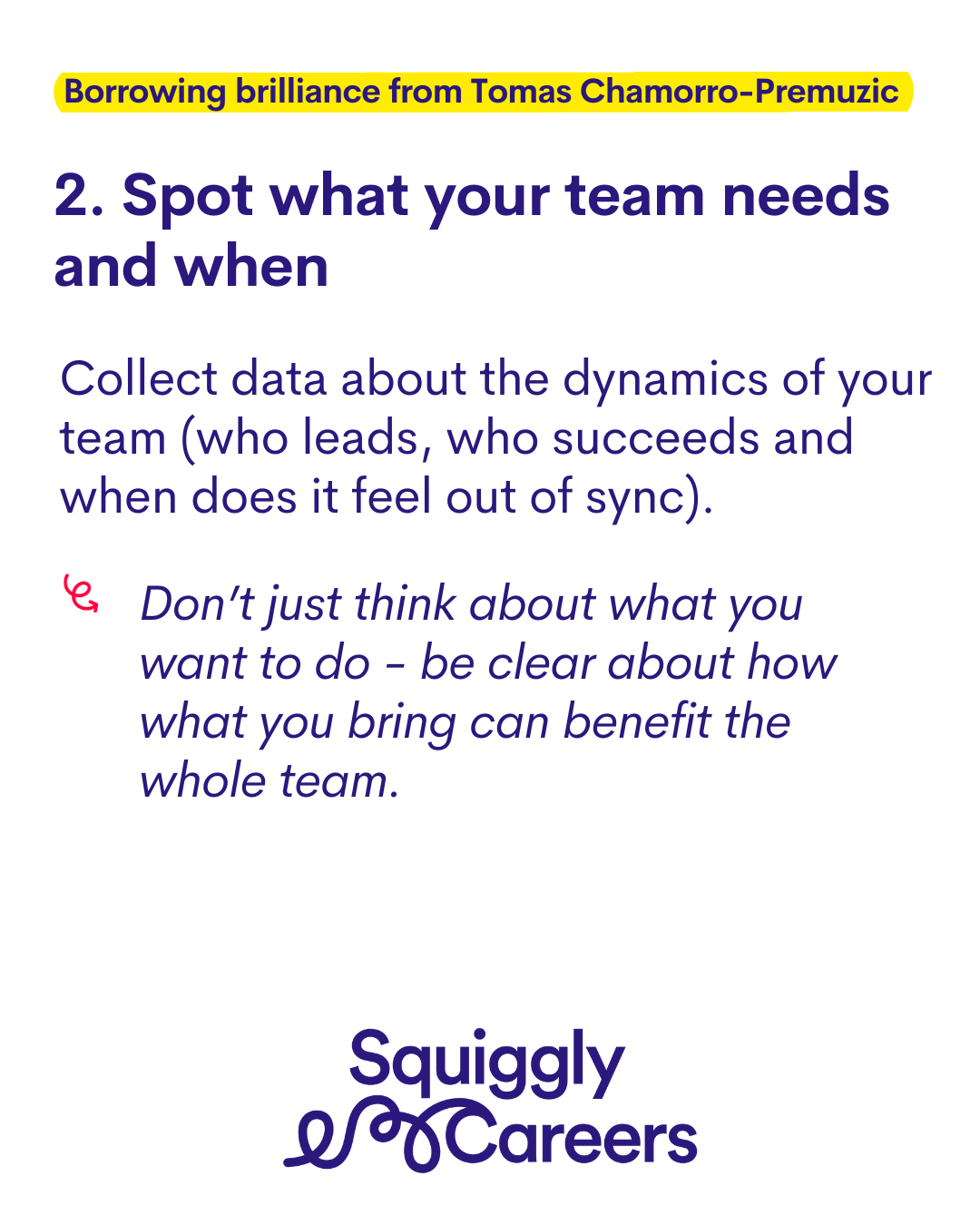
00:15:24: ... 2: understand your team
00:17:45: ... 3: focus on your flex/intentional coffee
00:22:33: Final thoughts
Sarah Ellis: Hi, I'm Sarah.
Helen Tupper: And I'm Helen.
Sarah Ellis: And this is the Squiggly Careers podcast. Each week, we borrow some brilliance and turn that curiosity into actions in a way that we hope will help all of us succeed in our Squiggly Careers.
Helen Tupper: And in today's episode, we are going to be tackling the topic, it's hard to say, of authenticity, which it turns out also might be harder than you might think to do. And I was intrigued by somebody whose work we've followed for ages, I think we're just really big fans of how he thinks. And that is Dr Tomas Chamorro-Premuzic, who has a new book all about basically not being yourself, this mantra of, "Just bring your whole self to work", and what does he call it, like the authenticity cult, or something like that? He's basically very, very anti this idea of everyone should just be themselves at work. So, we thought today that we would talk about that a little bit, maybe share some of his insights and our own opinions on his advice. And then, as ever, because we're trying to turn our curiosity into actions for you at work, we've got three things that you can do with his insights and advice so that you can put them into action to support your Squiggly Career. That is our plan.
Sarah Ellis: And one quick thing, this is our 500th episode today, which, yeah, I mean, sure, there's not loads to say, is there?
Helen Tupper: Do you know what, I normally do the milestones and then you normally just sort of flatten them.
Sarah Ellis: That was my version of doing a milestone.
Helen Tupper: I thought you said it flat!
Sarah Ellis: It's because no one cares.
Helen Tupper: Well, I care.
Sarah Ellis: I don't even think I … well, do I? Actually, do you know what I do care about? I do think doing something consistently for that long every week is something to be really proud of.
Helen Tupper: I agree.
Sarah Ellis: And so, that, I think for my …
Helen Tupper: Congratulations, Sarah.
Sarah Ellis: … own personal recognition of myself, I think I care. And if I think about where we started 500 episodes ago, we've come a long way.
Helen Tupper: In a little studio. Do you remember that little black studio down the stairs, and we would sit there really rigid with our microphones.
Sarah Ellis: Being really formal. That didn't last very long.
Helen Tupper: I know, I feel like our standards might have dropped. I think we had quite high standards.
Sarah Ellis: Well, I mean there was a moment where, I wonder if you can ever tell, when we would have been recording the podcast and both of us would have had really young children and having no sleep. I wonder whether we were, "This is amazing, because it's not that", you know, we were getting a break from something else that's harder, or whether at times we just sound broken?
Helen Tupper: I think, if you've listened, you'd be like, "Oh, they're really annoyed with each other there", or, "Clearly, someone's interrupted that one".
Sarah Ellis: Yeah, something a bit stressful's happening.
Helen Tupper: I can't listen back. They're traumatising.
Sarah Ellis: Imagine if you've listened. Do you reckon anyone has listened to all 500 episodes?
Helen Tupper: Apparently, I have been on sessions with our PodPlus crew before, and some people have listened to every single one.
Sarah Ellis: Every single one. That's a lot of Helen and Sarah in your ears, but thank you.
Helen Tupper: That is a lot, thank you.
Sarah Ellis: If that is you, I am very grateful that you choose to spend your time with us. And if you're new and you're like, "Wow, 500, that's really daunting". Don't worry. Just go back to the ones that you need.
Helen Tupper: Yeah, search for what you need. Go on our website, amazingif.com, put in your topic and it will tell you the most relevant podcast. Or, Sarah and I often use an app called Overcast, which often has quite a good search function, and we'll often just put, for our own podcast, we'll just put in the topic.
Sarah Ellis: Because it's got good search.
Helen Tupper: Because it's got good search and we'll find it.
Sarah Ellis: I was just thinking, you'll be able to tell me, maybe I bring too much authenticity to the podcast, like my actual personality about celebrating milestones. Maybe now, you're going to tell me that's not the right thing to do. What do you think?
Helen Tupper: Well, why don't I tell you a little bit more about this authenticity --
Sarah Ellis: Okay, and we'll decide.
Helen Tupper: -- with a very, like I say, I think Tomas has a very critical lens on it. So, we don't have to agree with it, right?
Sarah Ellis: Of course.
Helen Tupper: We're just going to learn from it. So, I've got a few notes, my notes from reading and reflecting. And I think what we're really looking here is how to use and not use authenticity as a strategy for career success. So, that was my frame when I was absorbing this. I was like, "Okay, what can I take from this that can help me to use authenticity and what I'm learning to support my career success?" So, let's do a couple of points to begin with.
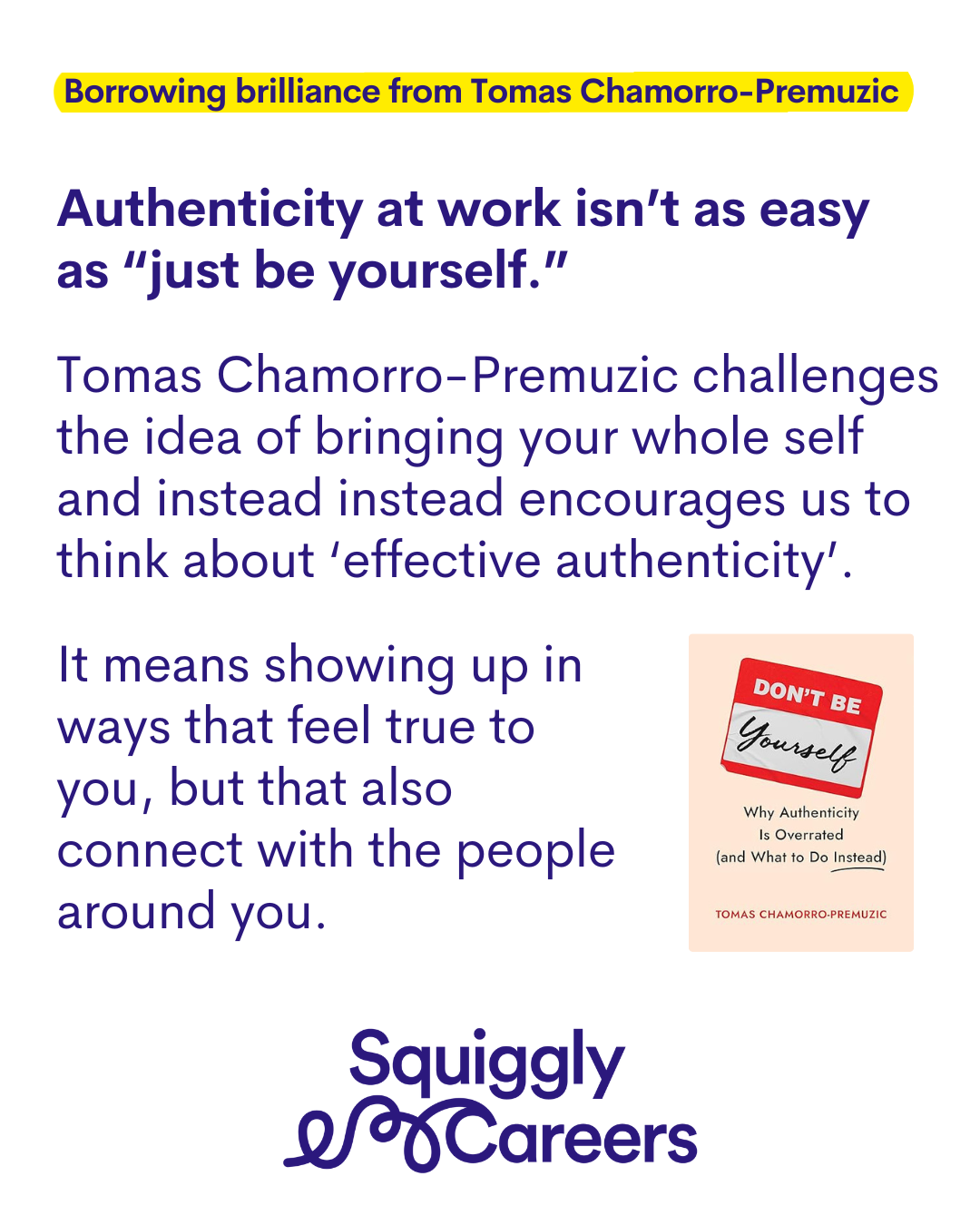
What he says that we are really aiming for is something called effective authenticity. I'll talk about the difference between effective and ineffective. So, let's start with effective. He says, "Effective authenticity is where you project a version of yourself that resonates with others, whilst maintaining a semblance of genuineness".
Sarah Ellis: A semblance?
Helen Tupper: Yeah. This is a really key point because he says it's about, "Achieving a harmony between self-expression", so Helen as I want to show up in the world, "and social connection", the Helen that the world wants to see.
Sarah Ellis: Right.
Helen Tupper: And his point is, if we go round every day just going, "Well, I'm just going to show up as who I want to be in the world. That's me being authentic. I'm just going to do all the things that I want to do in the way I want to do them", then actually, what that can cause is friction and disconnection from the people that you are working with, because largely the people that are most successful, so you go back to the filter of how does authenticity support career success, largely the people that are most successful in their careers have two dimensions that are consistent. One is agreeableness, so they get on with people, people want to spend time with them; and kindness, so they are empathetic and understanding. And so, this idea that you just show up as you want to be, regardless of what people want to see, you're just like, "Take me as I am".
Sarah Ellis: I suppose that's quite selfish, right?
Helen Tupper: Potentially, you could say.
Sarah Ellis: It's not very thoughtful, it's not very empathetic to almost be just like, "I'm just going to be me. Don't care how other people feel, think, what's useful for them", just kind of completely unfiltered. If you wanted to think of it like that, you could be like, okay, well that might be quite egotistical, I guess, doing that.
Helen Tupper: Yeah. You know, when you start looking at it like that, sometimes we say, "Oh, just be yourself at work". But actually, if you look at it with a critical lens, I think you do get to, "Oh, but what if that isn't relevant to these people, or what if that isn't helpful to what we're trying to do? Then actually, like you say, it's kind of getting in the way of the work we're trying to do. And he has this point, I thought was quite interesting, about he says that actually trust is more important than authenticity. And he talked about a pilot, for example. Whether they're being their authentic self as a person flying the plane, you know, they're bringing themselves to work, that is less important than trust. Do you trust them to fly the plane? So, actually, he was saying that the trust that we place in people to do the job is actually more important to the relationship than, you know, am I just being fully Helen?
Sarah Ellis: Yes, though I don't think I also care if a pilot is kind or agreeable, but I do care if they can fly the plane.
Helen Tupper: That is true.
Sarah Ellis: And as an example, I find that one trickier, because of the job that they do. One of the other kind of, it's not a counterpoint, but it's an interesting one to think about, is I suppose if you go too far the other way and you feel like you're wearing a mask, pretending to be someone you're not at work, because if you're feeling like, "I have to be really agreeable, it's all about other people", if you go that way, that is then really tiring. That is when people are very unhappy. And I have definitely flirted with that at certain points in my career, trying to show up in a way because I thought it was the right way to show up. And that's hard to do well, and I think also not that helpful. And I wonder if you are naturally, I mean this bit isn't me, but if you are naturally a people-pleaser and you're very selfless, almost your description as well, you could end up being kind of very 'other' orientated and then not confident enough in yourself. It's a tightrope to walk. Interesting.
Helen Tupper: That's what I thought. You need this projecting a version of yourself that resonates with others, so you're being kind of quite adaptable, whilst maintaining a semblance of genuineness. That is quite hard. And I wrote down as I was reading, I was like, "What are the themes that are coming through?" So, clearly authenticity, but the underpinning themes are trust, not an easy topic; transparency, not an easy topic; and he talks about emotional intelligence quite a lot, like people who do this well, because you are good at understanding others and how you show up in relation to them. I actually haven't read something for a while where emotional intelligence has been so kind of, you know, it was quite fashionable for a while, wasn't it? But he really comes back to it in this topic.
Sarah Ellis: I read something on that last week on, "Are you part of an emotionally intelligent team?" So, to your point, I'd not read anything on it for a while and then it just popped up. I'd have to find the lady's name who's the researcher. It's a well-researched piece of work. I think it's an academic lady who's done it and it was on Harvard Business Review, because I've shared it with a few people. So, we'll put the link to that in the show notes. But I was like, "Oh, interesting thinking about the we rather than just the I. Am I emotionally intelligent? Are we emotionally intelligent?" I was like, "Oh, that's interesting". So, what actions could we take on this, because this feels really hard, right?
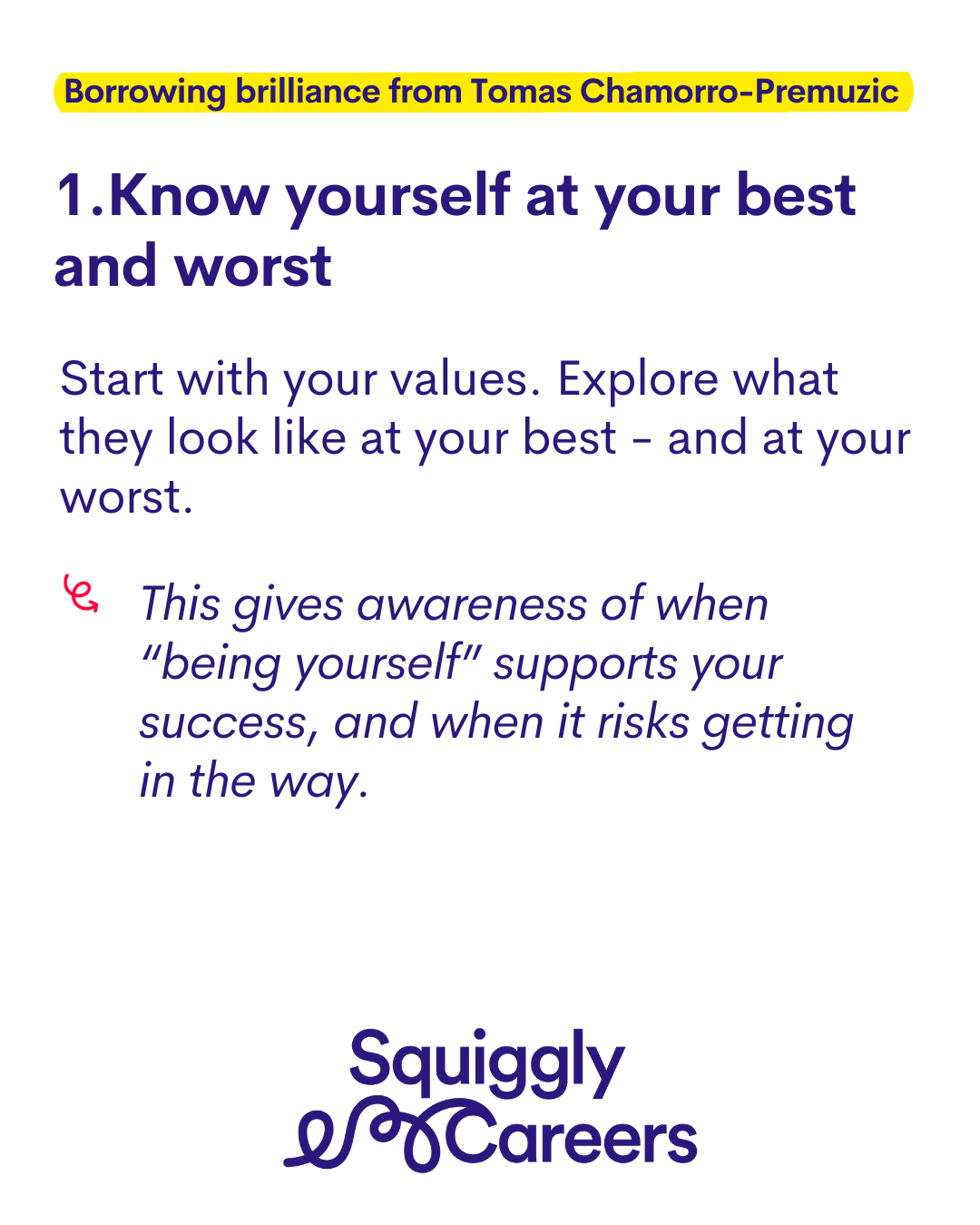
Helen Tupper: Yeah, I know. So, I did get to three areas that I think actually you could take sort of the insights, which are quite complicated. I think there's quite a few different feelings that are feeding into this into something that's useful. So, the first action that I think is important, if you're going to start thinking about, "What does it mean for me to be authentic in a way that supports my Squiggly Career success? I think you have to know what makes you, you. But I think you have to look at that from two perspectives, you at your best and you at your worst. And I think the way to do this, I and Sarah, we often talk about values are what makes you you. So, I think you can start with your values, an understanding of what your values are. And for anybody that sprinted with us, we recommended a tool called values.institute as a very good starting place to understand your values if you've not used that tool. So, you start with what your values are. And then, what you want to think about is for each of those values, what do they look like when I'm at my best, and what do they look like when I'm at my worst?
If you are super self-aware, you might be able to do that. You could go and get some feedback if you're feeling brave. Or what I did is I went to AI and I said, "These are my values, this is what I do, what is likely to be the impact of them showing up at their best and at their worst?"
Sarah Ellis: You could just ask me. I reckon I could have done that for you.
Helen Tupper: I know, but you were busy and I wasn't feeling like a brutal bit of feedback.
Sarah Ellis: "Because Sarah brings too much of herself to work".
Helen Tupper: Let's see what you think about these.
Sarah Ellis: Go on then.
Helen Tupper: Let's see if you agree. So, freedom is one of my values. I'll just pick out a couple of them. I wrote down my definition. I actually just voice-noted it to ChatGPT to make it quicker.
Sarah Ellis: Oh, nice. I don't use voice noting as much with GPT.
Helen Tupper: I found it so helpful.
Sarah Ellis: Maybe I'm going to experiment with that because I love it voice note, but I just forget, I think, to use GPT in that way.
Helen Tupper: It's so helpful. I was like, "My value is freedom. It means being unconstrained about my choices", and it's got it all here.
Sarah Ellis: Just easier than typing. Nice.
Helen Tupper: Yeah. "How might it work for you: gives you the courage to build and scale your own business rather than being trapped by corporate norms", apparently. "How it might work against you: risk of spreading yourself and the company too thin by chasing too many opportunities at once". I want to do too much. "Energy", I'm just going to say all of them, "Energy: works for you because it inspires your team, clients and audience; works against you: pace and positivity might overwhelm or unintentionally silence quieter team members". "Growth: works for you, keeps your company evolving; working against you: may create impatience when progress feels slow". "Achievement works for you: drives results, you don't just think you make things happen; works against you:", you'll love this one, "risk of prioritising visible wins over deeper, longer-term investments that might not quickly pay off".
Sarah Ellis: Oh, I don't know. I actually think a few of those you know about yourself already. And so, there were a few there where I was like, well, I actually think you are very good at including people in conversation, so I don't see you silence other people with your energy. I understand how that could be a risk with you because you do bring so much energy and it is like, it's literally your watch word. I feel like if I cut you in half, that's the word that would be in the middle, but maybe because you're self-aware or maybe because you've thought about it. Also, because we all have agility, right? Just because you bring energy doesn't mean that you can't, 'and' include people in conversations.
Helen Tupper: Well, you have to have, I think, the awareness to have agility. And we've talked about this at length. So, I know what my values are and I've thought about them before, but I think other people might not be in the same place. So, the first action I think is, in order for you to have the agility, which is what Tomas is recommending, like don't just go be yourself all the time, Helen, so, don't ignore that sometimes when I show up with my values, it can have a negative impact, I think that first bit is be aware of what makes you you, when that works for you and when that could work against you. And it's the working against you bit that he's saying, "Don't be 100% authentic or all those things that are going to work against you are going to show up for you at work and get in your way".
Sarah Ellis: A team activity, I can see that working as a team. I mean, you definitely have to have some trust, right, because you're talking about yourself at your worst. But I can also imagine that making people smile. And you know like often, you at your worst, your people have a little bit of an inclination of that anyway. And then actually being able to say it and people being like, "Oh, yeah, Helen, freedom, loves loads of stuff". You're like, well, of course she does, that's what makes her brilliant. But actually, people maybe hearing it from everyone could be quite nice. That's quite a nice team trust activity.
Helen Tupper: Yeah, I think. And the reason I quite like using the ChatGPT stuff is you've got 75% of the way there without anyone having to say the hard thing. You're like, "I've done some of the hard work for you. I'm just asking you what you agree, what you disagree with. You don't have to say it out loud".
Sarah Ellis: Yeah. And I do wonder whether it's nice to be able to still have the choice in terms of what you share for you at your worst, versus you imagine other people telling you, even you and I doing that.
Helen Tupper: Yeah, I edited some of those. There were some that were a bit vulnerable, so I just didn't say them.
Sarah Ellis: Okay, but that's okay, right? That is also part of doing what you feel comfortable with. And I remember, in Why Should Anyone Be Led By You?, one of the things that Rob Goffee and Gareth Jones talked about, which actually is a similar theme, you know when you start to connect dots, they talk about the idea of being selectively vulnerable. So, actually, again, as a leader, they say, you know when there was a real trend to be, like, leaders need to be really vulnerable and stuff. They were like, sure, you need to be human. But don't share everything all of the time, because actually, that's not what teams need. They don't need to know from you that this is really stressful or that all this stuff is kind of going on. You do need to think about what's useful for you to share but also what's useful for other people. So, actually, though initially that idea of authenticity can sound quite brutal, can't it, being like, "Well, it's about being agreeable and kind and don't worry", actually, when you start to get to it, you're like, "It sounds quite smart and sensible".
Helen Tupper: Yeah. Well, that bit about the team, I think, is the next part of where I get to on the action. So, I almost see it as a bit of a funnel. So, part one of the funnel is like, what are you bringing; where does that work for you and work against you? And let's hold the 'what might work against you' stuff. Before you just adapt for adapting sake, I think the second bit is, he talks about the rules of the game. You need to understand, how does this team work? What are the dynamics of the team? Who does well in the team? What does success look like in the team? You need a bit of data so that you can take those things that might work for or against you, and you're looking at them in the context of the team or the company that you're working in. So, that's where you're going to do the potential adapting, otherwise you're changing in a very undefined or unmanaged way.
Sarah Ellis: Yeah, so this is about being situational. So, I suppose knowing how your values work for and against you, generally useful; but even more useful, if you then make that application to, "What kind of team am I working in? What kind of culture am I in? What kind of organisation am I in?" And actually, you and I both have achievement as a value. If I think about how that achievement shows up in different companies, it's actually always been quite different, because of what that organisation is like. Are they a very achievement-based organisation and what would achievement mean to that company? Are they very results-focused? Are they very people-focused? Are they very short term? All of those kind of things, it's sort of connecting the dots, isn't it, between you and who you work with and who you work for?
Helen Tupper: Yeah. And I think, knowing that that is quite dynamic. So, I was thinking it's team and time. So, how does this team work? But also, even the same team can need different things at different times. And therefore, my energy might be really appropriate in some times of the year, you know, start of the year or a big moment, that is usefully authentic, effectively authentic, as he would say, use that at that moment in time. But other times, that level of authenticity is going to be really annoying, and it's not actually going to help the team. It's just, "I'm going to be really energetic when actually, people want to be reflective or calm, for example".
Sarah Ellis: Yeah, okay.
Helen Tupper: Okay, so the third thing --
Sarah Ellis: I'm more and more on board. The more we talk about it, the more on board I'm getting.
Helen Tupper: So, we're aware of what makes us us and how that works for and against us; we've got this sort of situational context of what does the team need from me so we can be adapting; and that is the third item, which I've got two names. So, one, I've got, focus on your flex. So, you work out in this team at this time, what do you need to flex so that you can still be yourself? The other thing I've called it is, be intentional about the coffee. Can I explain that point?
Sarah Ellis: Talk to me, love a coffee.
Helen Tupper: Yeah, love a coffee. So, he has this really nice comparison where he talks about authenticity and coffee. And he says that lots of people don't like 100% full-strength coffee. People like a latte with some milk and some foam and some sugar.
Sarah Ellis: We saw that. We were away as a team last week and the range of coffee orders, like some people definitely don't really like coffee. And then there's you having a pure black coffee.
Helen Tupper: Yeah, that's true. Strong. I'm like, "Triple espresso, please".
Sarah Ellis: I think you did have something like that one day. I was like, "Here you go, Helen".
Helen Tupper: Well, apparently most people don't like that, because if we're thinking about authenticity, most people don't want the pure, unfiltered version of each other. They want the, "I'll have got a bit of extra milk please, bit of sugar", kind of soften you up. And my point here of focus on your flex is you still want a bit of coffee, right? But you need to work out how much coffee. Are we triple espresso today, because your company really, really does need the full-on version of you? Or actually, are we, I mean I'm going to go out of my depth with the coffees here, but are we a, I don't know, a cortado?
Sarah Ellis: You and I both drink a lot of coffee. We're not out of our depth. Are you a pour-over? Are you a V60? I mean, I can keep going.
Helen Tupper: You can go far further than me. I am like Nespresso pod in a room, and you're like, "I've got to walk for a mile to find the coffee shop".
Sarah Ellis: I walk to find the coffee shop, yeah. But I still do have milk in my coffee. But yeah, I do. I will walk to find the coffee shop.
Helen Tupper: But yeah, I guess the point is you need to work out what coffee you're bringing. Or if that doesn't work for you, you need to focus on your flex. But I think the point is, be intentional. Like, you might think about over the next month, over the next quarter, who does my team need me to be? And how can I still bring me at my best? His whole point is, this isn't just this selfish, "I'm just going to be myself at work every single day regardless". I need to be the person my team needs to be whilst also still feeling true to me. And that is tricky, but I think this sort of awareness, team context, intentional flex is how you might get to that outcome.
Sarah Ellis: I also wonder if you need to keep coming back to it. Because, I mean you said the word 'dynamic', we said 'situational', we talked about 'context'. It's not a sort of solve it once. This is not a one and done, is it? This is, you kind of need to know yourself at the core. So, I think you do need to do your values. And also, we've got a free values toolkit on our website. Use that, use the values.institute. There's loads of good stuff out there now that you just get for free that's pretty good quality. And then, I think it's kind of the wrapper, it's what goes around that. And as you said, it's unlikely to stay the same. But it's almost keep questioning yourself, like I would think, okay, so one of my values is ideas, "What ideas do the team need from me at the moment? Do they need loads of ideas? Do they actually need me to back away because the last thing they need is more ideas?" You know sometimes more ideas is actually annoying and it's overwhelming? What we need is decisions not ideas.
I suppose if I was going to think about this more consistently, I wonder if I'd want to come up with almost a set of questions to ask myself, because obviously I love a coach-yourself question. Regular listeners will know that. And so, I think I find questions a useful way to be, it gives a frame for me to get started. So, it might be things like, "What do my values mean at my best at the moment? What would my values mean at my worst this week", or just to start to get some really useful insights that I can then turn into actions, "Oh, I need to dial this up a bit. I need to dial this down. Or I need to think about doing some things differently". Because often, we just don't have that awareness, do we? We're just not really thinking.
Helen Tupper: Yeah, we're just operating.
Sarah Ellis: Operating, yeah.
Helen Tupper: But I think in this social context of being authentic and bringing yourself to work is brilliant, and I think what he's doing is putting a mirror up to that and going, "But maybe we should think a bit more about it".
Sarah Ellis: Yeah, it's being much more intentional, isn't it? Very useful.
Helen Tupper: Thank you. I found it very useful.
Sarah Ellis: So, if people want to find more, please make sure you go to the show notes where there's loads of links. Lots of you will already be signed up to Squiggly Careers in Action. That's our newsletter that comes out every Tuesday. And pretty much everything in that newsletter is always free. So, our ambition is to make careers better for everyone. So, we try to make sure that we're doing as much useful ideas, actions, tools that anyone can access wherever you are in the world and however you like to learn. So, if you don't sign up to that and you've enjoyed the podcast, that just might be helpful for you and your development.
Helen Tupper: And nearly 40,000 people do, Sarah. So, lots of people are getting all that insight, so hopefully we can have a few more into the mix.
Sarah Ellis: But that's everything for this week. Thank you so much for listening and back with you again soon. Bye for now.
Helen Tupper: Bye everyone.
Sign up to the Squiggly Careers Newsletter and get our latest ideas, tools and inspiration every week - all in one place, straight to your inbox


