How close are you to yourself, your team and the people you serve? In this episode, Helen and Sarah borrow brilliance from the concept of zero distance, a philosophy championed by brands like e.l.f. Beauty, and turn it into one of the most honest and practical self-reflection exercises they’ve done on the podcast.
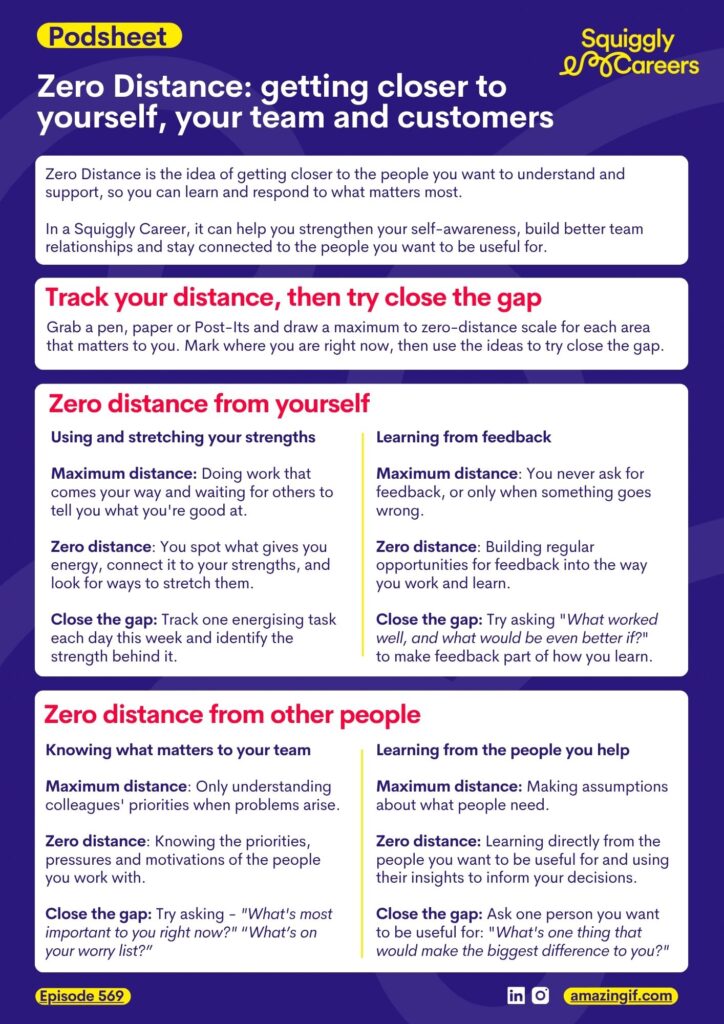
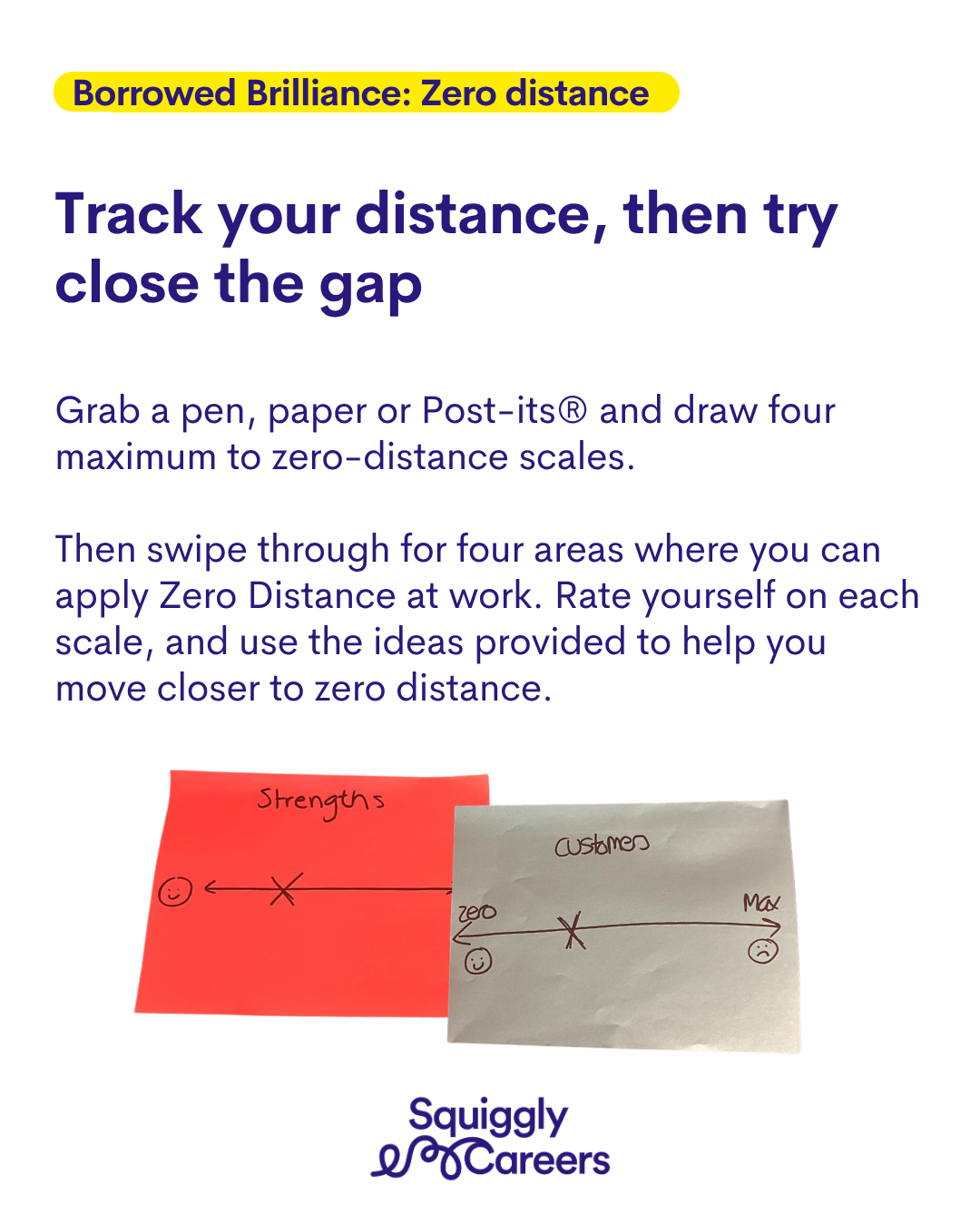
Using Post-it® Notes and a simple scale, they plot themselves live on six different dimensions of distance, from how well they know their own strengths and feelings, to how much feedback they really get from their team, to how close they are to the people they’re there to help.
This episode is brought to you in partnership with the Post-it® Brand. If today’s episode sparked an idea, stick it down – find out where to buy Post-it® products at go.3M.com/squiggly
🎯 What You’ll Learn
– What zero distance means and why brands like e.l.f. Beauty have made it their entire philosophy
– How to use the zero distance framework across three areas: distance from yourself, your team and your customers
– Why knowing your strengths isn’t enough if you’re not spending time on them
– What Helen’s “I’m fine, it’s fine” taxi moment reveals about emotional distance at work
– How to make feedback unmissable rather than occasional, and why rhythm matters more than quantity
– What zero distance from your customers or learners actually looks like in practice (including a story about a credit card in a glass of orange juice)
For questions about Squiggly Careers or to share feedback, please email: helenandsarah@squigglycareers.com
Need some more squiggly career support?
1. Download our free careers tools
2. Sign up for our Squiggly Careers Learn Like a Lobster Skills Sprint
3. Sign up to the for Squiggly Careers Newsletter, a weekly summary of the latest squiggly career tools
4. Order our new book Learn Like a Lobster
00:00: Introduction to zero distance
05:44: How to use zero distance in a few different ways
07:13: … to measure your strengths
10:03: … to understand your feelings
21:13: … to spot feedback flow
29:11: … to understand your manager and team
34:48: … to understand your customer
48:49: Closing remarks
Helen Tupper: Hi, I'm Helen.
Sarah Ellis: And I'm Sarah.
Helen Tupper: And this is the Squiggly Careers Podcast, a weekly show where we borrow some brilliance from things we're watching, reading, listening to or events we're maybe attending.
Sarah Ellis: Objects.
Helen Tupper: Objects, yeah. There's been many things since we made a bit of a change to the Squiggly Careers podcast to do Borrowed Brilliance and we are living it. I'm finding it's like unlocking my curiosity. I'm quite excited about this conversation today because since Sarah shared the idea with me, which I'll let her tell you about in a minute, it's just come up quite a lot. I feel like the relevance of this one, it keeps being dropped into conversation. So hopefully it's going to be a useful listen for everybody. And don't forget to subscribe wherever you listen or watch the podcast. That just means that you never miss an episode because it always goes top of your list on those platforms. Also, it is worth going to our website because every one of our episodes has a podsheet. It's like a one page summary of the conversation, the ideas, all the links to learn from. And it's all on amazingif.com if you just go to the podcast page, you'll see all of our podcasts there, all 500 and something. And the vast majority of those have got this one pager. So it might help you to take what you are listening to in our conversation into some practical actions afterwards.
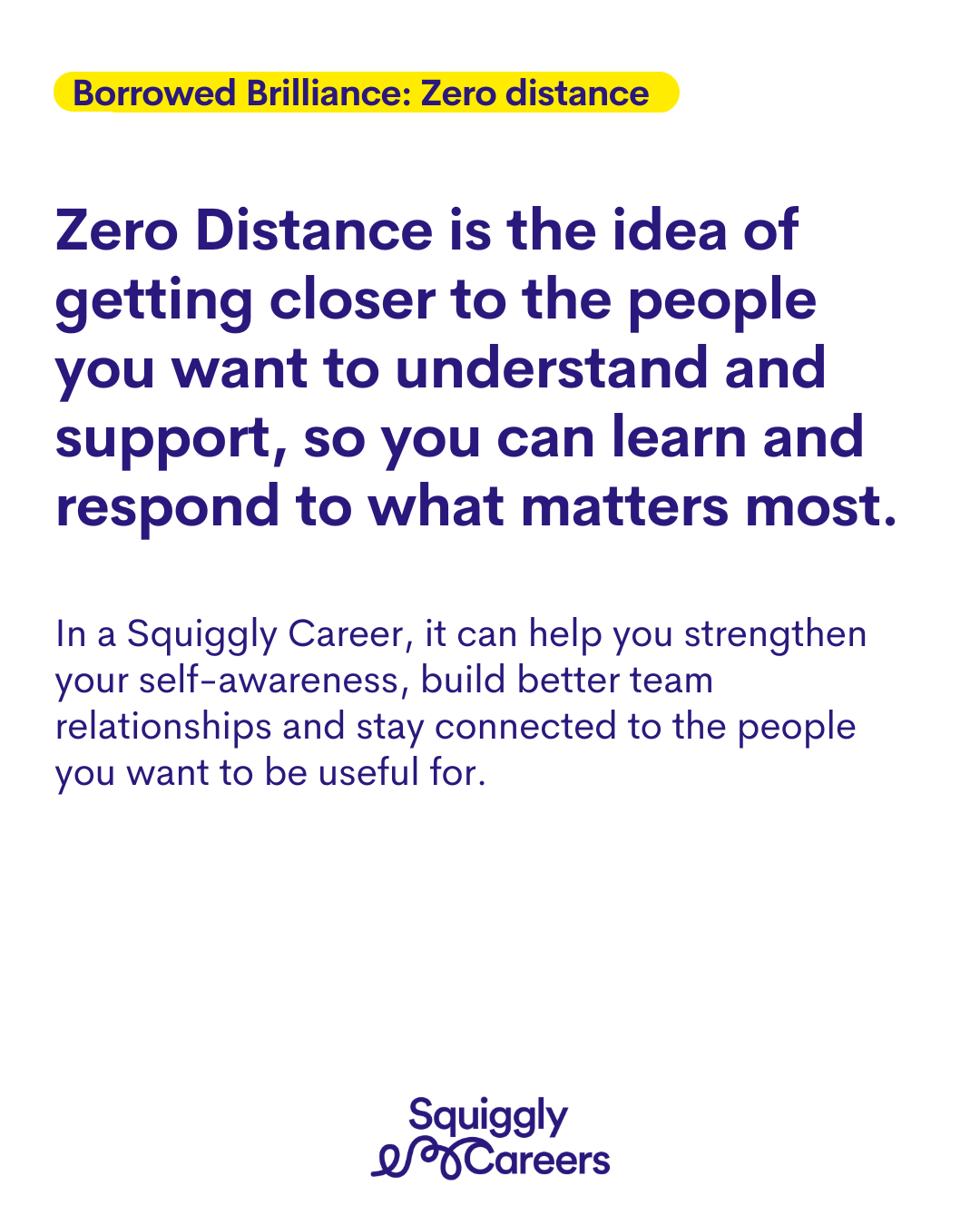
Sarah Ellis: And this is one of our episodes that we're doing in partnership with Post-It. And I sort of don't want to spoil the surprise of how we're going to be using them today, but the topic really lends itse.l.f, I think, to bit of visualising, doing a bit of drawing as we go. So we'll come back to how we think they might be helpful. And so the idea we're going to be exploring today is something called zero distance. And zero distance was first introduced by a company called Haier, who I think are a Japanese company. And the idea of zero distance, it does what it says on the tin, is making sure that between a business and a customer, you have zero distance. And so, you know, like you, you're so close to your customer that you really understand them and you're learning from them. And actually I went on their website to see how they kind of described like the philosophy and they talk about this idea of relentless learning which obviously like really appealed to me. I was like, oh yeah, that sounds amazing. And they talk about like maintaining a startup mentality, adopting an agile approach. And obviously, like, really like listening as well. There's a big thing about listening. But where I'm actually borrowing brilliance from is I saw the marketing director of a brand called e.l.f speak, lady called Kory Marchisotto. And so we've got some E.l.f products. We have got some E.l.f products. We have some excuse for us to buy some E.l.f products. Which, looking at these beautiful products look, which, you know, I'm sure some people who do proper podcasting and YouTube, like, always ask us, they're sponsored. We're like, no, no, we just like products. I just thought it was a really good idea.
Helen Tupper: Sarah said this morning, because we always like, plan what we're going to record. Yes, it is. It is planned, everybody. You may not think it is, but we do plan it. She's like, I think it'd be good to have some E.l.f products. So Vivi, who works at the team, was then sent to go and get some products and now I'm going to steal them because I'm very excited about this.
Sarah Ellis: Then you got carried away with the products.
Helen Tupper: Jealous. Because I've heard a lot about less about the products, more about the company, but I've heard a lot about their culture. I've heard a lot about Kory as well. Like, she's been on a podcast, like, Energy Tenacity, like, great, great leadership, yet loads of energy.
Sarah Ellis: So she was on the stage, we were at an event together. I've never met them before and actually I hadn't come across the brand before. I think everybody else has to be honest. Every time I've then used this, people are like, I love their products, but I just hadn't. And she was. She is really. She did a brilliant job, I think partly of, like, sharing her philosophy on, like, work and how she worked. And she's got a really interesting Squiggly Career story, but also E.l.f in particular. So they talk about Zero Distance as a real philosopher, philosophy and mindset. So that's what kind of reminded me of it. And I was thinking, I'm sure I've heard about this before. And they've sort of taken it to the extent where now they have a Substack. So E.l.f have a Substack called Zero Distance. So they've actually kind of named their Substack that you can actually read their chief executive saying exactly what it is
Helen Tupper: for the Substack in terms of the content on that stack.
Sarah Ellis: Definitely their community. They are so community-led as a brand, which is probably why the zero distance makes a lot of sense. But they talk about zero distance is the belief that organisations are strongest when they erase the gap between leaders and teams, between brands and the people they serve and between ambitions and those who bring them to life. It's fundamental to who we are at E.l.f Beauty and then in the substack, it's not just the CEO doing it, but there's loads of of them talking a bit about like how they listen, how they learn and I think it's actually how they've. It's sort of in their DNA because then obviously I've got lost in that world of like how did they create that brand? And they are very driven by the people, the people that they serve. They sort of go where their community are. So if their community like hanging out in a certain place or interested in a certain product or I don't know, TV show or something, they also follow their customer rather than expect their customer to follow them.
Helen Tupper: That is interesting. So what two things going on in my head. One is interesting concept, how does it relate to careers? We'll come back to that. The other thing going on in my head is like, oh, I feel like we have done that with Squiggly Careers, you know, like we've kind of followed the customer. If I think about which is hopefully good for some of things we're going to come on to in terms of how good are we at this at the moment. But I think a lot of the time when I think about what, what books we've written or I don't even what podcasts we put out and things like that, it's kind of, it's quite, it's generally quite audience led. Like someone will email us and we'll hear we've got this thing going on. So I would hope that like the growth of Squiggly has been kind of. I want to go deeper into the idea of zero distance but I feel like we may have been doing it without knowing we were doing it.
Sarah Ellis: I think definitely some of the time and I some of the time less so. And the reason actually we both saying it feels really relevant is with lots of different kinds of conversation we've come back to this idea of zero distance. I think it's helpful in quite a few ways. But what we have done and to be honest it's not that hard to do we found and actually we've taken quite a lot out of this. So you can take this in loads of directions. We were like, you can look at zero distance in a few different ways. So we've looked at zero distance sort of from yourself, so self awareness, distance from your team, so manager, people you work with and then distance from your customers, which is kind of where the idea originated from. But everybody has customers. Like in your job that you do, there'll be somebody that you are there to be useful for. But actually you could just go with self-awareness. I think I came up with about 10 ways and you were like, should
Helen Tupper: we do two, should we do two for each?
Sarah Ellis: So we've got two for each and what we're gonna do for each of them is we'll describe it briefly. What would maximum distance look like? So that's what we don't want. What would zero distance look like? Which is what we do want. And we're going to use our post-it notes and both of us, we're going to sort of, we've done it. We've already got our pre drawn scales. We've been organised enough to have those. We're going to plot where we think we are on that scale from zero to kind of maximum compare and contrast. Have a chat.
Helen Tupper: Yeah, sounds good. Okay, what's going first?
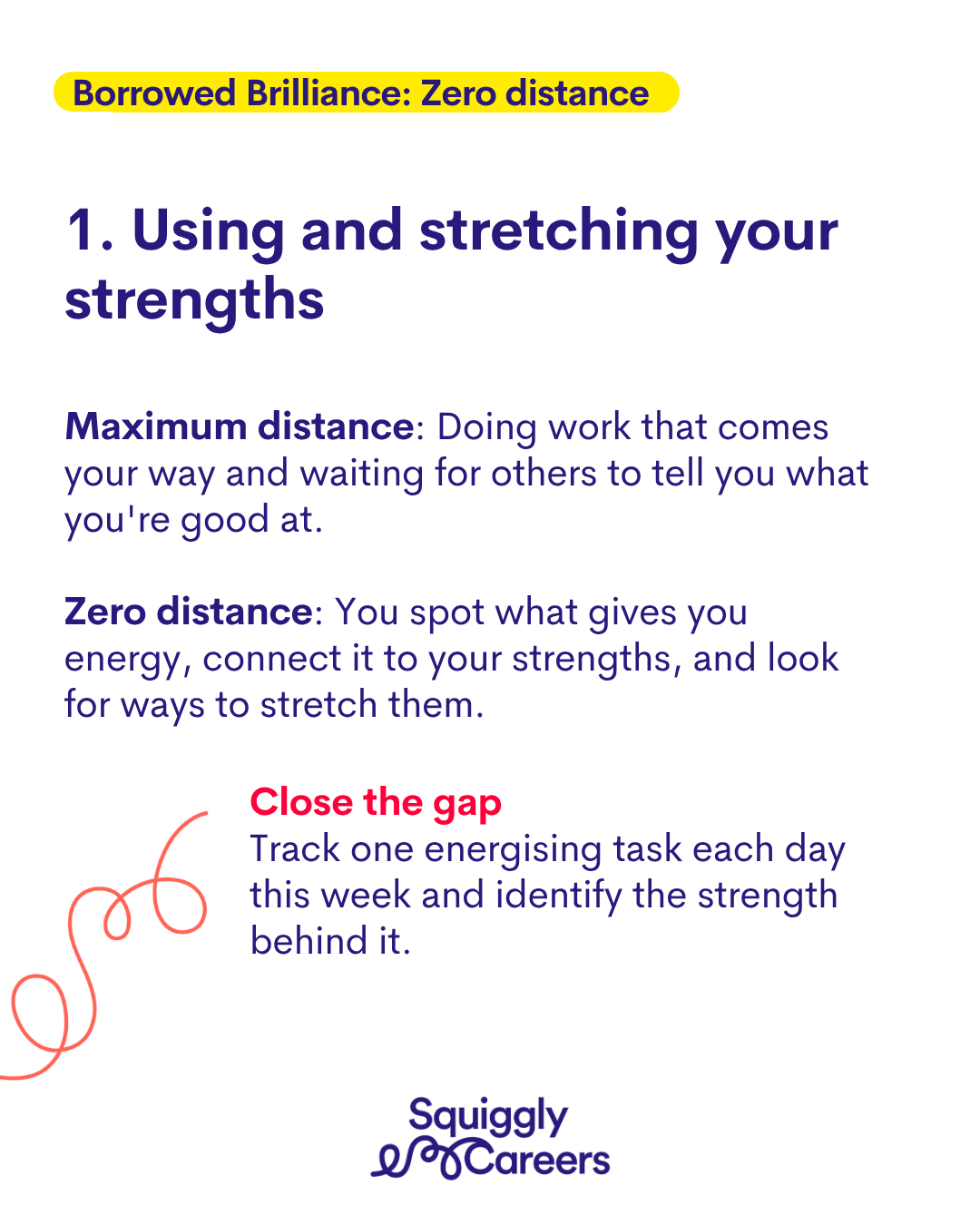
Sarah Ellis: So first is your strengths. And so maximum distance would look like you do whatever work comes your way and you wait for other people to tell you what you're good at. So that's maximum distance. Well this is just certainly this is our first go at it. Zero distance would be you're spotting what gives you energy every day, connecting it to the strengths that you're using. And you're always looking for opportunities to, to use and stretch your strengths more. So this is about like you, you Helen, like how good do you think you are at doing that?
Helen Tupper: Yeah.
Sarah Ellis: So place your cross, place your cross
Helen Tupper: and then hold on, we'll hold it up. If you're watching, if you're watching this, we'll hold up to the camera. But if you are not worried, if you're not watching, I'll just describe it. We've basically got a scale and on one end we've got a sad face which is like there's loads of distance. And one end we've got a happy face which is zero distance. Okay. I'm intrigued as to where Sarah's, where Sarah's putting.
Sarah Ellis: Okay, ready? We're just gonna show each other. We probably show the cameras as well. We'd like to show each other.
Helen Tupper: Oh, same place. Oh, this can't be for everyone. It'll be really boring, won't it tell me why. So Sarah's basically put hers near to zero distance but not on top of it. We're both in the same place.
Sarah Ellis: There's still a gap.
Helen Tupper: There's still a gap. So we're not totally zero distance. We are moving towards zero distance, which is a good thing. Tell me more about your thinking here.
Sarah Ellis: I felt that I'm always thinking about my energy. I think I try and manage my energy more than my time and think about my energy in the context of my strengths. So that bit I was like, okay, I feel really good about that. I feel confident that I'm always thinking about my strengths and I do look for opportunities to use them definitely because I know that's what makes me enjoy my work. I think I could stretch my strengths more sometimes. I. I definitely have got some new situations I'm using my strengths in this year. That's why I do an independent director job. It's why I do a non exec job. It was very specifically to stretch my strengths, but I think I'd like to do that even more intentionally and purposefully.
Helen Tupper: Yeah, yeah. Probably similar, but slightly different insights. So I think I scored myself more towards zero distance because I know what my strengths are and I see where they add value. So I have kind of that sort of clarity and confidence in my strengths which I think is a helpful thing. But I don't think I spend all of my time on them because I often get pulled into, you know, the things that I can do. Yeah, I'm good at, but they don't necessarily give me energy. I think both habitually and also from a capacity perspective. Sometimes in our business I get pulled onto that stuff. Stuff. And so I don't spend as much time as I could like sitting with the strengths because I get pulled into some of the other areas of the business.
Sarah Ellis: Good observation. Ready for the next one?
Helen Tupper: Ready for the next one.
Sarah Ellis: Okay, so we're on to. You're gonna have taken yours off. I'm gonna create a little pile of post.
Helen Tupper: It's here. So we're still on self and distance with self
Sarah Ellis: So the next one is feelings.
Helen Tupper: Okay.
Sarah Ellis: So maximum distance would be you ignore, avoid or dismiss your feelings. Yeah, I mean that sounds so definitive. You're like, yes, zero distance would be, I think, both noticing how you're feeling, but you also see it as an opportunity to learn more about yourself because this is about like self-awareness and I suppose even better if you're then sort of taking some action to do with what you've noticed and what You've observed. So where would you put that?
Helen Tupper: So maximum distance. You are avoiding, ignoring, dismissing your feelings.
Sarah Ellis: Like moving on from them, I guess. Yeah, head in the sand type stuff some of the time.
Helen Tupper: Okay. Oh, slightly different here. So Sarah has gone to sort of just away from the middle. So she's quite close to the middle, but she's closer to the zero distance. I've gone the other side. So I've gone closer to maximum distance. As in I don't think I'm as close to my feelings as Sarah is. Sarah is more self-aware of her feelings and then more likely to respond to them.
Sarah Ellis: Talk to me about yours,
Helen Tupper: I'm just looking kind of. When we were writing it, we said ignore, avoid, dismiss. I think I do that quite a lot. I think I'm like, oh, I'm feeling a bit frustrated or I feel like, oh, I want to say something about this, but then I kind of just go, go to a. I don't know whether it's because I've got the sort of people pleasing, likability, confidence, gremlin, but sometimes I just kind of go, oh, I just let it go. I just let it go. So I carry the weight of the feeling rather than do something with it. You know, I carry the weight and distance from between. Like the disconnect, like someone's my friend. Abby messaged me the other day. I think we were just talking about something, life. And then she was like, oh, do you think that's a bit of disconnection, Helen? She was basically like, Abby as a coach. She's a great coach. And she was subtly, I think, trying to coach me in response to something that I was writing to her on the message and I was like, yes, I think that might be me trying to just sort of.
Sarah Ellis: Well, do you know when you do this, what do I do?
Helen Tupper: Well, I'm fine.
Sarah Ellis: Serenades me so well I can shortcut. I was just thinking, actually, you're the biggest clue of your distance being probably like bigger than you would want it to be. Here is actually the more feelings you have, the more likely you are to suppress, ignore, dismiss the feelings. And then what we get is the Helen, I'm fine robot. Do you know, I'm fine, I'm fine, I'm fine. We had it three times.
Helen Tupper: Wait, that robot errored. Sarah and I were in a cab going somewhere.
Sarah Ellis: When did you say like, I'm fine? About four times.
Helen Tupper: Yeah, but I didn't just say I'm fine. I went, I'm fine. Well, I'm not fine, but it's fine. It's fine. No, I went, yeah, you did. I was like, I'm fine. I mean, I'm not fine, but you know, it's fine.
Sarah Ellis: Oh, it was. It was in a cab. We were in a cab together coming back from Swindon.
Helen Tupper: Yeah, we were.
Sarah Ellis: The glamour. And something had happened, hadn't it? Like some. That was like logistics in a cycle thing.
Helen Tupper: I'm fine. Well, it's not fine, but it's fine. But I'm fine though. But I mean, it isn't. But I just.
Sarah Ellis: I think I got this taxi just kept us safe.
Helen Tupper: I couldn't get out of the spiral.
Sarah Ellis: Someone else in our team was also in that taxi.
Helen Tupper: It's hell. An error rate.
Sarah Ellis: It's like we needed to like, you know, like restart. How do you restart?
Helen Tupper: How do you restart? Okay, so send your answers to helenamazingif.com
Sarah Ellis: one to work on. What would closing that distance look like? Cause I guess part of the point of this is what we're doing with the post-it notes gives you the awareness. But then. And for the first one, we were probably both like, oh, okay, we're in quite a good place. But what would an action now look like that would, you know, like move your cross towards.
Helen Tupper: You're not gonna like this. Cause you're gonna probably roll your eyes at me. But I actually find something that does help is journaling. And I know everyone's like, oh, I was a journaler, but I.
Sarah Ellis: It feels like it's just the answer to everything.
Helen Tupper: I know, I know. But I have got a new little in process, which I'm actually finding quite useful because loads of people just dump. They just dump their feelings and then probably get the zero distance things. They're literally like feelings on a page. I don't find that works for me because I end up just going. I got up at 6 o' clock
Sarah Ellis: and I'm like, like a diary for when you're like 10, like really not helpful.
Helen Tupper: I'm like, where is the insight of this? Because I haven't got to any. So what I've been doing is I set up ChatGPT and I basically said send me a daily prompt. So it sends me a daily at 5am every morning, which is not necessarily always when I'm awake so early, but I'm not always awake. It's just. It's there when I am awake.
Sarah Ellis: Okay.
Helen Tupper: It sends me like a question to reflect on and then a quote that kind of Matches the question. And so then I have my diary because I like writing. And I even do it like a fountain pen. I'm that retro. But I like the process of it. And I write down the quote, and then I write down the question. And. And I just do like two. It's like a five notebook. I just do two pages of like, oh, what do I think? And I find that, like, a useful way of getting connected to how I'm feeling. So that's probably the best thing to me. But I just hadn't done it. I think I haven't had chance. This. That was Sarah. And I had been away quite a lot that week. And I hadn't actually done a lot of journaling. Cause there was a lot of early mornings and travel. And I missed that routine.
Sarah Ellis: I wonder if we need a Helen, I'm fine agent. Cause I feel like it does happen. What would it do? I don't know yet. But I'm just thinking, like, you know, like, it happens enough.
Helen Tupper: Melon is not fine.
Sarah Ellis: It happens enough that it would be helpful. Right? Because that's definitely your default of like, when. Almost like when you need to close the distance the most is in those moments. But it's also when it's hardest to do because you're doing it because. Because things are hard. Because you're like, you're not fine.
Helen Tupper: What's this agent gonna do for me?
Sarah Ellis: Well, I was just. Because I was listening to questions about my feelings. Well, it could. Well, you could be like, name it to tame it. We know naming it to tame it as a way to deal with your emotions will help to, like, calm your brain. So rather than saying, you're fine, name three feelings. And you might be. You might just go frustrated, panicking, anxious, stretched. Yeah, fine. But we know that actually naming it, you're like. I'm like, oh, that's one action. Close the distance a bit. So you could teach it, right? To be like, well, here are things that we know help you. You sound like you really don't wanna do it.
Helen Tupper: I'm just like. I'm just thinking of that scenario.
Sarah Ellis: And I was like, maybe an agent would make you more likely to do it than me.
Helen Tupper: Yeah, but if you said to me, if I was in the cab and we were like, going through my, like, Helen, error ring. I'm fine. I'm not fine, but it's fine. And you're like, why don't you just pick your phone up and speak to the.
Sarah Ellis: I feel like you love your phone. So surely that I'm Always feeling like in those moments you want your phone more than you do me. I just want to buy something. You want to just buy something?
Helen Tupper: Just buy a handbag, Sarah.
Sarah Ellis: Guys. Well, I mean, that'll be zero distance for whoever you're buying from, but yeah.
Helen Tupper: Tell me about your little cross, which is closer to the zero distance.
Sarah Ellis: I think I relatively good at like, noticing how I'm feeling.
Helen Tupper: Yeah. How do you notice how you're feeling?
Sarah Ellis: So I don't, I don't write things down like, you know that. You know that I don't. And I just, you know, sometimes. Yeah. We talked before about with you, like thinkers versus doers. I wonder whether part of my just DNA of like is that I can do that. You know, like natural talents.
Helen Tupper: Yeah.
Sarah Ellis: Because that's interesting when you ask me that. I'm like, I always notice how I'm feeling, but there's not. I don't need a mechanism to help me with that.
Helen Tupper: Yeah, yeah.
Sarah Ellis: And then when I'm feeling stuck or anxious, I think I know quickly that's how I'm feeling. And then I think I talk to you. Oh, that's nice. Yeah, I suppose. I think probably the person that helps me at work, I'm probably out of work the most to like, close the gap when feelings are harder. Sometimes I'm feeling motivated and like, oh, I love it. And that will sometimes make me think, oh, I really enjoyed that. Am I doing enough of that? And I definitely do see, this is not just about negative feelings. Right. This is also about really positive ones. But I think my equivalent of my I'm fine AI agent is you. And I don't even have to talk directly to you in the moment. I think my voice notes are also a way of sort of self explaining and sharing and then they kind of help me to pro. I think I'm quite good at them, processing them.
Helen Tupper: Yeah.
Sarah Ellis: I think the reason it's not closer is sometimes I blame other people.
Helen Tupper: That's. That's honest.
Sarah Ellis: Yeah. And true. Both of those things. Same word. I think sometimes I was like, oh, I sometimes get a bit blamey, you know, like I'm feeling this way, like because of something or someone else. I sometimes blame things outside of myself. And then I was watching.
Helen Tupper: Just to give you a bit of credit.
Sarah Ellis: Oh, yeah, go on.
Helen Tupper: You reframe blame very quickly though
Sarah Ellis: I do.
Helen Tupper: You know, it's an emotional reaction to something and then you will go, look, that's probably not fair. You'll always.
Sarah Ellis: Yeah. And actually I saw Christine Armstrong, which you should all follow on LinkedIn because she's just funny and brilliant to follow on LinkedIn. And she does her weekly vlogs. And I can't remember if it's just a post she did or a weekly vlog, but she was saying one of the best pieces of career advice she'd ever got, or something was all around. Whenever something's like, frustrated or you're blaming whatever she was like, you have to just ask yourself, well, what could I have done? What does this mean for me? Like, you've got to take back that kind of the I ness and the kind of control, because then you can do something about it. And I think that actually, it's funny that you say that. I think that is what I do with feelings, is like, if I am feeling frustrated we're not making enough progress on a project, I might get a bit blamey for a moment. But then quite quickly, I think I start to ask myself questions like, right, how can I speed this up? Or what can I do differently to be helpful? And then I think that's quite useful.
Helen Tupper: So maybe you've been a bit harsh. Maybe you are a bit more zero distance there because you are doing that.
Sarah Ellis: Yeah, I think probably I just know people who I feel like are closer.
Helen Tupper: So you want zero distance, zero blame.
Sarah Ellis: Yeah, Which I think that'd be a good way. And I think some of my. You know, it's interesting, isn't it? Like, your scales are impacted by the people you surround yourself with, I think. Yes. And so I've also got a family who I think have very close distance at times. If I think about, like, my younger sister, I think she is so good at naming and processing feelings and supporting other people with their feelings. So I can't help but think, oh, but there are people I know who I think are better than this.
Helen Tupper: Yes. Yeah, yeah.
Sarah Ellis: And I think I can learn a lot from. I learn a lot from watching her, you know, like, respond to what's happening. Our family grief. And I think, oh, that's just so emotionally intelligent.
Helen Tupper: I have fewer people like that.
Sarah Ellis: I'm probably one of your better ones.
Helen Tupper: Yeah, I think you are. My context is quite a lot of max distance.
Sarah Ellis: Okay, okay, next one.
Helen Tupper: Where are we going?
Sarah Ellis: So next we're moving. We're moving on from distance, from self.
Helen Tupper: Yeah.
Sarah Ellis: But if you want to keep going with that, by the way, there are loads of ways you could do it. Ask. Ask Claude or whoever. But lots of prompts. At one point, I'd gone through every squiggly skill, like strengths, values, Confidence. And you can do that with you. I was really tempted to for another day, everyone. Helen talked me out of it this morning.
Helen Tupper: Team distance.
Sarah Ellis: Team distance from team. So first one feedback.
Helen Tupper: Okay.
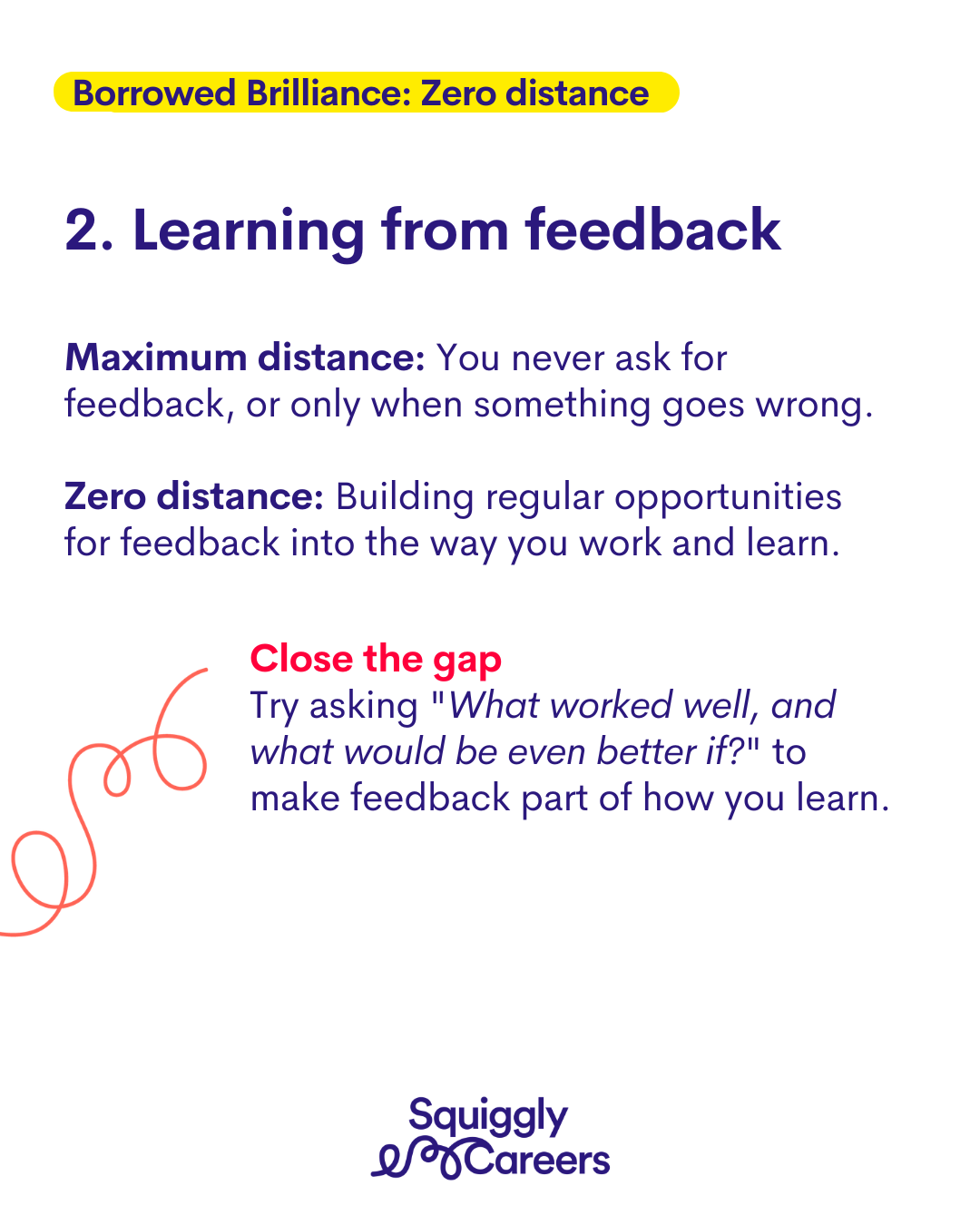
Sarah Ellis: Maximum distance would be. Well, maximum distance I think would be no feedback. So you just like. Well, I never ask the people that I work with, my team, the people who know me probably the best for any feedback. Maybe at a push. I do it once a year or twice a year because the system tells me I have to. Which, you know, we've all been there. Zero distance would be. You have added in ways of asking for feedback that are unmissable as part of your week. And it's sort of, it's become, you know, just sort of part of how you work. So the flow frequency is high of that feedback and I guess you're also sort of learning from it because you don't just want to receive it and just go, well, I've got it.
Helen Tupper: Yeah.
Sarah Ellis: I think there's also got to be something about what are you using that feedback for? Doesn't mean you have to agree with it. But you know, you've got to be taking that data for your development and turning it into, into something useful for your learning, your growth, for getting better at your job. Place your X. Oh, you're not going
Helen Tupper: to like it because I'm going to do two X's. I know, sorry.
Sarah Ellis: I know you're allowed to do two X's.
Helen Tupper: Okay.
Sarah Ellis: I'm also interested how you've managed to get to two X's. So. Okay. I'm enjoying. I'm enjoying it.
Helen Tupper: Yeah, me too. I can hear us do the things. Okay. Oh, right. So you've gone. Oh, you're quite far. So let's explain.
Sarah Ellis: So I've gone.
Helen Tupper: We're in very different places now.
Sarah Ellis: Very different. Which makes it more interesting.
Helen Tupper: Yeah. So Sarah's gone max distance, as in is not getting a lot of feedback from the team to help her get a sense of kind of what they think of Sarah. I've gone much closer to zero distance.
Sarah Ellis: You've had two.
Helen Tupper: I've got.
Sarah Ellis: And what's the two?
Helen Tupper: Well, cause I was just thinking about feedback generally, which probably. Cause I was thinking about this was about distance from team.
Sarah Ellis: Yeah. I stuck to distance from Sarah.
Helen Tupper: I know. But then I was just. Because my first thought was feedback generally and I was like, oh, actually we aren't. Sarah deny.
Sarah Ellis: We get so much feedback.
Helen Tupper: We get so much feedback. I think they must get more feedback. Well, I guess some people that are like really popular on YouTube must. Because they get loads of comments, which
Sarah Ellis: is comments the same as feedback?
Helen Tupper: Well, the people probably think it is.
Sarah Ellis: Whether it is. My question is, is this useful for someone's growth?
Helen Tupper: Yeah, but I think so. Sarah and I, we. We run somewhere between 10 and 15 workshops a week for companies all over the world. And in all of those workshops, we get feedback on both our content. So is it useful? And we get feedback on our communication, like, were we helpful? And we get words and we get numbers and we get a constant stream of feedback. So I was like, I think that is quite a unique position to be in. So. And I kind of sort of considered those learners, like our team.
Sarah Ellis: Yeah. I mean, that is 100% cheating. Well, that's where I realised.
Helen Tupper: I was like, okay, well that's not my team. That's like a pseudo team of people
Sarah Ellis: that I've created around you still put team high.
Helen Tupper: Yeah. Because I think I do ask. I do in one to ones I do ask quite regularly, like. Like, how am I coming across? Or I will ask people, like, is this working for you? Can we change our ways of working? I do ask people that regularly. It's. The reason I didn't put it closer was because I don't think. I mean, I'll just give people random surveys. Often for the podcast, I'll be, oh, I need to know what three words? Or I need to know. I'm trying out this tool. Can you just give me feedback on this? And so I kind of get it. The reason I didn't go closer to zero distance was that I don't think I've got a really good rhythm. Mine is random.
Sarah Ellis: Okay. I'll be like, okay, you're doing it but in a random way.
Helen Tupper: You're doing it but in a random way. So I feel like I've got some information, but I probably could get richer information if I had more of a rhythm for how a more of a regular rhythm for how I asked team for feedback. But I don't think it's awful. But I'm very interested that you've gone to max distance. So Sarah's like, I don't think I get enough feedback about this.
Sarah Ellis: Well, I always think this is my fault because I don't ask for it. Okay. So sometimes. And I go on very. Our team, like, you give me feedback.
Helen Tupper: I put you in that as well. That was another person. We give each other quite a lot of feedback.
Sarah Ellis: Yeah. I forgot about you. Sorry. I wasn't actually thinking about you. I actually had taken you out. Yeah. But everyone else so sometimes people in our team will give me feedback. Great. I can think of an example, actually, recently where someone was like, it was this morning. Did I?
Helen Tupper: Yeah, because you did something for someone and they were like, that was really useful because I just went, that's great. And you did. You went standard. You went more than me.
Sarah Ellis: But I didn't ask for it. Right.
Helen Tupper: Okay.
Sarah Ellis: And so my filter, I think, because I was. It's, you know, like, you. Am I taking the initiative? Am I creating? Not waiting? Not really. I'm doing whatever I do at work. And then sometimes if obviously people take the initiative for me, they will then say they might give me some feedback. And you're like, well, that's still great. But I haven't made feedback admissible. I don't ask for it that often. The reason I'm not completely maxed out, like, completely sad face was we do have a channel, a teams channel, called what Worked well, Even Better if. And that I am good at. So for all of the projects that I work on with people in the team, I'll always be like, where's our. What Worked well, Even Better if. I'll contribute to those. I'll talk to teams about it. We came out of a meeting on Tuesday this week, and straight away we went into what Worked well, Even Better if. And then I said to someone, I was like, oh, let's get that on the team's channel so that we can learn from.
Helen Tupper: So you have a rhythm, but it's not directly related to you.
Sarah Ellis: Yes.
Helen Tupper: So if you do what Worked well, Even Better if. And you ask the team to do it for you.
Sarah Ellis: For me. So I was like, it's sort of more on my. Actually, I was sort of the opposite to you. I kind of got the rhythm and I really like that as a way of doing it. And that's on my work. Because some of that is reflected in, like, the work that I do, but less about, say, my impact. Like, I could have asked someone in our team was in that meeting that you were both. We were both in on Tuesday and we were, like, pitching for something that we're excited about. And I could have asked that person, what three words would you use to describe me in that meeting? And I. And I didn't. I could have asked you that.
Helen Tupper: Yeah, ask me now.
Sarah Ellis: Yeah, go on.
Helen Tupper: I thought you. I'm like, leadership. I have definitely was like a leadership. I would say there was confidence.
Sarah Ellis: Okay.
Helen Tupper: Yeah. Leadership of conversations. Confidence. And I think you had, like, humour.
Sarah Ellis: Hilarious. Hilarious.
Helen Tupper: I mean, I didn't say hilarious. Sarah, you were the person who injected humour into the conversation. So yeah, leadership, confidence and humour, they would be my words.
Sarah Ellis: But I, you know, like even just listening to you that I'm like, it would have been helpful for me to ask that question. Maybe I could have asked the what three words from not from you, from the other person. And then I could have asked you for one even better if. What would one even better if have been?
Helen Tupper: Oh, I'd probably have to think about that one for a bit longer. Maybe longer than. And that's not because I'm afraid of saying this. I kind of think actually I would.
Sarah Ellis: If I'd have asked you in the moment, it would have been easier, right?
Helen Tupper: Yeah. Yes, yes. If you ask me the moment because I now.
Sarah Ellis: Because if you miss the moment, then it's harder to remember.
Helen Tupper: I could give you it, but I would need to think about it because I'm always, I always really I Even better if I never want to go, there was nothing because there's always something.
Sarah Ellis: There would have been something.
Helen Tupper: And so I always want it to be a thought through response. So that's not me. I might. I'll give it to you after the
Sarah Ellis: I like the fact we're like genuinely now just doing work. I was like, the podcast has now just turned into work. But I think, yeah, so I just think I've got, I think I've got work to do. There would. That would be really helpful for me and the team as well.
Helen Tupper: Like I think if you had post its and you were having this conversation as a team, I think it's nice. I think there's something tangible, you know, because these are sometimes these are tricky conversations, like reflections on your se.l.f awareness, reflections of your relationship with your team. Yeah, they're not easy, but I feel like as soon as you do something like this and you're like.
Sarah Ellis: And also confined in different places. Right. And you're like, it doesn't matter. Right.
Helen Tupper: Where are we going next?
Sarah Ellis: Manager.
Helen Tupper: Oh, I'm gonna pop that.
Sarah Ellis: So who's, who's my manager? Are you my manager? In this instance?
Helen Tupper: Yes, I am.
Sarah Ellis: Okay, well, I'll be yours then.
Helen Tupper: Okay, thanks.
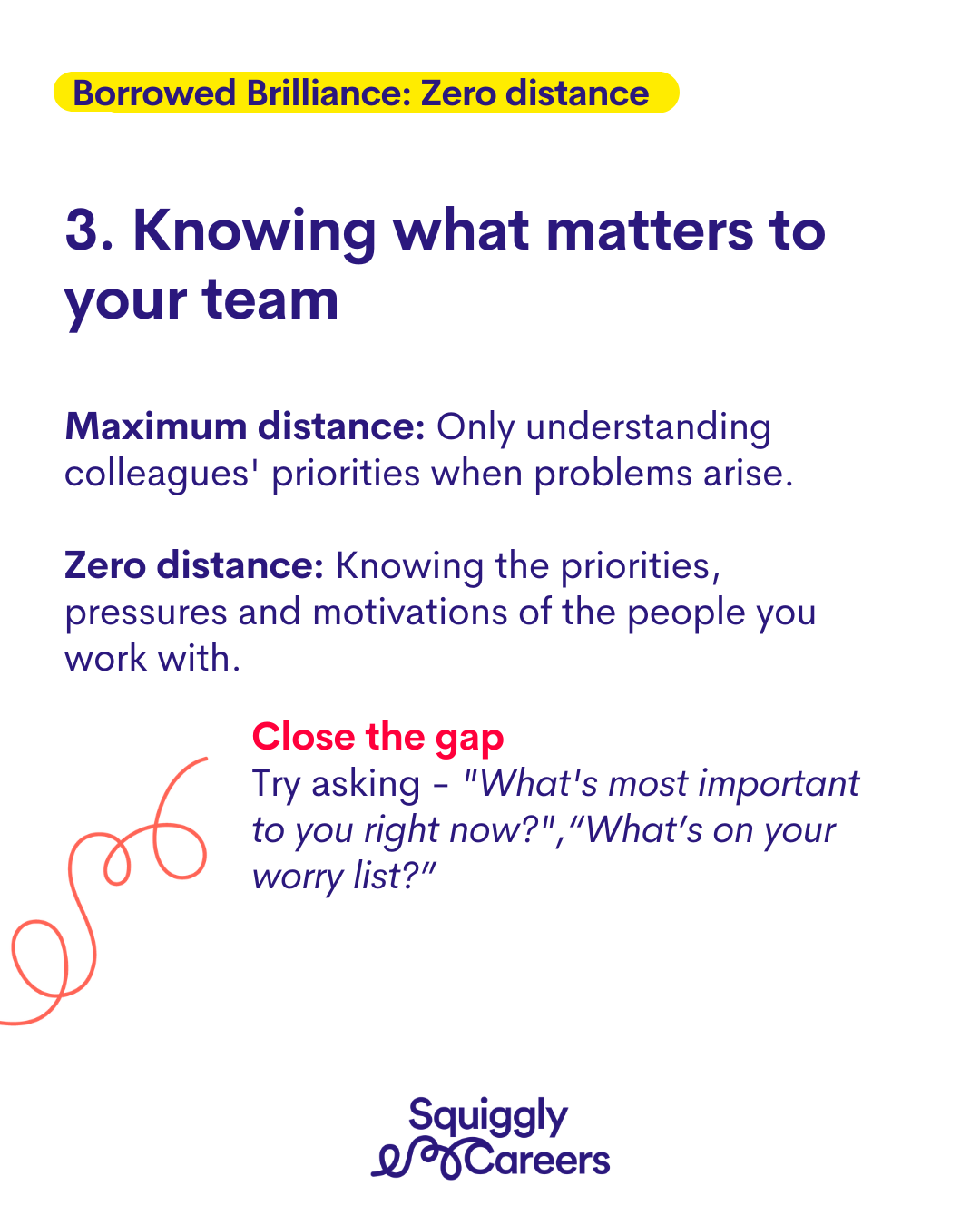
Sarah Ellis: So maximum distance would be you only find out what's on your manager's mind when they tell you or when you get something wrong. And they're like, well, why did you, why did you do that? Zero distance would be you're like 100% connected and confident that you know your manager's motivations and priorities. And I think my build would be you can connect the Dots with what you're doing and kind of what they care about.
Helen Tupper: This will be interesting.
Sarah Ellis: Ready?
Helen Tupper: Yes. Okay, we'll hold it up. We'll describe where we've got. Da, da, da. Ah. So Sarah's. I think this is accurate. So Sarah's gone almost zero distance, complete, like. Which basically means you know my motivations, you know my. Everything's going on with me. You're very, very close to it. I've got a little bit further away. So I'm definitely. I'm closer to the.
Sarah Ellis: Imagine if there must have been difference and you were like, you're a closed book. I know. I know nothing.
Helen Tupper: Yeah, yeah, well, we'll come on to that, I guess, because mine's a bit more. You go towards max, maximum distance. The implication is, I think you are a bit more closed than me. So my. Sometimes my reflections are, do I know your priorities? Yeah, I know your priorities.
Sarah Ellis: We've got the same priorities.
Helen Tupper: Let's hope we talk about them, we know them, even though sometimes they're different. Like, our life priorities aren't always the same.
Sarah Ellis: No, that's true.
Helen Tupper: But we do talk about our life priorities and then we work in a way that enables them and we support each other's life priorities, even if they're different. Like I said.
Sarah Ellis: Are you going to share what's happening soon with one of your priorities? Come on, you've got to share.
Helen Tupper: I'm getting a puppy.
Sarah Ellis: Oh, I'm so excited. Copying me. I know I am. I'm like some sort of trendsetter. The first person ever to get a puppy.
Helen Tupper: Would, you know, you were pivotal because you helped me convince my husband because
Sarah Ellis: she looked after my puppy for me.
Helen Tupper: Yes, that was a pivotal moment.
Sarah Ellis: Pivotal puppy moment.
Helen Tupper: Yeah. When I think it was real and my husband was like, oh, dog, everything's
Sarah Ellis: okay and my dog's gonna be worse than your dog.
Helen Tupper: So my daughter was like, do you love the dog more than me? Some days, maybe. Never listen to this podcast. My daughter. So, yes, we know that about each other. However, I. I can definitely think of situations that we have had in our long, long friendship partnership and all things where I haven't realised how you felt about something. Like, oh, gosh, I can think about so many. So many situations where I'd be like, oh, I didn't realise that you were so worried about that. Or I didn't realise that was on your mind so much. Or I thought I'd helped, but clearly I hadn't. You know, like, I can think, you know, we know the moments, we know the moments. And so in that situation, I think I just haven't. I'm not as in your head as I thought I was because there's something else going on there. And so I don't think I'm actually closed or I'm. I don't know what the right thing is, but I never feel completely aware of what you're thinking or feelings.
Sarah Ellis: I quite like that, though.
Helen Tupper: Yeah, of course.
Sarah Ellis: You do a bit of mystery about me. You have, like, zero mystery.
Helen Tupper: You know, when you're a mystery. I'm gonna put that on my LinkedIn profile.
Sarah Ellis: Well, also, we once did insights profiling, which is like, where you get a colour if you've not done it before. And then they also talk a bit about, like, the. The what you're like at work and what you're like at home and, like, whether those two things are different and, like, there's something to how open everything is. And Helen's just like, literally reads as, like, she's exactly the same and she's an open book and it's always the same and she's just always who she is. And then mine is all like this, like, myriad of, like, weird and wonderful mixes, which is, like. She's very hard to figure out. And so it's just like. And I think that probably reflects our. I think when we think about our work, I think we are very zero distance because, A, we have just worked together for so long, but I actually do think we have done some things, practical things, that have helped us be zero distance, like Clarity Creators. It sounds really boring, but, like, we've actually. We are better now at writing down those priorities and we do our win watch every quarter. And so actually we could. We would have more distance if we didn't do win watch.
Helen Tupper: I've got a build on this because we've done a manager, but you could do. I think you could do colleagues. So you like. Cause this a bit was about kind of distance from your team. We just picked manager out specific person, I think, also because they've got quite a lot of influence over your work generally. But you could scrap manager, you could put team and then you could think about who are the people that you work with and we'll just. Yeah, what's the distance cd? And I think you might be like, oh, quite interesting. Why am I closer to person? Why am I close to person A? Or maybe is it just because person D is new and I haven't talked about them and, like, what questions might I ask?
Sarah Ellis: We do do that a little bit. Because we, when we are thinking about projects and if usually one of us might lead more than the other, I think sometimes our decision making is based on distance. So we'll say, helen has a lot of distance from that person. And actually that's not useful. It's useful for us both to know everybody in our team as well as we can. And then sometimes we'll switch up and you might be like, okay, well, I'll work on that with that person. And I'll be like, well, I already know them. My. My distance is already closer. So we probably haven't had a language for it before. But I think it has been a. It's been a helpful filter.
Helen Tupper: Yeah.
Sarah Ellis: And also I think then you can get into really practical actions. You know, like, if you're doing this as a team. Right. You'd be like, right, well, what will mean that we have zero distance from each other?
Helen Tupper: Yeah.
Sarah Ellis: What's on your worry list? You know, like you were saying, like, sometimes I don't know what's.
Helen Tupper: What's most important to you right now.
Sarah Ellis: Yeah.
Helen Tupper: What's happening outside of work that we don't know about? Yeah, you just. There's some. You get to some quite nice questions quite quickly, I think. Nice closing questions.
Sarah Ellis: Nice.
Helen Tupper: Let's introduce those.
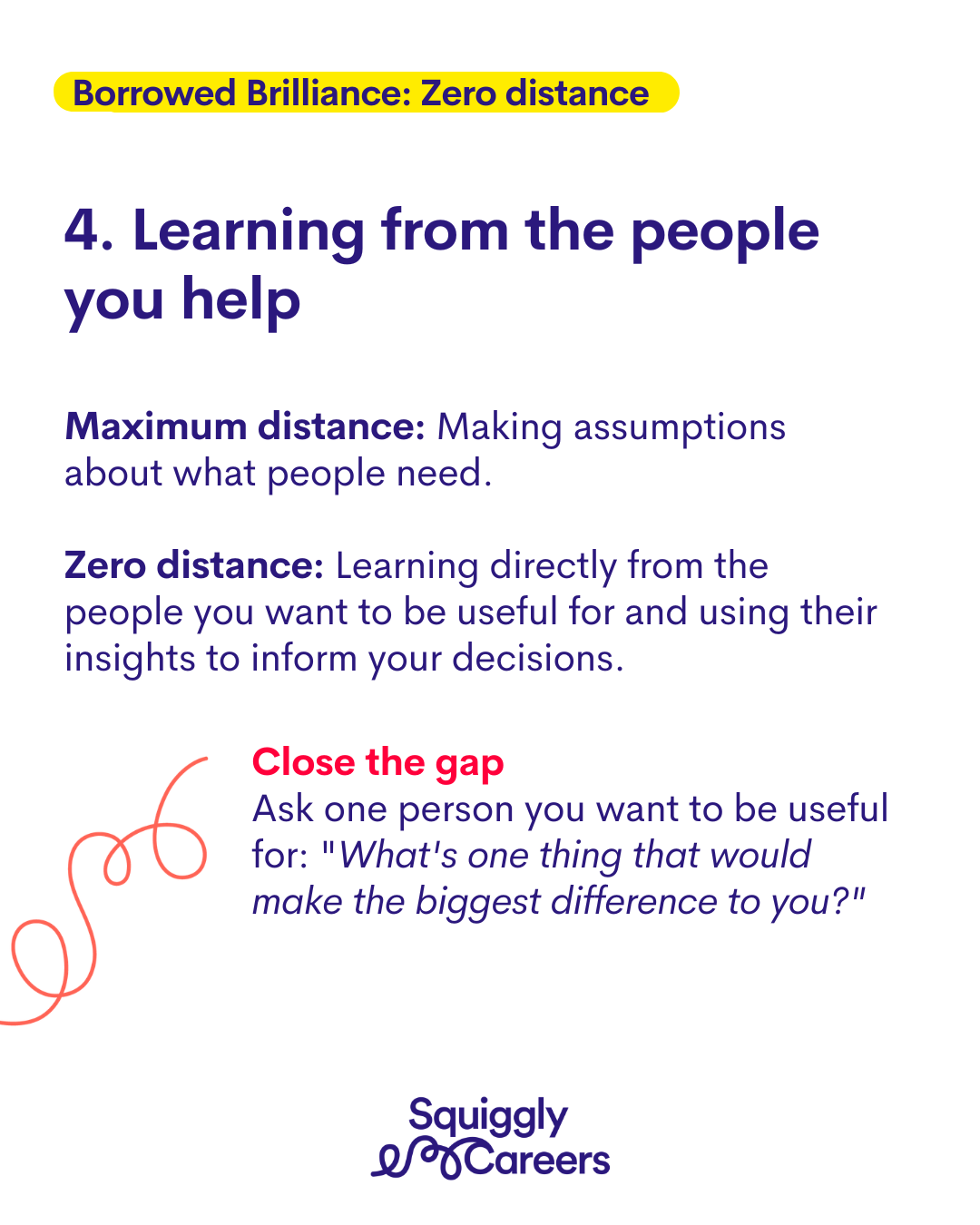
Sarah Ellis: That's good. That is good. Okay, so the last one, which is, I suppose, where zero distance came from, and we've now really. We've really borrowed the idea now, is this idea of, like, distance from customers. So who do you want to be useful for? Some people will be in jobs where they literally are serving the end customer. But, you know, you might be, let's say you're a finance business partner and it's like, well, what's the team that you're kind of working with? And it'd be like, well, how do I have zero distance from that team? And when I was thinking about this one actually, like internal zero distance, like maybe across team, if they're your customers, across company. Sorry. I can think of people I've worked with who are really good at this. And I think it's really helpful in your job and in your career because they don't get too preoccupied with almost like the team that they're in, you know, too tunnel vision, too siloed. Doesn't mean you don't know your team. But, you know, like, you can get a bit, oh, well, I like the team that I'm in and it feels comfortable. And they are really good at having, like, zero distance with, well, I'm in sales. You're in finance. Like, we. We need to have zero distance because actually, that's how we help each other. That's how we do a better job.
Helen Tupper: So in our framing this, our customers are who? My learners.
Sarah Ellis: Our learners in its broadest sense.
Helen Tupper: A podcast.
Sarah Ellis: Anyone who learns with and from us. Okay, so maximum distance for us would be, I suppose, for what we do. Let's take the podcast. You would record the podcast on anything you want to do the whole time. You define everything, then you'd put it out and that's it. You don't care. So you don't care about feedback. You're not asking your community for ideas. You're certainly not giving people an email address to tell you what they think. You'd just be like, well, this is kind of what we want to do. So you're completely disconnected, I suppose, from the end user. And then zero distance would be. I mean, if it was the podcast, this would be creepy. It would almost be like, spend time watching someone watch the podcast.
Helen Tupper: Okay.
Sarah Ellis: Or like, talk to people about how do they listen to the podcast. Yeah. I mean, and again, it'd be weird. I'm trying to work out how you do this, but, you know, like, if you had like a screen record of how someone used a pod sheet, for example, it would be that. So you're seeing real life interactions, which sometimes, like, people are really kind and like, tell us.
Helen Tupper: Well, yes, and I have heard of a podcast where they kind of do some of that, where they have technology that helps them to see what words that someone is saying are particularly engaging. Like, they literally. They know by kind of watching on YouTube when people are engaging more in the content, when they get distracted.
Sarah Ellis: So in like a stalkery way.
Helen Tupper: Oh, in a way that they gather data about. So that is kind of. That does happen on some podcasts, I have heard.
Sarah Ellis: I've heard. We both got an example actually here outside of our world before we do our scoring. One of maximum distance, which I'll show in a minute, and a good one of zero distance, where you got to go shopping.
Helen Tupper: Yeah. I mean, Joy. Joy. It links back to old jobs in innovation that I have done. And I got to go. So I worked for a credit card company, and zero distance is basically going shopping with someone with their credit card. It was a funny. It was a funny thing because I went shopping with a lady, this is in Nottingham, and we were sat. Remember we were in a Costa Coffee, and I said, oh, you know, can you show me your credit card? It was like the start of the start of the journey. And she said, oh, I haven't got it with me today. And I was like, well, this has gone wrong quite quickly. I was like, oh, where's your credit card? And she said, oh, it's in the freezer. I was like, oh, stay curious.
Sarah Ellis: Interesting.
Helen Tupper: Stay curious. I was like, why is your card in the freezer? And she said, oh, because I've got, you know, I shop a bit too much. I'm like, yeah, me too. But she said, puts in the freezer, puts it in a glass of water and therefore it has to be defrosted before she can use it. So it kind of forces a pause. But then she did go on to say, oh, but at the moment I've actually frozen it in a glass of orange juice. Because she said she could still see when it was frozen in water, she could still see the numbers.
Sarah Ellis: The numbers.
Helen Tupper: And then she would just go online and shop. So she was freezing it's next level. She was freezing it in a glass of orange juice. But the insight of that, we took this idea back into the company about this idea of freeze, like, freezing. Like, if there's that much fear of spending, how could you create a freeze on a.
Sarah Ellis: You don't have a negative relationship with your credit card.
Helen Tupper: Not at all. You don't really want people to be doing that. So. And you have a responsibility as well as a company with credit cards, not to create those kind of emotions with money and spending. So, yeah, we had really interesting ideation then about, well, how do we create this kind of freeze idea, but within the context of the product, and that would have never had happened that we wouldn't have those ideas without that. And I have actually loads of. Loads of little storys like that where when you're doing product development, I think a lot of the time, if you are doing product development or any kind of customer insight and research, you are naturally close to the customer. So I always think the challenge is, if that isn't the job you are doing, how could it still be part of the job you do?
Sarah Ellis: Yeah. Like how can you get as close. As close as you can? Well, mine was a maximum one that I had recently where I went to the doctors for something quite kind of specialist. This is like a specialist, expert doctor.
Helen Tupper: Yeah.
Sarah Ellis: That I had gone to see and she was prescribing me medication.
Helen Tupper: Yeah.
Sarah Ellis: And she said, so that's what I'm prescribing. These are the tablets. Oh. Just so you know, I've heard they're really big. Oh. But actually, I've never Seen them. And I was like, okay, so you're. You're like an expert. And, you know, she. She is in this, like, area. But you're about to prescribe me a tablet that you've sort of gone is like, massive.
Helen Tupper: Enjoy this.
Sarah Ellis: But you've never. But you've never even, you know, like, you. You've never held it, you've never touched it, you've never seen what that is.
Helen Tupper: Yeah.
Sarah Ellis: And so how can a. You have any empathy for what you're asking me to now take twice a day. But also, you sort of may be a bit scared of it, but without the actual, you know, if she had then said, the tablets are quite big. I've seen. Actually what I wanted to do was to show me one.
Helen Tupper: Right, yeah, here's one.
Sarah Ellis: Here's one. Just as an example, because I was like, well, how big are these tablets? And I was like, you know, swallow a submarine. They actually are that sort of shape. That's the sort of shape they are.
Helen Tupper: And they're grey.
Sarah Ellis: They actually do look a bit like a submarine. But, you know, I was just like, oh, it. When you think about, like, why you would want zero distance, it's because it shows. Yes. It helps you come up with ideas, but I think it also shows that you care and that you're committed. And I was like, well, how much does she care about me getting better? If you want to kind of call it that, if she doesn't even know what this looks like.
Helen Tupper: Yeah.
Sarah Ellis: I mean, I did want the tablet, so obviously I just. Fine, just moved on from it.
Helen Tupper: But I was like, it's quite a big reflection. But it is true. Like, I don't care.
Sarah Ellis: Should we do our exes? Yes.
Helen Tupper: Okay. Okay. I did mine quite quickly.
Sarah Ellis: I don't. So all of our learners.
Helen Tupper: Okay. I've done mine quite quickly. Oh, yeah, you've said all of our learners. All of our learners.
Sarah Ellis: Okay.
Helen Tupper: Okay.
Sarah Ellis: Sure. Got them.
Helen Tupper: Three, two, one. Okay, so for everyone listening, Helen has added hearts. Because I care.
Sarah Ellis: Just because you care doesn't mean there's zero destination.
Helen Tupper: Let's explain where our exes are. So I've gone the closest. I've gone very close to zero distance. Sarah's gone a little bit further away, so you go first. Why won't you love hearting it and getting close to zero distance with our learners?
Sarah Ellis: Well, so first of all, obviously, I really care, but I think I do care. I mean, it probably sounds like a don't, to be honest, like, saying it like that, but I'm like, but I Do actually really care I think sometimes. So I would if I really cared. I was like would I read YouTube comments if I really cared?
Helen Tupper: I do read YouTube comments.
Sarah Ellis: Yeah. And I don't.
Helen Tupper: And I read Spotify comments this week
Sarah Ellis: too and I don't for self someone
Helen Tupper: was cross with us.
Sarah Ellis: I don't for self protection reasons.
Helen Tupper: Okay.
Sarah Ellis: So I, I was like oh, zero distance. You would have to read them right. You'd have to get really close because I don't know there's probably, I'm sure there is learning in there. Yeah. But I definitely choose not to. Same on like Amazon reviews for the book. Yeah, I don't. Please, please leave an Amazon review. It's really helpful. It's really, really helpful. But I think it's because I know the ripple effect that that would. So there's a little se.l.f protectionism in there also. I do think we listen but we don't have like. I think there are companies when I look at like E.L.F and what they've done, they have these really well designed like well thought through feedback mechanisms to like to learn and to spend time with their learners. And I think we do it in quite an ad hoc way. So we might do a listening board which are always brilliant or we will say emailers like we will, we like encourage it and we definitely want it but we've not systematised in the way that someone like E.L.F has being like really close to our learners. And I do think sometimes we choose our own things. So if you're like each other we, you know sometimes I think we'll listen to learners but sometimes there's just something that we are interested in learning.
Helen Tupper: Yes, that's true.
Sarah Ellis: And that's you know, again if we're going to be really honest and then that ends up being our starting point. So I think, I think I was really holding myself to account to going if you're looking at like higher and E.L.F as like that is a zero distance company. Their culture, the communities, their customers, like it's all kind of embedded into what they do. I was like, oh, I don't think we are built in quite that way in our DNA. I think we do some good stuff and actually what this has really inspired me to think about is like how do we do those? I actually do want to do those things. I'm not sure I want to read YouTube comments because sometimes people are really mean. Yeah. But I did see one that someone in our team had like messaged us about this week and I was like okay, yeah, that's why I don't know. I don't know if I've got the resilience.
Helen Tupper: I think it doesn't bother me. Just be nice back.
Sarah Ellis: Maybe I'm thinking about back to the feelings thing. Maybe I have because of the feelings thing. You could process it much better than I can. You put super close.
Helen Tupper: I think it's because I think about in our newsletter that goes out every week we have a scale of let us know how useful it is. So that's in there. People can vote on that anytime. We ask for feedback regularly for things via. Via the newsletter. So I kind of look at that as a community that we are. I feel like if you subscribe to the Squiggly Careers newsletter, you're quite, quite close to us.
Sarah Ellis: That's probably a better example of something we've done more recently.
Helen Tupper: Yeah, that's in there. Regularly we get vote on topics and things we're going to cover. I think all of our learners, we ask for feedback at the end of our sessions. We give out our email, get loads. I get loads of emails from people that I'm responding to and so I get a kind of sense and a sentiment. I read all the comments. I'm probably more active on social so I get a sense of what people like and what they don't like. I do our social media review every month and I scan across all of our platforms. What are all of the things that we've put out where there's the highest levels engagement. And so it. I kind of. And then it helps me go we should do more of that. We should do more of that. So I think I am probably spending more time.
Sarah Ellis: You're right.
Helen Tupper: You're working with the data from you. We spend equal time with our learners. But I'm probably spending a little bit more time with the data.
Sarah Ellis: Yeah.
Helen Tupper: Which.
Sarah Ellis: But this is one actually across all of them. But it definitely made me think about. I think it's a really inspiring way to run a company and I think it's a really useful way to think about your own development and really helpful for your team. I think you can kind of take this in whatever feels helpful. And actually we were laughing with a company earlier this week that we worked with and you know, like loads of companies say oh, we're going to be really close to our customer or we're going to be the champion of our customer. And I think if you do this really well, it's true in your actions, not just in your words, like not just in kind of what you say. And I think I do want to do that. You know, we talk about we want to make squiggly careers better for everyone. Yeah. And I think to do that really well, you want zero distance with those people. I did have one example recently with a different company who are doing some work on early careers. And I had made this suggestion actually, and you know what? I think it's because I knew we were doing zero distance. So I'd read the substack, was talking to the company, and I said, oh, let's do a listening board for this group of people. And the listening board will be people in their early careers, but, like a range. They were all doing kind of different things. Some of them were. I think the youngest girl was 19 up to about 23, 24. And I sort of got to interview them as like, a panel for this group who were thinking about, like, their learning. And that created. Even that one action, created so much sort of like, zero distance. Because also they said things that definitely that surprised me. You could see that group being like, oh, well, we thought this would be important, but actually it's something slightly different. They were all describing what it's like to be in the first year in, like, a new job in a new company. They didn't all agree. You know, sometimes I think it's really. It's always tempting, isn't it, to go, oh, you've got a group of people in their early careers. Yeah, they're all the same. And I. And I know that was one. One moment, one example, but I was like, they were really different. Yeah, they were really different in their attitudes to AI. They were really different in their attitude to learning. Like, obviously, I asked them some questions I was interested in. I was like, how do you feel learning as you go? And, like, what does learning look like? And, you know, what, how are you experimenting with AI? Do you use AI outside of work? Yeah, a couple of them were like, no, just like, not. And, you know, like, everyone's like, of course. They're all like digital natives.
Helen Tupper: Assumptions.
Sarah Ellis: And. Yeah, it was just. And it was really interesting when I asked that group who I was doing loads of learning with that day, like, for some of the standouts, they were all just like, it was so powerful. And I was with them again yesterday and they. They can still remember. They were still repeating back to me what they'd heard. And I was like, I mean, that was like a tiny example of closing the distance. So I was like, just the more of those things you can do, I think the better at your job. You are so other than picking up
Helen Tupper: some post its and doing this with your team, I guess also looking at the zero distance substack would be something as well.
Sarah Ellis: It's only a five minute read, really easy.
Helen Tupper: And then getting the pod notes from the episode and we'll just put all the questions that we've talked about on there. So that's we link to it in the show notes but it's always on
Sarah Ellis: our website, amazingif.com but that's everything for this week. Thank you so much for listening and we're back with you again soon. Bye for now.
Helen Tupper: Bye everyone.
Sign up to the Squiggly Careers Newsletter and get our latest ideas, tools and inspiration every week - all in one place, straight to your inbox