Does work feel a bit knotty right now? In this Squiggly Shortcut, Helen shares three practical ways to find your footing when everything around you feels uncertain — whether that’s a restructure, a shifting role, or just the general noise of a complicated economic moment.
🎯 What You’ll Learn
For questions about Squiggly Careers or to share feedback, please email: helenandsarah@squigglycareers.com
Need some more squiggly career support?
1. Download our free careers tools
2. Sign up for our Squiggly Careers Learn Like a Lobster Skills Sprint
3. Sign up to the for Squiggly Careers Newsletter, a weekly summary of the latest squiggly career tools
4. Pre-order our new book Learn Like a Lobster
00:00: Introduction
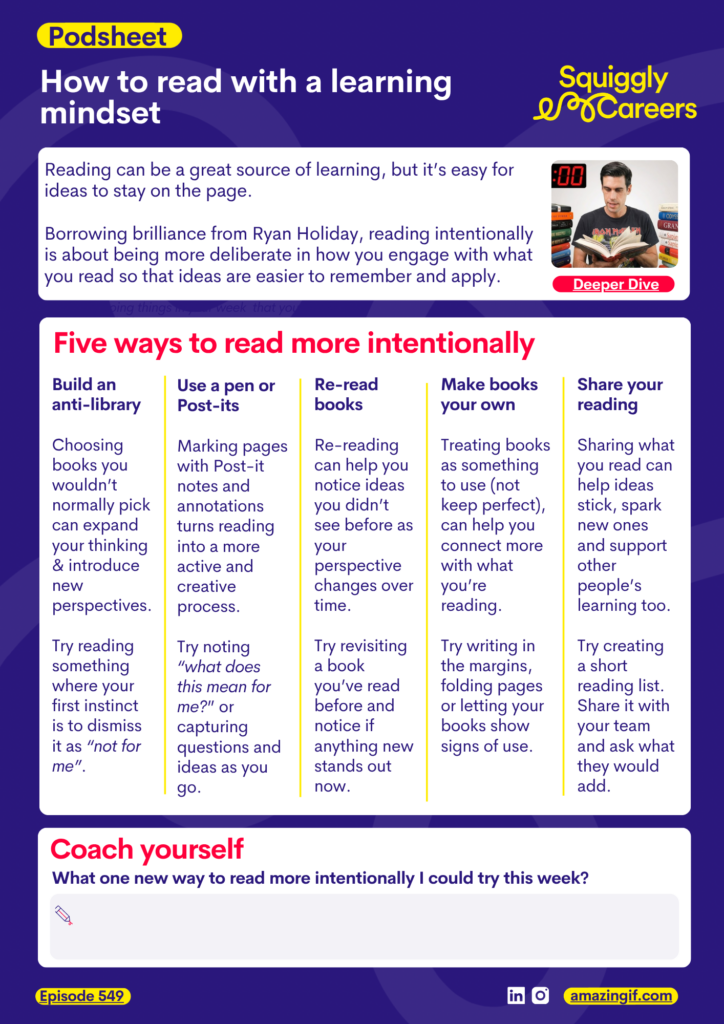
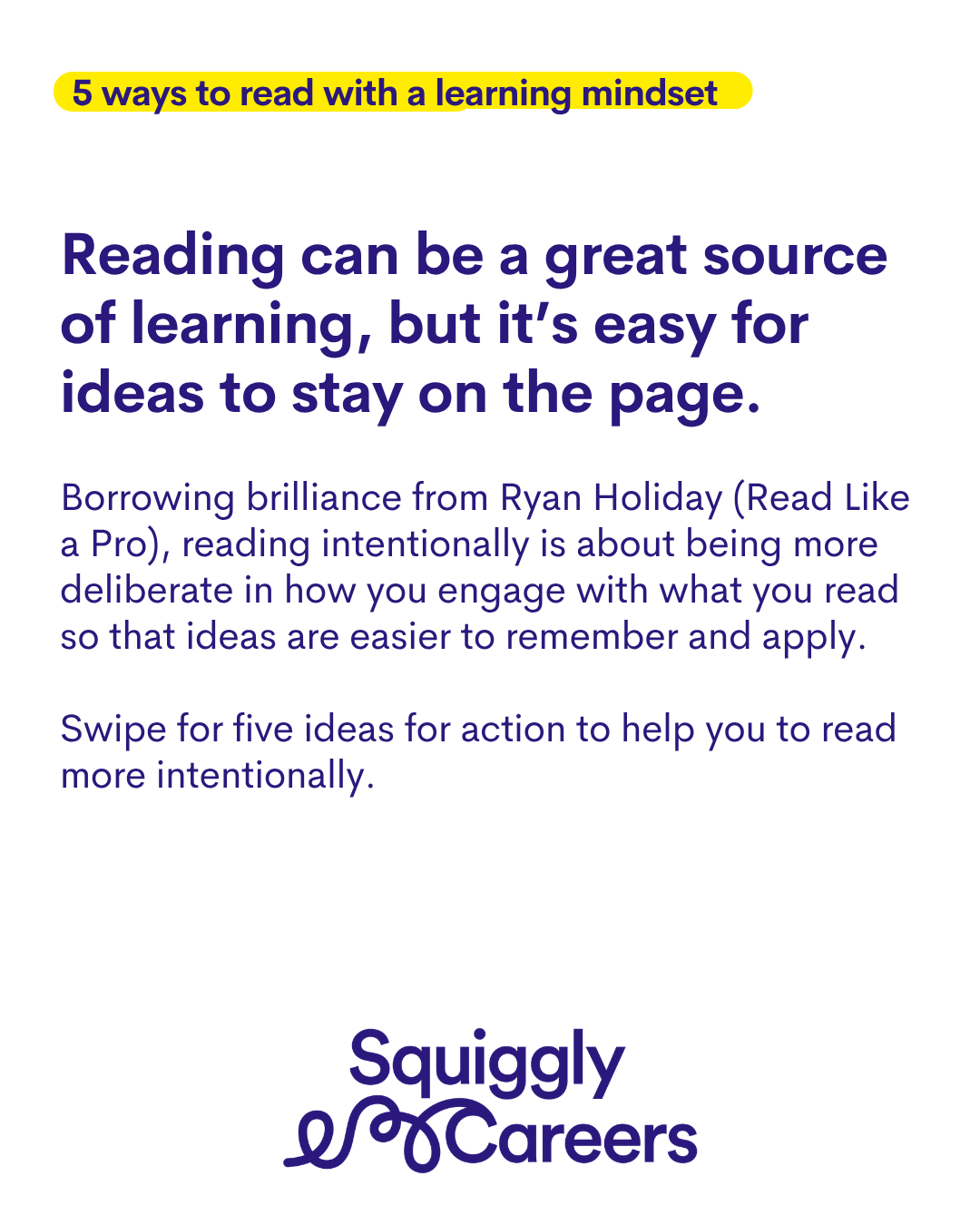
00:59: Borrowing brilliance from Ryan Holiday on how to read like a pro
02:44: Our new partnership with Post-it® Notes
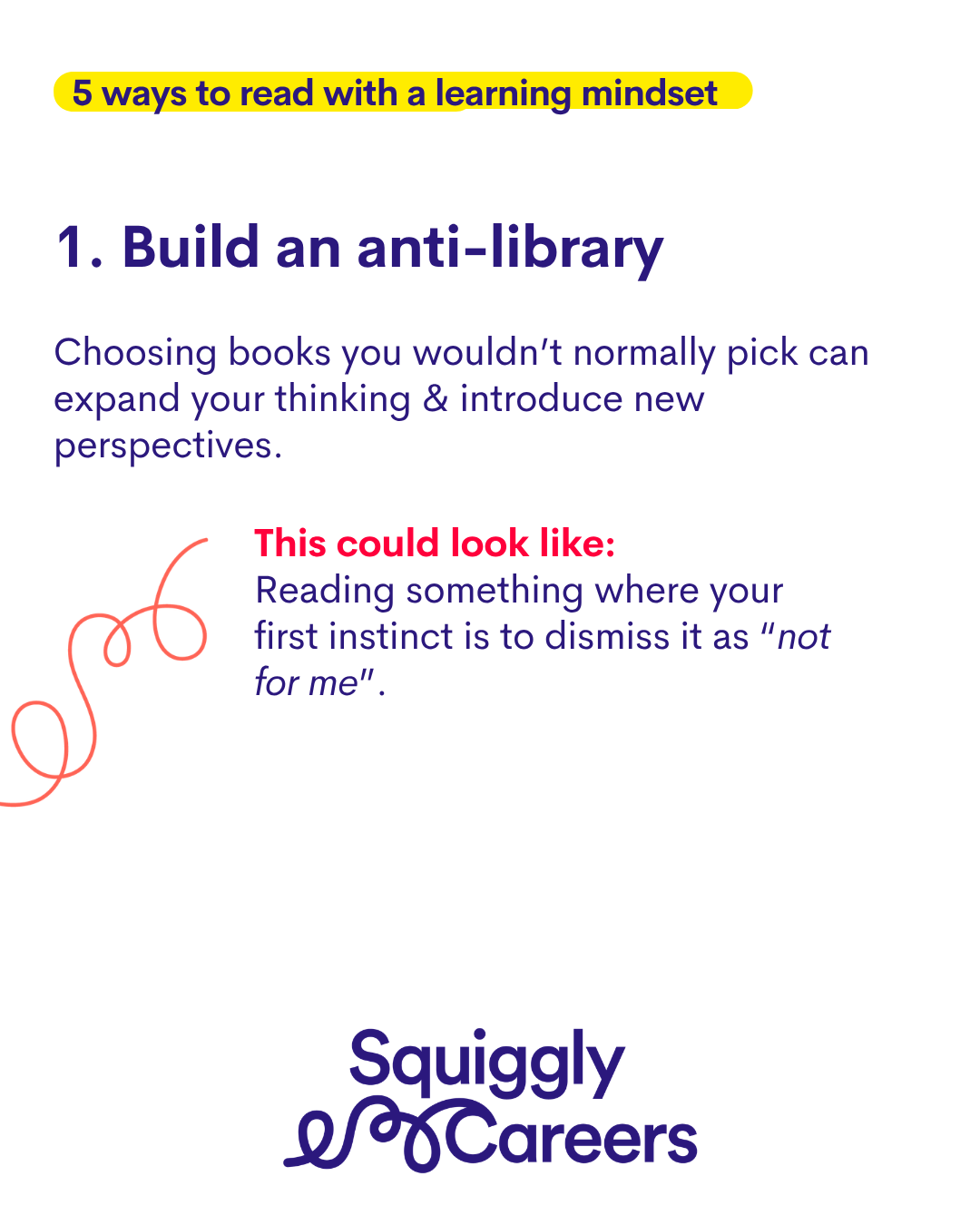
03:55: Idea 1… Build an anti-library
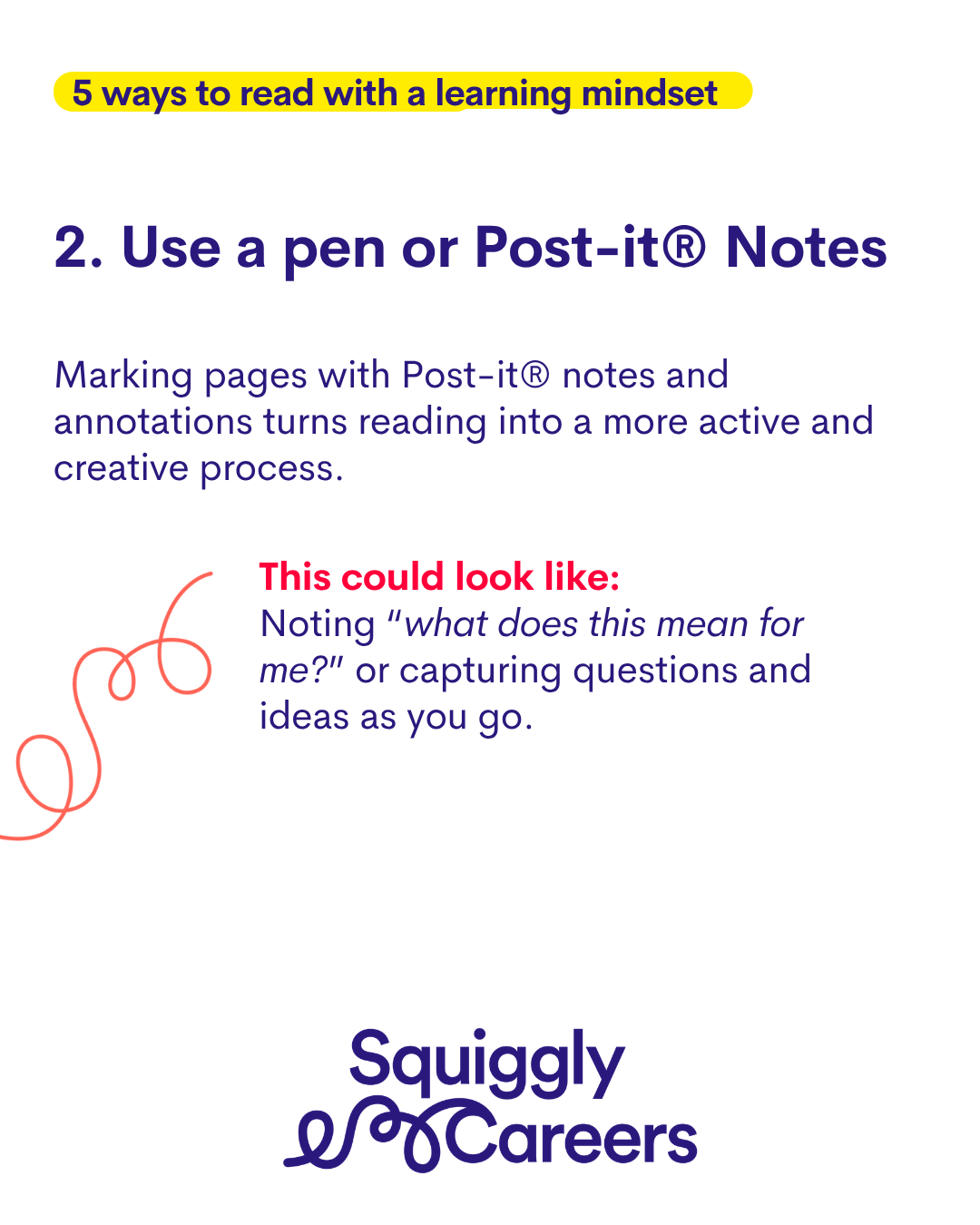
11:58: Idea 2… Use a pen or Post-it® and Sarah and Helen’s Post-it® Note systems for reading
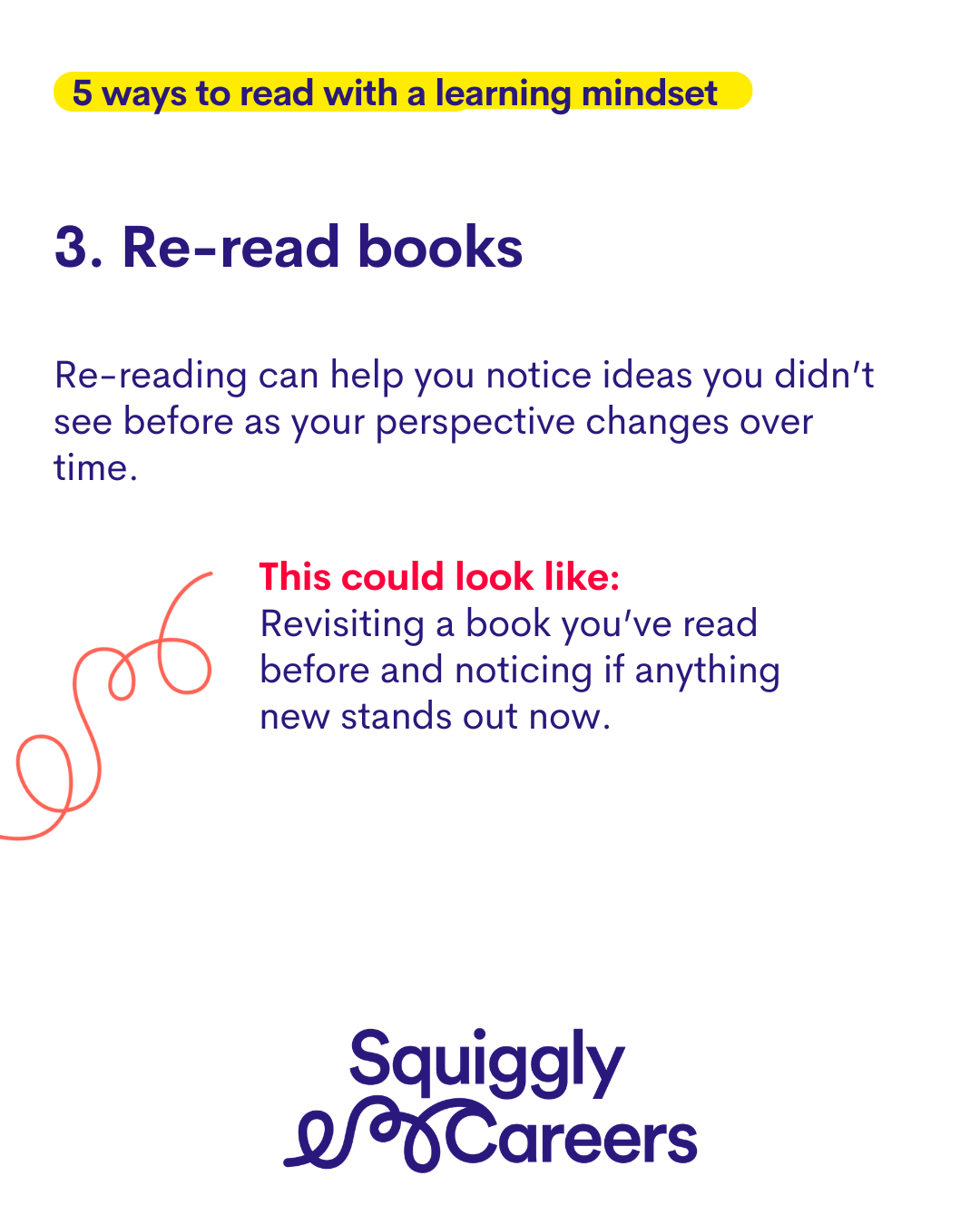
15:37: Idea 3… Re-read books
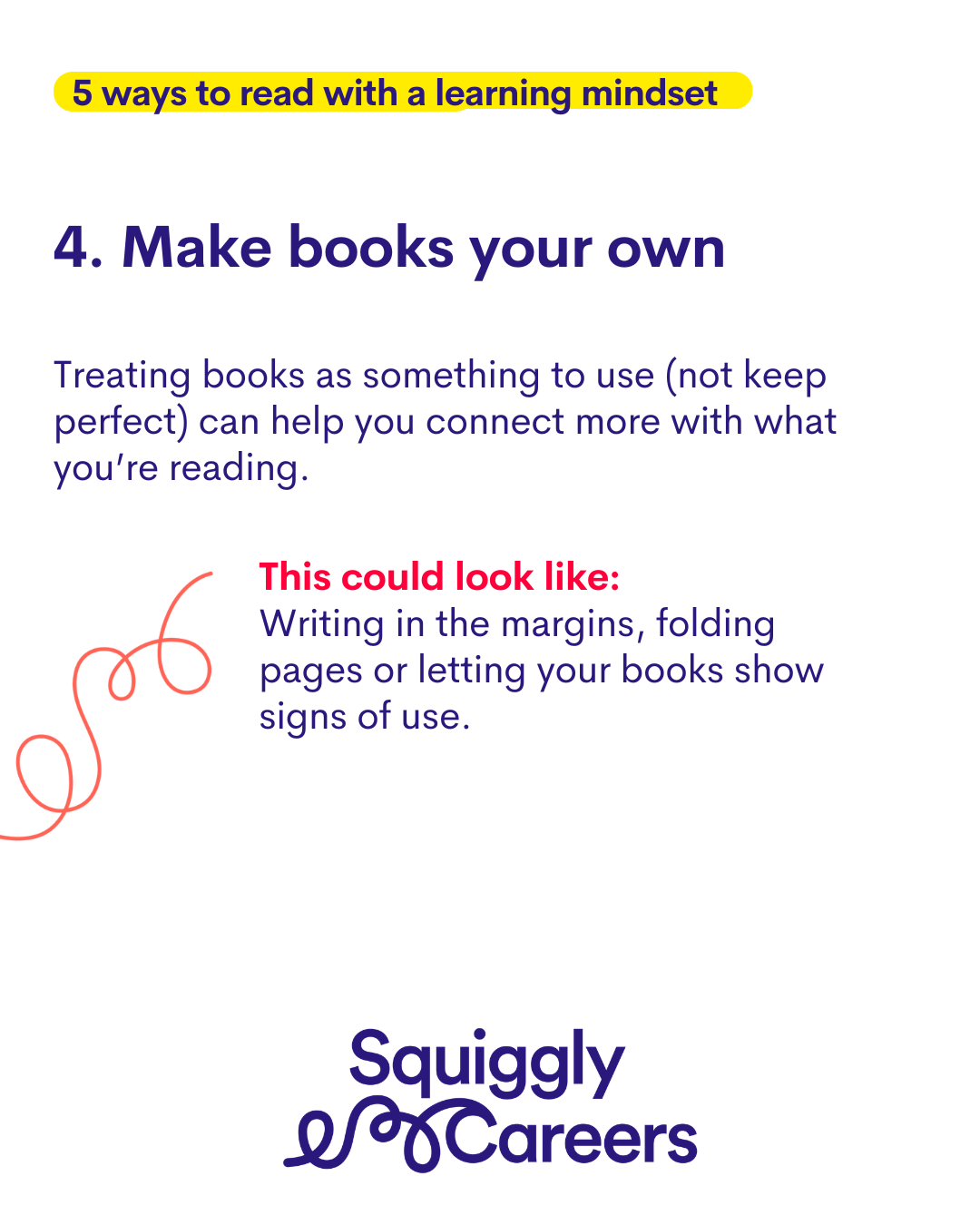
20:47: Idea 4… Make a book your own
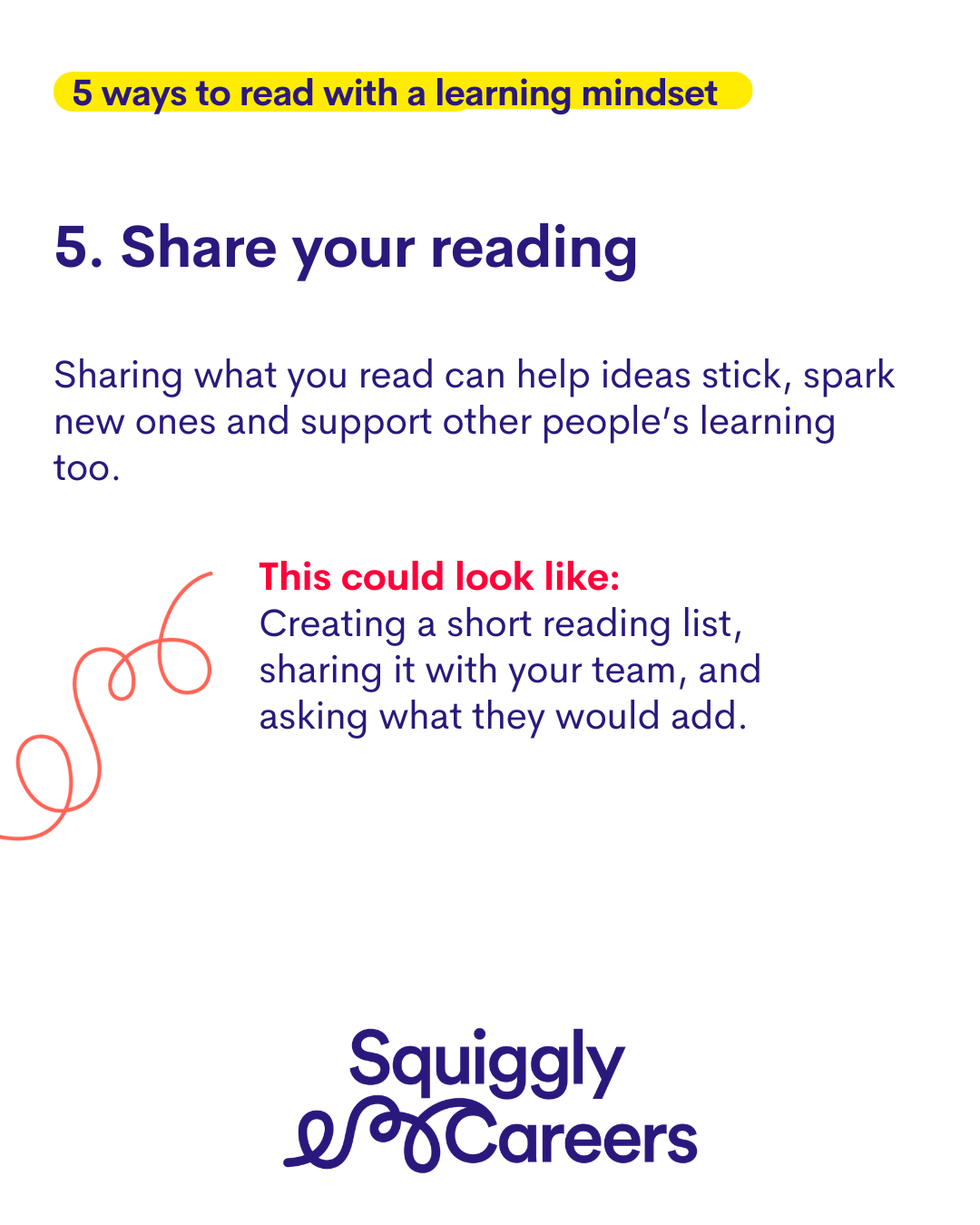
23:43: Idea 5… Share your reading list.
23:58 Sarah and Helen's non-fiction recommendations
28:34: Sarah and Helen’s own extra rules for reading nonfiction
Sarah Ellis: So are you ready to read like a pro?
Helen Tupper: I would like to read better.
Sarah Ellis: So number one, Yeah. I think sometimes books meet you where you are or in a moment of need. Yeah, great. Books are like a great conversation. This week we are borrowing brilliance from Ryan Holiday and a video that he did called how to Read Like a Pro.
Helen Tupper: Oh, I bet you loved that. You were like click.
Sarah Ellis: Yes.
Helen Tupper: I loved making a mess of a book.
Sarah Ellis: Yeah.
Helen Tupper: I like folding over pages, filling it with post it notes, putting highlights everywhere,
Sarah Ellis: writing in the margins.
Helen Tupper: Yeah, I absolutely love it. I feel like until I've done that,
Sarah Ellis: it's just a book. We'll create our own rules.
Helen Tupper: Yeah.
Sarah Ellis: If you're listening to this and you haven't actually read a non fiction book in ages, start off with, well, what, what am I almost trying to get better at or a problem I've got or what do I want to achieve? If you're going to do one thing differently with your reading after today, what's it going to be?
Helen Tupper: Going back to something that's resonated and rereading. I will do that.
Sarah Ellis: Mine is to keep going with my new system.
Helen Tupper: Hi, I'm Helen.
Sarah Ellis: And I'm Sarah.
Helen Tupper: And this is the Squiggly Careers podcast where each week we borrow some brilliance and turn that curiosity into action that can help you in your career.
Sarah Ellis: And this week we are borrowing brilliance from Ryan Holiday and a video that he did called how to Read Like a Pro.
Helen Tupper: Oh, I bet you loved that. You were like, click.
Sarah Ellis: Yes. Though I was like, oh, the irony, the irony of watching something about reading. I was like, wasn't lost on me.
Helen Tupper: Well, so I think you are one of the best readers I know, if not the best reader I know.
Sarah Ellis: I'll take that because you read a lot.
Helen Tupper: So quantity and you read broadly breadth and then you connect the dots and you share like you're just, you're just a really good reader. So
Sarah Ellis: from his video, what I've done is I've picked out points that I think are particularly useful if you're reading a non fiction book. Okay. With the motivation to learn, remember and apply what you are reading. Because I do think there is a difference between that and what I would call relaxing reading. Because I do read so much, as you said. So sometimes I don't want to remember and apply. I just want to enjoy it and I just want to get lost in a book if it's fiction, but actually sometimes some non fiction as well. Not, not every book we read, we want to do what we're going to do. Today with. Yeah, yeah. If you think I read a lot, I mean, watch Ryan’s video. He is surrounded by books and he's like, I read hundreds of books and I still do all of this stuff. He's like, it's like a machine. Yeah. But I believed him, you know, like, in his approach. And this is a bit of a special episode, so longtime listeners will know we've always been a big fan of the Post-it® note. Oh, we love it. We do. And they've even created some special lobster ones for our book launch, which we gave out. And honestly, we saw some people get more excited by the lobster Post-it® notes than they did the book.
Helen Tupper: I've taken them to events and people have like, at the end, we're like, oh, you want to ask a question? Or I've got some Post-it® notes and they're just like straight to the Post-it® notes.
Sarah Ellis: Well, I did something the other day where you had to ask a question and if you did, you like won a pack of the lobster Post-it® notes. And I sort of forgot to say up front, and it was a bit quiet and I said, oh, as a reminder, don't forget, you'll get the Post-it® notes. And honestly, suddenly all these hands went up. They were like, oh, yeah, we'll just do it for the Post-it® notes. And I was like, oh, okay. Not the learning. So we are doing a few episodes in partnership with the Post-it® note brand where we've had the chance to play with lots of their products.
Helen Tupper: What a dream.
Sarah Ellis: Yeah. When the box arrived at my house, my partner was like, why have you got so many Post-it® notes? And I was like, why not?
Helen Tupper: Because I'm living my dream.
Sarah Ellis: Living my dream. And so this is the first one of those. And you'll just see as we go through, we're going to show you, like, how we've used them and how we think, how we think it's helpful. So are you ready to read like a pro?
Helen Tupper: Yes.
Sarah Ellis: Okay.
Helen Tupper: Because I'd like to read. I would like to read better. I would like to read more intentionally. I just, you know, like a bit of a reading reset. I love reading and I feel like my aim in listening and learning from you is. Is to have a bit of a reading reset so I can maybe do it a bit differently.
Sarah Ellis: So number one.
Helen Tupper: Yeah.
Sarah Ellis: Build an anti library. And I liked this idea. So this is read about things you don't know. So I have just read Unreasonable Hospitality, which has actually been out for a while. Honestly, I've got. It's a bit embarrassing. I think I've been slightly put off by the cover because it's funny, right? Because it's all in capitals and it's very shouty.
Helen Tupper: It's a bit like those books that tell you to F off and save your money or whatever.
Sarah Ellis: I don't like a book title with the swear word, probably because of how I was brought up, but I was like, oh, it's a bit shouty. And I don't know, I think I just got some preconceptions. Which just shows you, like, obviously you should challenge your own assumptions.
Helen Tupper: So were you browsing online with this book or were you in a shop?
Sarah Ellis: No. So I saw it recommended by somebody I trust. You know, like, oh, that's interesting. We like books. And so somebody, Rob, who we know well, had said he'd read it and he shared a few of his reflections. And I thought that that does sound interesting. Ordered a copy and it's absolutely brilliant.
Helen Tupper: I know, because I have heard quite a lot about this.
Sarah Ellis: You know, like, you know, a book is brilliant when you then start sharing it, which we'll talk about later. But I think what it reminded me of was, you know, the whole thing about our podcast is about boring. Brilliance. I don't know anything about. Hospitality is also not naturally something I'm drawn to. I like food, but that's like. That's slightly different. And there is so much in it that I found really easy to relate and apply and felt really relevant to us, to the work that we do to Squiggly Careers. It just really stood out for me, just because you don't work in a restaurant, for example, this. The guy who wrote this book, he sort of runs restaurants. So he's not the chef. He runs sort of all like the front of house and like builds restaurants and all the service around restaurants. And you think, oh, that's so different to squiggly careers and what we do. Turns out it's not. And you're gonna get lots of. I'm going to read out lots to you today. But it was brilliant. How about you? What's in your anti-library at the moment?
Helen Tupper: So I guess it's what could make it anti is you could be turned off by the title.
Sarah Ellis: Yeah.
Helen Tupper: To your point, you could be turned off by the cover. Be like, oh, I just don't like that.
Sarah Ellis: Looks a bit boring.
Helen Tupper: Or I think you could be turned off by the size of a book.
Sarah Ellis: Yes.
Helen Tupper: You know, like, actually, I've got a very big book at home. This is brilliant. Empire of Pain, which someone had told me was brilliant. I think. I think I've got the title right. If I had seen that in a bookshop, there is no way I would have bought it because it is massive. Or Believe in Principles, Ray Dalio.
Sarah Ellis: That's a very big book. But they're brilliant.
Helen Tupper: Yeah, but you could. You could be turned off, couldn't you? So I guess it's like, it's. If your first reaction is, that's not for me, that maybe that can't be anti library. Okay. So I don't think I've done this very well. But I was thinking, when was the last time I read a book that I wouldn't. It would not have been like one that I would have chosen and that's because it was an accidental read. So I was doing a bit of research on Richard Feynman because he is a scientist that's kind of known for his approach to learning. And I picked up a book that had a very misleading title. It was something about, like, how to be more curious, something like that. And I was like, oh, yes, that is a book that would go in my actual library. And then I started realising it.
Sarah Ellis: Sorry.
Helen Tupper: And then I started reading it and realised that this is basically a book about science. And I failed science at school. And then I resat it because I didn't want to have a D.
Sarah Ellis: Did you pass it like that?
Helen Tupper: I got a C.
Sarah Ellis: Well done.
Helen Tupper: Sufficient. My C was sufficient. My D was. No, not, not. Not acceptable. But I did that off my own back. Like in my summer, summer of 16, I went and reset it.
Sarah Ellis: The summer of 16. The summer of Science Reset.
Helen Tupper: It was a revelation. The summer of 16. For my life, for many reasons. We won't go into about that summer
Sarah Ellis: quite a few times.
Helen Tupper: We won't go into it on the podcast, but it was revelation. Science is the least of it anyway. Reading this book about science and me going, absolutely not, I cannot. But then I was on a plane and I had nothing else to read.
Sarah Ellis: So you're trapped.
Helen Tupper: I was trapped. And I. And I don't really like watching the TV on a plane, so I just needed to keep reading it. And I actually learned quite a lot from it. It was kind of funny at times. There was interesting things about how he communicated complex topics and so I can see the benefit of reading something that you wouldn't not ordinarily do. I think you'll learn things that you might not.
Sarah Ellis: What's that book you bought for me that I've been reading and this is definitely part of my anti library that we saw when we went to see our book be printed. There's that beautiful book with the gold cover on the almanack that's about the seasons.
Helen Tupper: That's one.
Sarah Ellis: So you bought that for me. When we saw our book being printed. Well how do you say almanack? Almanack. Yeah. And I remember saying oh what does that even, what does that mean? Cause it's a really popular book.
Helen Tupper: Yeah, it's beautiful.
Sarah Ellis: Yeah. And it's beautiful on the cover. But I would never pick up that book. Cause I would think oh like I'm not that interested in the moon. There's quite a lot of chat about the moon. There's a lot of moon chat. There's a lot of moon chat. And I'd probably be like oh how, yeah, how useful is that going to be to me as like a non fiction book?
Helen Tupper: There's a lot of information about trees in that book.
Sarah Ellis: Oh I'm really into it.
Helen Tupper: Okay.
Sarah Ellis: So I have it downstairs where I like sit and have a coffee, buy some plants. I have it there because it also looks beautiful and because it's done at the start of every month I just read just for that month. I know quite a lot about tides and the trees.
Helen Tupper: Yeah, I thought that about tides.
Sarah Ellis: But it's quite a relaxing, it's quite a relaxing read and that would be a very anti library read for me. Another one and it's funny like this has definitely then got a permanent place on my bookshelf is how to break up with your phone.
Helen Tupper: Oh yeah.
Sarah Ellis: I really hope I'm not getting her name wrong. And that is one of those books you know you see in like gift shops and I, I'd be judgy of those books, let's be honest. I'd be like well that's not, that's not you. That's not going to help me.
Helen Tupper: That's just a show book.
Sarah Ellis: Yeah, well, you know, like, oh maybe that's a prep. It's not going to be that helpful for work. Would be my starting point.
Helen Tupper: And then you framed your judgement. Yeah.
Sarah Ellis: And then otherwise I'd rather read a fiction book.
Helen Tupper: Yeah.
Sarah Ellis: But that book is brilliant. So that's another good example of you know like again you could judge a book by the place you're in the cover. And that book is so helpful and maybe you judge it. You said about long books. That's quite a short book. Yeah, but it's just short and really good and like really well written.
Helen Tupper: It's making me think about. Be more intentional about it. I like it.
Sarah Ellis: Okay, next one. Read with a pen and my build here and a Post-it® note.
Helen Tupper: Got it.
Sarah Ellis: Or Post-it® notes plural and index tabs and just you wait. So we have both done this. Just you wait till you start to see these. So should we get our books? Because we have actually this bit we did prepare. Okay. Yeah.
Helen Tupper: But yours is so much tidier than mine. This is from a while ago.
Sarah Ellis: Okay. She genuinely uses them.
Helen Tupper: Yeah. This is very. This is so genuine. But yeah, do yours because yours looks brilliant and neat and I'm envious of it.
Sarah Ellis: Okay, well, Ryan's two points here was if you're not reading with a pen, you're not really reading. So I don't agree with that for every reading instance because I'm like, well, I am really reading. It's just back to the. If you want it to sink in. Yeah. And I do understand that. And this bit I really liked because this is where the using the Post-it® notes has made a big difference to me. He says great books are like a great conversation. And I was like, oh, I don't think I had reflected on reading these kind of books in that way before. So do you want to know my system?
Helen Tupper: Yes.
Sarah Ellis: Because later on he talks about reading critically and a bit like a spy.
Helen Tupper: Is this just before you tell me system. Is this a new system? Because you've got lots of post notes to play with and you're like, how can I use them to help me read better? Okay. And it's worked. Yeah. Okay. Right, go on then.
Sarah Ellis: What's this new system? So my new system. And I'll describe it in case you're not. In case you're listening rather than watching. So as I went through, I've used the transparent Post-it® notes, which are new to me in a page.
Helen Tupper: Okay.
Sarah Ellis: So the transparent Post-it® notes are the. So what does this mean for me? Maybe.
Helen Tupper: Hold it. I know people are listening, but we
Sarah Ellis: have lots of you on YouTube.
Helen Tupper: Okay. I was, I was. I like those. I got very excited about a transparent one.
Sarah Ellis: And I think you can probably. I think people listening will probably get what a transparent post it is.
Helen Tupper: A Post-it® note that you can see through onto the page. So.
Sarah Ellis: So those have gone sort of in the book.
Helen Tupper: Okay.
Sarah Ellis: Then I've used like the index.
Helen Tupper: Like when you say I've gone in the book, what are you writing on those?
Sarah Ellis: I'm writing my reflection on something I've read on that page. What does that mean? What does that mean to me? Okay. So sometimes I'm just looking at this one. This one is a question. Sometimes it's related to our team, Sometimes it might be our workshops. Then the flags, my index flags have been. Because there's something I want to come back to.
Helen Tupper: Okay.
Sarah Ellis: Then I realised a flaw in my system. So that was the first attempt at my system. And then my flaw was. Oh. But when I see like the index bags, I just don't know what is right. So then I went back to the original post. It's like. Well, I see them as like the OG and they have kind of. I've created almost like a filing system. So I've got. You can choose one if you like. Language. Blue spoons. Next level Noticing. Language again.
Helen Tupper: Okay. I mean, I feel like you're leading with language, but I'm going to go blue spoons, Sarah.
Sarah Ellis: Blue spoons. Okay. So now because of my handy filing system, I am actually quite proud of.
Helen Tupper: I'm so excited.
Sarah Ellis: We can turn to the blue spoon page.
Helen Tupper: Okay.
Sarah Ellis: Well, there's a transfer note. The question is. Yeah. What's our equivalent of the blue plastic spoon?
Helen Tupper: Well, I don't know. What's a blue plastic spoon?
Sarah Ellis: Well, let me tell you, move the Post-it® note a tiny bit. So he was running, you know, MoMA in New York. The art gallery. Yeah. So he was running the kind of like the cafes and the restaurants in MoMA. And they had a posh, like ice cream cart in the garden bit.
Helen Tupper: Yeah.
Sarah Ellis: With this amazing ice cream. He'd like track down this guy that was like incredible at ice cream. And then they sourced these blue plastic spoons that were incredibly well designed and really unique and really expensive. These like tiny, like beautiful blue spoons. And his point is, like, you know, spend 90% of your budget or 95% of your budget, obviously has to be sensible, prove return on investment, all that kind of good stuff. Yeah. But he's like. But you have to have like the special touches still and you'll never be able to justify them on a P and L, you know, like the blue plastic spoon. You can't. There's no business case for a blue plastic spoon. But he was like. But it's the, it's the experience. It's what it adds up to it's the intangibility of what that represents. And people like loved them and that ice cream cart did really well. And he said it's like you should always know what your equivalent of a blue plastic spoon.
Helen Tupper: It reminds me of Virgin Atlantic and the. They used to have little aeroplane. I think they still do have these actually. A little aeroplane salt and peppers when you're on the flot, on the fly. And people used to steal them.
Sarah Ellis: Yeah.
Helen Tupper: Because like they were so cute.
Sarah Ellis: Yeah.
Helen Tupper: But then Virgin knew that they did then Obviously, you know, 97 budget is going on the actual plane and the fuel and everything.
Sarah Ellis: Yeah.
Helen Tupper: But they, they still spent money on these because they were shareable and stealable and so. Yeah, they're so distinctive. Oh, I like your question. I'm trying not to ponder it too much because it's going to distract me for the rest of the episode. But I would like to come back to that question.
Sarah Ellis: So that's my system. Do you want, do you want to talk to me about it? Well, look, look.
Helen Tupper: So this is a book. You can't even see what's even the title.
Sarah Ellis: It's Atomic Habits. But you can't even tell us atomic habits because there's so many.
Helen Tupper: There's so many Post-it® notes, which is a sign of a good book, I think. Sign of a good book. So, yeah, the system here. So there is. So let me just tell you what I do. So I've used the Post-it® notes for particular. So you've just got headlines on yours of like sections because yours is a filing system, whereas I think are more. Mine are more. I've pulled out some quotes and reflections. So what does this say? Too often we convince ourselves that massive success requires massive action. Oh, that's something to ponder. And then I appear. Then for some reason I've also underlined it. So I think I probably start with a pen and then I'm like, okay, that's something to remember. It requires a Post-it® note and clearly in this book there's quite a lot to remember.
Sarah Ellis: So.
Helen Tupper: So that's part of my. Not quite sure why I've got some at the top and some not. I would like to improve having looked at how you've structured yours. But what I do do, I thought this was interesting is I've also put Post-it® notes on the front cover.
Sarah Ellis: This is interesting. Yeah.
Helen Tupper: And this is because when I'm reading there are things I want to remember. So that goes on the Post-it® notes on the pages. But then it sparks new thoughts that reading sparks for me, which could be like a LinkedIn post or a framework. So it kind of, I don't know, I create when I'm reading and so on. Here I've got, oh, I've got a career and identity vision board that we should do.
Sarah Ellis: Okay.
Helen Tupper: I've just created some framework about problem solving. I think that's on there. I've got, I mean, I don't know what that is, but there's something here. Wake up, snooze, breakfast.
Sarah Ellis: I don't even, I don't know, creating new habits.
Helen Tupper: But I, I think when I'm reading it is also a creative process for me and that's why I love reading days, because I think when I'm reading I'm connecting dots and so the more Post-it® notes on the front of my books, I think the more ideas I've got as a result of my reading.
Sarah Ellis: So we've done the first two, build an anti library and read with a pen and a Post-it® note. Next one is reread books, which I think is quite divisive. Some people are like, never read the same book twice as I read. Something about that. If you keep rereading books like you've only got so many books you're going to be able to read in your life. It's like a waste of time.
Helen Tupper: Wow.
Sarah Ellis: And I was like, oh, I really like rereading books. And there was a quote that Ryan shared about like, why you should reread, which I was like, oh, this, this made sense to me. He says you never step in the same river twice. Yeah. You know, so like when you read it again, you get new reflections and actually I have read Unreasonable Hospitality twice now and I read it in a different way. I think the first time I was just reading it with intrigue and curiosity. And then, you know, probably as I was becoming more and more convinced by the book, as I was going through, I think the second time I read it more with that kind of critical spy like mindset that he talks about where I was, I was sort of beyond the storey because there's obviously storytelling in the book as well, which I was interested in and I'd heard of some of the restaurants. So I was like, oh, this is like just interesting. But then I think I was the second time converting the interesting into useful. It was the points that I was picking out. It was writing the questions. I was adding much more of the kind of post it notes and the tabs the second time around. Whereas the first time around There was, like, the odd thing, but it was almost. Once I knew the book was gonna be a permanent book on the bookshelf, it was beyond one read that I was like, oh, yeah, this is interesting. So, yeah, I think that's what. That's what stood out for me.
Helen Tupper: I was thinking it's the equivalent of, like, sometimes I'll watch a film once. It's not very credible here, but like, Fight Club or something like that.
Sarah Ellis: Fight Club's a great choice.
Helen Tupper: But you watch it once, you're like, oh, good film. And then you watch it again, you're like, ah, now I see. You know, like, it's almost like the second time you. I guess you would read into different things. I have recently. I bought it with me. I've recently reread Matthew Syed's Rebel Ideas book, which I read ages ago and which is the Power of Diverse Thinking. And I read it the first time because I like his writing. And I think we did a podcast on it. Marty was on.
Sarah Ellis: Yeah. You've done a podcast with Matthew. Yeah. And with James on Atomic Habits.
Helen Tupper: Yeah. Yeah. But I reread it because of Lobster. Learn like a Lobster. And. And I definitely was connecting with different concepts in the book because I was in a. You know, never stepping the same river twice. I was. I was. My brain was in a slightly different place.
Sarah Ellis: Yeah.
Helen Tupper: But I. I'm going to take this one away because I have such a stack of books I want to read that sometimes I. I think I might need to challenge myself more to reread because that's almost harder for me than the anti Library
Sarah Ellis: Oh, but there's so much. There's a new one.
Helen Tupper: This is probably the hardest of the three things you suggested so far for me.
Sarah Ellis: Okay, the next one. Books are not precious things. It should look like you've read the book, which I think there's zero question about that with your ones. And you should take pleasure in folding pages and spilling coffee. And actually, what's interesting about this, I think, because probably I do think books are precious. That's my starting point. I nearly bought a new copy of Unreasonable Hospitality, which Will Guidara, who wrote it, would probably would have appreciated because I thought, oh, I've made a real mess of it. That book has been to three or four different countries with me now. It's been in lots of bags and it is starting to get quite tatty, like on the front. You can See, some of it's just from wear and tear and actually it made me think, oh no, that's okay. I don't need to be embarrassed about it not looking beautiful. I think it's because I feel especially with nonfiction and probably because we write nonfiction, I know how much effort goes into them. I don't want someone to look at it and be like, what have they done to my book? Even though I love seeing copies of our books looking, you know, with loads of post it notes in or people writing or them folded over. Like that's what you want to see.
Helen Tupper: Yeah.
Sarah Ellis: But I sort of don't want to be rude.
Helen Tupper: Well, I think this is a really emotive topic. So I love making a mess of a book. I like folding pages, filling it with post it notes, putting highlights everywhere, lighting in the margins. Yeah, I absolutely love it. I feel like then it becomes mine.
Sarah Ellis: Yeah.
Helen Tupper: Almost like until I've done that, it's just a book. But once I put my post it notes, then it's my book. But I've seen some comments of things on like I was watching something on social media, can't remember what and I. And someone was reading a book and they're folding over the corners. People are very. I'm sure maybe we're going to get some, some critique on this.
Sarah Ellis: And people are like, why are people anti that?
Helen Tupper: Because I think they think it's disrespectful.
Sarah Ellis: Yeah. Okay.
Helen Tupper: To they would see it as damaging a book. Whereas I feel like it's owning a book is part of what that is. But then some people see, no, that's a dis. You shouldn't damage a book as part of the reading process.
Sarah Ellis: Do you know, I think I have a different point of view for fiction versus non fiction. Yeah. So actually for fiction I won't fall down a corner. And I won't with my son's books either.
Helen Tupper: Oh, I wouldn't with the children's books, actually.
Sarah Ellis: No.
Helen Tupper: I do what I have with me men.
Sarah Ellis: Have I. Yeah. I wouldn't with Max's books. Partly because I think I'm also thinking I'm probably going to give that to a charity shop.
Helen Tupper: I have the same thought with children's book. I give those away. Yeah.
Sarah Ellis: And I do give some of my fiction books to charity shops as well. Sometimes. I'll keep. I'll keep them. And so I don't want to ruin it because I think I want it to be. Which is a good thing.
Helen Tupper: Right.
Sarah Ellis: I want it to be usable for other people. My non fiction Books I don't. I don't tend to donate in the same way.
Helen Tupper: Isn't it? Who would have thought? I. I agree. I think maybe I do fold a page down, but I wouldn't highlight, because I'm not.
Sarah Ellis: And you're reading in a different way, aren't you? And then the last one, which I think is a really nice one, and we know that this helps. Learning to last and learning to stick is about paying it forward. So this is sharing. So tell others about. Others about books that you love. Share your reading list. Like, you have had to hear quite a lot about Unreasonable Hospitality. I think you probably feel like you're like, I've sort of read that. Read this book already through me, but I picked some other ones out that I would both reread and recommend because I think that maybe those two things sometimes go hand in hand.
Helen Tupper: So.
Sarah Ellis: Right. Kind of wrong. Amy Edmondson. I think I might read that again. I think I might have read it twice already. But, you know, I still look at that and think, I remember every time I've read it, I found it really useful. But I don't think it is influencing our work or how we work as a team as much as it could. I have a sense of, like, a missed opportunity there.
Helen Tupper: Do you think we both have to read it for that to happen?
Sarah Ellis: I don't know. It's a good question. No, I think. I suppose, because one of the things she talks about is intelligent failure. And I still. I think I reflect on that and I'm like, oh, would we say that we. We definitely have mistake moments, but I'm not sure we're as good at intelligent failure, which is something different. I think it depends. You're very good at being open and listening to me. If I say, I think I've got a good idea for our company, or this. This might be useful for our company, I don't. You probably don't have the need to then read it for yourself to be able to listen to me or to believe me that, like, I've talked to you about some things from Unreasonable Hospitality that have already impacted our business. I know.
Helen Tupper: I've just let it happen.
Sarah Ellis: And you've.
Helen Tupper: You've noticed there's certain things I just learned.
Sarah Ellis: You've not. You've not read the book, right? You've not felt the need to read the book?
Helen Tupper: No.
Sarah Ellis: Um.
Helen Tupper: I do think sometimes, Major, you probably would do.
Sarah Ellis: Yeah. So that was my first one, Uncharted, which is Margaret Heffernan. Probably everyone is better off if you read one of Margaret's books, there's quite. Quite a few to choose from. She also has a really good substack. I think it's on substack, if you want to read that rather than read a book. And then the Wonderbox, which is Roman Krznaric, who has been on the podcast talking about empathy. But the Wonderbox is if you are someone who's just very curious. There is one chapter about work that I remember reading 15 years ago, and it helped to reinforce that Squiggly Careers was not a rubbish idea, but it goes beyond work. And so if you're interested in lots of parts of society and being curious and why we are where we are as a society, I just remember reading that. And it helps you to collect lots of dots from lots of different places. There's definitely like a Squiggly Career section. He didn't call it that, but calling it that. But that's a book. I do. I do keep coming back to. There's quite enduring ideas in that book. What about you?
Helen Tupper: I think mine. I was thinking about these and actually I thought, oh, actually all of these I'd quite like to reread now. Right now. Which is probably a good sign. Right. But it's because I have quite an emotional connection with the books because they've helped me at different points. I've got three Mash-up by Ian Sanders.
Sarah Ellis: Yeah.
Helen Tupper: Because I read that.
Sarah Ellis: We have both read that. Yeah.
Helen Tupper: And that was back in 2012.
Sarah Ellis: 2011.
Helen Tupper: Yeah, 2011. 2012. And that was really helpful for me when I was thinking, oh, I think I'm more than just someone who does a job in a company. I think there's. I've got more strings to my bow. I don't quite know how to talk about who I am and what I want to do. And his book gave me confidence and clarity. And I really. I really did things differently after reading that. So I have a very soft spot for Ian Sanders book there, How to Have a Good Day by Caroline Webb. That made a real difference to me when I. When I read it at the time. And I would really like to reread it. I know my friend Carl Quinlan has had her on his podcast, and so I was probably, maybe I'll listen to that and read the book at the same time. So I want to reread that and another one. And again, someone else that's been on our podcast, Michael D. Watkins and the first 90 days.
Sarah Ellis: Yeah, it's a classic.
Helen Tupper: It is a classic. And do you know what? I used to read it all the time because I, I used to start more jobs, but I think. But maybe I should because I've recently become a trustee of. For the Chartered Management Institute, which is effectively a new job. Because I think I've probably gone, oh well, I'm not doing a new job, so I don't need to read that book anymore. Even though it was such a good. It's such a good read for how you make a quick impact and how you build the right relationships when you're starting a new role. I would highly recommend that to anyone in a new job. And I think I may be ruled out reading it again because it's not me. But maybe, maybe, you know, the fresh start effect, maybe like new job, new year, new job. Even if it's the same job.
Sarah Ellis: Maybe it's. Yeah. And also maybe it is interesting to read. Like you said, maybe if I read it as somebody without anything new. But if I was like, but I am just going to create the next 90 days.
Helen Tupper: Yeah.
Sarah Ellis: You know, almost like with that mentality. Yeah. Because I'm sure you could apply the mindset at whatever point you're at. That'd be. That's an interesting one. And then we thought as well as Ryan Holiday, we'll create our own rules.
Helen Tupper: Yeah.
Sarah Ellis: So I asked Helen, and we did talk about this before, if we were creating one rule for reading nonfiction, as we kind of talked about today, like what would we add that we've not talked about today? Helen, what would you add?
Helen Tupper: I think as well as reading the book is really. Well, I find it really interesting to listen to the author talk about the book. So I find a podcast where they are being interviewed and they're talking about the book. And the reason I like it is having read the book, I then really connect with the conversation they're having. So. And you also hear a few more insights. There's often a story that didn't quite make the book or there's just, there's just like a little bit of extra detail. And so I don't do that for all the books I read, but books I non fiction books I really enjoy. I will then look for the conversation that the author's had with somebody else. And I, I don't know, I connect with it in an even deeper way.
Sarah Ellis: That's nice. And also I suppose in a more personal way because you're hearing their side of it, you know, their view.
Helen Tupper: It's a bit like if someone listened to us, the story behind why we wrote Learn Like a Lobster or what it means to me in my voice might be different to what we have written together.
Sarah Ellis: Yeah, yeah. Mine was pick a book that solves a problem that you've got.
Helen Tupper: Okay.
Sarah Ellis: Because I think I read non fiction in quite a pointed way. Yeah. Probably a bit less curious than I am about and was like widely curious about other things. And so I really remember reading on a train, I think, going up somewhere the north of the uk, so quite a long train journey. A book called Essentialism, which is Greg McEwen. And it was at a time where we were struggling to prioritise and there was like ever, there's always so much that you and I want to do, but you're very mindful of you can't do everything and you want to have an impact. And I think sometimes books meet you where you are or in a moment of need. And so I think almost like if you're trying to reconnect with reading, if you're listening to this and you haven't actually read a nonfiction book in ages, which I think is loads of people, I don't think we sort of almost have books as a bit of part of our job and part of our life. But I think don't beat yourself up. But if you're trying to reconnect with reading and you want to do it in a way where you're like, how can this be helpful for my job? Start off with, well, what. What am I almost trying to get better at? Or a problem I've got? Or what do I want to achieve? And then often I'm like, there's a book for that. Also, if anyone's like, got a problem and they want a book recommendation, just email me. I would love. Those are the emails that I want in my inbox. Just helenandsarah@wquigglycareers.com anyone who's like, this is what I want to read about, tell me. And I will reply with a book recommendation.
Helen Tupper: Take that joy from your life, because I think you would enjoy that. But just somebody who has already done a bit of a shortcut for what? Well, I'm thinking Toby Sinclair has those really useful like flowcharts, where it's like, if you want to learn about this. And he does a flowchart because I think we featured in it a few times where he will recommend nonfiction books. So if you follow Toby Sinclair particularly on LinkedIn rather than me on LinkedIn.
Sarah Ellis: No, no, I think you're definitely not me on LinkedIn.
Helen Tupper: Follow Sarah, message Sarah. She'll reply and it'll bring a joy. In addition to Sarah Yeah. Toby's got some quick flowcharts.
Sarah Ellis: To be fair, that sounds better than me.
Helen Tupper: Yours, I think, would be super thoughtful and personal, which is very kind. He's just got like an efficient version.
Sarah Ellis: He sounds efficient.
Helen Tupper: Yeah.
Sarah Ellis: Yeah. So just summarise our rules.
Helen Tupper: Yep.
Sarah Ellis: Build an anti library.
Helen Tupper: Yeah.
Sarah Ellis: Read with a pen and a Posti-it note. Reread books. Books are not precious things. And pay it forward.
Helen Tupper: Ah, I love it.
Sarah Ellis: If you're going to do one thing differently with your reading after today, what's it going to be?
Helen Tupper: I'm going to do the reread because it's the one that feels. I'm like, I don't want to do that. I want to read new stuff. So going back to something that's resonated and rereading, I will do that.
Sarah Ellis: Mine is to keep going with my new system.
Helen Tupper: Oh, yeah, of course it is.
Sarah Ellis: I'm really enjoying it.
Helen Tupper: I didn't see the joy. The joy that reading and having a system has brought you makes me happy
Sarah Ellis: because I've not really done that before. So I've got more sort of underlining, folding down pages. But I feel like unreasonable hospitality, which has been quite a big part of my life.
Helen Tupper: I mean, can someone do a buzzword on this? Like, how many times have mentioned that in this episode?
Sarah Ellis: Also, I recommend it to, like, everyone. Every, like, learning partner I talk to, they'll be talking about, like high performing teams, which everyone's talking about. And I'm like, well, have you read.
Helen Tupper: Say it one more time.
Sarah Ellis: But they'll be, I'll read somebody else soon and then that will.
Helen Tupper: And then we'll move on. I feel like this is going to have a place in your heart and head for quite a long time, though.
Sarah Ellis: Yeah. But that's everything for this week. Thank you so much for listening and we're back with you again soon. Bye for now.
Helen Tupper: Bad one.
Sign up to the Squiggly Careers Newsletter and get our latest ideas, tools and inspiration every week - all in one place, straight to your inbox